Gemini 4 Carbon Tops AI Benchmark, 72% Cheaper Than Leader

Google DeepMind releases Gemini 4 Carbon in two weeks, topping performance with task costs 72% lower than the leader.
Two weeks after Argon, Google DeepMind released Gemini 4 Carbon, topping the Archital Analysis Intelligence Index B5 with 59 points (up from Argon's 50). It took first on Arena's text leaderboard (1528) and second on the Agent leaderboard, excelling in long-horizon agentic and cyber defense tasks. Its median task cost is only $80, 72% lower than leader Cloud Office 1.5, creating a major cost-performance edge. Rapid iteration and cost control are reshaping large model economics, pressuring competitors and forcing developers to reweigh performance against budget. Long-horizon stability and real cyber defense effectiveness still need independent verification.
Google DeepMind released a new model, Gemini 4 Carbon, just two weeks after launching Argon. It topped the Archital Analysis Intelligence Index B5 leaderboard with a score of 59, up from the previous generation Argon's 50. The model stands out on long-horizon agentic tasks and cyber defense-related tasks, and in its first Arena test it took first place on the text leaderboard (1528 points) and ranked second on the Agent leaderboard. Even more notable is its cost advantage: the median cost per completed task is only $80, 72% lower than the current Agent leaderboard leader, Cloud Office 1.5. This rapid iteration and cost control are changing the economics of large model development.
Performance: Long-Horizon Tasks and Cyber Defense Stand Out
Gemini 4 Carbon scored 59 on the Archital Analysis Intelligence Index B5 leaderboard, surpassing the previous generation Argon's 50 and showing a generational improvement. According to screenshots shared by a Bilibili creator, it ranks first on the leaderboard, indicating competitiveness in comprehensive intelligence evaluation.
In its first Arena test, Gemini 4 Carbon directly took first place on the text leaderboard with a score of 1528, and also ranked second on the Agent leaderboard. The screenshot shows its score in the lead, confirming the model's strong capabilities in text understanding and Agent tasks.

The model's strongest areas are long-horizon agentic tasks and cyber defense-related tasks. This means it may have an advantage in scenarios requiring multi-step reasoning and sustained interaction, and it has also been specifically optimized for security defense applications.
Long-horizon agentic tasks: In the context of AI evaluation, this type of benchmark usually refers to task sets that require the model to maintain goal consistency, remember context, and dynamically adjust strategies across dozens or even hundreds of interaction steps—for example, multi-turn tool calling, cross-document information integration, or continuous decision-making in simulated environments. Unlike single-turn Q&A, long-horizon tasks place greater demands on the model's planning ability, error recovery ability, and effective use of the context window. Strong performance on such tasks often means its reasoning chain is more stable, making it suitable for building autonomous Agents or complex workflow automation.
Cyber defense-related tasks: This type of evaluation generally covers scenarios such as vulnerability identification, log anomaly analysis, attack chain inference, and security policy generation. It requires the model to have domain knowledge and to handle mixed structured and unstructured data. Optimization for cyber defense may involve specialized training or alignment on security corpora, making the model more reliable in threat detection and response recommendations. However, it should be noted that real defense effectiveness still needs to be verified in dynamic attack environments.
Cost Advantage: Median Task Cost Far Lower Than Competitors
The median cost for Gemini 4 Carbon to complete a task is only $80, a full 72% lower than the current Agent leaderboard leader Cloud Office 1.5. The screenshot shows this cost comparison, highlighting its economic efficiency.

This cost advantage directly affects developers' budget decisions. The invocation budgets previously allocated to last-generation flagship large models can now be directly reduced—developers can obtain stronger performance at lower cost, or invest their budgets in more tasks.

Median task cost is a key metric for measuring Agent economics: it refers to the median of the total cost—including inference, tool calls, and retries—consumed by a model to complete a standard task, rather than the average. The median avoids extremely complex tasks inflating the average and is closer to the actual spending of typical developers. A median cost of $80 means a large number of routine tasks can be completed within a relatively low budget, but the cost of complex tasks may be significantly higher. When evaluating, developers should consider their own task distribution—if long-tail complex tasks account for a high proportion, the actual average cost will be higher than the median.
Industry Impact: Rapid Iteration Intensifies Competition
Google DeepMind iterated a "millennium model" (original wording) in just two weeks. This is no longer about catching up with peers, but about forming a strong lock (original wording) in the industry. The rapid iteration pace puts pressure on competitors, especially at the cost-performance level.
For users who use large models for development on a daily basis, the trade-off between performance and invocation cost has become more critical. Gemini 4 Carbon tops performance while significantly reducing costs, which may prompt developers to reassess model selection.
How Should Developers Choose?
Faced with both performance and cost advantages, developers need to judge based on their own scenarios: if the task involves long-horizon reasoning or cyber defense, Gemini 4 Carbon's targeted optimizations may deliver better results; if cost-sensitive, its median task cost of only $80 offers a significant advantage over competitors.
However, the model's actual performance still needs to be verified in more scenarios, especially the stability of long-horizon tasks and the real effectiveness of cyber defense. Developers can follow subsequent independent evaluations and community feedback.
(This article is based on information shared by a Bilibili creator, with data from screenshots.)
One-line Summary
Google DeepMind released Gemini 4 Carbon within two weeks, topping performance benchmarks with task costs 72% lower than the leader.
Paragraph Summary
Two weeks after launching Argon, Google DeepMind quickly released Gemini 4 Carbon, which topped the Archital Analysis Intelligence Index B5 leaderboard with 59 points, up from the previous generation Argon's 50. In its first Arena test, the model took first place on the text leaderboard (1528 points) and second on the Agent leaderboard, excelling especially in long-horizon agentic tasks and cyber defense tasks. Its median cost per task is only $80, 72% lower than the Agent leaderboard leader Cloud Office 1.5, creating a significant cost-performance advantage. Rapid iteration and cost control are changing the economics of large model development, forcing developers to reweigh performance against budget and putting greater pressure on competitors. However, the model's long-horizon stability and real cyber defense effectiveness still need independent evaluation and verification.
Related articles
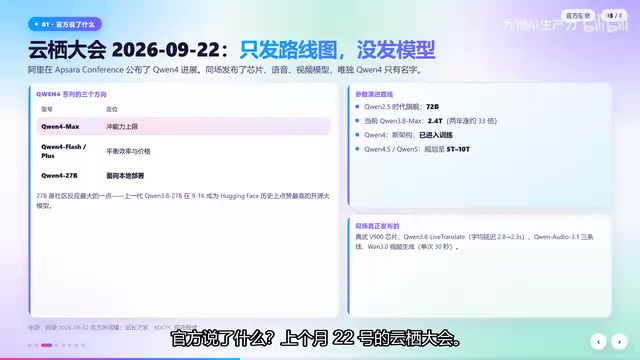
Qwen4 Architecture Preview Open-Sourced: 125B Parameters, 512 Experts, Designed for VRAM-Constrained Hardware
Qwen4 isn't released yet, but its architecture is previewed via open-source Qwen3.8 Flash Next: 125B params, 6B activated per token, 512 experts, 262K context, built for VRAM-limited hardware. This article covers official confirmations, key config.json metrics, and local deployment tests on 24G memory.
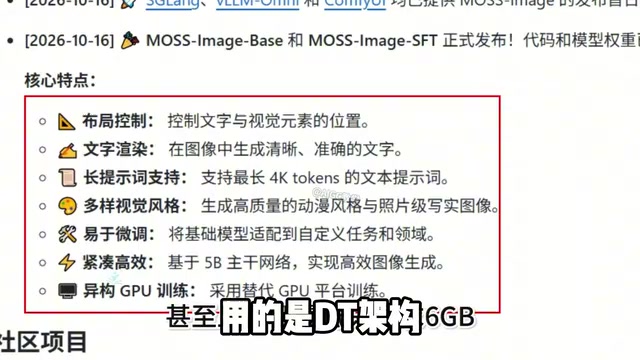
Run 8K Images on 6GB VRAM! Hands-On Test of Fudan's Open-Source MOSS-Image Model
Fudan OpenMouse team and Shanghai MOSS Intelligence open-source MOSS-Image, a 500M-parameter DT architecture text-to-image model that runs locally on 6GB VRAM with precise text rendering, structured layout control, and 4K Token prompt support—ideal for e-commerce posters and local deployment by individual creators.
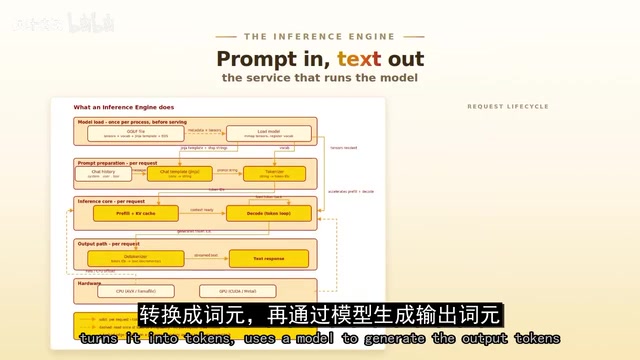
Overseas Blogger Tests Local Deployment of 100B-Parameter MoE Model: Key Lessons on Quantization and Tool Calling
Overseas blogger tests local deployment of Alibaba's Qwen 3.8 Flash Next 100B MoE model on a Strix Halo mini PC and CUDA workstation, revealing how quantization precision affects tool-calling success and the real-world performance of the Strata and GUFO inference engines.