GitHub Daily · November 8: Agent Infrastructure Blooms Across the Board

Agent infrastructure dominates today's GitHub Trending, covering browser automation, design systems, skill libraries, VM runtimes, and context compression.
Today's GitHub Trending shows agent infrastructure becoming the main battlefield, with projects spanning browser automation, design systems, skill repositories, VM runtimes, and context compression. Veteran tools like sherlock and mujoco are warming up or staying steady, and Rust and Go are increasingly taking on heavy workloads in agent toolchains.
Looking at today's Trending list, one word keeps coming up: agent. From design systems to browser automation, from official skill libraries to context compression, nearly half the list is paving the way for agents. At the same time, a long-dormant hardcore tool suddenly shot up the charts, and a bare-metal GPU management plane quietly emerged. The overall feeling is that the agent ecosystem is shifting from competing on model capability to filling in the engineering infrastructure. Whoever builds a solid toolchain will be able to catch the next wave of applications.
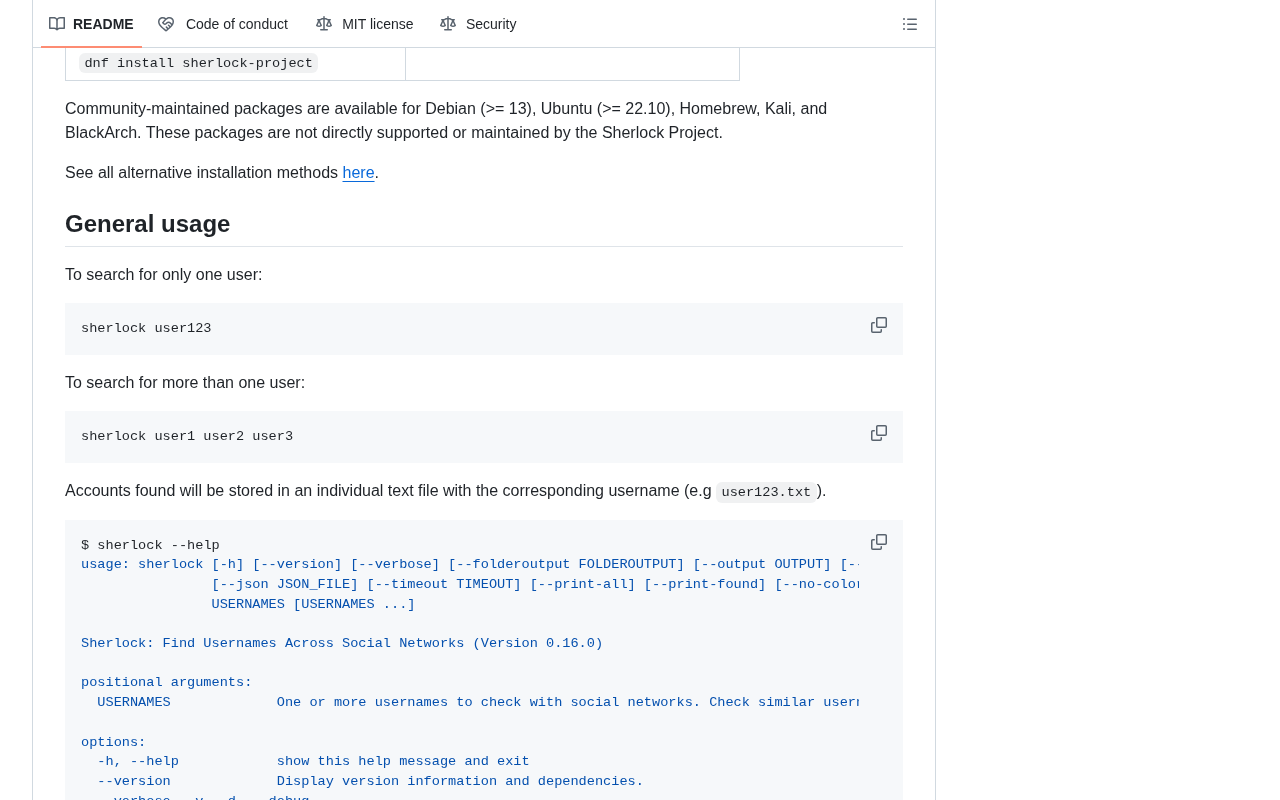
sherlock-project/sherlock: The 90k-star Account Tracking Veteran
Project positioning: Enter a username and batch-check whether that account exists across hundreds of social platforms.
Problem it solves: In OSINT scenarios, manually searching platform by platform is too slow. This tool automates the queries, filling a gap in the open-source intelligence collection process.
Core features: Supports hundreds of sites, exports query results as structured files, supports proxies, and allows custom site lists. A single command runs a whole-network sweep.
Use cases: Security researchers doing attribution, journalists doing background checks, companies monitoring brand infringement. Also commonly used by red teams during the information-gathering phase.
Tech stack: Written in Python, with light dependencies, based on asynchronous requests for concurrent queries. A good reference sample for developers who want to learn network request orchestration.
Stars analysis: Nearly 100k stars, adding over 1,700 today—an old project suddenly warming up again. This magnitude suggests it has been brought back into a new scenario, such as agents needing this kind of tool as a foundation for information gathering.
dsx-ai-factory/nvke: Giving Bare-Metal GPUs a Kubernetes Brain
Project positioning: NVIDIA Kubernetes Engine, a management plane for GPU clusters on bare metal.
Problem it solves: When traditional Kubernetes manages GPU nodes, driver installation, device plugins, and topology awareness are all troublesome. This project consolidates this dirty work into a single management plane.
Core features: Targets bare-metal environments, eliminating the overhead of the virtualization layer. Specifically optimized for GPU scheduling.
Use cases: Teams building their own AI training clusters, especially those that are budget-sensitive and want to squeeze out every bit of compute.
Tech stack: Written in Go, fitting the cloud-native ecosystem. Suitable for developers who want to learn control plane design.
Stars analysis: Only 300+ stars, but up 125 in a day—a very high growth ratio. An early burst for a new project shows that demand for GPU infrastructure is real.
milind-soni/OpenMausBot: Giving a Bot Its Own Virtual Machine
Project positioning: An open-source alternative to Grok Bot, centered on letting a bot operate a virtual machine.
Problem it solves: Many agents can only click buttons inside a sandbox and lack a complete, operable runtime environment. This project directly gives the bot a virtual machine.
Core features: Isolated execution in a VM reduces host risk. Open source and controllable, self-deployable.
Use cases: Developers building automation-type agents who need to run untrusted tasks in an isolated environment.
Tech stack: TypeScript, handling both frontend and backend. Valuable reference for teams building agent runtimes.
Stars analysis: Up 1,190 in a day, with a total just over 7,000—a typical breakout curve. It shows people are indeed looking for secure runtime solutions for bots.
anthropics/claude-quickstarts: The Official Getting-Started Template Library
Project positioning: A collection of examples for quickly building deployable applications with the Claude API.
Problem it solves: Developers get the API and don't know where to start writing; the official team provides a set of templates that run out of the box.
Core features: Covers a variety of common application forms, with clear code structure that can be copied and modified for use.
Use cases: Developers new to the Claude API, or teams that want to quickly validate a product form.
Tech stack: Python, close to mainstream data and backend development habits.
Stars analysis: Only up 28 today, a stable stock. Such official repositories normally grow slowly; their value lies in practicality, not popularity.
vercel-labs/agent-browser: Letting Agents Open Browsers Themselves
Project positioning: A browser automation command-line tool for AI agents.
Problem it solves: Agents need to search the web, fill out forms, and scrape pages, but lack a stable and reliable browser driver layer.
Core features: Command-line interface, convenient for agents to call directly. Encapsulates common browser operations.
Use cases: Developers building web-operation agents, such as automated price comparison, automated form filling, and automated inspections.
Tech stack: Rust, balancing performance and memory safety. It shows that heavy work like browser automation is migrating to low-level languages.
Stars analysis: 45k stars, up 132 today. Large base with steady growth—already one of the de facto standards in this niche.
meta/astryx: A Design System Prepared for Agents
Project positioning: A fully customizable open-source design system specifically for agent scenarios.
Problem it solves: When agents generate interfaces, they often lack unified design specifications, resulting in scattered output styles. This project provides a constraint framework.
Core features: Highly customizable, with components designed for agent invocation, reducing the randomness of generated interfaces.
Use cases: Teams doing AI-generated frontends, low-code platforms, or agents that automatically build pages.
Tech stack: TypeScript, native to the frontend ecosystem.
Stars analysis: 14k stars, up 198 today—a new project in its ramp-up phase. Backed by a big company plus the agent concept, attention naturally runs high.
anthropics/skills: The 160k-star Official Skills Repository
Project positioning: The public repository for Agent Skills, the official skill collection.
Problem it solves: Agent capability expansion lacks a standardized packaging method; this repository provides the organizational specification for skills.
Core features: Modular, reusable skills, officially maintained to ensure quality.
Use cases: All teams building agents based on Claude—essentially the official model home for a skills marketplace.
Tech stack: Python.
Stars analysis: 167k stars, up 468 today. This scale plus growth rate shows that skills have become an infrastructure standard for agent development.
google-deepmind/mujoco: The Evergreen of Physics Simulation
Project positioning: A general-purpose physics simulator focused on multi-joint dynamics and contact computation.
Problem it solves: Robotics and reinforcement learning training need high-precision physics environments, and among open-source solutions it is the most stable.
Core features: Accurate contact modeling, good performance, and mature interfaces.
Use cases: Robotics research, reinforcement learning environment construction, biomechanical simulation.
Tech stack: C++, prioritizing low-level performance. A must-learn for developers working on simulation and control.
Stars analysis: Up 26 today, steady. Classic projects don't need the charts to prove themselves.
ranxianglei/billion-context: Compressing Context to One-Tenth
Project positioning: A context compression plugin for ultra-long sessions and small-window models.
Problem it solves: Long sessions have high token costs, and small-window models cannot fit the history. This plugin compresses context and saves 5x tokens.
Core features: Supports month-level single sessions, 100k context is enough, and the compression ratio is significant.
Use cases: Teams building long-term companion applications or running long conversations with cheap models.
Tech stack: TypeScript, easy to integrate into existing frontends or services.
Stars analysis: 4,300 stars, up 185 today—good growth. It shows that context cost remains a real pain point.
Today's Trend Observations
First, agent infrastructure has become the main battlefield. Browser automation, design systems, skill repositories, VM runtimes, context compression—five or six projects point to the same thing. As model capabilities converge, engineering support determines the speed of implementation.
Second, Rust and Go are on the rise. agent-browser uses Rust, nvke uses Go—heavy work is moving toward systems languages, a continuing signal.
Third, veteran tools are warming up. When projects like sherlock suddenly shoot up the charts, it often means they have been absorbed into new workflows.
Today's Must-See TOP 3
- anthropics/skills—the official standard for skill packaging; unavoidable when building agents.
- vercel-labs/agent-browser—a key layer for agents to operate online.
- ranxianglei/billion-context—directly confronts token costs, a representative of pragmatism.
One last note: today's list is quite interesting. On one side, official teams are setting standards; on the other, individual developers are filling in the gaps. In this agent wave, the truly lively place may not be the models themselves, but these inconspicuous pipes.
One-line Summary
Agent infrastructure became the main theme of today's list, covering browser automation, design systems, skill libraries, VM runtimes, and context compression; veteran projects such as sherlock and mujoco warmed up or held steady, showing that classic tools are being reabsorbed into new workflows; the share of Rust and Go in agent toolchains is rising, with systems languages taking on heavy-load scenarios.
Related articles
 Tech Frontiers
MuJoCo: An Analysis of DeepMind's Open-Source General-Purpose Physics Simulator
An in-depth analysis of Google DeepMind's open-source physics simulator MuJoCo: high-performance C++ kernel, MJCF modeling format, contact solving principles, MJX GPU acceleration, and robot reinforcement learning use cases.
 Tech Frontiers
Claude API Quick Start: The Official Quickstarts Project Collection
Anthropic's official claude-quickstarts project collection helps developers quickly build deployable apps with the Claude API. Nearly 20k stars, Python-based, great for beginners and prototyping.
 Tech Frontiers
AI Agents Connecting Directly to APIs: Which Calls Can Be Safely Allowed?
AI agents can call any API, but the real challenge is deciding which calls can be safely allowed. This article analyzes allowance decisions from three dimensions—intent matching, least privilege, and controllable impact—and argues that the control layer should sit outside the agent, combined with audit traceability to build a trustworthy API call governance mechanism.