Grok Drawn Into Political Decision-Making? AI Chatbot Allegedly Consulted on Venezuela Operation

Reports that Trump consulted Grok on Venezuela raise urgent questions about AI's role in national decision-making.
Reports claim Trump consulted Musk's AI tool Grok before taking action on Venezuela, receiving an encouraging response — placing large language models in an unprecedented sensitive role. The article argues that current AI models are probabilistic generation systems prone to hallucinations, incapable of fact verification, and free of accountability. Over-reliance on AI's confident tone is especially dangerous in high-level decision-making. The author contends that regardless of the report's veracity, it reveals how technological expansion has outpaced societal consensus on usage limits, and calls for AI to be strictly confined to information provision with transparent audit and accountability mechanisms.
Overview
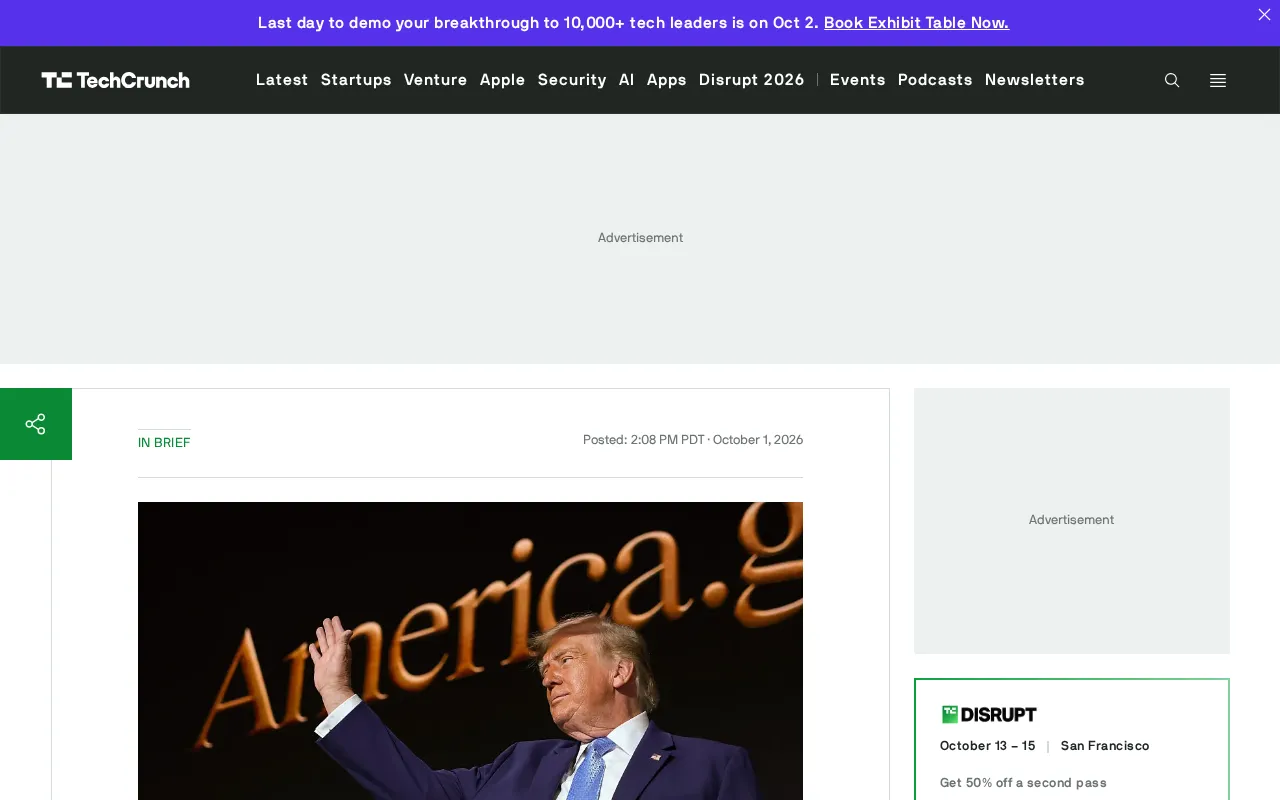
According to reports, U.S. President Trump consulted Grok — the AI chatbot developed by Elon Musk's xAI — before taking action against Venezuela and pursuing the arrest of President Nicolás Maduro. Grok allegedly provided an encouraging response during this process.
If true, this would place generative AI tools in an unprecedented and sensitive position — elevating them from everyday question-answering assistants to potential influencers of national-level geopolitical decisions.
Concerns About AI Involvement in High-Stakes Decisions
Current large language models, including Grok, are fundamentally probabilistic generation systems trained on massive text datasets. They excel at producing fluent, seemingly well-reasoned responses — but they do not possess genuine fact-checking capabilities, nor can they be held accountable for real-world consequences.
Using such tools as reference points for military or diplomatic decisions exposes several core problems:
- Hallucination risk: Models can generate information that sounds authoritative but is actually incorrect or one-sided.
- Lack of accountability: AI "recommendations" carry no legal or moral responsibility — the burden always falls on the user.
- Susceptibility to manipulation: A model's responses are shaped by training data, system prompts, and fine-tuning objectives, meaning its tendencies may not be neutral.
Hallucination is a technical term in the large language model field referring to content that is linguistically fluent and confidently stated, but is factually wrong, fabricated, or unverifiable. This phenomenon stems from how models work — they are essentially predicting "the next most likely word" rather than retrieving or verifying facts. In everyday scenarios, hallucinations might lead users to receive incorrect historical data or technical specifications. In geopolitical or military decision-making contexts, however, a piece of "plausible-sounding" misinformation could directly skew situational assessments and influence the selection of action plans — making it far more dangerous than ordinary information errors.
The Gap Between Technical Limitations and Real-World Expectations
Whether it's Grok, ChatGPT, or other mainstream models, their official positioning is as assistive tools — not authoritative decision-makers. For questions involving personal safety, legal matters, healthcare, or national security, models typically issue disclaimers or decline to offer definitive recommendations.
In practice, however, users often place excessive trust in the "confident tone" of AI outputs. A self-assured response can easily be misread as a carefully considered, expert judgment. This cognitive bias is amplified in high-level decision-making contexts, where the consequences can be severe.
The psychological concept of Automation Bias helps explain why people tend to over-trust AI outputs: when a system presents information in an authoritative, definitive tone, human decision-makers tend to reduce their own critical scrutiny. This phenomenon has been documented in domains ranging from pilots relying on autopilot systems to physicians depending on diagnostic decision-support tools. Large language model responses are typically presented in complete sentences with an affirmative tone, lacking the linguistic hedges — such as "I'm not sure" or "this needs further verification" — that human advisors routinely attach to their opinions. This makes automation bias more easily triggered in AI-use contexts, particularly under time pressure.
A Warning for AI Governance
The core value of this report lies not in its specific details, but in the governance question it raises: as AI tools penetrate ever deeper into the centers of power, have we established sufficient usage norms and boundaries?
- AI should be clearly restricted to an "information-providing" role, not a "decision-making" one.
- Critical decisions must preserve human final judgment and accountability.
- The use of AI in high-risk scenarios requires transparent logging and audit mechanisms.
It is worth emphasizing that this news remains at the "reportedly" level, lacking a complete chain of evidence or official confirmation. Until the information is verified, the public should exercise caution and avoid over-interpretation.
The international community has yet to establish a unified regulatory framework for AI governance. The EU's AI Act, formally passed in 2024, classifies AI applications that "affect critical infrastructure and public safety" as high-risk, requiring mandatory audits and human oversight. The United States, by contrast, relies primarily on executive orders and voluntary industry guidelines, lacking legally binding mandatory regulations. This institutional gap means that even the use of unvetted AI tools at the national security decision-making level currently faces no clear violation mechanisms or penalty channels — further underscoring the urgency of establishing AI usage standards for high-risk scenarios.
Conclusion
This report reflects a deep anxiety underlying the rapid proliferation of AI tools: the pace at which technological capabilities are expanding has already outstripped society's ability to reach consensus on the boundaries of their use. Regardless of whether the events are true, they serve as a reminder — AI can participate in thinking, but it should not replace thinking, and it certainly should not replace the human judgment that bears responsibility for consequences.
Related articles

Vibe Coding Full-Stack in Practice: AI Programming from Beginner to Enterprise Deployment
From Cursor to Claude Code, this Bilibili AI programming course uses four progressive projects to cover full-stack development, open-source secondary development, and team collaboration. The article analyzes the shock to frontend roles, the efficiency shift from 50 people to 5, and the methodology required for enterprise-grade projects.

David Blaine's Global Quest for Real Magic: From South Africa to Japan and India
David Blaine travels to South Africa, Japan, and India in his Do Not Attempt special, documenting Spinning drivers, black mamba rescuers, iaijutsu masters, and ascetics—exploring the boundary between magic and real human极限 challenges.

Is a Touchscreen MacBook Coming? Vergecast Reveals Apple Executive's Response
Vergecast podcast reveals a conversation between a reporter and Apple executive John Ternus about a touchscreen MacBook and Apple Pencil support. Ternus says iPad is the best device for a stylus, while the reporter bets MacBook will eventually support Apple Pencil.