Hark Releases Handoff²: A 2x Faster Computer-Use Agent

Hark releases Handoff², a computer-use agent that learns batched actions via latency-penalized RL, achieving 2x speed and 82% completion.
Hark's Handoff² is a computer-use agent built into Hark Pro that achieves an 82% completion rate on 478 internal web tasks and averages 2x the speed of v1. Its core technology is latency-penalized reinforcement learning: during training, the agent is rewarded for task completion but penalized for per-step latency, so it learns to merge consecutive actions and reduce waiting rounds. The article notes that the 82% completion rate means the agent still fails nearly one-fifth of tasks, making it better suited as an assisted executor; the 2x speed is an overall average, with the greatest gains on highly repetitive, step-dense tasks. The release reflects a shift in computer-use agent competition from "can it do it" to "how fast and how reliably," with reliability and failure recovery mechanisms set to be the key focus of the next stage.
From "Operating a Computer" to "Batch Operations": The Core Breakthrough of Handoff²
Hark recently released Handoff², a computer-use agent built into Hark Pro. Compared to v1, Handoff² runs at double the average speed while achieving an 82% completion rate on internal enterprise web tasks. This figure is based on testing across 478 internal web tasks, covering common operation scenarios in real business workflows.
In the competition among computer-use agents (also called GUI agents or desktop agents), speed and completion rate often constrain each other. Chasing speed alone can sacrifice accuracy, while repeated verification slows execution. The key to Handoff² is that it balances this trade-off through the idea of "batched actions."
Latency-Penalized Reinforcement Learning: Teaching the Agent to "Wait and Merge"
According to official disclosures, Handoff² learned to execute actions in batches, trained with latency-penalized reinforcement learning (RL). This means that during training, the agent is rewarded not only for task completion but also penalized for the latency of each operation step.
This reward design pushes the model to find more efficient action sequences. For example, when the agent needs to click multiple buttons in succession on a web page, it may learn to merge these actions into a single batch rather than waiting for the page to respond after each click. In principle, this resembles the habit of a skilled human user rapidly clicking through an interface—reducing the number of back-and-forth confirmation rounds naturally lowers overall time cost.
Latency-penalized RL is not new to agent training, but applying it to learning batched actions in computer-use scenarios is a technical label that distinguishes Handoff² from similar products. Interestingly, the official announcement did not disclose the scale of training data, the latency penalty coefficient, or the specific implementation of batched actions—details that will need to be filled in by future technical blog posts or papers.
Computer-Use Agent refers to a class of AI systems that can directly operate a graphical user interface (GUI) to complete tasks, also known as GUI agents or desktop agents. Unlike agents that invoke tools via API, it needs to "see" the screen (typically using a vision model to take screenshots and understand the interface), locate interactive elements (buttons, input fields, links), and then simulate mouse clicks and keyboard input. The difficulty with such agents is that the environment is dynamic and uncertain: page loads have delays, pop-ups can obscure elements, and layouts may change with window size. Therefore, after each operation step, the screen often needs to be re-observed to confirm the state, forming an "observe–act–observe" loop, where more rounds mean greater cumulative latency. What Handoff² optimizes is precisely the waiting overhead within this loop.
Reinforcement Learning (RL) learns behavior by having an agent repeatedly trial and error in an environment, adjusting its policy based on reward signals. In agent training, rewards typically consist of whether the task is completed and whether steps are valid. Latency-penalized RL introduces an explicit penalty on time cost on top of this: the latency consumed by each operation step is deducted from the total reward, forcing the model to weigh "taking more steps but each more reliably" against "taking fewer steps but possibly making errors." Since the penalty is tied to latency, the model spontaneously tends to reduce the number of rounds and merge parallelizable actions, thereby learning more compact action sequences. This reward-shaping approach has already been applied in areas such as robot control and inference acceleration; when transferred to GUI operation scenarios, the key lies in how to accurately measure per-step latency and feed it back stably into the training process.
82% Completion Rate and 2x Speed: The Pragmatic Trade-offs Behind the Numbers
The test results on 478 internal web tasks provide two quantifiable metrics: an 82% task completion rate and an average speed 2x that of v1. These two figures need to be understood in context.
First, the 82% completion rate means Handoff² still fails nearly one-fifth of tasks. For enterprise internal process automation, this level means the agent is better suited as an "assisted executor" rather than a "fully autonomous decision-maker." Users may still need to confirm or provide a fallback at critical nodes.
Second, "2x average speed" is an overall average; the speedup may vary significantly across task types. Batched actions yield the greatest benefit for highly repetitive, step-dense tasks, while for tasks requiring complex judgment or long-chain reasoning, the speedup may be limited. This pragmatic trade-off reflects the reality of current computer-use agents: efficiency gains come more from operational-level optimization than from cognitive-level leaps.
The Competitive Focus of Computer-Use Agents Is Shifting
The release of Handoff² reflects a trend: competition among computer-use agents is shifting from "can it do it" to "how fast and how reliably can it do it." Early products mainly demonstrated whether an agent could understand the screen, locate elements, and complete clicks and input; today, vendors are competing on throughput—how many tasks can be completed per unit time, and how much success rate can be maintained in multi-step workflows.
Hark Pro launching Handoff² as a built-in agent shows that its positioning is product-level delivery rather than a research demo. Compared with general browser agents, agents built into Pro products are usually more focused on specific workflows and easier to optimize in a targeted way through internal task sets. The 478 internal web tasks are a typical internal evaluation set; they may not represent performance on public benchmarks, but they reflect usability in real business scenarios.
For teams focused on agent deployment, Handoff² offers a sample worth watching: whether latency-penalized RL can continue to drive the evolution of batched action policies, and whether the 82% completion rate holds stable across broader task distributions. The answers to these two questions will determine how quickly computer-use agents move from "speedup demos" to "reliable colleagues."
What the Speedup Actually Means
From a user experience perspective, 2x speed means processes that previously required long waits can return results faster. For web backend tasks that require repeated operations—such as form filling, data entry, and page inspection—the speedup translates directly into lower time costs. But speed itself is not the end goal; completion rate and recoverability are the keys to whether an agent can be trusted. The next evolution of Handoff² will most likely revolve around automatic retries for failed tasks and human takeover mechanisms.
Related articles
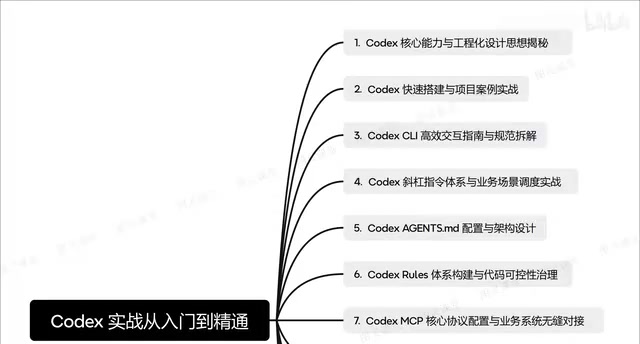
Codex in Practice: From Installation and Configuration to Multi-Agent Collaboration
Based on a Bilibili Codex course overview, this guide maps the full path of AI coding assistants from installation and agents.md context design to CLI commands, MCP integration, and multi-agent collaboration.

Claude Code Installation and Model Switching Guide for Users in China
How can developers in China install Claude Code reliably? This article compiles a Bilibili creator's hands-on solution: install via NPM, skip official login, use CC Switch to configure API Keys and freely switch between DeepSeek, Kimi, and other models to avoid account bans.
AI Supply Chain Security: What Canary Tokens Reveal
Starting from a Hacker News discussion, this article analyzes the role of canary tokens in AI supply chain security: how they detect abnormal access to model weights, training data, and credentials, as well as coverage blind spots and cost constraints during implementation.