Hermes Agent Free Deployment Tutorial: Build a Full-Featured AI Agent with Zero-Cost Models

Hermes Agent runs locally for free; connecting to OpenRouter free models enables automatic website building and coding.
The article introduces the usage path of the open-source AI agent Hermes Agent: it offers CLI and GUI versions, with automated GUI installation that can create a Python environment itself; the interface includes a capability marketplace, connectors, tools, and messaging bots, and the skill marketplace encapsulates programming, design, and automation capabilities into one-click installable skills. The Agent doesn't come with models and needs to connect via providers like OpenRouter; the author suggests setting the price filter to free for zero-cost operation, and setting reasoning intensity to high rather than ultra to control time and token consumption. In testing, a one-sentence PRD generated a food delivery landing page with ordering and shopping cart, with design following real UI/UX specifications and responsive mobile layout. The author believes this solution suits vibe coders, automation operators, and content creators, but cloud 7×24 deployment and the long-task stability of free models still await verification.
The open-source AI agent Hermes Agent is rapidly spreading through tech circles. If you follow AI coding, automation workflows, or content creation, you've likely already heard its name. What makes this tool most appealing is that you can run a fully capable AI Agent on your own system completely for free — it can control your computer like a real person, keep working even after you shut down, and building websites, writing code, and running automations are all standard operations.
Two Usage Forms and Deployment Paths
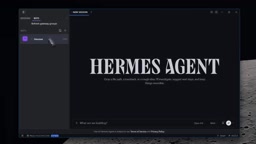
According to a demonstration by a YouTube channel author, Hermes Agent offers both CLI and GUI versions, and he explicitly recommends that ordinary users go with the GUI version for its lower interaction barrier. The entire installation process is quite automated — if there's no Python environment on the system, the installer creates one itself, and users only need to select a color theme and layout style on the guide page to complete it.
Worth noting, the original article also mentions a route for always-on operation: if you want the Agent online 24/7, you can use solutions from hosting providers like Hostinger or GoDaddy to deploy Hermes Agent to the cloud for continuous operation, rather than relying on a local machine being powered on.
MCP (Model Context Protocol) is an open protocol proposed by Anthropic at the end of 2024, aiming to let AI models connect to external data sources and tools in a standardized way. You can think of MCP as the "USB-C interface of the AI world": whether the other side is a local file system, database, Slack, GitHub, or a self-built service, as long as it implements an MCP Server, the model can discover and invoke its capabilities in a unified format. The significance of introducing MCP in Agent-type products is that capability expansion no longer depends on vendors hardcoding integrations one by one — third-party developers can publish connectors themselves. Hermes Agent's Connectors module connects to external services precisely based on this protocol, which is the structural reason it can rapidly accumulate a large number of pluggable tools.
Interface Structure: From Marketplace to Connectors
After installation, the left sidebar is divided into several key functional areas:
- Main content area and session history: for creating new projects, new sessions, or chats
- Capabilities (capability marketplace): a built-in skill marketplace where you can browse and one-click install hundreds of skills
- Connectors: similar to service integration management in ChatGPT or Claude, supporting connection to external services via the MCP protocol
- Tools: enable video generation, text-to-speech, image generation, video analysis, and other features
- Messaging: the new version adds a bots section that can drive messaging bots like Telegram bot
The value of the skill marketplace lies in turning "capabilities" into downloadable modules. After searching for cloud in the marketplace, the original author found that Cloud Code-related programming skills and design skills were already pre-installed — these skills are the real source behind the smooth motion graphics seen in the video, something most tutorials don't proactively mention.
The essence of a skill is rule encapsulation: you write processes, data sources, and operational specifications into a skill, and the Agent executes according to that rule set. The original author claims he used this mechanism to implement automation tasks such as automatic email replies.
vibe coding is a term coined by Andrej Karpathy in early 2025, referring to a development approach of "describing intent in natural language and letting the model directly produce runnable code," where developers play more of a reviewer and guide role rather than writing line by line. Its difference from traditional AI completion is that code is generated end-to-end by the model, and humans only give directional instructions and provide feedback corrections when results don't meet expectations. This mode relies heavily on the Agent's parallel capabilities — when multiple files and modules advance simultaneously, serial execution becomes a bottleneck, and sub-agent division of labor allows frontend pages, backend interfaces, and style resources to land in parallel. Understanding this is necessary to see why Hermes Agent's multi-task parallelism is regarded by the author as a key advantage in vc scenarios.
Accessing Free Models: OpenRouter Is Key
Hermes Agent doesn't include models itself; on first use you need to configure a provider. In the demonstration, OpenRouter is chosen — create an API key on its official website, copy it back into the Agent, paste, and connect.
The key step is model filtering: in OpenRouter's model list, set the price filter to free, and you'll see a batch of completely free models. Copy the target model's ID into Hermes Agent's model configuration, and the whole chain is connected.
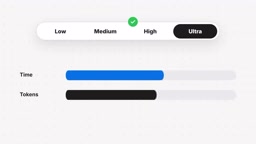
The original article also gives a practical configuration suggestion: the reasoning intensity should be kept at the high level rather than ultra. Ultra makes the model run at full power with better results, but time and token consumption increase significantly — if using paid models, costs will be noticeably amplified. Additionally, it's recommended to enable browser settings so the Agent can actually invoke the system browser; for security mode, smart is recommended over manual.
OpenRouter is a model aggregation gateway where developers only need to apply for one API key to call models from dozens of vendors through a unified OpenAI-compatible interface, including OpenAI, Anthropic, Google, Meta, and a large number of open-source models. Its billing method is deducting by token after topping up, and the platform长期 has a batch of free models marked as :free (mostly provided by the community or vendors as trial quotas), which can be filtered by price in the model list. For Agent tools, OpenRouter's value lies in decoupling: users don't need to configure separate keys for each provider, and switching models only requires replacing a model ID string. It should be noted that free models usually have rate limits, smaller context windows, and may be temporarily taken offline during long tasks — this is also why free solutions are weaker than paid flagship models in stability.
Practical Test: Generating a Food Delivery Website from One Sentence
After configuration, the original author validates the effect with a real task: create a new folder and import the project, input a PRD for a food delivery app landing page, and send it directly.
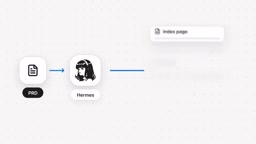
Hermes Agent's standout feature is that it can process multiple tasks in parallel in a single run, and can generate sub-agents internally for division of labor and collaboration — this is especially friendly for vibe coding scenarios, where multiple code files can advance simultaneously and code output speed is noticeably faster.
The result exceeded expectations: originally only a landing page was requested, but the Agent also built a complete food ordering system and shopping cart, complete with images, prices, add-to-cart, and checkout pages (the original author also admits the checkout process is actually non-functional).
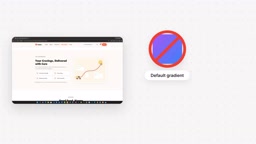
Even more impressive is the design quality you might not have noticed. The page doesn't use the gradient style common to default models, but follows real UI/UX specifications, with an overall look close to professional designer output, and mobile access also has a responsive layout. And all of this was accomplished using only free models on OpenRouter — no Claude Opus, no ChatGPT's flagship models.
Who This Solution Is For
From the demonstration, Hermes Agent's value is concentrated in three groups: vibe coders who need to write code in bulk, operators who want to build automation workflows, and content creators who need to generate motion effects and design assets. The free model access solution greatly reduces trial-and-error costs, while the skill marketplace turns automation workflows that originally required self-exploration into reusable modules.
What needs to be viewed calmly is that the original article only gives a conceptual introduction to cloud 7×24 deployment without showing the complete configuration process; the actual stability and long-task performance of free models also lack more verification. The original author says he will launch a series of tutorials around Hermes Agent, covering web development, AI automation, motion effects production, and agency business operations — follow-up content is worth watching.
One-line Summary
Hermes Agent runs locally for free; connecting to OpenRouter free models enables automatic website building and coding.
Paragraph Summary
The article introduces the usage path of the open-source AI agent Hermes Agent: it offers CLI and GUI versions, the GUI version has automated installation and can create a Python environment itself; the interface includes a capability marketplace, connectors, tools, and messaging bots, and the skill marketplace encapsulates programming, design, and automation capabilities into one-click installable skills. The Agent doesn't come with models and needs to connect via providers like OpenRouter; the author suggests setting the price filter to free for zero-cost operation, and setting reasoning intensity to high rather than ultra to control time and token consumption. In testing, a one-sentence PRD generated a food delivery landing page with ordering and shopping cart, with design following real UI/UX specifications and responsive mobile layout. The author believes this solution suits vibe coders, automation operators, and content creators, but cloud 7×24 deployment and the long-task stability of free models still await verification.
Related articles

VERS: Editing Activation Explanations to Halve Reasoning Model Tokens
VERS guides reasoning models by editing activation explanations, cutting 45.8% of tokens on GSM8K with only a 0.82 pp accuracy drop and transferring to larger models, but losing accuracy on competition problems.

Finding Errors Is Not Enough: Selective Model Escalation for Entity-Targeted Sentiment Analysis
This study explores selective model escalation for entity-targeted sentiment analysis, comparing data collection ordering, uncertainty-driven re-examination, and model routing—finding that minority-class priority only helps at very small data volumes, the oracle upper bound far exceeds actual gains, and escalation must be tailored to each dataset.

WAS-PO: Using Whitened Advantages to Solve the Correlation Trap in Multi-Reward Reinforcement Learning
WAS-PO paper proposes whitening advantages to correct correlation bias in multi-reward RL: when rewards are correlated, naive weighted summation effectively applies Σ^{1/2}w instead of w. Experiments show training reward improves steadily, but held-out accuracy does not improve in sync, and under two rewards it actually falls behind.