How BookTok Became the Antidote to Reading in the Digital Age

BookTok's counter-trend growth reveals the enemy of reading is notifications, not video; offline value and low-barrier content drive community vitality.
Based on a conversation between The Vergecast host and BookTok creator Morgan Book, the article explores the new social forms of books in the algorithmic age. BookTok isn't a single community but multi-layered circles differentiated around reading behavior, with romance and romantasy becoming the core of aggregation due to narrative certainty and beginner-friendliness. Morgan points out that reading's real rival isn't video but the notification system, and offline nature is the unique value of books. Both explicitly state that audiobooks and e-books should be included in the definition of reading, and BookTok's acceptance of e-readers has increased. The show also discusses the dilemma of the new Kindle's improved feel but sharply higher prices, as well as methods for rebuilding reading habits such as using fragmented time and rereading familiar works.
When short videos and infinite scrolling dominate most people's attention, a community called BookTok is growing against the tide. The Vergecast host David Pierce's conversation with literary content creator and podcast host Morgan Book reveals a phenomenon worth re-examining by the tech industry: books aren't dead — instead, they've grown new social forms in the soil of algorithmic recommendation.
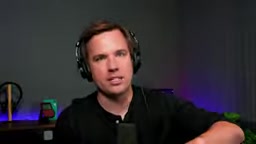
BookTok Isn't a Single Community, but a Collection of Countless Reading Circles
Morgan Book defines BookTok carefully: "an online reader community," but behind this simple description is a highly fragmented ecosystem. Some people only do book recommendations, some shoot reading vlogs, and some authors promote their new books themselves — especially those creators with limited marketing budgets who can only appear on camera themselves. Readers of different genres gather in different "pockets" that may not overlap.
This structure distinguishes BookTok from ordinary content tags. It's not a group of people doing the same thing, but a multi-layered social network derived from the act of "reading." David Pierce noted on the show that BookTok's uniqueness lies in its "cultural unity" — every so often, almost all readers are discussing the same book. This phenomenon is hard to replicate in today's film and television culture.
Why Romance Became the Adhesive
Morgan attributes the rise of romance and romantasy to a long-underestimated quality: predictability. "We live in a world full of negative social and political issues, and curling up on the couch with a book that gives you cute characters and a happy ending is a comfort." She mentions that romance was once a reading preference readers were ashamed to admit, and now that shame is fading.
From a content design perspective, works like Throne of Glass, A Court of Thorns and Roses, and Fourth Wing share a common trait: "beginner-friendly" — they're not high-barrier hard fantasy, and new readers can enter the worldbuilding relatively easily. This explains why they can form large-scale discussion waves on BookTok: low barriers plus high emotional rewards are naturally suited to short-video传播.

romantasy is a portmanteau of romance and fantasy, referring to romance novels that incorporate magic, otherworldly, or epic adventure settings. Unlike traditional fantasy, which is primarily plot-driven, it makes emotional relationships the narrative core while retaining complete worldbuilding. This genre has rapidly broken out through BookTok in recent years, with representative works including Sarah J. Maas's A Court of Thorns and Roses series and Rebecca Yarros's Fourth Wing. The popularity of romantasy reflects readers' demand for "high emotional reward + low cognitive barrier" content, and also explains why it has become a viral hit on short-video platforms.
The Enemy of Reading Isn't Video, but Notifications
The most practically valuable insight from the interview is Morgan's answer to "why people don't read." She doesn't think video steals reading time, but that the notification system on screens continuously interrupts attention. "A book is something you can pick up, with no notifications popping up, no mom texting you to empty the dishwasher. You can be completely offline."
This directly points to a product-level contradiction: we try to use online tools (Goodreads, reading apps, social platforms) to promote an essentially offline behavior. Morgan admits this tension is real — she puts her phone in another room when reading, and even carves out dedicated reading time on her calendar, not using it for content creation.
David Pierce added a common dilemma from listeners: many people intellectually know reading is good, but their bodies still slide toward Instagram. Morgan's solution is to lower the activation cost — "if you arrive five minutes early for an appointment, pull out your Kindle or Kobo and read a few pages." She reads about 100 books a year, and the secret isn't big blocks of time but the utilization of fragmented time.
Do Audiobooks Count as Reading: This Debate Should End
In the show, both take a clear stance on "what counts as reading": consuming text is reading. Paper books, magazines, comics, audiobooks — all fall within this definition. Morgan says she marks an audiobook as read on Goodreads right after finishing it, and David also stated "if you think audiobooks don't count as reading, don't email me."
Behind this seemingly casual statement is a real market signal. The controversy around audiobooks and e-readers is essentially identity anxiety within the reading community. Morgan observes that BookTok's acceptance of Kindle and Kobo has clearly increased, with the discussion focus shifting from "should I use an e-reader" to "should I buy a Kindle or a Kobo." She herself was once a staunch paper-book advocate, but after travel needs led her to get an e-reader, her reading speed actually increased.
Goodreads is a book social and review platform owned by Amazon, where users can mark books as want-to-read, currently reading, and read, write reviews, and follow other readers. It has long been regarded as infrastructure for the reading community, but has also been criticized for its outdated interface and weak recommendation algorithms. The article mentions Morgan marking audiobooks as read on Goodreads, which touches on a detail in the platform's design: Goodreads' "read" status itself doesn't distinguish reading format, and users can use it to uniformly manage reading records for paper books, e-books, and audiobooks. This design objectively provides product-level support for "audiobooks count as reading," and also shows that reading community tools need to accommodate multiple ways of consuming content.
Hardware Upgrades and Price Increases: The Dilemma of the Kindle Product Line
In the latter half of the show, David Pierce shared his hands-on impressions of the new Kindle product line. His judgment is direct: this is the best-feeling generation of Kindle ever, the base model has an aluminum version, the screen performance of Paperwhite and Colorsoft continues to lead, and Amazon's investment in E-Ink tuning is clearly higher than other manufacturers.
But the cost is price. He mentions the base Kindle has risen from about $60 in the past to $150, the high-end aluminum model is close to $200, and the Paperwhite is also far above the past default recommended price of about $120. Colorsoft he positions as a niche product for comic and graphic novel readers, "most book readers don't need color and the extra cost that comes with it."
Interestingly, David thinks this round of price increases is actually more acceptable for Kindle than for other electronics, because e-readers are one of the few devices that "don't become outdated much after purchase." "If you buy a Paperwhite now, chances are it will still work the same way in five, seven, ten years." His advice is pragmatic: those who will hold onto it long-term are worth paying for the feel, while those prone to leaving devices in airplane seat-back pockets don't need to.
E-Ink (electronic ink) is a display technology that presents text and images by moving black and white particles in microcapsules under an electric field. Its core advantage is bistability — the image remains after power is cut, so it only consumes power when turning pages, with battery life reaching weeks; at the same time, it doesn't emit backlight but relies on ambient light reflection, providing a reading experience close to paper that's less tiring over long periods. The reason Kindle's screen performance is praised in the article is precisely that Amazon continuously invests in E-Ink panel refresh algorithms, front-light uniformity, and contrast tuning. Color E-Ink (as used in Colorsoft) adds a color filter layer on top of black and white particles, at the cost of refresh speed, contrast, and cost — which is the technical reason the article believes most text-only readers don't need the color version.
Implications for Reading Community Products
This conversation offers several transferable judgments for those building community and content products. BookTok's vitality comes from the combination of low-barrier content (the narrative certainty of romance) and high emotional connection, not refined algorithmic distribution. The core value of reading behavior lies in being offline, and any product that tries to fully online-ize reading needs to answer the question "how not to interrupt." As for the format debate — audiobooks, e-books, paper books — users are already voting with their behavior, and product designers don't need to set barriers for them.
Morgan's advice for struggling readers also applies to product cold starts: find a short book, don't start with Stephen King's It; reread a book you know you love to rebuild the habit; treat reading as a muscle, starting with five minutes. These principles hold logically in any habit-forming product.
One-line Summary
BookTok's counter-trend growth reveals that the enemy of reading is notifications, not video, and offline value plus low-barrier content drive community vitality.
Paragraph Summary
Based on a conversation between The Vergecast host and BookTok creator Morgan Book, the article explores the new social forms of books in the algorithmic age. BookTok isn't a single community but multi-layered circles differentiated around reading behavior, with romance and romantasy becoming the core of aggregation due to narrative certainty and beginner-friendliness. Morgan points out that reading's real rival isn't video but the notification system, and offline nature is the unique value of books. Both explicitly state that audiobooks and e-books should be included in the definition of reading, and BookTok's acceptance of e-readers has increased. The show also discusses the dilemma of the new Kindle's improved feel but sharply higher prices, as well as methods for rebuilding reading habits such as using fragmented time and rereading familiar works.
Related articles

How Accurate Are Sci-Fi's Predictions About AI?
How accurate are sci-fi's predictions about AI? Drawing on a Hacker News discussion, this article analyzes sci-fi's foresight and blind spots in AI development, arguing its true value lies in inspiring thought rather than precise prediction.

SwarmEvolve: Latent-Space Agent Swarms Accelerate Evolutionary Search
SwarmEvolve lets hundreds of low-cost agents swarm-reason in latent space, sharing info via KV caches to achieve fast evolutionary search for math and science problems—reaching in a median of 3–8 minutes the best scores other frameworks need 60 minutes for.

trainlint: Static Checks Catch ML Training Bugs That Don't Crash
trainlint is a static analysis tool that finds ML training bugs that don't throw errors, including data leakage, leftover eval mode, and softmax/CrossEntropyLoss conflicts across 14 categories. This article covers its principles, validation results, and limitations.