Inside Craft Computing's New Studio: Lighting, Desks, and an Unexpected Blackout
Craft Computing unveils its new studio, highlighting storage zoning and circulation for efficiency, plus a health warning.
Craft Computing's Jeff tours his newly renovated studio, covering remote track lights, nine-year-old IKEA countertops, and custom storage shelving, with details on functional zones and workflow optimization. Though 30% smaller than the old office, the new studio sits next to the garage equipment room, so usable space is larger and project switching is much faster. Jeff stresses that storage design is key to ending surface clutter, with each zone dedicated to specific tasks. He ends by sharing a fainting injury caused by fatigue, reminding creators to watch their health. Overall, it's less a hardware upgrade than a deep reflection on efficiency and order.
Craft Computing's Jeff recently gave viewers a tour of his newly renovated studio. From the lighting system to custom desktops to an unexpected health scare, this video showcases not just hardware upgrades but deeper thinking about workflow optimization.
A Studio Transformed: From Bare Walls to Functional Zones
According to the latest video on the YouTube channel Craft Computing, Jeff's new studio is taking shape. The wood paneling is fully finished, the carpet was laid by his own hands (he jokes that he'll "never lay carpet myself again"), and all the trim is installed. Although shelving and background lighting aren't fully in place yet, the space already shows a clear functional layout.
Jeff particularly highlighted the lighting system upgrade. He installed a set of remote-controlled track lights that adjust color temperature, brightness, and beam angle, and can even achieve a spotlight effect. The four-piece set was purchased from Amazon for about $70, includes two remotes, and uses RF radio control—no Wi-Fi or Bluetooth configuration required. In addition, he's using his long-serving GVM 800D RGB lights as background lighting; the pair cost about $250 and has been in service for six years. With barn doors, they prevent light from spilling onto the subject.
Color temperature is a core parameter in lighting design, measured in kelvin (K). Low color temperatures (around 2700K) lean warm yellow and suit a relaxed atmosphere; high color temperatures (around 5000–6500K) lean cool white and help boost focus. Video creators typically need to adjust color temperature based on what they're shooting to ensure accurate skin tones. Beam angle determines how focused or spread out the light is: a narrow beam (e.g., 15°) creates a spotlight effect ideal for highlighting a subject; a wide beam (e.g., 60°) provides ambient lighting and reduces shadows. The track lights Jeff chose support both adjustments, meaning a single lighting kit can handle both subject lighting and scene ambiance without constantly swapping equipment.
Desks and Workflow: A Nine-Year Veteran Returns to Duty
Jeff's desktops come from an IKEA Carl B. countertop composite surface purchased nine years ago. To fit the new space, he had to shorten one by about 10 inches and the other by nearly 20 inches. These countertops are bolted to the wall using 1x3 lumber and corner brackets, and are fitted with three legs for excellent stability. He notes that each cost about $180–190 back then and has now risen to nearly $300, but it's still a good alternative to solid wood countertops.
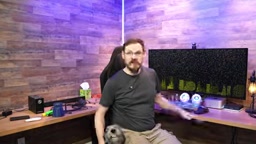
The new studio is divided into multiple functional zones: the main editing desk is equipped with an M1 Mac Studio and a Ryzen AI Halo for local AI tasks, mainly used for video editing, writing, and capture; the gaming and podcast area will house a 43-inch Gigabyte AORUS monitor and an M4 Mac Mini; the third desk serves as a pure workbench for assembly and fabrication. Jeff emphasizes that each zone is for specific tasks only, to keep the workbench from being overrun by clutter.
IKEA Carl B. countertop is a composite countertop from IKEA with a solid-wood veneer surface and a particleboard core, commonly used for kitchen countertops or DIY desk conversions. It typically comes in lengths of 186 cm or 246 cm, with a depth of about 63.5 cm and a thickness of 3.8 cm, and is popular among DIYers for its moderate price and near-solid-wood appearance. The advantage of a composite countertop is good stability and resistance to warping, but when cutting it shorter you need to edge-band it properly, or the core can absorb moisture and swell. Jeff re-edge-banded the countertops after shortening them and secured them to the wall with 1x3 lumber and corner brackets—this "floating plus support legs" approach distributes the load and prevents the middle from sagging, making it suitable for heavy equipment like a Mac Studio and monitors.
Storage and Efficiency: Saying Goodbye to "Surface Pile-Up Syndrome"
Jeff admits that his biggest past workflow problem was a lack of storage design. The new studio adds a 6-foot-tall, 2-foot-wide shelving unit, taking advantage of the 9-foot ceiling to provide ample storage space. Cameras, lenses, chargers, and other daily-use items go in easy-to-reach spots, while the remaining space is for active projects. His goal is to "make sure no surface ever becomes a junk collector again," with a fixed place for everything.

Although the new studio is about 155 square feet—roughly 30% smaller than the old 210-square-foot office—the actual usable space is larger. Because the garage is right next door, the 3D printers, laser cutter, and server rack are all within reach. Jeff no longer has to spend hours trekking between the old office and the garage looking for things. In the past, switching projects or troubleshooting often took three to four hours and could even ruin an entire day; now he expects to produce more content faster.
Resting heart rate refers to the number of heartbeats per minute while awake and at rest; for a normal adult it's typically 60–100 bpm. Long-term exercisers or manual laborers may be as low as around 50 bpm, which is physiological sinus bradycardia and generally needs no treatment. However, when a low resting heart rate is combined with fatigue, dehydration, or a cold, it can cause orthostatic hypotension, leading to brief insufficient blood flow to the brain and fainting. Jeff is 6 feet 4 inches tall (about 193 cm), so when standing, more blood pools in his lower limbs, further increasing the risk of fainting. Creators who stay up late for long stretches and eat irregularly can easily overlook these signals; regular checkups and adequate sleep are recommended.
An Unexpected Interlude: A Warning from a Blackout
At the end of the video, Jeff shared a health scare. At 2 a.m. last Wednesday, he got up to drink water because of a cold and suddenly fainted, hitting his head on a marble countertop, which caused a cut near his eye and a black eye. He stresses that this was not a heart issue (he's had heart problems before, but not this time), but rather the combined effect of fatigue, a cold, his height (6 feet 4 inches), and a low resting heart rate (about 55 bpm). He thanked the paramedics and Salem Hospital for their care and confirmed there was no concussion or vision damage.

The incident set the studio progress back a few days, but he has now recovered and is ready to finish the remaining work, including installing ceiling lights, running wiring, replacing the garage door power supply, and adding insulation.
Conclusion: From Chaos to Order
This studio update from Craft Computing is far more than a hardware showcase. It reflects a creator's deep reflection on workflow: storage, zoning, and circulation design often determine efficiency more than the equipment itself. Jeff's experience may inspire many content creators facing similar challenges.
One-line Summary
Craft Computing shows off its new studio, emphasizing how storage zoning and circulation design boost efficiency, and shares a health warning.
Paragraph Summary
Craft Computing's Jeff tours his newly renovated studio, detailing functional zones and workflow optimization—from remote-controlled track lights and nine-year-old IKEA countertops to custom storage shelving. Though the new studio is 30% smaller than the old office, it's next door to the garage equipment room, so actual usable space is larger and project-switching time is greatly reduced. Jeff stresses that storage design is key to ending surface pile-up, with each zone dedicated to specific tasks. At the end of the video, he shares an experience of fainting and getting injured from fatigue, reminding creators to mind their health. Overall, this update is not just a hardware upgrade but a deep reflection on efficiency and order.
Related articles

Build a Reasoning Model from Scratch: An 11-Hour Open-Source Course Breakdown
Sebastian Raschka releases a free 8-episode, ~11-hour video course teaching you to build a reasoning model from scratch with Python and PyTorch—from a small Qwen3 model through Verifier, Inference Time Scaling, GRPO, and distillation, with open-source code on GitHub.

An 11-Hour Reasoning Model Course in Practice: How Small Models Learn to Think
Starting from Sebastian Raschka's 11-hour reasoning model course and HN buzz, this analyzes small-model training, legal text version control, Anthropic data policy, and product reliability reviews.

Lightpanda: A Headless Browser Built for AI and Automation
Lightpanda is a headless browser built from scratch in Zig for AI and automation, with 37,852 GitHub stars. This analysis covers its technical approach, design choices, and use cases.