Jensen Huang Returns to Nvidia: The Power Game Behind an "Aggro Reset"

Jensen Huang's swift return two weeks after resigning reveals the deep power game of board authority, political intervention, and declining media influence.
The article examines Nvidia CEO Jensen Huang's reappointment by the board less than two weeks after resigning amid scandal. Analysis suggests the resignation was a calculated "aggro reset" to let the scandal fade before a quick return. Reports indicate President Trump personally called the board to push for the return, raising questions about political intervention in corporate governance. The board bypassed senior management entirely, with interim CEO Colette Kress not consulted, highlighting public ignorance of board power structures. The host also proposed a "motion" theory about personal influence transcending rules, citing former Activision Blizzard CEO Kotick. The incident drew criticism from Senator Warren and reflects the loosening grip of traditional media on narrative control.
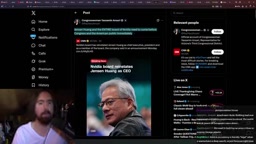
Nvidia's board of directors abruptly announced the reappointment of Jensen Huang as CEO, less than two weeks after he resigned amid scandal. This dramatic return not only sent the stock price soaring instantly but also sparked intense debate about corporate governance, media power, and political intervention. According to analysis by a YouTube tech commentary channel, Huang's resignation may have been a carefully orchestrated "aggro reset" from the very beginning—designed to let the scandal's heat fade naturally before making a dignified comeback.
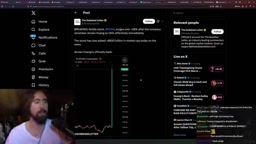
Resignation Was Fake, the Reset Was Real?
The host presented a compelling argument in the video: Huang's resignation was not forced but a proactive "aggro reset." The logic is simple—if he hadn't resigned, reports about his extramarital affair would have continued to fester, with each new story dealing another blow to the company's reputation. But once he left, the scandal lost its news value, because "he's no longer at the company—what's the point of talking about it anymore?"
The brilliance of this strategy lies in its precise control of the time window. Less than two weeks after the resignation announcement, the board convened a meeting and unanimously voted to restore his position. The host joked: "Imagine getting kicked out of the CEO role, and it just happens to coincide with the release of GTA6. By the time you finish the game and come back, the CEO chair is still waiting for you."
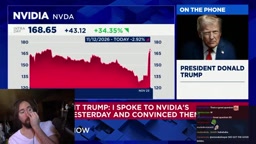
Even more intriguing is that the push for this return reportedly came from the White House. Reports indicate that U.S. President Trump personally called Nvidia's board to "persuade" them to reconsider their decision. In a CNBC interview, Trump stated bluntly: "I called the board, and let me put it this way—I persuaded them."
Aggro reset is a term originating from video games, particularly the "aggro" mechanic in multiplayer online battle games—referring to the threat value a monster or enemy unit generates toward a particular player. When a player accumulates too much "aggro," they adopt a "reset" strategy: temporarily disengaging from combat or causing the monster to drop aggro, bringing the threat value to zero, and then re-entering the fight. In the context of business PR, this term has been borrowed as a crisis management strategy: when negative news continues to fester and public attention keeps building, the person involved voluntarily resigns or temporarily withdraws from public view, depriving the media of a reason to keep tracking the story, and then seeks a comeback after public interest naturally subsides. The key to this strategy lies in precise control of the time window and the choice of comeback timing.
Who's Making Decisions? The Board Is the Real Center of Power
This incident exposed a fact the public widely overlooks: the CEO is essentially an employee, and the board of directors is what truly controls the company's fate. According to Bloomberg, the decision on Huang's return completely bypassed Nvidia's senior management—interim CEO Colette Kress wasn't even included in the discussion process.
The host emphasized in the video: "Those C-level executives and VPs at the company—the gap between them and the board is bigger than the gap between a VP and a janitor. The board is who makes the decisions, and the public doesn't even know who most companies' board members are."
Some analysts point out that these board members often come from the same network—"the same three hundred people" appear on every company's board. This also explains why Huang was able to return so quickly: when decision-making power is concentrated in a few hands, the speed of reversing a situation far exceeds what the public imagines.
Political Intervention and Market Reaction
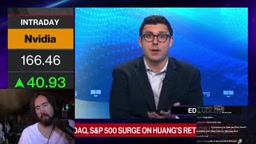
According to multiple reports, after the news of Huang's return was announced, Nvidia's stock surged, with market capitalization increasing by hundreds of billions of dollars in a single day. Some commentators described it as "Napoleon's return"—an exiled leader returning to the center of power in an even stronger position.
Trump explained his reasoning for intervening in the interview: "I watched this country lose five trillion dollars because of a bad election. I wasn't on the ballot, but I still watched it all happen. I felt I had to get involved." When asked about the boundaries of presidential intervention in publicly traded company governance, Trump responded: "I only do what's good for the country."
The incident also triggered political confrontation. Senator Elizabeth Warren publicly criticized the decision as "reckless," stating that Huang and Nvidia "still owe Congress an explanation," and called for passage of a bipartisan export control bill. The host commented: "When Elizabeth Warren starts complaining, you know the decision was right."
The Failure of Media Power and the "Motion" Theory
The host proposed an interesting observational framework: what this incident truly exposed is the decline of traditional media influence. "The media's power lies in creating and spreading narratives, thereby indirectly exercising power. But when a single phone call from Trump can render their narrative ineffective, that proves the media isn't as powerful as they think they are."
He called this kind of personal influence "motion"—an ability that transcends rules and conventional constraints. "If you have enough motion, you can do anything. You don't need to follow the law, you don't need to follow the rules, you don't need to listen to anyone." He cited former Activision Blizzard CEO Bobby Kotick as an example: despite being surrounded by controversy, Kotick still received a massive severance package when he left the company and remains active in business and political circles.
In his return statement, Huang said: "I am honored to return to Nvidia to lead one of the world's most influential technology companies... I assume this responsibility with the utmost humility and renewed commitment." The statement specifically thanked the board, interim CEO Kress, and employees and shareholders for their support.
The real significance of this comeback drama may not lie in the ups and downs of Huang's personal fate, but in what it reveals about the usually invisible operating mechanisms of modern corporate governance: the mysterious power of boards, the hidden interweaving of politics and business, and the loosening grip on media narrative control. For the average investor, the most practical question might be—when the next similar opportunity arises, do you have the guts to "buy the dip"?
One-line Summary
Jensen Huang's swift return two weeks after resigning reveals the deep power game of board authority, political intervention, and declining media influence.
Paragraph Summary
The article centers on Nvidia CEO Jensen Huang being reappointed by the board less than two weeks after resigning amid scandal. According to analysis by a YouTube tech commentary channel, the resignation may have been a carefully orchestrated "aggro reset"—voluntarily stepping away to strip the scandal of its news value, then making a swift return once the heat died down. Reports say U.S. President Trump personally called the board to push for the return, exposing the boundary issues of political power intervening in corporate governance. Meanwhile, the board made the decision entirely bypassing senior management, with interim CEO Colette Kress not consulted, highlighting the public's general ignorance of board power structures. The host also proposed a "motion" theory, arguing that personal influence can transcend rule constraints, citing former Activision Blizzard CEO Kotick as an example. The incident drew criticism from Senator Warren and also reflects the loosening grip of traditional media on narrative control.
Related articles

Why Voice AI Can't Understand Kenyans' Everyday Conversations
Swahili speech recognition hits 3.24% error on read text, but everyday Kenyan speech mixes English, Sheng slang, and accents—leaving mainstream voice AI struggling.

Data Centers Build Their Own Natural Gas Plants: AI Compute's Breakout Around a Decade-Long Grid Wait
Grid interconnection approvals can take a decade, so xAI and others are building off-grid natural gas plants to power AI clusters. This article analyzes the drivers, costs, and impact of behind-the-meter generation on AI infrastructure.

2035 Arrives Early: AI Coding Assistants Are Reshaping Developer Workflows
"2035 Came Early" sparks Hacker News debate: how AI coding assistants reshape developer workflows—from writing to reviewing code, speed vs. verification cost, and toolchain relayering.