Jobmate AI: A Full-Workflow Job Search Copilot for Auto-Applying and Resume Tailoring

Jobmate AI aims to use an AI agent to take over repetitive job search tasks, but its effectiveness remains to be proven.
This article introduces Jobmate AI, a job search AI tool on Product Hunt positioned as a human-friendly Copilot covering the entire job search process. It can auto-submit applications, fill out forms and open-ended questions, aggregate jobs from across the web and tailor resumes and cover letters by role, contact recruiters, and track application progress, with Chrome and Firefox support and a free starting tier. The article recognizes its approach of breaking the job search into automatable subtasks connected by an agent, while noting two limitations: automated applying may lead to spray-and-pray side effects and recruiter detection, and tailored content quality depends on profile completeness and AI understanding of job context. A sample of 81 upvotes and 9 comments is insufficient to validate effectiveness. The conclusion: such tools help cut administrative time, but job matching judgment and content review still require human effort.
The "last mile" of the job search process is being taken over by AI agents
Anyone who has submitted a resume knows the drill: switching back and forth between multiple job boards, repeatedly filling in the same personal information, tweaking your resume and cover letter for each role, and then trying to track down the recruiter's contact details. What really drains your energy often isn't the interview itself, but the long chain of mechanical tasks leading up to it.
On Product Hunt, Jobmate AI positions itself as a "human-friendly AI Copilot that covers the entire job search process," with a straightforward core proposition: take over the grunt work of job hunting so job seekers can focus their energy on landing interview opportunities. The product currently has 81 upvotes and 9 comments on Product Hunt, ranking 20th, and is categorized under Productivity, SaaS, and Career.
What an AI agent can do for you
Auto-applying and form auto-fill
According to the product description, Jobmate AI's AI agent can submit job applications on the user's behalf and automatically fill out various application forms based on the user's profile, including answering open-ended questions. This addresses the most practical barrier in job application automation—form fields and Q&A questions vary across different recruiting systems, and writing answers by hand is both time-consuming and prone to inconsistency.
Applicant Tracking System (ATS)
The "form fields across different recruiting systems" mentioned above mostly sit behind Applicant Tracking Systems (ATS). This is software companies use to post jobs, collect resumes, screen candidates, and manage the hiring process—common examples include Workday, Greenhouse, Lever, and Taleo. Every field a job seeker fills in on a web page ultimately enters the ATS database, where the system performs initial screening based on rules such as keyword matching and field alignment. ATS form structures vary widely, and the number and format of open-ended questions are inconsistent—this is precisely the main technical obstacle facing auto-fill tools. Understanding how ATS works helps clarify that whether automated applying can genuinely improve pass rates depends not only on the volume of applications but also on how well the content aligns with the system's screening logic.
Cross-platform job discovery and content tailoring
The product claims it can aggregate newly posted jobs from across the web and tailor resumes and cover letters for each position. Compared with tools that only handle resume formatting, this "adapt for each role" approach is closer to a real job search strategy: sending the same resume to every position is itself the least efficient approach.
Job aggregation and resume tailoring
Cross-platform job discovery relies on scraping and normalizing data from multiple job boards, company websites, and job listings, unifying job information in various formats into comparable structured data, and then matching and ranking it based on user profiles. Resume tailoring typically involves targeted rewriting and rearrangement of the existing resume based on keywords and requirements in the job description. It's worth noting that this kind of tailoring can easily be optimized into "keyword stuffing," which actually reduces readability; at the same time, if the user profile is incomplete, the quality of the tailored content will drop noticeably. Therefore, the evaluation criterion for tailoring effectiveness should be whether the content accurately reflects real experience, not just keyword coverage.
Reaching out to recruiters and tracking progress
Beyond the application stage, Jobmate AI also covers contacting the recruiters and hiring managers behind job postings, as well as tracking all applications and interview progress in one place. Bringing "finding contacts" and "tracking status" into the same tool means it attempts to cover the complete chain from job discovery to interview scheduling, rather than solving only isolated problems.
Product approach worth recognizing, along with real limitations
From a product design perspective, Jobmate AI's value lies in breaking the job search into several automatable subtasks and connecting them with a single agent. A free starting tier and support for Chrome and Firefox browsers also lower the barrier to trying it out.
But two points deserve sober consideration. First, while automated applying increases application volume, it may also bring the side effect of "spray-and-pray" applications; recruiters are increasingly sensitive to identifying bulk applications, and the tool itself cannot judge for the job seeker whether a position is truly a good match. Second, the quality of resume tailoring and open-ended question answers depends on the completeness of the user profile and the AI's understanding of the job context—results in actual use vary. The limited number of comments on Product Hunt is not yet sufficient to fully validate its effectiveness.
Spray-and-pray applications and recruiter detection
"Spray-and-pray" refers to job seekers submitting applications to a large number of positions at low cost, usually accompanied by insufficient resume targeting. As automation tools become widespread, many recruiters have begun identifying bulk applications through signals such as application time intervals, content similarity, and source concentration; some ATS platforms also flag accounts that submit large volumes of applications in a short period. This means the volume advantage brought by automation may be partially offset by recruiters' filtering mechanisms. For job seekers, a safer approach is to use automation for information gathering and draft generation, while keeping application decisions and final content review in their own hands.
Who should try it
If you're juggling multiple job applications at once and are tired of repeatedly filling out forms and manually rewriting cover letters, this kind of tool can significantly cut down administrative time. But if you're applying for highly specialized roles or positions that require strong personal narrative, auto-generated answers still need to be reviewed one by one—AI can handle drafts and repetitive work, but the judgment of "is this position worth applying to" still needs to come back to you.
The trend Jobmate AI represents is worth watching: job searching is shifting from "people finding tools" to "agents running the process for you." The competitive edge for these products will ultimately not hinge on whether they can auto-fill forms, but on the quality of tailored content and the ability to judge match.
One-line Summary
Jobmate AI attempts to use an AI agent to take over repetitive tasks in the job search process, but its effectiveness remains to be verified.
Paragraph Summary
This article introduces Jobmate AI, a job search AI tool on Product Hunt positioned as a human-friendly Copilot covering the entire job search process. The product can automatically submit job applications, fill out application forms and open-ended questions, aggregate jobs from across the web and tailor resumes and cover letters by role, and also supports contacting recruiters and tracking application progress; it is compatible with Chrome and Firefox and offers a free starting tier. The article affirms its approach of breaking the job search into automatable subtasks connected by an agent, while pointing out two limitations: automated applying may trigger spray-and-pray side effects and be detected by recruiters, and the quality of tailored content depends on the completeness of the user profile and the AI's understanding of job context. A sample of 81 upvotes and 9 comments on Product Hunt is also insufficient to validate its effectiveness. The conclusion is that such tools are suitable for cutting down administrative time, but job matching judgment and content review still need to be done manually.
Related articles
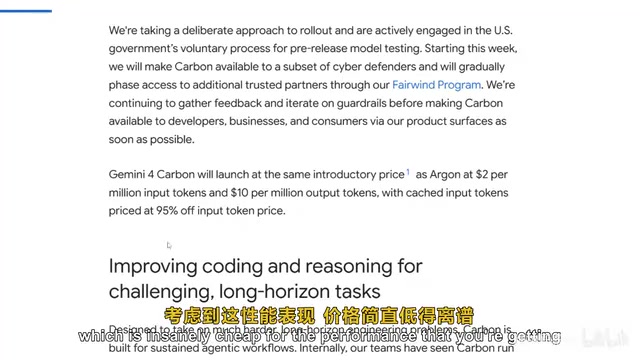
Gemini 4 Carbon Hands-On: The Strongest AI Model? Compared with Claude Opus 5.5
Google's Gemini 4 Carbon tops the Artificial Analysis leaderboard with 71% on CW Bench and leads Vending Bench. Hands-on comparison with Claude Opus 5.5: stunning front-end design but slightly behind in web development, with a clear price advantage.

Gemini 4 Carbon Tops Global Rankings as AI Productivity and Open-Source Ecosystems Surge
Google DeepMind's Gemini 4 Carbon tops global benchmarks, built for complex agents and system security. ByteDance launches Doubao Work integrated with Feishu, Anthropic's AI autonomously breaches 5 system-level attack chains, and ModelBest and Fudan open-source on-device multimodal and image generation models.

Overseas Creator Breaks Down N8n AI Agent Business Playbook: From Tooling to Monetization
An overseas creator breaks down the N8n AI agent business playbook: comparing Zapier, Make, and N8n, detailing four monetizable automation categories—lead capture, WhatsApp follow-up, booking, and content pipelines—plus agency pricing and a sales playbook.