Kodiak Signs First Commercial Agreement for Driverless Trucks on Public Highways

Kodiak signs its first commercial deal with DTL Transport, pivoting to a light-asset autonomous truck supplier model.
Kodiak Robotics has signed its first commercial agreement with DTL Transport to supply driverless trucks for public highways. This marks Kodiak's shift from a heavy-asset self-operated fleet model to a light-asset technology supplier role, similar to software licensing logic, with revenue from technology licensing rather than transportation gross margin. The public highway scope means driverless trucks enter a more open, more strictly regulated real operating environment. The light-asset model makes expansion depend on customer signings rather than proprietary capital, pushing the industry toward a Tier 1 supplier plus fleet operator structure.
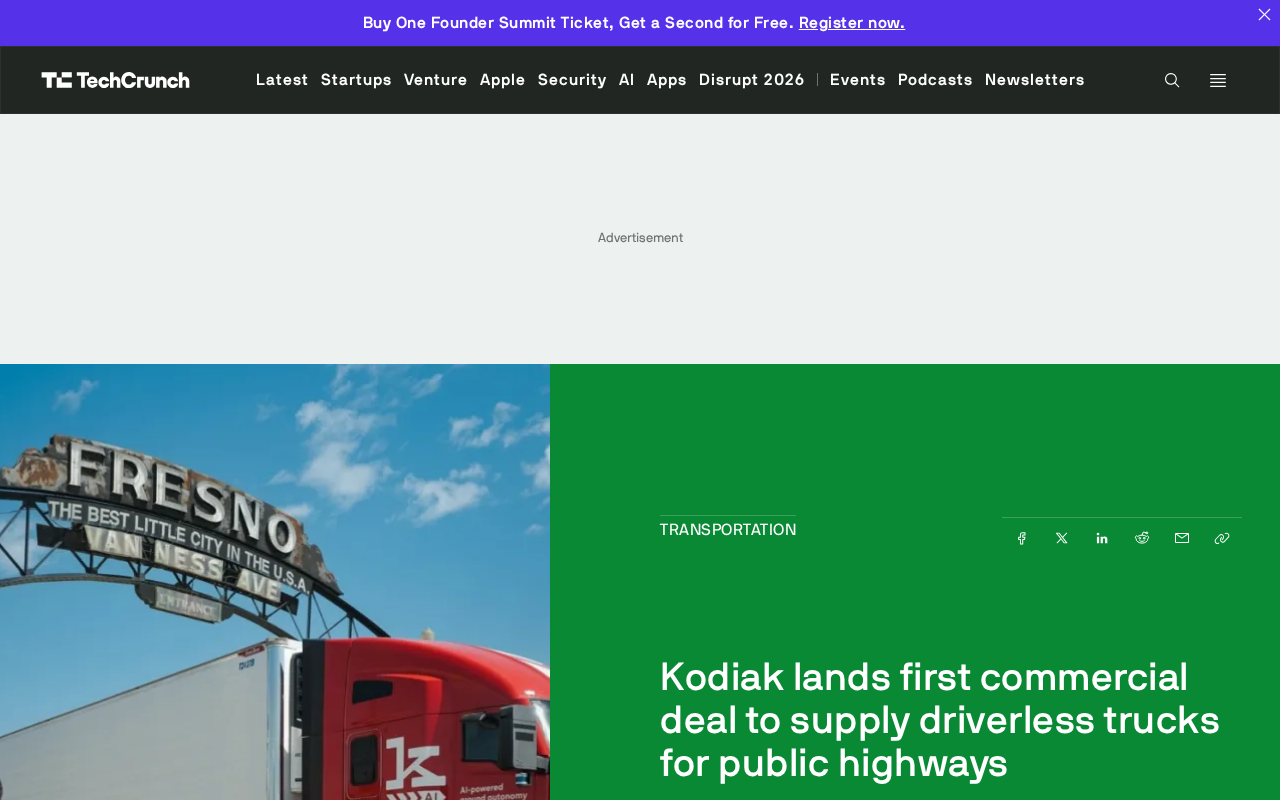
Autonomous freight company Kodiak Robotics has announced its first commercial agreement with transportation firm DTL Transport to supply driverless trucks for public highways. The significance of this deal goes well beyond a sales contract—it marks Kodiak's formal shift from a heavy-asset model of "owning and operating its own fleet" to a light-asset supplier role of "providing autonomous driving technology to customers."
From Operator to Supplier: A Key Pivot in Business Model
Previously, most players in the autonomous trucking space had to own vehicles, build fleets, and bear operational responsibility—a model that consumed large amounts of capital and whose expansion speed was constrained by fundraising cadence. Kodiak's partnership with DTL Transport returns vehicle ownership and operations to a professional transportation company, while Kodiak focuses on providing the autonomous driving system and related technical capabilities.
In the original article's words, this path makes Kodiak "a light-asset technology supplier rather than an owner and operator." For a technology company, this positioning is closer to the business logic of a software and solutions provider: revenue comes from technology licensing or services rather than per-mile transportation gross margin, marginal costs are lower at scale, and it is easier to replicate across more fleet customers.
Heavy-asset vs. light-asset models are two fundamentally different commercial paths in autonomous freight. The heavy-asset model means a company purchases trucks itself, builds a fleet, hires drivers (or safety operators), and bears operations and maintenance costs—typical of early self-operated test fleets at Waymo Via and TuSimple. Its advantage is full control over the technology deployment process, but capital expenditure is enormous and expansion speed is constrained by fundraising capacity. The light-asset model resembles software licensing or SaaS logic: the technology company provides only the autonomous driving system, algorithms, and remote support, while vehicle assets and daily operations are handled by the transportation company. This allows the technology company to concentrate resources on R&D, with low marginal replication costs and revenue growing linearly with customer fleet size. Kodiak's pivot is precisely a migration from the former to the latter, and its challenge lies in building standardized delivery, integration, and after-sales systems to support rapid multi-customer deployment.
Why "Public Highways" Is a Keyword
Another noteworthy qualifier in the agreement is "public highways." Driverless trucks have long operated in closed sites, fixed routes, or under testing permits; truly entering the open highway network means facing more complex traffic participants, longer operational mileage, and stricter regulatory scrutiny.
By anchoring its first commercial agreement in this scenario, Kodiak indicates that its technical solution has advanced to the stage where customers can use it for actual transportation operations. For transportation companies, choosing to deploy driverless trucks on public highways also implies a commercial-level judgment about system reliability and safety redundancy.
Public highways refer to the regular road network open to social vehicles, as opposed to restricted areas such as closed test tracks, ports, or mining sites. In the commercialization of autonomous trucks, public highways mean the system must handle unpredictable traffic flows, construction zones, severe weather, and mixed human-driven vehicles, while also meeting federal and state vehicle safety standards, operating permits, and insurance requirements. Previously, most autonomous trucking companies obtained testing permits only in specific states and often carried safety operators. Kodiak anchoring its first commercial agreement in public highways indicates its system has passed sufficient validation to allow customers to use it in real line-haul transportation—more commercially valuable than driverless operation within campuses, but also subject to stricter regulation and liability definition.
What the Light-Asset Model Means for the Industry
Competition in autonomous freight is shifting from "who masters the technology first" to "who can sell the technology." Kodiak's pivot offers a reference path:
- For technology companies: no need to carry fleet assets; expansion speed depends on customer signings rather than proprietary capital;
- For transportation companies: no need to develop autonomous driving in-house to introduce driverless trucks on capacity-constrained routes;
- For the industry: division of labor moves closer to the "Tier 1 supplier + fleet operator" structure of the traditional automotive industry.
Of course, whether this model holds depends on whether the technology supplier can consistently guarantee system performance on open roads, as well as on collaboration mechanisms between both parties regarding liability allocation, maintenance, and data ownership.
Tier 1 suppliers originally refer to first-tier suppliers in the automotive industry that provide systems or modules directly to OEMs, such as Bosch and Continental. In the autonomous freight context, this structure evolves into: a technology company provides the autonomous driving hardware and software suite (similar to a Tier 1), while the transportation company as fleet operator handles vehicle assets and daily scheduling. This division of labor frees the technology company from vehicle depreciation, insurance, and driver management costs, while the transportation company gains automated capacity without developing algorithms in-house. But the model requires clear liability allocation—accident liability, system maintenance, and data ownership must be specified in contracts; meanwhile, the technology supplier must provide 24/7 remote monitoring and OTA upgrade capabilities, otherwise the fleet operator cannot independently handle system anomalies. If Kodiak wants to replicate this model, it must first establish scalable customer integration and support processes.
After the First Customer, the Challenges Begin
As the first commercial customer, DTL Transport's operational feedback will directly affect Kodiak's subsequent customer expansion. The core test of the light-asset supplier model is not signing the first deal, but whether the first deployment can be turned into reusable delivery capability: fleet onboarding speed, system stability, and operational support responsiveness will all become the basis for evaluating the next batch of customers.
Kodiak has crossed the threshold of "having a commercial customer." The next question is whether this light-asset path can be accepted by more transportation companies, and whether the commercialization pace of driverless trucks on public highways will accelerate as a result.
One-line Summary
Kodiak reaches its first commercial agreement with DTL Transport, pivoting to a light-asset autonomous truck supplier model.
Paragraph Summary
Kodiak Robotics has signed its first commercial agreement with transportation firm DTL Transport to supply driverless trucks for public highways. This marks Kodiak's shift from a heavy-asset self-operated fleet model to a light-asset technology supplier role, akin to software licensing logic, with revenue from technology licensing rather than transportation gross margin. The agreement is limited to public highway scenarios, meaning driverless trucks are entering a more open, more strictly regulated real operating environment, and the technical solution must have high reliability and safety redundancy. The light-asset model makes expansion speed depend on customer signings rather than proprietary capital, driving the industry division of labor toward a "Tier 1 supplier + fleet operator" structure. The first customer's operational feedback will determine Kodiak's subsequent customer expansion and commercialization pace.
Related articles
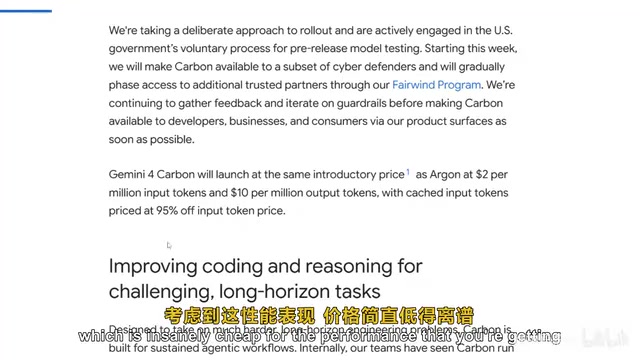
Gemini 4 Carbon Hands-On: The Strongest AI Model? Compared with Claude Opus 5.5
Google's Gemini 4 Carbon tops the Artificial Analysis leaderboard with 71% on CW Bench and leads Vending Bench. Hands-on comparison with Claude Opus 5.5: stunning front-end design but slightly behind in web development, with a clear price advantage.

Gemini 4 Carbon Tops Global Rankings as AI Productivity and Open-Source Ecosystems Surge
Google DeepMind's Gemini 4 Carbon tops global benchmarks, built for complex agents and system security. ByteDance launches Doubao Work integrated with Feishu, Anthropic's AI autonomously breaches 5 system-level attack chains, and ModelBest and Fudan open-source on-device multimodal and image generation models.

Overseas Creator Breaks Down N8n AI Agent Business Playbook: From Tooling to Monetization
An overseas creator breaks down the N8n AI agent business playbook: comparing Zapier, Make, and N8n, detailing four monetizable automation categories—lead capture, WhatsApp follow-up, booking, and content pipelines—plus agency pricing and a sales playbook.