Kyla Scanlon's New Show 'Best of Luck': How We Rethink Work When Career Planning Fails
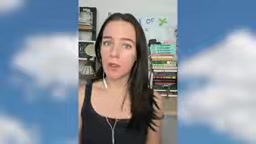
Kyla Scanlon's new show explores how to plan a career as economic rules shift.
The article introduces content creator Kyla Scanlon's new Vox show Best of Luck. Its core question: when no one can predict which jobs will exist in five years, how should you plan a career? Scanlon argues the traditional advice of picking a stable field, getting the right education, and putting in your years rests on an economy that no longer exists, with structural change happening beneath a stable US surface. She notes the past fifteen years favored those with both technical and social skills, that technical skill alone falls far short of the top, and calls grad school a trap. Guests span economists, farmers, and comedians, emphasizing diverse economic experience and linking data analysis to questions of personal value.
A Career Formula That No Longer Works
"Pick a stable field, get the right education, put in your years of service" — this endlessly repeated career advice, in Kyla Scanlon's view, rests on an economic system that no longer exists.
This content creator, whose mission is "making economics make sense," is launching a new show called Best of Luck on Vox. The show's central question is blunt and sharp: when no one can tell you which jobs will still exist in five years, how are you supposed to plan a career?
Scanlon's observation is that the direction of the economic ladder has changed. The stability and predictability the traditional path relied on is breaking down, yet most career advice is still drawn from an outdated map. This isn't a matter of individual bad decisions — the rules themselves keep shifting.
Structural Change Beneath the Economic Surface
Scanlon makes clear she isn't in "recession watch" mode, but she stresses that a great deal is changing "under the hood" of the US economy. That framing is worth noting: stable macro data doesn't equal stable micro experience, and the gap between the two is exactly the territory she's trying to probe in the show.
The show's conversation partners span economists, farmers, and comedians. This guest lineup is itself a methodology — the economy isn't just an abstract system of models and indicators; it also lives in a farm's harvest expectations, a comedian's cash flow, and ordinary people's anxiety about the future.
Scanlon acknowledges the fear this uncertainty brings, but her stance isn't pessimistic: "Yes, it's scary. Yes, it's changing. But there are ways to make it work for us."
The Ceiling on Technical Skill
One judgment, pulled out on its own in the trailer, may be the most widely shared idea from the whole show: during the past fifteen years of the tech boom, the people who did best in the economy were those with both excellent technical skills and excellent social skills.
More crucial still is the follow-up: if you only have excellent technical skills, you're actually still far from the top.
This poses a direct challenge to the many people now flocking to AI and technical learning. A single-point breakthrough in a skill stack — whether programming, data analysis, or prompt engineering — isn't enough to form a career moat. Scanlon's observation points to a simpler conclusion: technical skill is the ticket in, while cross-domain communication, collaboration, and the ability to understand others determine how far you can go.
"Prompt engineering" refers to the skill of designing and optimizing the instructions fed into large language models to reliably get high-quality outputs. It became a hot skill label after 2022 with the spread of generative AI and was even briefly listed as an emerging profession. However, prompt engineering is highly dependent on specific model versions and task contexts, with limited generality and transferability, and as models' own comprehension improves, many early tricks are being internalized. So treating prompt engineering as a standalone career moat is risky; a more reasonable framing is to treat it as a tool that amplifies existing domain expertise rather than a shortcut that replaces domain knowledge.
Grad School Is a "Trap"
Scanlon offers an unambiguous judgment in the trailer: "Graduate school is a trap, and it's a disaster." The statement isn't argued out, but it aligns with the show's overall awareness of the problem — when the basis for calculating the return on education changes, treating deferred entry into the market as a default strategy may be an expensive and inefficient way to cope.
This view is especially worth discussing today. AI tools are compressing entry-level demand for some knowledge-based roles, and the relationship between the value of a credential signal and the value of concrete skills is being repriced. Scanlon's assertion may be too absolute, but the question it raises can't be avoided: what are you going to grad school to get, and will that thing still hold up in a few years?
The Leap from Data to Self-Worth
At the end of the trailer comes a listener's perspective: reading Scanlon's newsletter feels like reading deep economic data blended with philosophy and journalism, "you feel like you're getting smarter," and the ending often delivers an abrupt question, like "but are you living out your own self-worth?"

This structure neatly sums up Best of Luck's positioning. It isn't offering career-planning templates; it's building connections between economic analysis and personal circumstance. When external rules keep shifting, decisions about work inevitably circle back to a harder-to-quantify question: what do you want, and what are you willing to bear for it?
The show premieres on October 27, with weekly episodes on YouTube and major podcast platforms. For anyone rethinking their career path, it's a conversation worth following.
"Newsletter" refers to subscription content that creators publish regularly through email lists, usually bypassing platform algorithms to reach readers directly. Platforms like Substack let economics and tech writers build independent audiences and monetize directly, and Scanlon's newsletter is a representative example of this model. The newsletter format often blends analysis, commentary, and personal narrative, forming a closer relationship of trust between reader and author. Understanding this media form helps grasp why Best of Luck places economic data and questions of personal value side by side: it continues the "data plus philosophy" tradition of expression from the newsletter.
Background
"Credential signal" comes from signaling theory in the economics of education: employers can't directly observe a job seeker's ability, so they use educational credentials as a proxy. When university degrees become widespread and the supply of graduate degrees increases, the signal depreciates, and employers turn to demanding higher credentials or more specific proof of skills. AI tools compressing entry-level knowledge jobs further weakens the assumption that "a degree is the ticket in." Discussing whether grad school is worth it is essentially comparing three types of return: skill gains, signal value, and network — plus the opportunity cost of two to three years.
Related articles

Vibe Coding Full-Stack in Practice: AI Programming from Beginner to Enterprise Deployment
From Cursor to Claude Code, this Bilibili AI programming course uses four progressive projects to cover full-stack development, open-source secondary development, and team collaboration. The article analyzes the shock to frontend roles, the efficiency shift from 50 people to 5, and the methodology required for enterprise-grade projects.

David Blaine's Global Quest for Real Magic: From South Africa to Japan and India
David Blaine travels to South Africa, Japan, and India in his Do Not Attempt special, documenting Spinning drivers, black mamba rescuers, iaijutsu masters, and ascetics—exploring the boundary between magic and real human极限 challenges.

Is a Touchscreen MacBook Coming? Vergecast Reveals Apple Executive's Response
Vergecast podcast reveals a conversation between a reporter and Apple executive John Ternus about a touchscreen MacBook and Apple Pencil support. Ternus says iPad is the best device for a stylus, while the reporter bets MacBook will eventually support Apple Pencil.