LangChain 1.3 in Practice: From Beginner to Agent Development, Building Resume-Worthy Projects
A Bilibili course based on LangChain 1.3 systematically explains the Agent development path from beginner to multi-agent practice.
The article introduces an "AI Agent Super Practical Course" based on LangChain 1.3. The course advocates learning the underlying framework rather than chasing endless AI tools, because the LangChain ecosystem is active, quickly integrates new standards such as MCP and Skill, and once mastered allows you to understand other frameworks by analogy. The course design emphasizes system, practice, and ideas, unifying the underlying foundation of LangChain, LangGraph, and Deep Agents, and helps learners accumulate resume projects through eight industry SOP workflows, multi-agent projects, and AI mini-program demos. The article also mentions the limitations of prompt engineering, token consumption planning, and the Time Travel tool, and explains that the course is suitable for Java developers, algorithm engineers, AI product job seekers, and others.
In the field of AI application development, LangChain has long been the core framework for building intelligent agents. With the release of version 1.3, it brings a more unified module design and more powerful Agent-building capabilities. Recently, a tutorial series on Bilibili called "AI Agent Super Practical Course" has attracted attention. The instructor, Loulan, based on LangChain 1.3, systematically explains the entire process from beginner to Agent practical development. This course not only covers the core concepts of LangChain and LangGraph, but also helps learners accumulate resume-worthy project experience through multiple industry cases.
Why Choose LangChain?
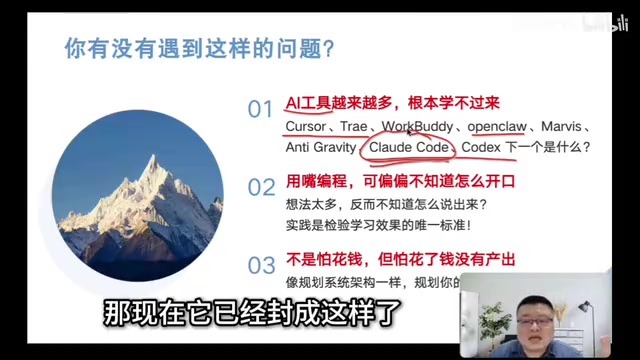
Faced with an endless stream of AI tools, many developers feel exhausted. From the early Cursor and Tray to later OpenCloud and CodeX, tools update extremely fast. But the course points out that in the future there will only be more and more tools. If you just learn by following tools, it's hard to find the problem you really want to solve. As a low-level development framework, LangChain lets you understand the principles behind the tools and even customize your own solutions based on its features.
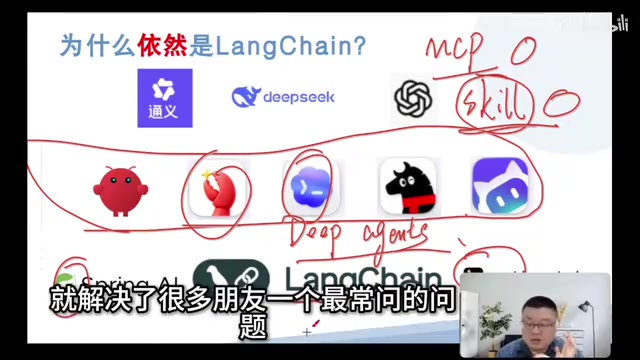
LangChain is one of the earliest Agent development frameworks, with an active ecosystem and a wealth of accumulated issues and experience. It quickly integrates new standards such as MCP and Skill—for example, the Deep Agents module directly supports Skill, usable just by downloading the API. In addition, LangChain is at the center of the storm; once you learn it well, other frameworks like LlamaIndex and Spring AI can be understood by analogy. The course emphasizes that LangChain is based on Python and TypeScript, but language is not a barrier—Java developers can migrate the ideas through LangChain4j and Spring AI Graph.
MCP (Model Context Protocol) is an open protocol proposed by Anthropic, aimed at standardizing the connection between large models and external tools and data sources. It defines a universal specification similar to a USB interface, allowing models to discover and call resources such as file systems, databases, and APIs in a unified format, without having to write adapter code for each tool separately. LangChain's quick integration of MCP means developers can reuse existing MCP Servers in the ecosystem, significantly reducing the cost of tool integration.
Skill is a mechanism for encapsulating specific capabilities (such as reading and writing files, executing commands, or calling a service) into reusable modules, commonly found in Agent frameworks. The Deep Agents module directly supports Skill, usable just by downloading the API, allowing intelligent agents to load capabilities on demand rather than hardcoding all functions into prompts or tool lists.
Course Design: System-Oriented, Practice-Oriented, Idea-Oriented
The design principle of this course is "focus on system rather than features, on practice rather than theory, on ideas rather than code." The instructor unifies LangChain and LangGraph, extracting the underlying foundation of Agents—encapsulating the basic capabilities for interacting with large models. In this way, the construction approaches of the upper layers—LangChain, LangGraph, and Deep Agents—become interconnected, and there is no need to learn them separately.
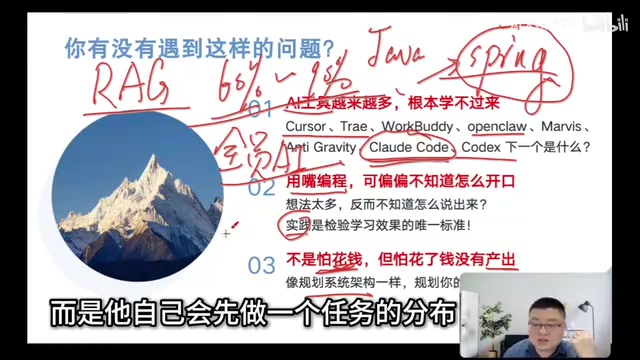
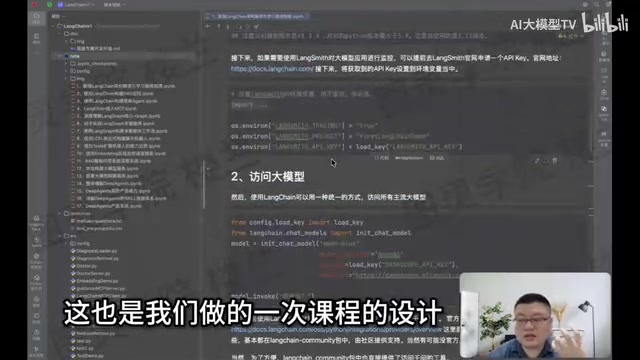
The course includes a large number of practical cases, such as building a multi-agent project by hand-typing code from scratch—only flowcharts are given at the beginning, and the code is typed line by line. There are also complete RAG-based applications, Deep Agents practice, and more. These projects cover industries such as e-commerce customer service, finance and taxation, and HR, and can be used directly as project experience on a resume and demonstrated in interviews.
Core Module Analysis: LangChain, LangGraph, and Deep Agents
LangChain provides the basic components for building Agents, while LangGraph is used to orchestrate complex workflows. The course extracts the parts where the two are fundamentally connected, calling it the "Agent underlying foundation," which mainly includes encapsulation of interactions with large models, tool calling, and memory management. Once you master the foundation, LangGraph's graph orchestration and Deep Agents' autonomous planning become easier to understand.
Deep Agents is an autonomous agent module that leaves task planning to the large model itself. Unlike LangChain and LangGraph, which require predefined processes, Deep Agents lets the model autonomously decompose tasks and execute them. The course will guide you through building a Deep Agents practice project to understand its design ideas.
LangGraph is a graph orchestration framework launched by the LangChain team, using nodes (Node) and edges (Edge) to describe the execution flow of an intelligent agent. Nodes represent a step (such as calling a model or executing a tool), and edges define the transition conditions between steps, supporting loops, branches, and human intervention. Compared with linear chains, LangGraph is better suited for building stateful, multi-step complex Agent workflows and can persist state to support resuming from checkpoints.
Deep Agents is built on top of LangGraph and leaves task planning to the large model to complete autonomously. It has built-in capabilities such as planning, sub-agent delegation, and file system operations. The model can decompose tasks on its own, decide which tools to call, and execute iteratively, making it suitable for open-ended, long-cycle task scenarios. Understanding Deep Agents helps distinguish between the two Agent design paradigms of "predefined processes" and "autonomous planning."
Practical Projects: From Industry SOPs to Multi-Agent Systems
The course breaks down eight real industry SOP workflows, including e-commerce operations, customer service, financial reconciliation, recruitment HR, teaching and research, self-media, manufacturing operations and maintenance, and financial research reports. Learners will learn to orchestrate agent business processes, letting AI run through a complete business loop. At the same time, it implements multiple industry AI workbench solutions, such as finished cases for e-commerce customer service, finance and taxation, and HR, which can be used directly as project experience.
It also comes with eight AI mini-program practical demos that can be demonstrated in interviews. The tech stack covers RAG, MCP protocol integration, Skill encapsulation and development, workflow orchestration, industry workbench construction, as well as hands-on practice with APIs, Git, and databases. The course also includes a section on building large model services locally to meet enterprise private deployment needs and avoid leaking sensitive information.
Pitfall Guide: Prompts, Tokens, and Time Travel
The course points out common misconceptions: prompt engineering is not a panacea. Many people think that writing a complete prompt will yield good results, but large model interaction is based on natural language, and the effect needs to be verified through practice. The instructor uses an analogy: when communicating with people, even if you explain your needs clearly, the other person may not necessarily understand—the same goes for large models. Only by rapidly building demos to verify can you find effective prompts.
Token consumption is also a pain point. Major companies such as Microsoft, Amazon, and Google are all limiting token usage, and individual users need to plan even more. The course introduces the "Time Travel" tool in LangChain, which can save the task execution process and rerun from the error step when something goes wrong, avoiding repeated consumption. This reflects the importance of developer thinking—planning tokens with architecture and spending money where it matters most.
For domestic users, the course mentions the limitations of tools such as Claude Code and emphasizes that learning the underlying framework can free you from dependence on specific products. Customizing features based on LangChain yourself to solve problems around you is the more sustainable path.
Token is the basic unit for large models to process text. In English, it is roughly equal to a word or part of a word; in Chinese, one character or word usually corresponds to one or more tokens. The model's context window, billing, and response speed are all measured in tokens, so long conversations and multiple rounds of tool calls will quickly accumulate consumption.
Time Travel is a state management capability provided by LangGraph: the framework saves a checkpoint after each node executes, and developers can view historical states and re-execute from any checkpoint without rerunning the entire process from the beginning. In Agent debugging and token control, this means that when an error occurs, you only need to rerun the part after the error step, avoiding the waste caused by repeatedly calling the model.
Target Audience and Learning Path
The course is suitable for Java developers, AI application developers, algorithm engineers, and AI product job seekers. All content is engineering-oriented practical material, specifically addressing interviewers' follow-up questions about project details and solution selection. Learners will personally build runnable project demos and establish a competitive AI project portfolio.
For those with weak Python fundamentals or no application development experience, the course starts from scratch with hand-typed code, and following along with a few projects will naturally build technical skills. For those who cannot afford expensive GPUs, the course provides local deployment solutions and cloud service resources. The instructor also offers customized services, designing courses for individual learning issues.
The course concludes by emphasizing that AI is the future, but you must become the driver. In a vague future, let us make the goals clearer and clearer together.
One-line Summary
A Bilibili course based on LangChain 1.3 systematically explains the Agent development path from beginner to multi-agent practice.
Paragraph Summary
The article introduces an "AI Agent Super Practical Course" based on LangChain 1.3. The course advocates learning the underlying framework rather than chasing endless AI tools, because the LangChain ecosystem is active, quickly integrates new standards such as MCP and Skill, and once mastered allows you to understand other frameworks by analogy. The course design emphasizes system, practice, and ideas, unifying the underlying foundation of LangChain, LangGraph, and Deep Agents, and helps learners accumulate resume projects through eight industry SOP workflows, multi-agent projects, and AI mini-program demos. The article also mentions the limitations of prompt engineering, token consumption planning, and the Time Travel tool, and explains that the course is suitable for Java developers, algorithm engineers, AI product job seekers, and others.
Related articles
DeepSeek SuperAgent Architecture Explained: A New Multi-Task Concurrent Agent Paradigm
DeepSeek Harness proposes SuperAgent architecture: a Router+Worker two-layer team model solving context confusion, loop blocking, and local sleep in multi-task Agents.
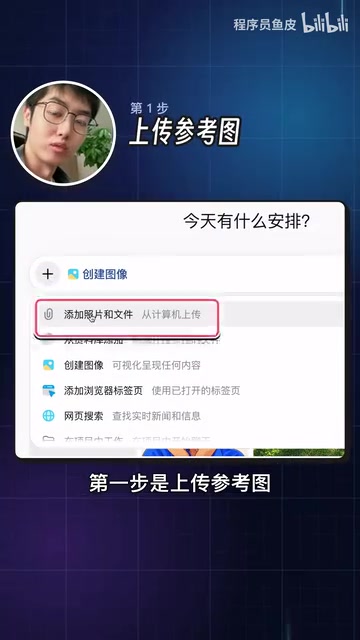
AI Now Generates GIFs Directly: The Era of Unlimited Custom Stickers Has Arrived
AI can now generate GIFs directly. Learn how to use GPT's Images 2.6 to create sticker GIFs with reference images and story prompts, plus sprite sheet frame-level editing, real-person performances, and chat log generation.

Burned Through 1.3 Billion Tokens and Tens of Thousands of Yuan to Build 500 Websites with AI
Bilibili creator Yu Pi built Vibefather, an AI website template library with 270+ templates and 500+ live sites, consuming over 1.3 billion tokens. Each template includes full prompts and design docs, open-sourced and integrable via Claude Code, Cursor, and more.