LangChain + LangGraph + MCP in Practice: Building Enterprise-Grade AI Agents from Scratch
The key to AI Agent development isn't chasing tools but mastering engineering thinking for building them.
The article argues that while low-code platforms and mature frameworks have lowered the barrier to AI Agent development, engineering thinking is what truly determines a developer's level. Using the LangChain ecosystem, it explains three building approaches—chain-based (LangChain), graph-based (LangGraph), and autonomous planning (Deep Agents)—and highlights Time Travel and human oversight as key to precise token cost control, along with the course's design principles and target audience.
The barrier to AI Agent development is being redefined. In the past, building a deployable agent required programming proficiency, framework familiarity, and a deep understanding of LLM interaction details; today, low-code platforms and mature frameworks allow developers with zero background to quickly build publishable applications. But the richer the tooling, the easier it is to fall into the anxiety of "never finishing learning." What truly determines whether you can master AI isn't how many APIs you can call, but the depth of your understanding of Agent engineering thinking.
Why AI engineering thinking matters more than tools
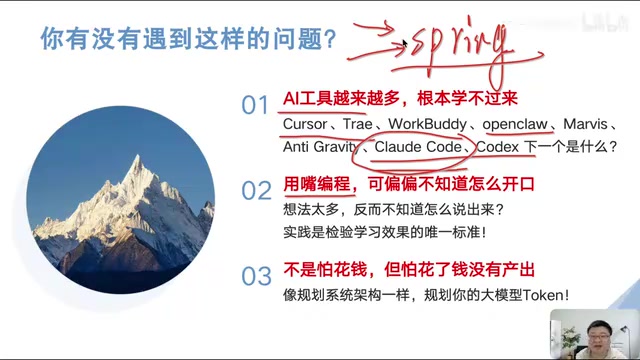
Large models themselves don't create value—value comes from how you use them to solve specific problems. Many developers get stuck in a loop: they learn every new tool they see, from Cursor to Claude Code, from Skill to MCP, chasing every hotspot, only to find their workflow is still fragile—switch a tool and they're lost. The core issue is that you've been learning "products" without mastering "the thinking behind building products."
Take requirement description as an example. Asking an LLM to write a simple essay is easy, but asking it to replicate a complex framework from scratch (like Spring), or to clearly describe the business logic of an e-commerce system, is far harder. Natural language descriptions are inherently ambiguous, and the internal reasoning process of large models is a black box to everyone. You can't guarantee that writing good prompts will give you correct results. The final outcome can only be verified through practice, but practice comes with cost issues—validating ideas directly with tools like Claude Code can incur token consumption and subscription fees that individual developers may struggle to afford.
More realistically, even big tech companies are controlling AI usage costs. Microsoft, Google, Amazon, and others once promoted company-wide AI productivity, but recently they've started limiting token consumption because unlimited AI calls produce output that can't cover costs. Ordinary developers need a low-cost, verifiable engineering approach even more.
The LangChain ecosystem: three approaches to building Agents
LangChain is worth diving into because it's one of the earliest Agent-building frameworks, with a mature and flexible ecosystem. More importantly, it fully preserves three different Agent-building approaches:
- LangChain modules: Built on the Chain approach, suitable for linear flows.
- LangGraph modules: Built on the Graph approach, supporting complex multi-agent collaboration and workflow branching—currently the most widely used approach in enterprise applications.
- Deep Agents: Emphasizes autonomous planning, where the Agent decides its own steps, suitable for scenarios requiring dynamic decision-making.
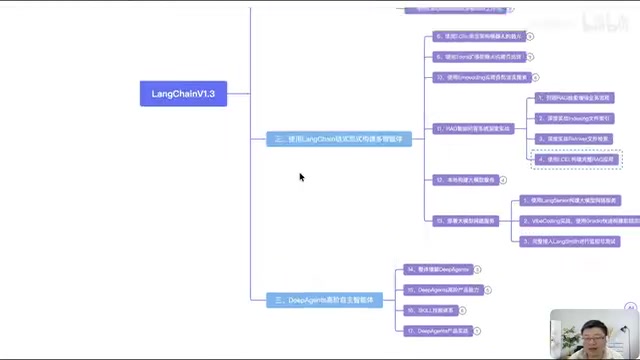
These three approaches coexist in the LangChain ecosystem, letting you access the full spectrum of low-level building logic. Once you master LangGraph's graph-structure thinking, picking up other frameworks like Spring AI or LlamaIndex becomes very fast. This is what makes old frameworks classic—they've distilled the most essential engineering patterns.
Core differences between LangGraph and LangChain
LangChain's Chain is essentially a predefined directed linear path: the output of the previous component feeds directly into the next, with weak exception handling and branching capabilities. LangGraph models the Agent as a state graph: nodes are computation steps (calling models, executing tools, conditional checks), edges describe how state flows between nodes, and it supports cycles (loops) and conditional branching.
The key mechanism is shared state: each node reads and modifies the same state object, and the graph engine decides which edge to take next based on the current state. This makes loop logic like "plan—execute—check results—retry if unsatisfied" explicitly expressible rather than hard-coded in external code. Production environments also use a Checkpointer to persist the state of each step—this is precisely the technical foundation of the Time Travel backtracking capability.
What is MCP (Model Context Protocol)
MCP is an open protocol proposed by Anthropic and gradually adopted by mainstream tools, standardizing "how LLM applications connect to external tools and data sources." Before MCP, every framework and platform had its own way of integrating tools, and tool providers had to adapt repeatedly for different clients.
MCP splits roles into MCP Server (exposing tools, resources, prompt templates) and MCP Client (implemented by the Agent host program), which communicate through a unified message format, with a transport layer that can use local stdio or remote HTTP/SSE. This way, the same MCP Server can be reused by Claude Desktop, IDE plugins, or custom Agents. For Agent developers, MCP's significance lies in plug-and-play tool ecosystems, turning "integration capability" from an engineering detail into a configuration item.
Course design: emphasis on system, practice, and thinking
Through iterations, this hands-on course has settled on three principles:
First, emphasize system over features. LangChain and LangGraph are no longer taught separately but as a unified system. We first cover Agent fundamentals (LLM interaction, tool mechanisms, MCP integration), then expand by different building approaches: LangGraph first (most used in enterprises), LangChain next, Deep Agents last. This way you learn not isolated feature points but a complete building methodology.
Second, emphasize practice over theory. The first lesson goes straight to code, letting you first experience what LangChain and LangGraph feel like to use, then circle back to dissect the principles. Later there's plenty of hands-on coding, including building a multi-agent project from scratch. Learning by playing is more effective than listening to hours of theory.
Third, emphasize thinking over code. Code can be generated by large models, but how to combine tools, design systems, and describe requirements—these ideas cannot be replaced. The course dedicates chapters to explaining the essence of Graph, the building logic of Chain, and the principles of autonomous planning, so you truly understand how Agents are "assembled."
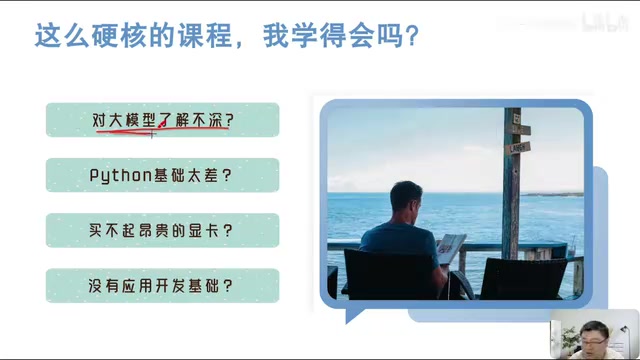
For students with weak programming foundations, the course is designed accordingly: Python has a low barrier to entry—typing along twice removes the unfamiliarity; LLM knowledge follows the framework, which has already filtered out what's essential for practice; localization deployment and LangSmith monitoring integration are covered early on, so you build the habit of engineering practice from the start.
LangSmith's role in engineering
LangSmith is LangChain's official observability and debugging platform, mainly solving the "black-box hard-to-troubleshoot" problem of Agents. It records the complete trace of every run: the input/output of each step, the models and parameters called, tool execution results, latency, and token consumption, displayed in a tree structure for easy identification of which link went wrong.
In addition, LangSmith provides datasets and evaluation capabilities, allowing real run samples to be accumulated into test sets for regression comparison of prompt or model changes; it also supports prompt version management and human annotation feedback. For individual developers, the value of early monitoring integration lies in building the habit of "observable, measurable, iterable"—this is precisely the watershed between a Demo and a deployable product.
Precise token control: Time Travel and human oversight
Complex Agents typically plan first and then execute, calling tools step by step. If an intermediate step fails (e.g., retrieval failure, wrong keyword), someone without engineering thinking can only rerun the entire process, wasting all previously consumed tokens. LangChain's Time Travel feature allows you to restore from historical checkpoints, skip successful steps, and rerun only the failed part.
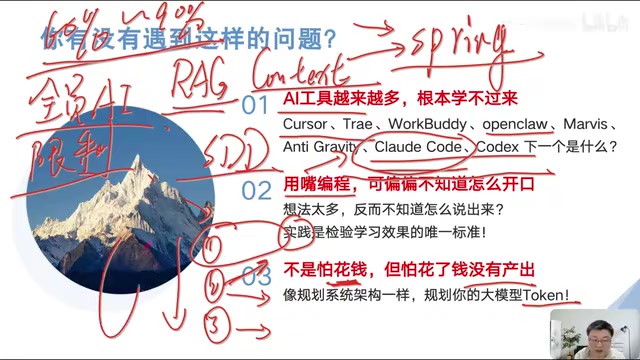
Combined with human oversight mechanisms, simple tasks can skip model calls, and sufficiently good intermediate results can be terminated early. This fine-grained process control directly determines whether your token spending produces effective output. Only by mastering these ideas are you driving the tools rather than being led by them.
Common forms of Human-in-the-loop
Human oversight in engineering is typically divided into three types of intervention points: Approve, i.e., pausing before executing high-risk tools (writing to a database, sending emails, making payments) and waiting for human confirmation; Edit, i.e., allowing humans to modify state or intermediate results before continuing; Takeover, i.e., humans directly providing the next action or final answer, skipping model calls.
In graph-based Agent frameworks, these intervention points are implemented by inserting interrupts before and after specified nodes. When execution reaches that point, the graph suspends and persists a checkpoint, and after human processing is complete, it resumes from that checkpoint. This ensures control over key decisions without rerunning the entire process from scratch, naturally complementing Time Travel's backtracking mechanism—a standard design for deploying highly reliable Agents.
Who this course is for
Students can use it to add hardcore project experience; professionals can use it to develop side businesses or boost efficiency; those transitioning into AI development can use it to match the real requirements of entry-level AI positions in enterprises. The course covers the full process from agent building and workflow design to project publishing, with the goal of helping you produce a finished product ready to publish directly to app stores.
AI is the future, but you must be the driver. Tools will keep changing, but engineering thinking is the confidence to weather any cycle.
One-line Summary
The key to AI Agent development isn't chasing tools but mastering engineering thinking for building them.
Paragraph Summary
The article points out that low-code platforms and mature frameworks have lowered the barrier to AI Agent development, but the richer the tooling, the easier it is to fall into the anxiety of "never finishing learning." What truly determines a developer's level is Agent engineering thinking. Using the LangChain ecosystem as an example, the author explains that it fully preserves three building approaches: chain-based (LangChain), graph-based (LangGraph), and autonomous planning (Deep Agents). Once you master graph-structure thinking, migrating to other frameworks becomes fast. The article also emphasizes that the ambiguity of natural language descriptions and the black-box nature of large models mean results can only be verified through practice, while token costs limit trial and error—making Time Travel and human oversight key means of precisely controlling costs. Finally, it introduces the course's design principles of emphasizing system, practice, and thinking, as well as its target audience.
Related articles
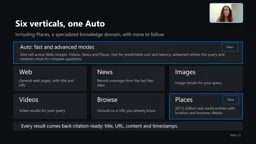
Microsoft WebIQ: Verifiable Real-Time Web Grounding for AI Agents
Microsoft WebIQ gives AI Agents real-time, citable web grounding across web, news, images, videos, and Places—164ms P95 latency, 50% fewer tokens, Scopes source control, and MCP integration.
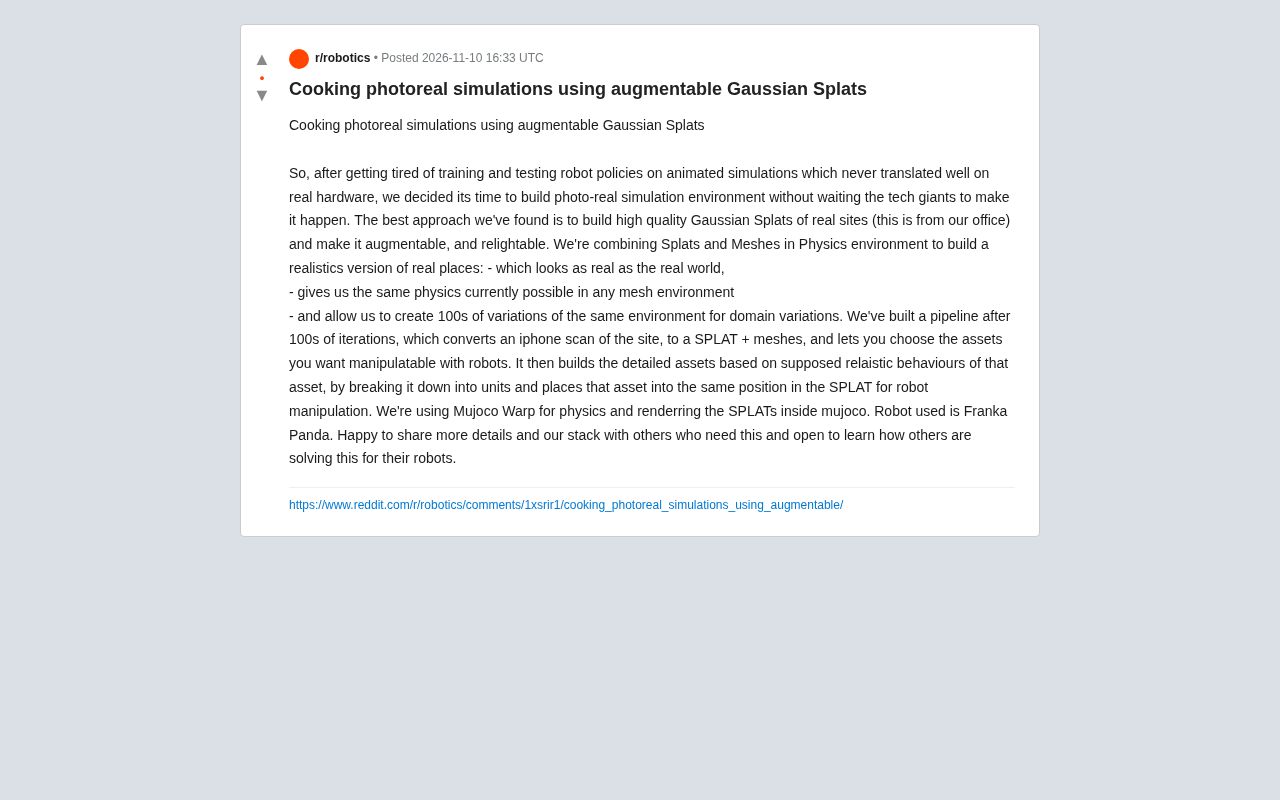
Augmentable Gaussian Splatting: Building Photorealistic Simulation Environments for Robot Training
Team combines Gaussian Splatting with meshes to build photorealistic robot simulation environments, integrating MuJoCo Warp physics and Franka Panda for augmentable, relightable real-site simulation.

Gemini 4 Carbon Released: The Leap from Gemini 3 to Gemini 4 in Under a Year
Google releases Gemini 4 Carbon, less than a year after Gemini 3. In the official demo, Carbon reverse-engineered the Theme Park binary, added a new DeepMind-themed ride, and ported it to the web in one shot.