LangChain + RAG Interview Prep: Understanding LangChain's Core Value in One Article
LangChain is an agent development framework that fills the three major limitations of large models: knowledge cutoff, external interaction, and state retention.
The article introduces LangChain's positioning in Agent and large model application development: it is not a simple model API wrapper, but an open-source framework providing pre-built agent architectures and tool integrations, comparable to Spring in Java, with LangGraph at the lower level. It analyzes the three limitations of large models—knowledge cutoff, inability to interact with external systems, and lack of state retention—and explains how LangChain addresses them through Function Call, tool integration, and chained composition. It also covers the origin of the name, a documentation-first learning path, the ecosystem relationships among LangChain, LangGraph, DeepAgencies, and LangSmith, and interview insights: understanding the framework's positioning and model boundaries matters more than memorizing APIs.
In the fields of Agent development and large model application development, LangChain is a framework you can hardly avoid. On Bilibili, there is a LangChain + RAG interview prep tutorial that has been called "better than paid courses," and its core content has now been publicly released for the first time. Based on the explanations in that tutorial, this article outlines LangChain's positioning, the three major limitations of large models that it addresses, and learning path recommendations, helping you truly understand this framework in interviews and in practice.
What Is LangChain: More Than Just an API Wrapper
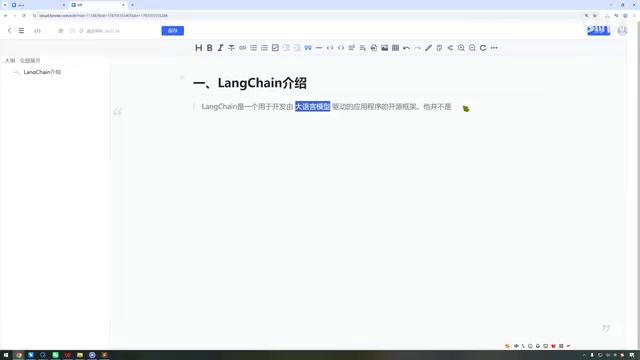
LangChain is an open-source framework for developing applications powered by large language models. For many developers, it is the first stop when they initially start working with large models. But it is important to be clear that LangChain is not simply an API wrapper for model calls—it provides pre-built agent architectures and rich tool integrations.
If you have a Java background, you can temporarily think of LangChain's role in the Agent ecosystem as analogous to Spring's role in Java. Internally, it includes not only LangChain itself but also LangGraph at the lower level, and it also covers DeepAgent-related content. This means developers can quickly build advanced applications based on large language models without having to build complex integration architectures from scratch.
The Three Major Limitations of Large Models, and How LangChain Fills the Gaps
Before learning any technology, first figure out what problem it solves. From a macro perspective, LangChain mainly addresses three key limitations of large language models.
Limited Knowledge and Training Data Cutoff
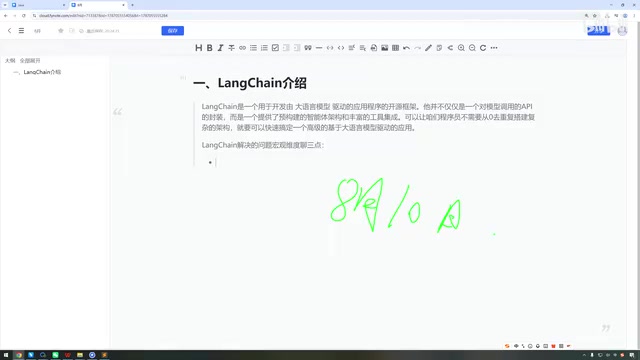
A large model's knowledge is limited by the time cutoff of its training data. For example, if the model finished training on August 10, and you ask it about the weather on August 11 or what happened on August 12, it cannot answer. Some might say, "When I ask Doubao, it knows"—but that is already an application wrapped by someone else; you are not interacting directly with the Doubao model, but rather using an application driven by a large model. LangChain solves this problem through the Function Call mechanism: developers can call tools themselves to obtain data from after the model's training time.
Function Call is a structured output capability provided by large model platforms: developers describe available tools (name, purpose, parameter types) using JSON Schema. When the model determines that external information is needed, it does not directly give a natural language answer; instead, it returns a call request specifying a tool and parameters. The developer's code actually executes the tool, then passes the result back to the model, and the model uses it to organize the final response. It does not itself give the model internet access or computational ability; it simply delegates the decision of "what to call" to the model and "actual execution" to the program, so security, permissions, and result validation remain under the developer's control. LangChain wraps the processes of tool definition, call parsing, and result backfilling on top of this, so you do not have to repeatedly write glue code when integrating real-time data, database queries, or precise calculations.
Cannot Directly Interact with External Systems
A large model itself cannot directly interact with external systems. For example, calling a third-party API to query weather, or writing a utility class to perform precise addition, subtraction, multiplication, and division—models are often inaccurate with complex calculations. In such cases, you can use Function Call to get feedback information and then perform the calculation yourself. In addition, a company's internal data is usually stored in databases, and large models cannot directly connect to and retrieve it via JDBC or similar methods. These problems can all be solved with LangChain.
Lack of State Retention Capability
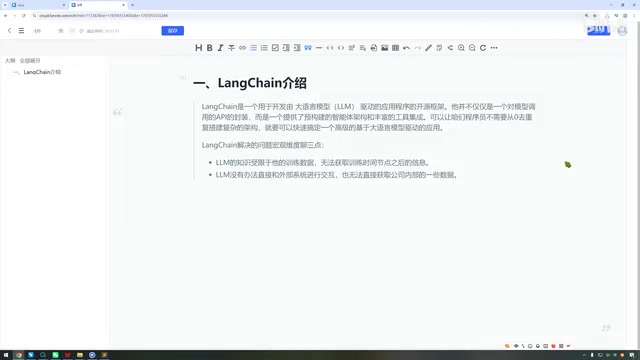
When interacting with Doubao, DeepSeekAd, and similar systems, you will notice that they can remember previous chat records and provide answers based on context. But this is not an inherent capability of the large model—large models do not have state retention. They are essentially one-question-one-answer: when you ask a second question, they will not associate it with the first. The model alone cannot achieve multi-turn dialogue. The LangChain framework was created precisely to solve this problem.
The "statelessness" of large models means that each inference only processes the content explicitly passed in that request, and the server does not automatically retain the previous conversation. The so-called "remembering the above context" is actually the application concatenating historical messages into the current prompt and sending them together. This is limited by the context window length, and when it is too long, truncation or summary compression is needed. LangChain abstracts this process with components such as Memory and Conversation Chain: they are responsible for saving historical messages, trimming or summarizing according to a policy, assembling a complete context before each call, and persisting conversations to a database or cache. Understanding this helps you explain in interviews that "multi-turn dialogue is an engineering capability, not a model capability," and also explains why long conversations suffer from forgetting and rising costs.
Origin of the Name: Language + Chain
The name LangChain essentially comes down to two points: Lang stands for Language (language, i.e., large language models), and Chain stands for chained interaction composition. In plain terms: connect large language models with other resources in the computer in a chained manner, enabling interaction between them, thereby building more powerful AI applications or agents.
Chain in LangChain is an abstraction that connects multiple processing steps in sequence or according to conditions: the output of one step becomes the input of the next. For example, "prompt template → model call → output parsing" forms the most basic chain, and on top of that you can compose retrieval, tool calls, branching logic, and other stages. Compared with the earlier Chain-centric style, LangChain currently promotes LCEL (LangChain Expression Language), which uses pipeline-style declarative syntax to describe data flow and naturally supports streaming output, async operations, parallelism, and retries. Note that when the flow involves complex control flow such as loops and conditional jumps back, the official recommendation is to move to LangGraph, expressing nodes and edges with a graph structure.
Learning Path: Official Documentation First, Chinese Documentation as a Supplement
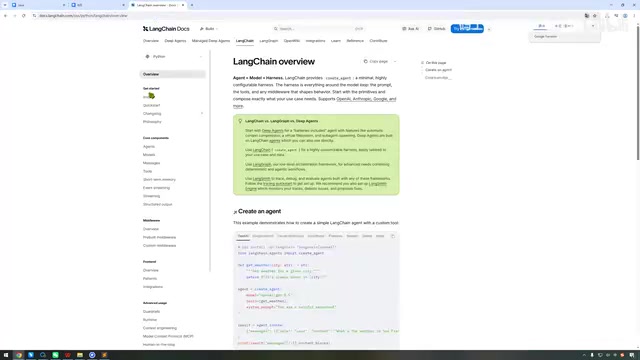
LangChain is continuously iterating and updating, so when learning it you should refer more to the official documentation. The official ecosystem mainly revolves around three cores: LangChain, LangGraph, and DeepAgencies, along with tools such as LangSmith. Their relationships and differences are all introduced in the documentation.
English documentation is the primary source for the latest updates, and developers with reasonable English proficiency are recommended to read it directly. If your English is average, the Chinese documentation is basically updated in sync, with identical code content, and can be understood as an AI-translated version—although个别 wording may not be fully accurate, most of the content is fine. The Chinese documentation also clearly shows LangChain's overall positioning: model plus wrapper framework, that is, the combination of large language models and the corresponding framework. The official team also provides CurateAgent, an extremely simple and highly configurable wrapper framework that makes it easy to interact with various models.
LangGraph is an orchestration framework built on top of LangChain that models applications as state graphs: nodes are processing functions, edges define transitions and conditional branches, and a persistable state is shared. It is especially suitable for scenarios requiring loops (such as "think—call tools—think again"), human-in-the-loop approval, multi-agent collaboration, and resuming from checkpoints, making up for the shortcomings of linear chains in complex control flow. LangSmith is the accompanying observability and evaluation platform, used to trace the input and output, latency, and token consumption of each call, manage prompt versions, and perform regression evaluations based on datasets. It is particularly useful for troubleshooting abnormal Agent behavior. The division of labor among the three is clear: LangChain provides components and integrations, LangGraph handles process orchestration, and LangSmith handles debugging and evaluation.
Interview and Practical Insights
For developers preparing for interviews, understanding LangChain's positioning is more important than memorizing APIs. Interviewers are more likely to test whether you clearly understand the boundaries of large models—knowledge cutoff, lack of external interaction, and insufficient state retention—and how LangChain fills these gaps through Function Call, tool integration, and chained composition. Comparing LangChain to Spring in Java can help interviewers quickly understand the depth of your knowledge.
From a practical perspective, LangChain's value lies in saving developers from reinventing the wheel. Whether integrating with a company's internal database or building a multi-turn dialogue Agent, the framework already provides pre-built components and integration solutions. Mastering how to read the official documentation and keeping up with the evolution of LangGraph and DeepAgencies are key to staying competitive in this rapidly iterating field.
One-line Summary
LangChain is an agent development framework that fills the three major limitations of large models: knowledge cutoff, external interaction, and state retention.
Paragraph Summary
The article introduces LangChain's positioning in Agent and large model application development: it is not a simple model API wrapper, but an open-source framework providing pre-built agent architectures and tool integrations. Its role can be compared to Spring in Java, and it also involves LangGraph at the lower level. The article focuses on analyzing three limitations of large models—knowledge limited by the training data cutoff, inability to directly interact with external systems, and lack of state retention—and explains how LangChain addresses them through Function Call, tool integration, and chained composition. It also explains that the name comes from Language and Chain. For the learning path, it advocates prioritizing official documentation with Chinese documentation as a supplement and paying attention to the ecosystem relationships among LangChain, LangGraph, DeepAgencies, and LangSmith. Finally, it offers interview and practical insights: understanding the framework's positioning and model boundaries is more important than memorizing APIs.
Related articles
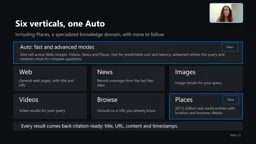
Microsoft WebIQ: Verifiable Real-Time Web Grounding for AI Agents
Microsoft WebIQ gives AI Agents real-time, citable web grounding across web, news, images, videos, and Places—164ms P95 latency, 50% fewer tokens, Scopes source control, and MCP integration.
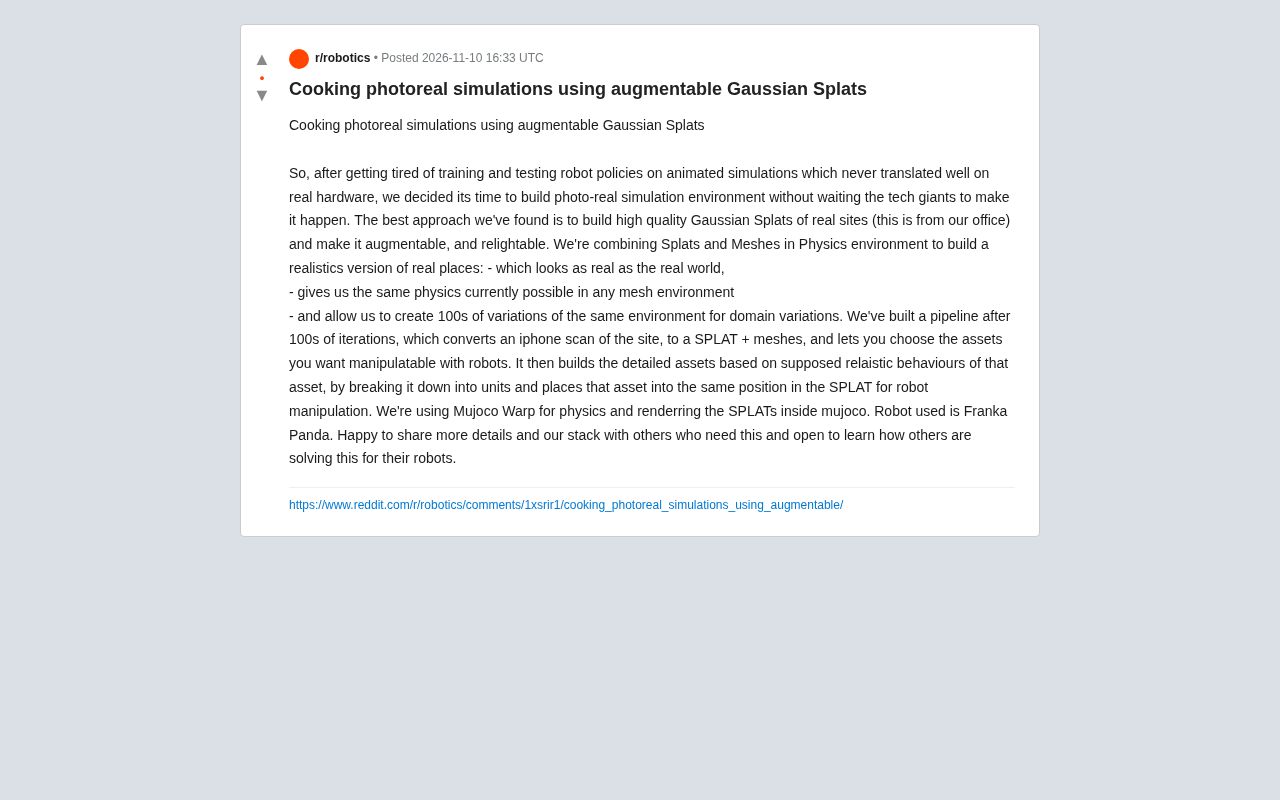
Augmentable Gaussian Splatting: Building Photorealistic Simulation Environments for Robot Training
Team combines Gaussian Splatting with meshes to build photorealistic robot simulation environments, integrating MuJoCo Warp physics and Franka Panda for augmentable, relightable real-site simulation.

Gemini 4 Carbon Released: The Leap from Gemini 3 to Gemini 4 in Under a Year
Google releases Gemini 4 Carbon, less than a year after Gemini 3. In the official demo, Carbon reverse-engineered the Theme Park binary, added a new DeepMind-themed ride, and ported it to the web in one shot.