LayerFS: A Filesystem Built for AI Coding Agents
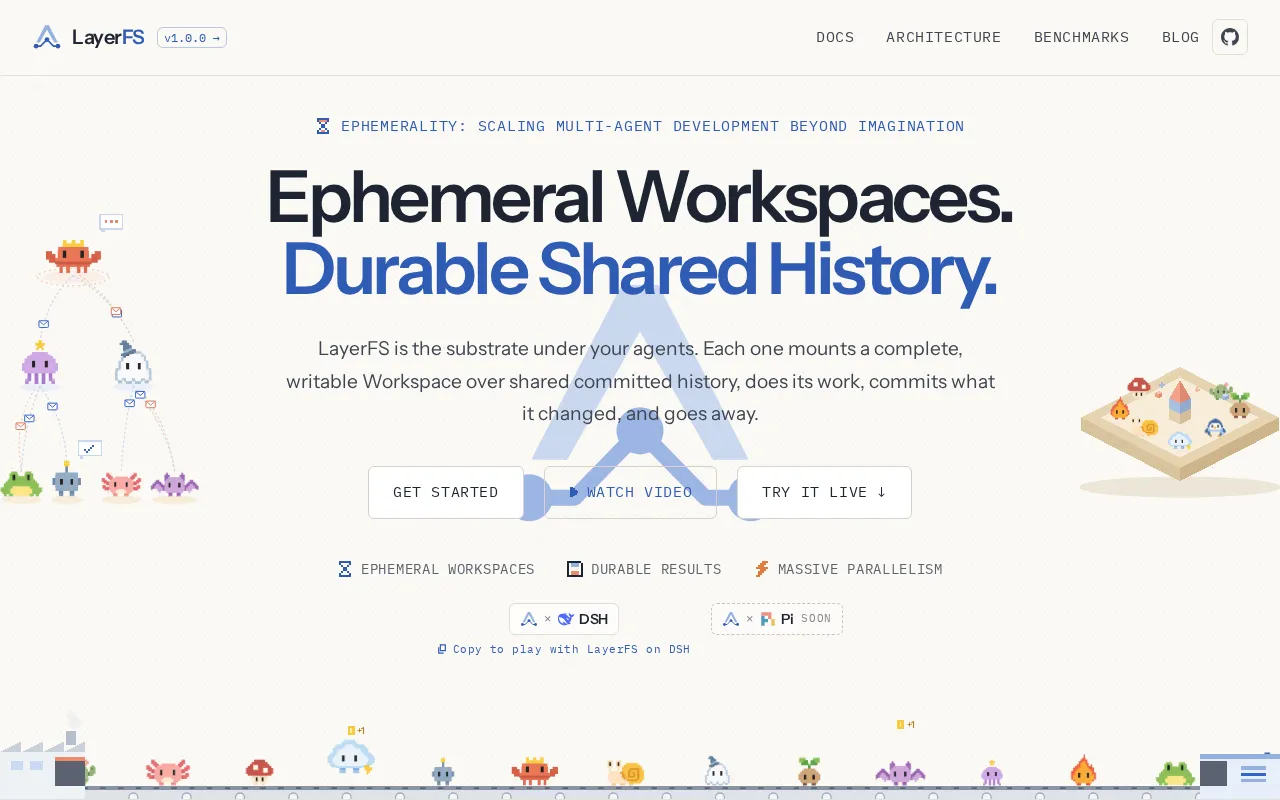
LayerFS proposes a layered filesystem designed specifically for AI coding agents, solving isolation, rollback, and auditing at the lowest level.
LayerFS is a project that appeared on Hacker News, positioned as "the filesystem for AI coding agents." It argues that traditional filesystems assume human operators and cannot meet AI agents' needs for bulk modifications, parallel trial and error, and complete rollback. The article infers from the name that it adopts a layering mechanism similar to container images, letting agent changes land on independent, discardable layers, thereby pushing isolation, versioning, and auditing capabilities down to the filesystem layer rather than relying on Git branches or containers at the application layer. The author also notes that information about the project is extremely limited (only a title, 5 points, 0 comments), with implementation details, compatibility, and performance undisclosed. It is more of a directional proposal than a mature product, but the questions it raises are real and urgent.
AI coding agents are moving from experimental tools to part of everyday development workflows. But when these agents need to read and write files and manage code changes, traditional filesystems often become a bottleneck — permission conflicts, version chaos, and untraceable operations. LayerFS proposed a targeted idea on Hacker News: redesign the filesystem layer for AI coding agents.
What Problem LayerFS Aims to Solve
According to the project introduction on Hacker News, LayerFS positions itself as "the filesystem for AI coding agents" — a filesystem built specifically to serve AI coding agents. This positioning itself reveals key information: existing filesystems are not designed for this new type of user, the "agent."
Traditional filesystems assume the operator is human — with clear intent, able to handle errors, and capable of understanding context. AI agents behave differently: they may modify dozens of files in bulk within a single conversation turn, may try multiple approaches in parallel, or may need a complete rollback after failure. These needs lack native support in ordinary directory structures.
LayerFS attempts to provide these capabilities at the filesystem level, rather than having every agent framework reinvent the wheel.
Core Design Approach
The "Layer" in the project name suggests its core mechanism relates to layering. For AI coding agents, the value of a layered filesystem lies in this: each agent operation can land on an independent layer, the underlying code remains read-only or stable, and changes produced by the agent exist as layers that can be stacked and discarded.
This design echoes the layering philosophy of container images. When an agent tries an approach, it writes to a new layer; if the approach fails, the layer is simply discarded; if it succeeds, the layer is merged back into the base. For programming tasks that require frequent trial and error, this is far safer than operating directly on real directories.
It should be noted that the above is a reasonable inference from the "LayerFS" name. Since the original post contains only a title and minimal discussion (Points: 5 | Comments: 0), the project's specific implementation details, supported agent frameworks, performance data, and other aspects are not disclosed in the source material.
The layering mechanism of container images (such as OverlayFS used by Docker) is a classic reference for understanding "layered filesystems": each layer of a base image is read-only, and the container runtime stacks a writable layer on top, with all modifications recorded in the writable layer. When a lower-layer file is deleted, it is implemented via a whiteout marker. This copy-on-write semantics allows image layers to be shared across multiple containers and makes "discarding the writable layer equals rollback" a natural capability. For AI agents, the same mechanism means multiple parallel branch views can be created at low cost, each recording only incremental differences, with conflicts resolved at merge time. However, there is a key difference between filesystem layering and Git's commit model: Git operates in units of snapshots and commit history, while layered filesystems operate in units of mount views. The former is better suited for human review, while the latter is better suited for rapid switching by runtime agents.
Significance for AI Coding Workflows
Much of the difficulty in deploying AI coding agents lies not in model capability but in the engineering environment. How is the code written by agents isolated? How is it audited? How can parallel exploration happen without polluting the main branch? These problems are currently addressed mainly at the application layer through Git branches, containers, or sandboxes, with the filesystem itself not participating.
LayerFS's approach is to push isolation and versioning capabilities down to the filesystem layer. If implemented well, agent frameworks would no longer need to maintain their own snapshot and rollback logic, and developers could use a unified view to see exactly which files the agent changed. This has real value for improving the controllability of AI coding.
However, for a new filesystem to enter mainstream development workflows, it must clear a high bar: compatibility with existing toolchains, cross-platform support, and performance overhead are all key to whether it can be adopted. The original source material does not provide information on these aspects.
Sandboxing and filesystem isolation are mechanisms at different levels. Sandboxes typically restrict the resources a process can access through namespaces, cgroups, or system call filtering (such as seccomp), focusing on security boundaries; filesystem-level isolation focuses on the manageability of changes — which files were modified, whether changes can be undone, and how modifications from multiple agents can coexist. The current mainstream approach is to provide each agent with an independent environment using containers, but container startup overhead is significant, and file changes inside a container are lost once the container is destroyed, making fine-grained auditing difficult. If a filesystem-level solution can provide lightweight snapshots and difference queries at the mount level, it could theoretically fill this gap, leaving a traceable record of every agent attempt without starting a full container for each task.
Observations and Judgment
The appearance of LayerFS on Hacker News reflects an emerging need: AI coding agents require dedicated infrastructure, not just stronger models. As one of the most fundamental abstractions, the filesystem has rarely been included in discussions of the "AI toolchain" in the past, and LayerFS brings this issue to the table.
Judging from community feedback, the post has only 5 points and no comments, indicating that the project is still early-stage with limited attention. It is more of a directional proposal than a mature product. Whether it is worth investing in depends on whether design documents, benchmarks, and real integration cases are published later.
For developers focused on AI coding infrastructure, projects like this are worth keeping an eye on — it may not become the final standard, but the questions it raises (how to isolate, roll back, and audit agent operations) are real and urgent.
One-line Summary
LayerFS proposes a layered filesystem designed specifically for AI coding agents, solving isolation, rollback, and auditing at the lowest level.
Paragraph Summary
LayerFS is a project that appeared on Hacker News, positioned as "the filesystem for AI coding agents." It argues that traditional filesystems assume human operators and cannot meet AI agents' needs for bulk modifications, parallel trial and error, and complete rollback. The article infers from the name that it adopts a layering mechanism similar to container images, letting agent changes land on independent, discardable layers, thereby pushing isolation, versioning, and auditing capabilities down to the filesystem layer rather than relying on Git branches or containers at the application layer. The author also notes that information about the project is extremely limited (only a title, 5 points, 0 comments), with implementation details, compatibility, and performance undisclosed. It is more of a directional proposal than a mature product, but the questions it raises are real and urgent.
Related articles
The Complete Guide to Running AI Models Locally: Inference Engines and Tool Stack Explained
A systematic breakdown of the complete local LLM tool stack: from PyTorch and GGML compute libraries to llama.cpp, vLLM, SGLang inference engines and Ollama, LM Studio wrapper layers, with benchmark data on performance differences and selection logic.
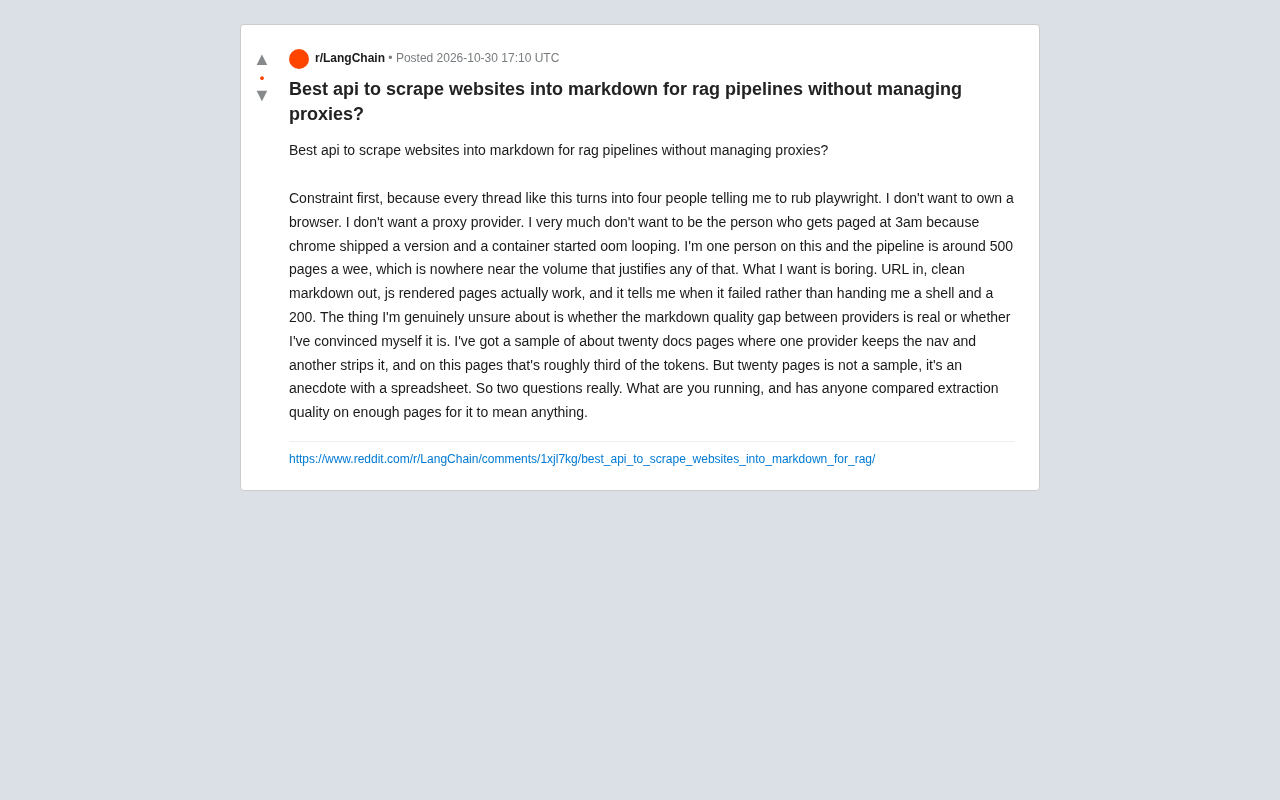
Proxy-Free Web-to-Markdown APIs: Choosing for RAG Pipelines
A guide to choosing proxy-free web-to-Markdown APIs for RAG pipelines: self-built vs. managed costs, real Markdown quality gaps, and an evaluation checklist.
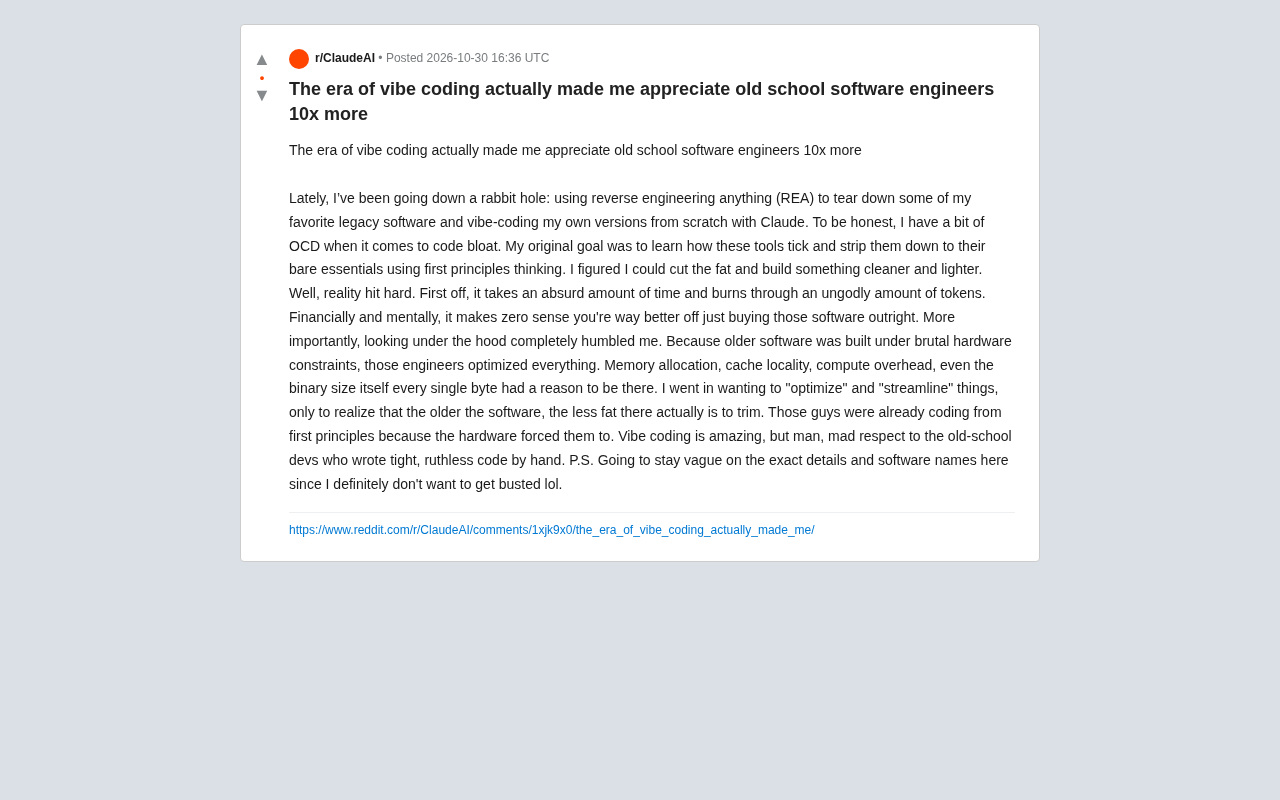
The More Vibe Coding Takes Off, the More I Respect Old-School Software Engineers
A developer's failed attempt to reverse-reimplement classic software with Claude: vibe coding burned tokens for little gain, while old-school engineers' tightly constrained code earns respect. Exploring AI coding's limits.