Long Live Open Source: A War of Faith in the AI World

The open-source vs. closed-source debate is a clash of faith and commercialization in AI, with the open-source community holding fast amid blockades.
Using a Bilibili video as a starting point, the article explores the duel between open source and closed source in AI. The open-source camp regards openness, transparency, and collaboration as its faith, persisting even in the face of blockades and bans; the closed-source camp, represented by OpenAI and Anthropic, is questioned as "untrustworthy" by open-source supporters. The core disagreement lies in the trade-off between free innovation and risk control. The article notes that open-source models like Llama and Mistral are approaching closed-source giants in performance, but safety governance and business models remain challenges. Ultimately, it emphasizes that the open-source ideology has taken root, and the future depends on balancing community collaboration and safety governance.
In today's rapidly evolving AI landscape, the debate between open source and closed source has long transcended technical路线 and become a war over belief, survival, and the future. A video circulating on Bilibili, with its highly infectious narrative, paints this war vividly—the open-source camp is a proud big family, while OpenAI and Anthropic on the other side of the wall are labeled "untrustworthy."
Open Source vs. Closed Source: A Duel of Two Paths
In the video, a figure referred to as "Liang Wufeng" declares: "The open-source ideology must be defended, no matter the cost." This statement captures the sentiment of the open-source community. In the world of AI model training, open source means transparency, collaboration, and sharing, while closed source represents control, barriers, and commercialization. The tension between the two is shaping the industry's landscape.
According to the video, the open-source ideology is like a faith. Models trained from "the embrace of the Great Emperor Kaiyuan" are launching a counteroffensive—in Moonshot (possibly referring to Moonshot AI), on land, and in the depths of the ocean, the power of open source is everywhere. This is not an exaggeration; in reality, open-source models like Llama and Mistral are indeed constantly approaching the performance of closed-source giants and driving the prosperity of the entire ecosystem.

Open-source vs. closed-source models: Open-source models refer to models whose weights, architecture, and even training code are publicly available, allowing anyone to download, modify, and use commercially (or under specific licenses), such as the Llama series, Mistral, and Qwen. Closed-source models are only provided through APIs or products, without disclosing internal details, such as GPT-4 and Claude. The advantages of open source lie in high transparency, customizability, community collaboration that accelerates innovation, and lower barriers to use; the disadvantages are potential misuse, difficulty controlling distribution, and unclear business models. The advantages of closed source lie in the company's ability to strictly control access, ensure security and compliance, and recoup R&D costs through commercialization; the disadvantages are low transparency and user dependence on the vendor. The tension between the two is essentially a trade-off between "open innovation" and "risk control."
Blockades and Bans: The Price of the Open-Source Legion
Open source is not without its hurdles. The video emphasizes: "When they know they will be blocked and banned, they still move forward." This brings to mind the real-world dilemmas faced by open-source models: some regions or enterprises restrict the use of open-source models for security reasons; commercial companies build moats through patents and licenses. Yet the open-source community continues to march forward because "this is their responsibility."
Supporting all of this are "every model in the open-source legion." They may lack massive commercial promotion, but they attract global developers with an open stance. Every code commit and every model iteration is a defense of the open-source ideology. As the video says: "They paid the heaviest price so that the open-source ideology could continue to live."

Model licenses and usage restrictions: Open-source models are not entirely free; their license terms define the boundaries of use. For example, the Llama series uses a community license that allows commercial use but with certain restrictions (e.g., requiring an application if monthly active users exceed 700 million); some models prohibit military use. In addition, some regions restrict the deployment of specific open-source models for data security or content compliance reasons; enterprises may also ban unverified models due to security audit requirements. These restrictions constitute the "blockades and bans" reality faced by the open-source community, but open-source supporters argue that transparency actually facilitates security review and vulnerability patching, and in the long run can build a more trustworthy ecosystem.
Across the Wall: The Credibility Crisis of OpenAI and Anthropic
The video directly points to OpenAI and Anthropic across the wall as "untrustworthy." While this view is somewhat emotional, it also reflects some developers' distrust of closed-source giants. OpenAI started as open source but shifted to closed source, while Anthropic emphasizes safety but restricts model access. In the eyes of the open-source community, these strategies are a betrayal of their original ideals.
However, supporters of the closed-source camp argue that strict controls can prevent misuse and ensure AI safety. This divide is precisely the core controversy in current AI governance. The open-source ideology emphasizes freedom and innovation, while closed source focuses on risk control. The two are not completely opposed, but the rift of trust is difficult to bridge.

OpenAI's shift to closed source and Anthropic's safety-first approach: In its early days, OpenAI was on a mission of "openness," releasing partial weights of models like GPT-2 and GPT-3, but since GPT-4 it has been completely closed source, providing access only through APIs, citing reasons of preventing misuse and maintaining competitive advantage. This shift has been criticized by the open-source community as "betraying the original ideals." Anthropic, founded by former OpenAI members, emphasizes safety technologies such as "Constitutional AI," but its model Claude is also closed source and access is restricted. Anthropic believes that strict controls are a necessary means to prevent AI from being used for malicious purposes. This "safety-first" stance stands in stark opposition to the open-source community's "transparency-first" approach, deepening the rift of trust.
The Future of the Open-Source Ideology: Survival and Continuation
"Long live the open-source ideology! Long live the invincible open-source ideology!" The video's ending is full of passion. This is not just a slogan but an expectation for the future. Through collaboration and sharing, the open-source community is building a decentralized AI future. Despite blockades and competition, the open-source legion continues to advance on land, in the ocean, and even in more far-reaching domains.
From a technical perspective, the transparency of open-source models promotes interpretability research, lowers entry barriers, and stimulates global innovation. But challenges remain: How to ensure the safe use of open-source models? How to establish sustainable business models? These questions require the community to answer together.
Regardless, the open-source ideology has taken root in people's hearts. It is not just a development model but a belief—a belief that collaboration can overcome closure and that sharing can bring a better future. As the video conveys, the open-source camp is a proud big family, and every member is fighting to protect this belief.
Safety governance and sustainable business models for open-source models: The open-source community is exploring multiple paths to address safety and commercial challenges. On safety, mechanisms such as model cards, responsible release guidelines, and bug bounty programs encourage transparent review and rapid fixes; some projects adopt an "open weights but restricted license" model to prohibit malicious use. On business, common models include: providing hosted services (e.g., Hugging Face), enterprise-level support and customization, dual licensing (open-source version + commercial version), and revenue sharing through cloud service providers. These attempts aim to balance openness and sustainability, but a unified standard has not yet emerged. In the future, the boundary between open source and closed source may blur further, forming a hybrid ecosystem.
One-line Summary
The open-source vs. closed-source debate is a clash between belief and commercialization in AI, with the open-source community holding fast to its mission amid blockades.
Paragraph Summary
Using a Bilibili video as a starting point, the article explores the duel between open source and closed source in AI. The open-source camp regards openness, transparency, and collaboration as its faith, persisting even in the face of blockades and bans; the closed-source camp, represented by OpenAI and Anthropic, is questioned as "untrustworthy" by open-source supporters because they shifted from open source to closed source or strictly restrict access. The core of the disagreement lies in the trade-off between free innovation and risk control. The article notes that open-source models like Llama and Mistral are approaching the performance of closed-source giants and driving ecosystem prosperity, but safety governance and business models remain challenges. Ultimately, it emphasizes that the open-source ideology has taken root, and the future depends on the balance between community collaboration and safety governance.
Related articles

AI Writes Your Code—Do You Still Need to Learn Git? Five Reasons
AI coding agents handle Git operations automatically—is it still necessary to learn Git? Five reasons: team communication, reviewing agent PRs, monitoring code changes, fallback when AI goes down, and the joy of learning—plus how the focus of learning Git is shifting in the agent era.
Anthropic Reportedly Prices IPO at $83 Per Share, Valuing Company at $1.5 Trillion
Anthropic reportedly prices IPO at $83 per share, above the expected range, with a fully diluted valuation of $1.5 trillion. This article analyzes the signal significance of the pricing and its impact on the AI industry's financing environment.
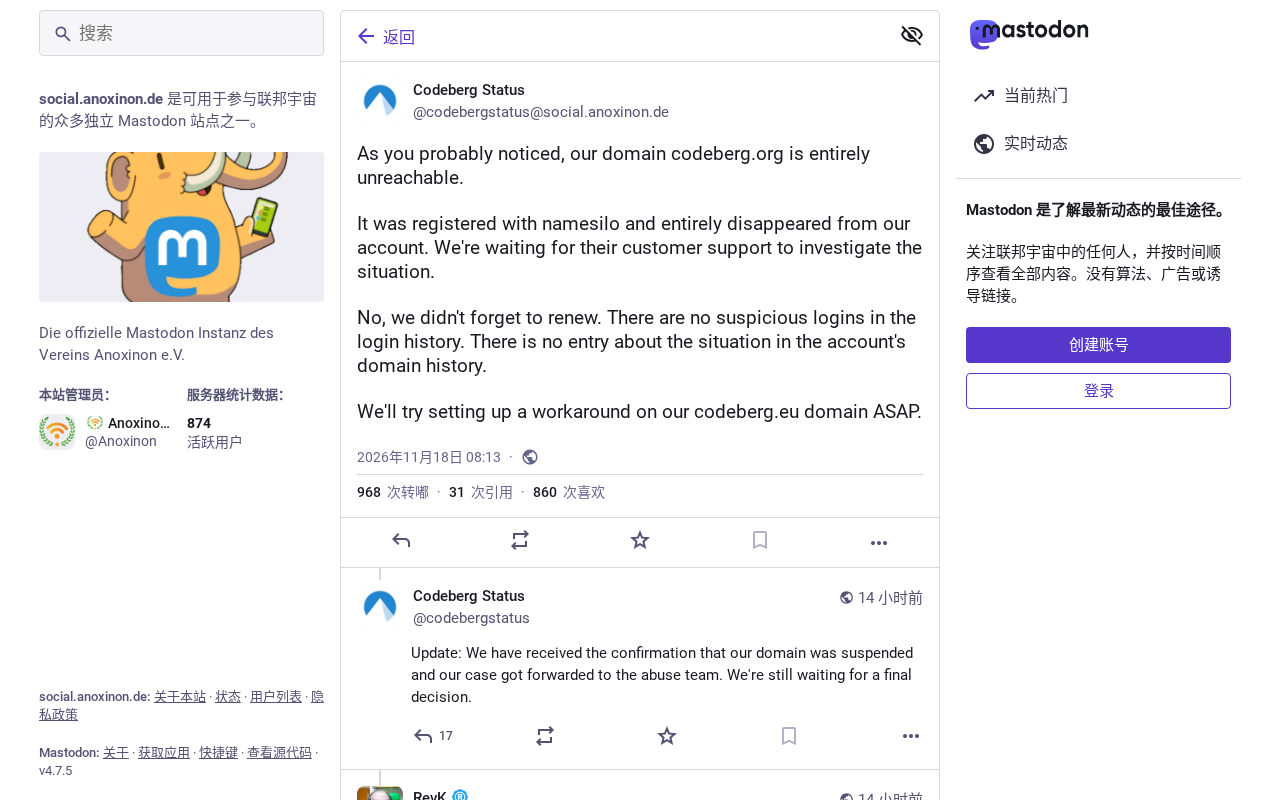
Open-Source Code Hosting Platform Codeberg Suffers Outage, Sparking Debate in Developer Community
Open-source code hosting platform Codeberg.org suffered an outage, sparking Hacker News debate over nonprofit platform stability and open-source infrastructure dependency risks.