Microsoft Fabric Database Agent in Action: From Reactive Firefighting to Intelligent Detective
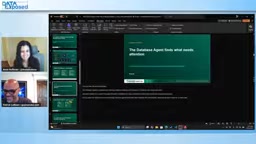
Microsoft Fabric Database Agent shifts DBAs from reactive response to proactive detection and diagnosis.
The article covers the design philosophy and hands-on demo of the Database Agent in Microsoft Fabric. Traditional DBAs respond reactively to failures, while the Agent uses continuous evidence-driven monitoring to detect and report blocking, query performance degradation, index tuning, and resource pressure—covering critical unattended scenarios. Enabling it requires tenant admins to turn on both the Database Hub and Agent switches; currently only SQL databases are supported, with Postgres and Cosmos being onboarded. The demo shows end-to-end blocking handling: the Agent identifies the lead blocker, launches SSMS with one click, and fixes it with GitHub Copilot. The north star is to give the Agent memory, building trust through credible evidence and ultimately reaching limited autonomy and natural-language conversational operations.
Database management is undergoing a quiet paradigm shift. In a recent episode of Data Exposed, host Anna Hoffman and Microsoft's Patrick LeBlanc took a deep dive into the design philosophy and hands-on demo of the Database Agent in Microsoft Fabric. Patrick described the predicament of the traditional DBA with a vivid scenario: "The app got slow, so it must be the database's fault"—and the DBA often only starts investigating the root cause after getting the call. The goal of the Database Agent is to let the database speak up before the developer even picks up the phone.
What Is the Database Agent: From Reactive Response to Persistent Detective
Patrick frames the Database Agent as a "colleague" for DBAs and developers. In the traditional model, the DBA's job is reactive: only when the app has performance issues and someone complains does the DBA step in to investigate stored procedures, queries, or resource bottlenecks. The core value of the Database Agent lies in continuous evidence-driven monitoring—it automatically detects blocking, query performance degradation, index tuning needs, resource pressure, and other issues, and proactively reports them to administrators.
The significance of this shift is that it covers the moments when "nobody is watching." Patrick cited several extreme scenarios: bank payment settlement, hospital back-office workflows, factory assembly lines, and the website of the world's largest retailer on Black Friday. In these scenarios, a database failure is catastrophic, yet a DBA can't perform manual inspections 24/7. That's exactly the gap the Agent fills.
To be clear, the current version of the Agent is only responsible for finding and detecting issues; investigation and remediation still require SSMS and Copilot. Patrick mentioned that colleagues will be invited later for dedicated demos of SSMS and Copilot.
Microsoft Fabric is Microsoft's all-in-one data analytics platform that unifies data engineering, Data Factory, data warehousing, real-time analytics, and Power BI into a single SaaS experience. Database Hub is the management center for database assets within Fabric, presenting a centralized inventory, monitoring status, and lifecycle operations. The Database Agent is an intelligent monitoring component built on top of the Hub that reads database telemetry (such as Query Store and DMVs) to form explainable diagnostic evidence rather than relying on preset threshold alerts. Understanding the hierarchy of these three helps grasp the setup described in this article—"the Hub and Agent switches are both essential": the Hub provides the asset and permissions foundation, and the Agent delivers intelligent analysis on top of it.
Enabling and Configuration: Admin Permissions Are a Prerequisite
Enabling the Database Agent has a clear permission threshold. A tenant administrator must first go to the Microsoft tenant admin portal, search for Database Hub, and turn on both the Hub and Agent switches separately. Both are required.
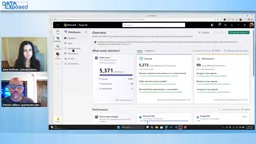
In Database Hub, navigate to "Manage Database Agent" → "Database Agent Settings" to see the scenarios currently supported for automatic monitoring: from blocking to query performance, index tuning, and resource pressure. After enabling, there's a delay of about 15 minutes before it takes effect. Users can choose to have the Agent monitor all databases or specify particular databases via the search box. Currently the feature only supports SQL databases, but Postgres and Cosmos are being onboarded rapidly.
Demo Breakdown: End-to-End Handling of a Blocking Issue
In the demo, Patrick artificially constructed a blocking scenario (triggered via WAITFOR DELAY), and the Agent accurately captured the issue in the Agent Preview tab. The information hierarchy in the interface is worth noting: user queries are highlighted in green, while the diagnostic queries provided by the Agent appear in white. The Agent doesn't just say "blocking exists"—it directly identifies the lead blocker query causing the blocking.
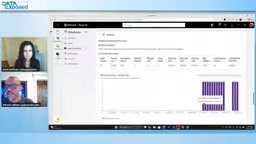
Clicking the link in the issue details automatically launches SSMS with the current server and database context, authenticating via Microsoft Entra ID without manual connection details. The diagnostic query appears directly in the query window, and the user can then open a GitHub Copilot conversation to discuss mitigation options. Once resolved, the issue can be closed at the bottom of the page. The entire loop—detect, diagnose, fix, close—is completed within Database Hub's lifecycle management.
lead blocker refers to the session at the top of the blocking chain that actually holds the lock resource and causes subsequent sessions to queue and wait. In SQL Server, blocking often forms a chain: Session A holds a lock without releasing it, Session B waits on A, and Session C waits on B. Terminating downstream sessions alone won't solve the problem because the root cause is still A. Having the Agent pinpoint the lead blocker directly frees the DBA from tracing the wait chain layer by layer. The demo in the article deliberately uses WAITFOR DELAY to create a long-held lock precisely to reproduce this typical scenario and verify whether the Agent can accurately identify the source of the blocking rather than just reporting that "blocking exists."
Roadmap: Memory, Trust, and Autonomy
Patrick made it clear that the product's "north star" is to give the Database Agent memory. The day-one goal isn't full autonomy, but rather gradually earning user trust through credible evidence. As interactions with the Agent accumulate—for example, confirming that "blocking during an index rebuild is expected behavior; just kill the session and restart it later"—the Agent learns these contexts and reduces repetitive communication.
There will be related announcements at the upcoming Ignite conference, though Patrick said he couldn't disclose details yet. But he showed a longer-term vision: a skill based on telemetry from Fabric Database Hub, with underlying data stored in Cosmos DB, allowing users to ask in natural language, "How are my database assets doing?" The Agent would query all the information and return a status assessment. Patrick's remark was rather interesting: "Everyone loves dashboards, and I'm not knocking dashboards, but if I can talk directly to my data to locate and mitigate issues, then I'm an extremely efficient DBA."
Microsoft Entra ID (formerly Azure Active Directory) is Microsoft's cloud identity and access management service. In the article, "clicking the link automatically launches SSMS with the current server and database context, authenticated via Entra ID" means the Agent and SSMS reuse unified identity credentials, so users don't have to re-enter connection strings or passwords. This relies on Entra ID's authentication support for databases and the integration of Fabric workspace permissions, and it's the key infrastructure enabling the seamless "detect-to-fix" loop. For enterprise environments, this identity-based rather than connection-string-based access approach improves both operational efficiency and security auditing.
Practical Impact on DBAs and Developers
One question Anna raised in the conversation touches on the essence of AI-assisted operations: the gradual path from reactive to proactive to autonomous. On the development side, better queries need to be written at the source; on the Agent side, repetitive patterns need to be identified—"I noticed you've handled it this way the last 15 times; should I do it automatically from now on?"

Patrick's attitude is pragmatic: this evolution takes time, and user trust can't be built through one-shot automation. At the current stage, the Agent's value lies in turning "waiting for someone to report an issue" into "discovering it in advance," and in aggregating scattered diagnostic information into a single interface. For teams managing a large number of database instances, this switch from reactive to proactive is itself an order-of-magnitude efficiency gain.
One-line Summary
Microsoft Fabric Database Agent moves DBAs from reactive response to proactive detection and diagnosis.
Paragraph Summary
The article introduces the design philosophy and hands-on demo of the Database Agent in Microsoft Fabric. Traditional DBAs respond reactively to failures, while the Agent uses continuous evidence-driven monitoring to automatically detect and proactively report blocking, query performance degradation, index tuning, and resource pressure—covering critical unattended scenarios. Enabling it requires a tenant administrator to turn on both the Database Hub and Agent switches in the admin portal; currently only SQL databases are supported, with Postgres and Cosmos being onboarded. The demo showcases end-to-end handling of a blocking issue: the Agent locates the lead blocker, launches SSMS with one click, and fixes it with GitHub Copilot. The product's north star is to give the Agent memory, building trust through credible evidence, and ultimately moving toward limited autonomy and natural-language conversational operations.
Related articles

T3 Code: The Open-Source AI Coding Assistant's Comeback Story
T3 Code is an open-source AI coding assistant that unifies subscriptions like Codex and Claude, with powerful remote control and parallel task management.

Never Elected, Yet Ruled New York for 30 Years: The Ultimate Case Study in the Mechanics of Power
Robert Caro's biographies reveal how unelected Robert Moses ruled New York for 30 years through legal drafting and public authorities, and how Lyndon Johnson built leverage as a "powerless" Senate Majority Leader. Unpacking the underlying logic of accumulating and sustaining power.

The CPython 3.10 Recursion Trap and Synthetic Recovery in TokenGuard, an LLM Circuit Breaker
TokenGuard's author recounts a recursion crash caused by OrderedDict.pop in CPython 3.10 and introduces v0.3.0's Loop Nudge synthetic recovery, inline DLP scanning, and other new LLM agent circuit-breaker capabilities.