Microsoft Merges Two Forza Studios: The Strategic Shift Behind Xbox's Restructuring

Microsoft merges its two Forza studios, shifting focus to Forza Horizon and Fable while Motorsport's future remains unclear.
Microsoft is merging Playground Games (Forza Horizon) and Turn 10 Studios (Forza Motorsport) into a single studio as part of a major Xbox restructuring. The combined team's stated focus is Forza Horizon and the upcoming fantasy RPG Fable, with Motorsport notably absent from official messaging — suggesting a possible reprioritization of the two racing franchises. The move reflects a broader industry trend of publishers consolidating resources amid rising development costs, and continues Microsoft's structural contraction following its massive expansion after the Activision Blizzard acquisition.
Microsoft is undertaking a sweeping restructuring of Xbox, and one of the most notable moves is the merger of its two Forza racing game studios into a single entity. This change reflects Microsoft's broader approach to consolidating resources across its gaming business — and raises plenty of questions about the future direction of the Forza franchise.
Two Forza Studios Merge Into One
The merger brings together two highly regarded names in racing games: Playground Games and Turn 10 Studios. Playground Games is the creator of Forza Horizon, celebrated for its open-world racing experience, while Turn 10 Studios developed the Forza Motorsport series, long known for its simulation-focused track racing.
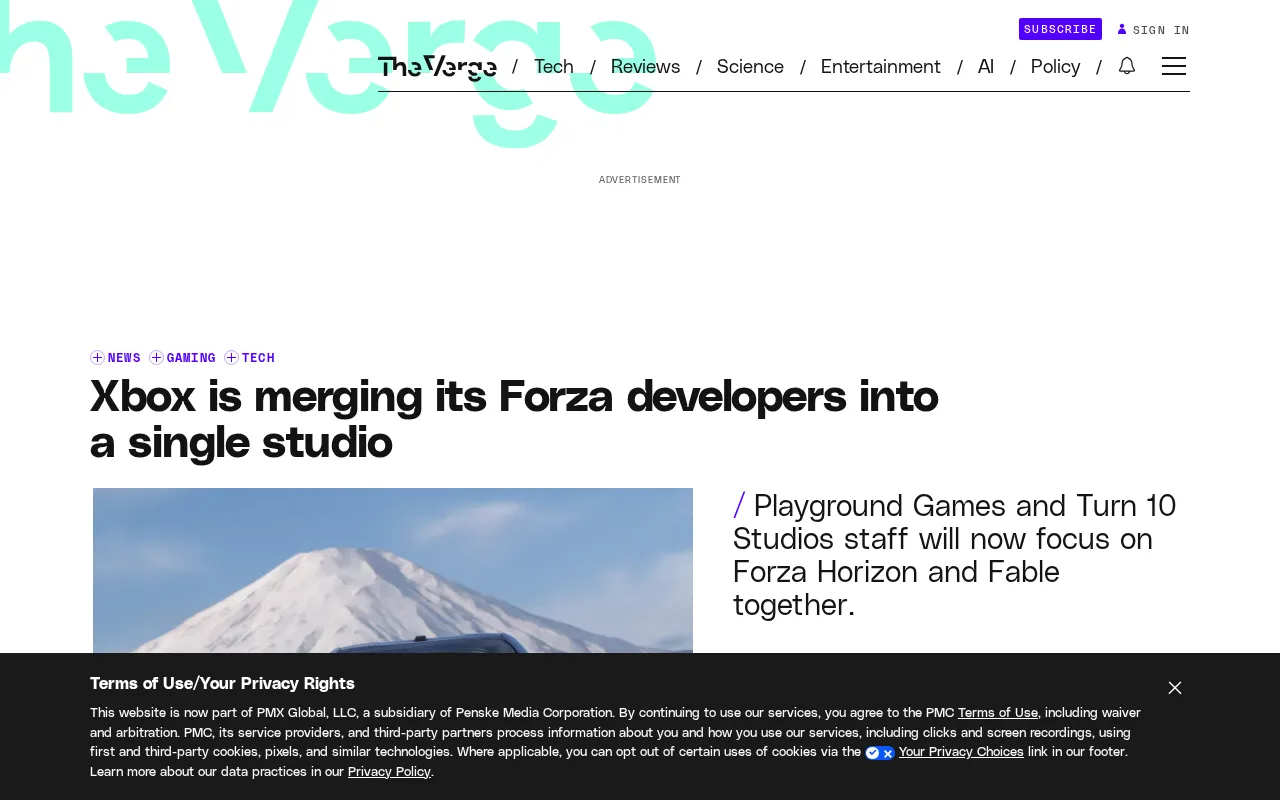
According to official statements, the two studios will "come together as one studio," with future focus placed on Forza Horizon and the fantasy action RPG Fable. This means the combined development talent is being redirected toward projects Microsoft considers higher priority.
Playground Games was founded in 2010 and is headquartered in Warwickshire, UK, by veterans from studios like Bizarre Creations and Codemasters. The Forza Horizon series, launched in 2012, has attracted a massive casual audience with its open-world maps, seasonal events, and accessible gameplay — and is widely regarded as the most commercially successful arm of the Forza brand. Turn 10 Studios is an older first-party Microsoft studio, founded around 2001 and the originator of the Forza franchise. Its Motorsport series is known for precise physics, detailed vehicle data, and authentic circuit racing, long considered the benchmark for racing simulation on consoles. While both studios have operated under Xbox Game Studios, they maintained relatively independent structures and were each responsible for iterating their own product lines.
The Strategic Signal Behind the Merger
Merging two independently operating studios typically signals a desire to improve efficiency and concentrate resources. For Microsoft, maintaining two parallel racing game franchises requires significant manpower and budget. A combined studio can share technology, toolchains, and talent.
Notably, the stated focus after the merger explicitly mentions Forza Horizon and Fable, while Forza Motorsport — the simulation series — is not singled out. This difference in language may hint at a shift in how Microsoft is weighting its investment across the two product lines.
Potential Impact on the Forza Franchise
For longtime racing game fans, the merger brings both excitement and concern. On the positive side, the combined expertise of both teams in the racing genre could complement each other, giving the Horizon series stronger technical backing. The involvement of the Turn 10 team in Fable development also suggests Microsoft wants to leverage existing talent for a highly anticipated new title.
The lingering uncertainty is whether the Forza Motorsport simulation series will suffer as a result. Studio mergers often come with organizational restructuring and shifts in project priorities, and what that means for specific long-term franchises remains to be confirmed by further official communication.
Part of a Broader Xbox Restructuring
This studio merger is explicitly framed as part of a large-scale Xbox restructuring. In recent years, Microsoft's studio count grew dramatically following the acquisition of Activision Blizzard and other deals, making it an ongoing challenge to effectively manage and coordinate those teams. Consolidating studios with overlapping functions is a common management tool for major publishers after periods of rapid expansion.
From an industry perspective, this kind of restructuring reflects the reality of rising game development costs. As the production cycles and budgets for AAA games continue to balloon, publishers need to allocate resources more precisely, concentrating firepower on projects with the strongest market potential. Microsoft's latest adjustments are a direct reflection of this trend.
Microsoft's acquisition of Activision Blizzard was completed in October 2023 for approximately $69 billion — one of the largest deals in gaming history. Following the close, Xbox Game Studios ballooned to dozens of studios spanning large-scale AAA teams to smaller independent-sized outfits. But the scale brought pressure: in 2024, Microsoft carried out multiple rounds of layoffs across its gaming division and shut down studios including Tango Gameworks and Arkane Austin, drawing widespread criticism across the industry. The integration of Playground Games and Turn 10 continues this pattern of structural contraction and resource concentration following rapid expansion — reflecting Microsoft's effort to find a more sustainable operating model within its vast studio portfolio.
Closing Thoughts
The merger of the two Forza studios is Microsoft's latest move to optimize its Xbox gaming business. It speaks both to the practical need for resource consolidation and to a broader reprioritization of Microsoft's product lineup. For players, the biggest questions remain: will Forza Horizon and Fable benefit from better development support as a result — and what becomes of the simulation racing series? Those answers will have to wait for more details from Microsoft down the line.
Related articles

Vibe Coding Full-Stack in Practice: AI Programming from Beginner to Enterprise Deployment
From Cursor to Claude Code, this Bilibili AI programming course uses four progressive projects to cover full-stack development, open-source secondary development, and team collaboration. The article analyzes the shock to frontend roles, the efficiency shift from 50 people to 5, and the methodology required for enterprise-grade projects.

David Blaine's Global Quest for Real Magic: From South Africa to Japan and India
David Blaine travels to South Africa, Japan, and India in his Do Not Attempt special, documenting Spinning drivers, black mamba rescuers, iaijutsu masters, and ascetics—exploring the boundary between magic and real human极限 challenges.

Is a Touchscreen MacBook Coming? Vergecast Reveals Apple Executive's Response
Vergecast podcast reveals a conversation between a reporter and Apple executive John Ternus about a touchscreen MacBook and Apple Pencil support. Ternus says iPad is the best device for a stylus, while the reporter bets MacBook will eventually support Apple Pencil.