Microsoft Open-Sources Token Economizer: Saving 18%-31% on AI Coding Agent Costs

Microsoft's open-source Token Economizer plugin cuts AI coding costs by 18.4% to about 31% by helping agents remember lessons.
Microsoft open-sourced the free Token Economizer plugin, which cuts average AI coding agent costs by 18.4% to about 31% without switching models or agents. It works via micro skills (injecting learned repository knowledge), tool pruning (not loading idle tools), and failure loop intervention (a judge model detects being stuck and suggests a new approach). Joint Microsoft/UC Berkeley tests covered 6 repos, 1,777 SWE-bench tasks, and 5 agent-model combos; success rates rose in 4 of 5, and all 30 combos were cheaper. But benefits rely heavily on repeated use of the same repository, and each agent learns independently.
Title
Microsoft Open-Sources Token Economizer: Saving 18%-31% on AI Coding Agent Costs
Meta Description
The free open-source plugin Token Economizer from Microsoft reduces AI coding agent costs through three mechanisms: micro skills, tool pruning, and failure loop intervention. Microsoft and UC Berkeley tests show an average cost reduction of 18.4% to about 31% on mainstream agents like Claude Code and Codex, with task success rates rising rather than falling in most combinations.
Article Content
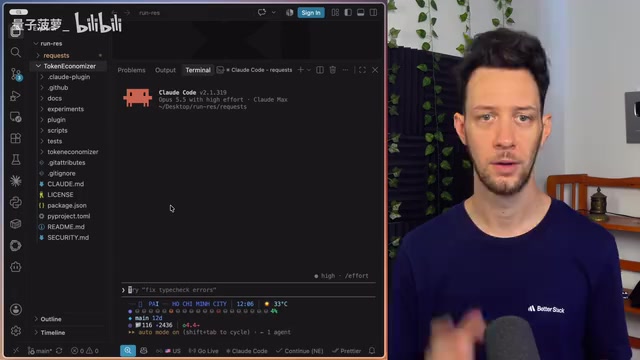
The token consumption problem of AI coding agents finally has a solution that doesn't rely on "switching to cheaper models." Microsoft recently open-sourced a free plugin called Token Economizer. According to a video posted by Better Stack on Bilibili, in joint testing by Microsoft and UC Berkeley, the plugin reduced the average cost of AI coding agents by 18.4% to about 31%. The tests did not use cheaper models or switch agents; instead, the plugin works directly on mainstream tools like Claude Code and Codex.
What Problem It Solves
Anyone who has used tools like Claude Code has likely seen this scenario: you ask it to fix a bug, it tries a command, gets an error, tries another approach, and keeps going—burning tokens through repeated trial and error. Worse, in the next new session, it may make the same mistake again, and you pay for the same lesson twice.
Token Economizer's approach is to let the agent "remember" these lessons. It learns how a repository works from historical sessions, removes tools that aren't used, and intervenes when the agent falls into repeated failures. Its official positioning is clear: it doesn't compress prompts or downgrade models, but eliminates the work the agent repeatedly wastes.
SWE-bench is key background for understanding the test data in this article. It is a software engineering benchmark proposed by Princeton University and other institutions. It extracts issues from real GitHub repositories, requiring AI to locate problems in the codebase, modify code, and pass tests, ultimately measuring capability by "task resolution rate." The 1,777 tasks used in the tests here come from this benchmark. SWE-bench's value lies in its closeness to the real development workflow: agents need multiple rounds of reading and writing files, running commands, and adjusting strategies based on errors, so token consumption is far higher than single-turn Q&A—which is exactly the cost structure Token Economizer targets. Understanding this is necessary to see why the tests were run across multiple repositories and multiple agent combinations, rather than a single scenario.
Three Core Mechanisms
Micro Skills: Turning Past Pitfalls into Opening Knowledge
Every repository has its own "unwritten rules"—which command to use for tests, which environment variables are needed, where files are placed. The agent doesn't know these at first and can only figure them out by trial and error. Micro skills analyze past sessions, and once a detail is repeatedly confirmed, it is fed directly to the agent at the start of a new session. The agent no longer wastes a round of tokens on the same command.
It should be noted that micro skills are off by default, and the video author manually enabled them during the demo.
Tool Pruning: Don't Load Unused Tools
When an agent starts, a batch of tool definitions is inserted into the context. These definitions themselves consume tokens even if the agent never calls them. Tool pruning tracks the actual usage of tools in the repository and stops loading tools that remain idle, restoring them when needed.

Failure Loop Intervention: A Nudge When It's Stuck
When the agent repeatedly executes nearly identical commands with only tiny changes, Token Economizer calls a judge model to determine whether it is stuck in a loop. If it confirms the agent is stuck, it sends a brief instruction suggesting a different approach; if the agent still cannot recover, it tells the user how to terminate the round. The author specifically notes that its approach is to prompt rather than rudely interrupt—it doesn't just "throw in the towel."
The judge model here acts as a lightweight, independent adjudicator rather than the main agent itself. It doesn't write code; it only receives a summary of the agent's recent command sequence and judges whether it is "spinning in place." The benefit of this design is decoupling "anomaly detection" from "task execution": the main agent's context is not crowded out by extra diagnostic logic, and the judge model can use a smaller, cheaper model to reduce costs. The trade-off is that it requires additional model calls, and this overhead is already included in the officially announced net savings. The judge model only prompts rather than forcibly terminating, which also avoids the risk of task interruption due to misjudgment.
What the Measured Data Shows
Microsoft and UC Berkeley's tests covered 6 repositories, 1,777 SWE-bench tasks, and 5 agent-model combinations, with a per-round cost of about $200. The results: average cost fell 18.4% to about 31%; in 4 of the 5 combinations, task success rates rose rather than fell, while 1 declined slightly; across all 30 "repository × agent-model" combinations, enabling the plugin was cheaper than not enabling it.
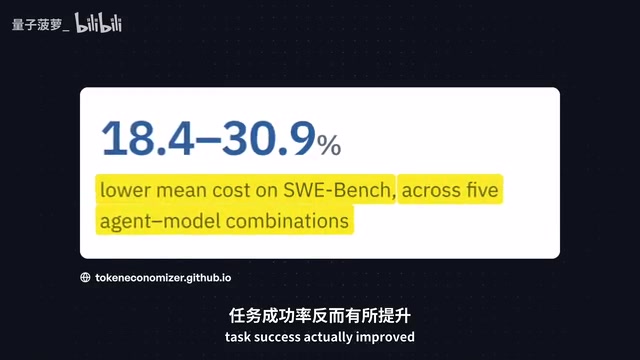
An easily overlooked detail: these savings already deduct the plugin's own overhead. Some features require additional model calls and do not run at zero cost; the official reduction figures are net gains.
Not Everyone Will Get the Same Numbers
This is the part of the article that most needs a calm reading. Token Economizer's benefits are highly dependent on "repetition." Its value comes from the accumulation of multiple sessions on the same repository—the longer you use it, the more it learns and the more you save.
If you repeatedly use the agent on one or two core projects every day, it will likely help; but if you frequently jump between unrelated projects, or the agent faces brand-new tasks every time, there is little repetitive work to learn from and eliminate, and the effect will be noticeably diminished. The author's advice is pragmatic: install it on your most frequently used repository for a week, then look at the status report, compare the actual cost of similar tasks, and decide whether to keep it.
Two other points to note: each agent learns independently, and what Claude Code learns does not automatically transfer to Codex; first-session performance is statistically meaningless, so don't draw conclusions from a single experience.
The benefit curves of micro skills and tool pruning are not linear; they gradually emerge as the number of sessions on the same repository increases. In the first session, the plugin has almost no samples to learn from—micro skills are off by default, and tool usage statistics have not yet formed—so savings are close to zero, or there may even be slight additional overhead from the plugin's own operation. Usually, after several or even a dozen similar tasks, recurring commands, environment variables, and idle tools are stably identified. This is the technical reason the original article emphasizes "don't draw conclusions from a single experience"—the evaluation period should be measured in weeks, not in uses.
How It Differs from Other Cost-Saving Approaches
There are many tools on the market focused on reducing tokens, and most take the path of compressing prompts or switching to smaller models. Token Economizer takes another path: it doesn't change how you write prompts or touch model selection, but squeezes costs out of the agent's behavioral patterns. An incidental benefit is transparency—all learned repository information is stored locally in the token economizer folder and is not uploaded to the cloud; the project itself is open source, and installation only requires cloning the repository and installing the plugin from the marketplace.
This "saving from behavior" approach essentially treats the agent's trial-and-error cost as an object to be optimized, rather than accepting it as a fixed tax on using AI for coding. For developers who work on a fixed codebase over the long term, this may be a more sustainable way to cut costs than switching models.
(This article is based on content from the Better Stack video; data and conclusions are cited from that source.)
One-line Summary
Microsoft's open-source plugin Token Economizer reduces AI coding costs by 18.4% to about 31% by letting agents remember lessons.
Paragraph Summary
Microsoft recently open-sourced the free plugin Token Economizer, which reduces the average cost of AI coding agents like Claude Code and Codex by 18.4% to about 31% without changing models or agents, and the savings already account for the plugin's own overhead. Its three core mechanisms are: micro skills, which extract repository knowledge from historical sessions and inject it directly into new sessions; tool pruning, which stops loading idle tool definitions; and failure loop intervention, which uses a judge model to identify being stuck and prompt a different approach. Microsoft and UC Berkeley's joint tests covered 6 repositories, 1,777 SWE-bench tasks, and 5 agent-model combinations; task success rates rose rather than fell in 4 of 5 combinations, and costs were lower in all 30 combinations. However, benefits depend heavily on repeated use of the same repository—when switching projects frequently or facing entirely new tasks, the effect weakens noticeably, and each agent learns independently with no knowledge sharing.
Related articles
Running GLM-5.3 on Two DGX Stations: A vLLM Tensor Parallelism Hands-On
NVIDIA engineers show how to run the 753B-parameter GLM-5.3 locally on two DGX Stations using vLLM tensor parallelism, covering RDMA setup, launch args, NCCL checks, and performance baselines.
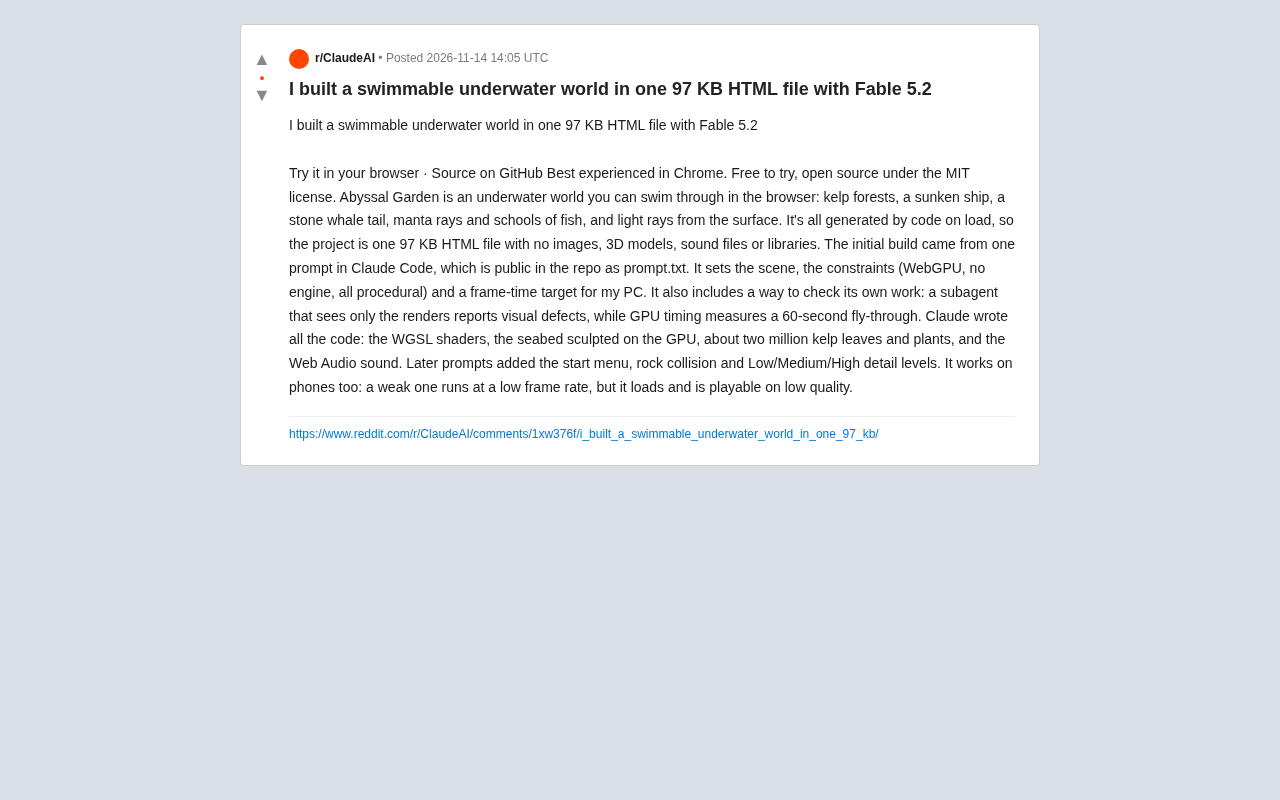
97KB Single-File HTML Underwater World: A WebGPU Experiment in AI Programming
A developer used a single prompt in Claude Code to generate a 97 KB single-file HTML underwater world, fully procedurally generated with WebGPU—kelp forests, a shipwreck, and fish, no images or model libraries, MIT-licensed, playable on mobile.
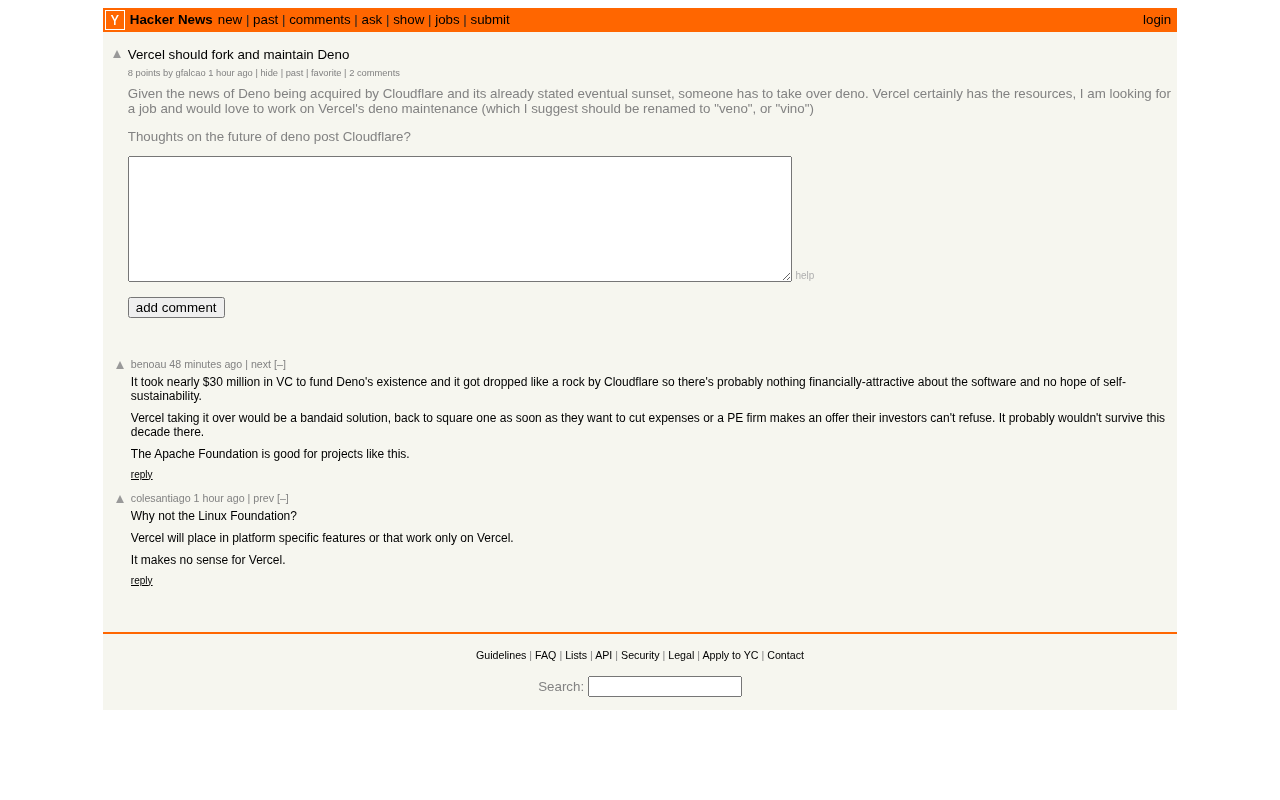
Should Vercel Fork and Maintain Deno? Developer Community Debates
Hacker News debates whether Vercel should fork and maintain Deno. This article analyzes the runtime ecosystem competition behind the claim, the commercialization dilemma of open-source projects, and the practical impact of forking on developers.