Mirendil Releases Fern 0.1: First Model Targets 10M-Token Context

Mirendil releases Fern 0.1, pretrained from scratch, betting on agentic R&D with a 10M-token context.
Mirendil has released its first model, Fern 0.1, pretrained from scratch with a 10M-token context window. It scored 100% on the 10M-length single-needle retrieval task in the RULER long-context benchmark but lags frontier models on agentic coding. The company targets agentic AI R&D, reasoning that a long window helps agents retain more historical state over long tasks and reduces goal forgetting from context truncation. The article notes that single-needle retrieval is only an entry-level metric, with multi-needle and cross-paragraph reasoning data undisclosed; the gap between "remembering" and "doing" remains, and turning long-context advantages into task completion rates is still an unsolved engineering problem. Public information on weights and pricing is limited.
Mirendil has released its first model, Fern 0.1, a new model pretrained from scratch with a 10M-token context window. With long context now a standard part of the large-model arms race, it is itself noteworthy that a new company has chosen to stake its first product on the combination of "ultra-long context + agentic R&D."
What Fern 0.1 Is: The First Model Pretrained From Scratch
According to a report by MarkTechPost, Fern 0.1 is the first model publicly released by Mirendil, and it was pretrained from scratch. This is uncommon today—many startups choose to fine-tune or continue pretraining open-source base models, whereas pretraining from scratch means the team must bear the full cost and risk of data, compute, and training engineering on its own.
The model's core selling point is its 10M-token context window. That scale far exceeds the context lengths generally offered by mainstream commercial models, and it means the model can ingest extremely large codebases, document collections, or long-term task records in a single pass.
Performance: Strong Long Context, Weak on Agentic Coding
A Perfect Score on the RULER Single-Needle Test
On RULER, the classic long-context benchmark, Fern 0.1 achieved 100% on the single-needle retrieval task at 10M length. Single-needle retrieval tests whether a model can accurately locate a specific piece of information within an ultra-long input, and it is a foundational metric for long-context capability. A perfect score here indicates that Fern 0.1 is indeed usable at "finding a specified passage within a massive amount of content."
Still, this should be viewed objectively: single-needle retrieval is only the entry threshold for long-context capability. The report gives no data for more complex tasks such as multi-needle retrieval, cross-paragraph reasoning, or information aggregation across long documents, so it would be inappropriate to infer the model's overall performance in real-world long-document scenarios from this result alone.
RULER is a long-context evaluation benchmark proposed in 2024 by NVIDIA and other institutions. Unlike the traditional "needle in a haystack" test, which only examines single-point information localization, it divides tasks into four major categories—retrieval, multi-hop tracing, aggregation, and question answering—with more than ten subtasks in total, and it allows users to customize the target context length. Its core design idea is that as input length grows, a model faces not only the pressure to "remember" but also the pressure to "maintain a reasoning chain across long-range dependencies." RULER scores are usually presented as the average accuracy across subtasks, so "100% on single-needle retrieval" represents only the most basic item among them and cannot be equated with overall long-context capability. The industry often mentions RULER alongside "Needle-in-a-Haystack," but the former demands more in task complexity and length flexibility.
Agentic Coding Lags Behind Frontier Models
The report explicitly states that Fern 0.1 lags behind frontier models on agentic coding tasks. This creates some tension with its positioning as "built for agentic AI R&D": on the one hand, the team sets agentic AI R&D as its target scenario; on the other, it has not yet reached the top tier on the most representative agentic coding benchmark.
For practical users, this means Fern 0.1 is better suited to work such as "understanding and retrieving from long materials" rather than directly replacing existing coding agents.
Agentic coding refers to a model acting as an autonomous agent to complete the full task of understanding a codebase, locating defects, modifying implementations, running tests, and iterating on fixes across multiple rounds of interaction; typical benchmarks include SWE-bench and SWE-bench Verified. The key difference from single-turn code generation is that the model must autonomously plan steps, call tools (such as file read/write and terminal execution), adjust strategy based on runtime feedback, and maintain goal consistency across long-range dependencies. It therefore tests reasoning, tool use, and long-context management simultaneously. Frontier models' solve rates on such benchmarks are usually presented as percentages, and they vary considerably across benchmarks. Fern 0.1's lag on such tasks indicates that its "long memory" advantage has not yet translated into "multi-step execution" completion rates.
Positioning: Why "Agentic R&D"
Mirendil sets Fern 0.1's target scenario as agentic AI R&D work. This choice has its own internal logic: when agents execute long-horizon tasks, they need to continuously accumulate context—past actions, code state, task goals, and intermediate conclusions. A 10M-token window can keep as much of this information as possible within a single inference pass, reducing goal forgetting or state loss caused by context truncation.
In other words, what Fern 0.1 bets on is not "being smarter in a single conversation" but "remembering more over long tasks." If this direction holds, it will have a role to play in scenarios such as handling large code repositories, long-running research agents, and complex document pipelines. But the shortfall in agentic coding also reminds us that context length is not equivalent to task completion capability.
What It Means for the Industry
A new player entering the ultra-long-context race with a model pretrained from scratch sends at least two signals.
First, context length remains a lever for differentiated competition. As frontier model capabilities converge, new companies need to find a quantifiable breakthrough point, and 10M tokens is a striking enough number.
Second, the disconnect between long context and agentic capability is worth watching. Fern 0.1 scores perfectly on RULER single-needle retrieval yet lags on agentic coding, which precisely shows that "being able to remember" and "being able to do things" are two different matters. For the industry as a whole, how to turn the memory advantage of long context into actual task completion rates remains an unsolved engineering problem.
Public information about Fern 0.1 is still limited. Whether the model weights will be open, how it will be priced, and how it performs on multi-needle and reasoning-oriented long-context benchmarks all await further disclosure from Mirendil.
Background
Pretraining from scratch means the model does not rely on any public base weights; all parameters start from random initialization and are trained under the company's own data mix and training pipeline. For a startup, this path is extremely costly: it requires building its own data pipeline, bearing the compute expense of thousands to tens of thousands of GPU hours, and solving engineering challenges such as distributed training stability and long-context attention efficiency on its own. The reward is full autonomy over architecture and data, enabling end-to-end optimization for ultra-long context without being constrained by the original window limits of an open-source base. By contrast, fine-tuning or continued pretraining has a much lower barrier but is capped by the base model's capabilities. Mirendil's choice to pretrain from scratch shows that it regards long context as a core capability requiring underlying architectural support, rather than an add-on feature obtainable through post-processing.
One-line Summary
Mirendil releases Fern 0.1, pretrained from scratch, betting on agentic R&D with a 10M-token context.
Paragraph Summary
Mirendil has released its first model, Fern 0.1, pretrained from scratch with a 10M-token context window. It achieved a 100% score on the 10M-length single-needle retrieval task in the RULER long-context benchmark but lags behind frontier models on agentic coding tasks. The company sets its target scenario as agentic AI R&D, reasoning that a long window lets agents retain more historical state over long-horizon tasks and reduces goal forgetting caused by context truncation. The article notes that single-needle retrieval is only an entry-level metric for long-context capability, with data on multi-needle retrieval and cross-paragraph reasoning not yet disclosed; there is a clear gap between "being able to remember" and "being able to do things," and how to translate long-context advantages into actual task completion rates remains an unsolved engineering problem. Public information such as model weights and pricing is currently limited.
Related articles

Qwen4 Architecture Preview Open-Sourced: 125B Parameters, 512 Experts, Designed for VRAM-Constrained Hardware
Qwen4 isn't released yet, but its architecture is previewed via open-source Qwen3.8 Flash Next: 125B params, 6B activated per token, 512 experts, 262K context, built for VRAM-limited hardware. This article covers official confirmations, key config.json metrics, and local deployment tests on 24G memory.
Run 8K Images on 6GB VRAM! Hands-On Test of Fudan's Open-Source MOSS-Image Model
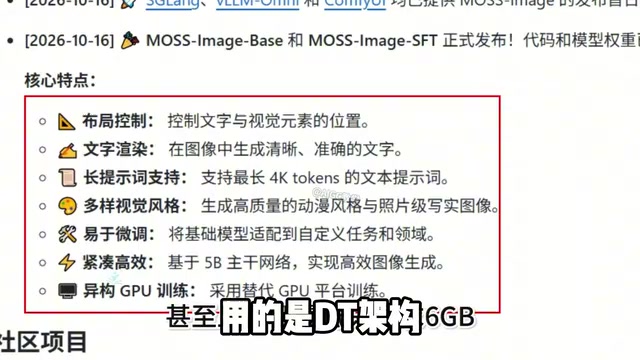
Fudan OpenMouse team and Shanghai MOSS Intelligence open-source MOSS-Image, a 500M-parameter DT architecture text-to-image model that runs locally on 6GB VRAM with precise text rendering, structured layout control, and 4K Token prompt support—ideal for e-commerce posters and local deployment by individual creators.
Overseas Blogger Tests Local Deployment of 100B-Parameter MoE Model: Key Lessons on Quantization and Tool Calling
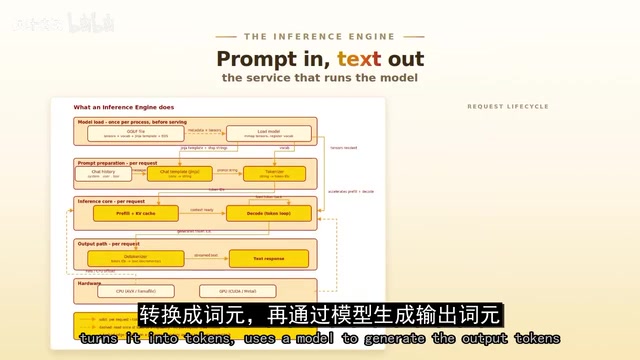
Overseas blogger tests local deployment of Alibaba's Qwen 3.8 Flash Next 100B MoE model on a Strix Halo mini PC and CUDA workstation, revealing how quantization precision affects tool-calling success and the real-world performance of the Strata and GUFO inference engines.