Motorola Signature 27 Supports GrapheneOS: A New Privacy Phone Option

The Motorola Signature 27 is reported to support GrapheneOS, potentially becoming a new option beyond Pixel.
The article discusses a device with the model name Motorola Signature 27 that the community identifies as supporting GrapheneOS, which could make it another privacy-friendly hardware option after Google Pixel. GrapheneOS is an open-source Android derivative centered on security and privacy, with strict requirements for the secure boot chain, hardware-backed key storage, and firmware updates, so its supported device range has always been limited. On Hacker News, the topic received 277 points and 185 comments, with the community mainly focused on the device's hardware specifications, Motorola's bootloader unlocking policy, and long-term system update commitments. The article notes that more hardware support can help lower the barrier to using privacy-focused systems, but full specifications and official support details are not yet reflected in the source material, so users should watch for subsequent official statements and updates to the GrapheneOS device support list.
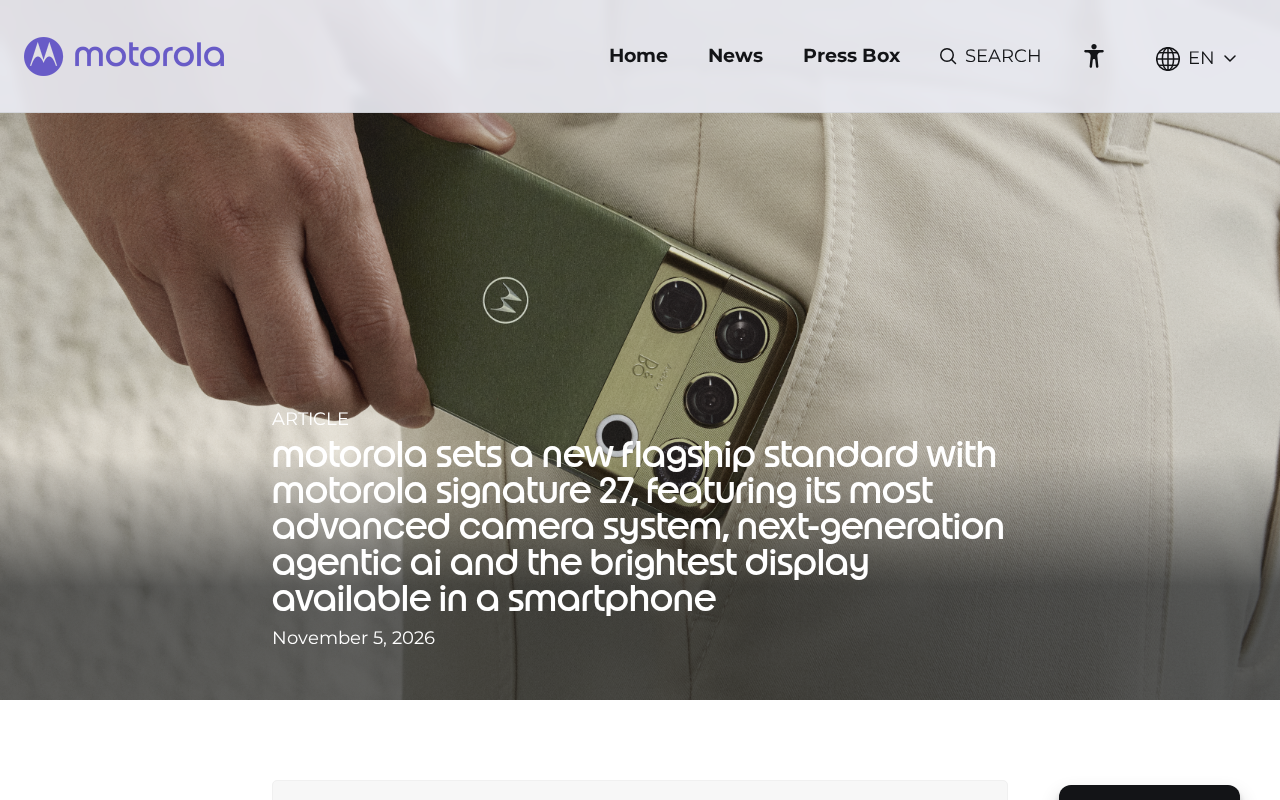
A device with the model name Motorola Signature 27 has surfaced in community discussions, and its most notable feature is official support for GrapheneOS. For users concerned with mobile privacy and security, this could be another hardware option beyond Google Pixel.
What GrapheneOS Is and Why Hardware Support Matters
GrapheneOS is an open-source Android derivative built around security and privacy, and it has long relied on deep hardware adaptation to deliver its protections. It imposes strict requirements on devices, including a secure boot chain, hardware-backed key storage, and timely firmware updates. As a result, only a limited number of devices make it onto its support list.
In the past, GrapheneOS was primarily optimized around the Google Pixel series, leaving users with relatively few choices. If the Motorola Signature 27 does indeed gain support, it would mean users have one more brand option when choosing a privacy-friendly device, and it would also indicate that GrapheneOS's hardware compatibility is expanding.
Verified Boot is the key background for understanding GrapheneOS's hardware threshold. Android's verified boot starts from a root of trust fused into the chip and verifies the bootloader, system partitions, and even critical system apps step by step; if any link's signature does not match, the device will refuse to boot or enter a restricted mode. On top of this, GrapheneOS further requires devices to support a bootloader that users can re-lock with a custom AVB key. Otherwise, after a user unlocks the device to flash a third-party system, the device can only remain in an "unlocked" state for a long time, which actually weakens overall security.
Hardware-backed key storage usually refers to the TEE (Trusted Execution Environment) in ARM TrustZone or a dedicated secure chip/StrongBox, used to store disk encryption keys, biometric credentials, and attestation private keys. GrapheneOS relies on this kind of hardware isolation to ensure that even if the system is compromised, keys cannot be easily extracted; at the same time, it uses hardware attestation to verify that the device is running an untampered system image. This is also why whether a device can enter the GrapheneOS support list depends heavily on whether the manufacturer discloses enough technical details, provides long-term firmware updates, and allows users to re-lock the bootloader.
Community Reaction and Discussion Focus
On Hacker News, the topic received 277 points and 185 comments, indicating considerable interest. Community attention centered on several aspects: the device's hardware specifications, Motorola's policy on bootloader unlocking, and long-term commitments to system updates.
For GrapheneOS users, whether the manufacturer allows bootloader unlocking is a key prerequisite. Motorola has provided unlocking channels on some models in the past, but the policy varies by region and model. If the Signature 27 has clear support in this regard, it will directly affect its usability.
Impact on the Privacy Phone Market
The mobile operating system market has long been dominated by a few manufacturers, and choices for privacy-focused custom systems are even fewer. More hardware support for GrapheneOS can help lower the barrier to entry for users and may also prompt other manufacturers to re-examine their bootloader unlocking and system update policies.
However, the currently available public information is still mainly community discussion, and the device's full specifications, release regions, and official support details are not yet reflected in the source material. Users interested in trying it are advised to watch for subsequent official statements and updates to GrapheneOS's official device support list.
Related articles
 Tech Frontiers
MuJoCo: An Analysis of DeepMind's Open-Source General-Purpose Physics Simulator
An in-depth analysis of Google DeepMind's open-source physics simulator MuJoCo: high-performance C++ kernel, MJCF modeling format, contact solving principles, MJX GPU acceleration, and robot reinforcement learning use cases.
 Tech Frontiers
Claude API Quick Start: The Official Quickstarts Project Collection
Anthropic's official claude-quickstarts project collection helps developers quickly build deployable apps with the Claude API. Nearly 20k stars, Python-based, great for beginners and prototyping.
 Tech Frontiers
AI Agents Connecting Directly to APIs: Which Calls Can Be Safely Allowed?
AI agents can call any API, but the real challenge is deciding which calls can be safely allowed. This article analyzes allowance decisions from three dimensions—intent matching, least privilege, and controllable impact—and argues that the control layer should sit outside the agent, combined with audit traceability to build a trustworthy API call governance mechanism.