Multimodal Experiment with Short-Form Content: Why This Bilibili "Movie Life" Post Resonates
A Bilibili short-form post with four English lines and four screenshots demonstrates blank-space storytelling and templated传播.
The article deconstructs a Bilibili short-form post titled *I'll Show You*: just four English lines paired with four screenshots, yet it completes an effective emotional narrative. The author points out that the core of this kind of content isn't explaining clearly but leaving blank space—using the fewest words to give emotional coordinates and handing interpretive authority to danmaku and the comments section for collective completion. English short lines serve the dual functions of rhythm and distance, weakening the preachy tone; its structure can be abstracted into a five-stage template of state statement, source of pressure, call to action, filtering mechanism, and landing point, which has reference value for AI content tools. But blank space depends on universal emotional anchors; templates can be copied, but resonance cannot—this is where the boundary of such content lies.
A Moment "Caught" by Danmaku
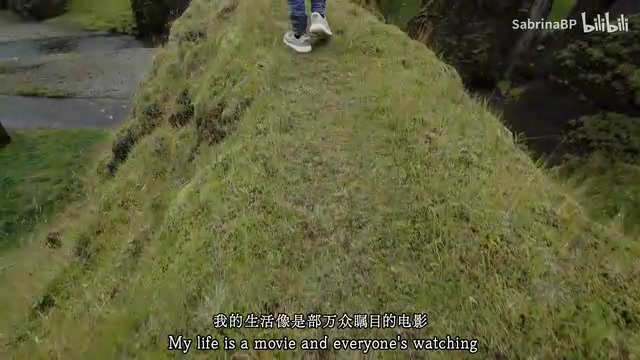
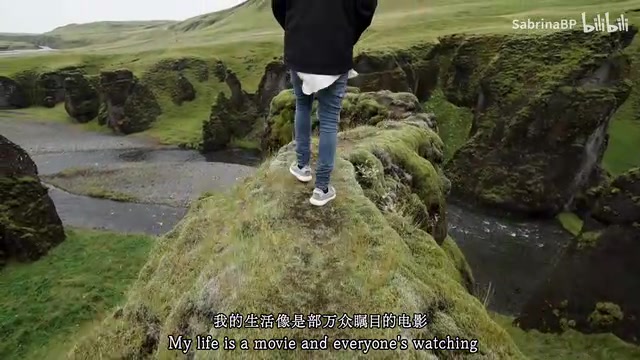
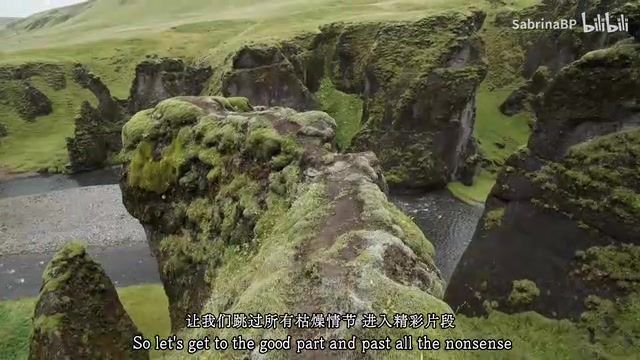
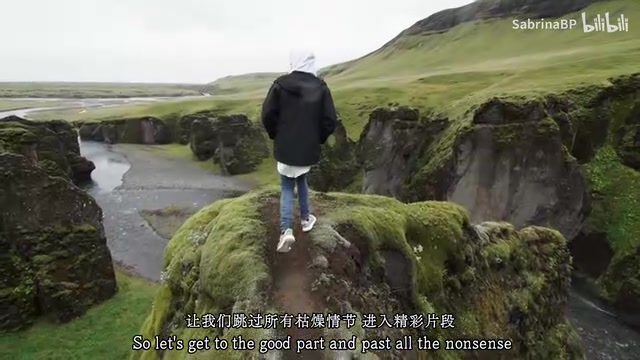
On Bilibili, a short-form post titled I'll Show You completed a narrative experiment in an extremely minimal way. The original text is just four English lines: "My life is a movie / And everyone's watching / So let's get to the good part / Past all the nonsense / Right there." Paired with four screenshots—And everyone's watching, So let's get to the good part, Past all the nonsense, Right there—it breaks a common psychological state into four visual anchors: being watched, anticipating a turning point, cutting out the noise, and finding a landing point.
The appeal of short-form content isn't information density—it's whether it can get viewers to complete an act of "self-projection" within seconds. What this post does is re-edit the old metaphor "life is a movie" and then hand the second half of the sentence over to danmaku to fill in.
Short-Form Content Is Shifting from "Explaining Clearly" to "Leaving Blank Space"
Traditional short-video tutorials emphasize "hook viewers in three seconds, explain one concept in fifteen seconds," but this post does the opposite: no explanation, no subtitle exposition, not even a Chinese translation. The four screenshots are four emotional nodes, and viewers must map "nonsense" onto their own lives themselves.
This kind of blank space works within Bilibili's community context. Danmaku culture is itself a form of collective completion—when the frame shows "And everyone's watching," viewers immediately think of the everyday experience of being watched and judged; when it cuts to "Past all the nonsense," the comments section often automatically fills in specific complaints. The content provides the skeleton; the community fills in the flesh.
Danmaku culture is a real-time commenting mechanism unique to video platforms like Bilibili: comments sent by viewers are overlaid on the video as scrolling subtitles, appearing synchronized along the timeline. It turns what was originally an isolated viewing act into a "virtual co-viewing" experience—later viewers can see earlier reactions and add their own comments on top, forming layer upon layer of collective interpretation. What makes danmaku unique is its illusion of synchronicity and relay-style completion: a single danmaku may just be a quip, but when hundreds or thousands stack up, they form a group annotation of the frame's emotion. This is precisely why blank-space content works especially well in a danmaku context—the simpler the frame, the more room danmaku have to fill, and content and community form a complementary rather than competitive relationship.
Why English Short Lines Instead of Long Copy
English short lines serve two functions here. The first is rhythm: four short lines naturally form four beats, corresponding one-to-one with the four screenshots, reading like trailer voiceover. The second is distance: non-native expression weakens the preachy tone, making the same sentence sound more like a line of dialogue than chicken soup.
This resembles the "prompt aesthetics" in AI-generated content—short, fragmented, with a sense of imagery. Creators are increasingly accustomed to anchoring emotion with a set of keywords or a single line rather than arguing with full paragraphs. This doesn't mean depth has disappeared; rather, depth has been shifted to the viewer's interpretation stage.
Prompt aesthetics refers to an expressive preference that has formed in AI-generated content practice: using short, fragmented phrases rich in visual imagery to anchor generation direction, rather than describing needs in complete logical paragraphs. Unlike traditional copywriting, which emphasizes "complete argumentation," prompts are often assembled from keywords, short sentences, and style tags, pursuing evocation rather than persuasion. The logic behind this is that generative models respond more sensitively to concrete, high-density imagery words and capture abstract argumentation less well. Over time, creators have also developed the habit of "thinking in short sentences"—first the image, then the sentence. When this aesthetic spills over into ordinary content creation, it manifests as using a set of short lines paired with a set of images to convey emotion, leaving the responsibility for expansion and argumentation to the viewer or reader.
From a Single Post to a Reusable Template
The structure of this post can actually be abstracted into a template: state statement (my life is like a movie) → source of pressure (everyone is watching) → call to action (skip to the good part) → filtering mechanism (get past the noise) → landing point (right there). These five stages correspond to four screenshots, and the final line "Right there" is both a conclusion and a blank space left for the viewer.
For people building AI applications and content tools, this template has direct reference value. It suggests a low-cost creative path: pair a set of short lines with a set of screenshots and hand interpretive authority to the audience. Multimodal generation tools can mass-produce this kind of structure, but what truly determines传播 effect is still whether that short line hits a collective emotion.
Multimodal generation tools refer to AI systems capable of simultaneously processing or generating multiple modalities such as text, images, audio, and video—for example, text-to-image models, text-to-video models, and joint image-text generation tools. In the creative scenarios of this kind of content, the value of multimodal tools lies in "batch replication of structure": given a set of short lines and a visual style, the tool can quickly produce accompanying screenshots or storyboards, greatly reducing the production cost of templated content. But tools solve the problem of capacity, not resonance—they can generate the structural skeleton of "state statement → source of pressure → call to action," but they cannot judge which short line will hit the current collective mood. Therefore, the actual creative workflow is often: humans handle the selection and refinement of emotional anchors, while tools handle visual presentation and batch trial and error.
Where the Boundaries of This Kind of Content Lie
Blank space is a double-edged sword. When viewers cannot fill the blank with their own experience, the content feels hollow. This post works largely because it relies on the universality of the metaphor "life is like a movie"—almost everyone has had moments of "being watched" and "wanting to skip the bad plot." Switch to a more niche theme, and the same structure may fail.
Another boundary is repetition. Once the short-lines-plus-screenshots template is reused on a large scale, viewers quickly become immune. Content creators need to constantly change the "emotional anchor," not the layout. In other words, templates can be copied; resonance cannot.
Conclusion
The value of I'll Show You isn't that it says something new, but that it demonstrates a way of organizing short-form content: use the fewest words to give emotional coordinates, use screenshots to establish rhythm, and leave interpretive authority to the community. For people interested in AI content generation, short-video storytelling, and community operations, this is a sample worth unpacking—it reminds us that in an environment of information overload, sometimes "saying one sentence less" has more传播 power than "saying ten sentences more."
Related articles

Microsoft WebIQ: Verifiable Real-Time Web Grounding for AI Agents
Microsoft WebIQ gives AI Agents real-time, citable web grounding across web, news, images, videos, and Places—164ms P95 latency, 50% fewer tokens, Scopes source control, and MCP integration.

Augmentable Gaussian Splatting: Building Photorealistic Simulation Environments for Robot Training
Team combines Gaussian Splatting with meshes to build photorealistic robot simulation environments, integrating MuJoCo Warp physics and Franka Panda for augmentable, relightable real-site simulation.

Gemini 4 Carbon Released: The Leap from Gemini 3 to Gemini 4 in Under a Year
Google releases Gemini 4 Carbon, less than a year after Gemini 3. In the official demo, Carbon reverse-engineered the Theme Park binary, added a new DeepMind-themed ride, and ported it to the web in one shot.