Multimodal Person Concept Model: Robust Identity Recognition with Few-Shot Data

A nonparametric Bayesian multimodal model learns person concepts from few unlabeled observations with 0.89 average recognition accuracy.
This study proposes a multimodal person concept model for service robots to identify users under few-shot and varying conditions. Based on the Chinese Restaurant Process nonparametric Bayesian framework, it fuses CLIP visual, CLAP acoustic, and speech-transcribed linguistic features, inferring the number of person concepts and achieving robust recognition without person labels. Experiments with six participants under eight varying conditions show 0.89 average accuracy, comparable to k-means with known participant count (0.88), and insensitive to concept count estimation errors. The study also analyzes PCA dimensionality, modality availability, and variation intensity, and demonstrates feasibility on a Toyota Human Support Robot. Multimodal complementarity is key to robustness, but limitations such as small scale, reliance on pre-trained extractors, and unhandled concept drift remain for future work.
In home or office environments, service robots need to identify users to provide personalized services. However, robots often have access to only a small number of observations, and observation conditions vary due to appearance, environmental noise, and speech content. Learning person concepts from few unlabeled observations and achieving robust recognition is a key challenge. This study proposes a multimodal person concept model that integrates visual, acoustic, and linguistic features through a nonparametric Bayesian generative model, achieving an average recognition accuracy of 0.89 across eight varying conditions—comparable to k-means clustering with known number of participants.
Core Challenge: Few-Shot and Varying Conditions
Service robots face a dual difficulty when identifying users: first, very few learning samples—perhaps only a few interaction records; second, dynamically changing observation conditions, including appearance changes (e.g., changing clothes), environmental noise interference, and speech transcription errors. Traditional methods rely on large amounts of labeled data and struggle to adapt to such scenarios. The goal of this research is to enable robots to form "person concepts" from few observations, much like humans do, and to maintain recognition stability when conditions change.
Technical Approach: Nonparametric Bayesian + Multimodal Features
The model employs a nonparametric Bayesian generative model based on the Chinese Restaurant Process, which does not require specifying the number of persons in advance but instead infers the number of concepts from observations. For feature extraction, visual features use the CLIP (Contrastive Language-Image Pre-training) model, acoustic features use the CLAP (Contrastive Language-Audio Pre-training) model, and linguistic features come from speech transcription text. All features are reduced via Principal Component Analysis (PCA) and then fused. This design allows the model to simultaneously leverage multimodal information such as appearance, voice, and speech content, without requiring person labels for training.
Chinese Restaurant Process (CRP) is a commonly used prior in nonparametric Bayesian models, describing how data points are probabilistically assigned to an infinite number of latent categories. In the person concept learning scenario, it allows the model to dynamically decide whether to create new person concepts (categories) as observations gradually increase, without specifying the number of persons in advance. Its core mechanism is: each new observation joins an existing concept with a certain probability (proportional to the number of existing observations), or forms a new concept with a certain probability (proportional to the concentration parameter). This property makes the model naturally suited for few-shot, open-world recognition tasks with an unknown number of categories.
CLIP (Contrastive Language–Image Pre-training) is a vision-language pre-trained model proposed by OpenAI that uses contrastive learning on large-scale image-text pairs to map images and text into the same embedding space. Its image encoder can extract semantically meaningful visual features and is somewhat robust to lighting, viewpoint, and partial appearance changes. CLAP (Contrastive Language–Audio Pre-training) adopts a similar approach, aligning audio with text descriptions to extract acoustic features. Both are used as frozen feature extractors without retraining for the person recognition task, which reduces overfitting risk in few-shot scenarios but also means feature quality is affected by the pre-training data distribution.
Experimental Setup and Results
The study recruited six participants and evaluated under eight conditions: appearance changes, additive noise, transcription errors, and their combinations. On average, the proposed model achieved a recognition accuracy of 0.89, while k-means clustering using the true number of participants achieved 0.88. Notably, the model did not always infer the number of person concepts perfectly, but recognition performance remained stable, indicating that errors in concept count estimation have limited impact on the recognition task. The experiments also analyzed the effects of PCA dimensionality, modality availability, and variation intensity, and demonstrated the approach on a Toyota Human Support Robot.
Value and Limitations of Multimodal Fusion
Multimodal fusion is key to the model's robustness. Visual, acoustic, and linguistic features complement each other; when one modality is disturbed, the others can provide support. For example, appearance changes mainly affect visual features, but acoustic and linguistic features still help with recognition. However, the model also has limitations: the experimental scale is small (only six people), and performance on larger populations remains to be validated; feature extraction relies on pre-trained models (CLIP, CLAP), whose generalization ability may affect overall performance; moreover, the model does not explicitly handle concept drift over time, and adaptability in long-term interactions still needs exploration.
Concept Drift refers to changes in data distribution over time, causing learned concept models to gradually become ineffective. In long-term human-robot interaction, a user's appearance (e.g., hairstyle, clothing), acoustic environment, or even speaking style may slowly change; if the model cannot update person concepts in time, recognition performance will degrade. The static generative model in this paper does not explicitly model the temporal dimension, so concept drift is an issue that needs attention in real deployment. Common strategies include sliding-window re-estimation, online variational inference, or introducing forgetting mechanisms, which can serve as future extension directions.
Implications for Service Robot Interaction
This research demonstrates the potential of nonparametric Bayesian methods for few-shot person recognition. Robots can gradually build person concepts without large amounts of labeled data and dynamically adjust based on new observations. This is crucial for personalized services—robots can remember user preferences and still correctly identify them when appearance or environment changes. Future directions include scaling to large populations, integrating more modalities (e.g., depth information), and enabling online learning and concept updating. The project page and demo video are publicly available, providing a foundation for future research.
One-line Summary
A nonparametric Bayesian multimodal model learns person concepts from few unlabeled observations, achieving an average recognition accuracy of 0.89.
Paragraph Summary
This study addresses the need for service robots to identify users under few-shot and varying conditions by proposing a multimodal person concept model. Based on a nonparametric Bayesian generative framework with the Chinese Restaurant Process, the model fuses CLIP visual features, CLAP acoustic features, and speech-transcribed linguistic features, enabling inference of the number of person concepts and robust recognition from few observations without person labels. Experiments with six participants under eight varying conditions (appearance changes, noise, transcription errors, and combinations) show an average recognition accuracy of 0.89, comparable to k-means clustering with known number of participants (0.88), and insensitive to concept count estimation errors. The study also analyzes the effects of PCA dimensionality, modality availability, and variation intensity, and demonstrates feasibility on a Toyota Human Support Robot. Multimodal complementarity is key to robustness, but limitations such as small experimental scale, reliance on pre-trained feature extractors, and unhandled concept drift remain to be addressed in future work.
Related articles
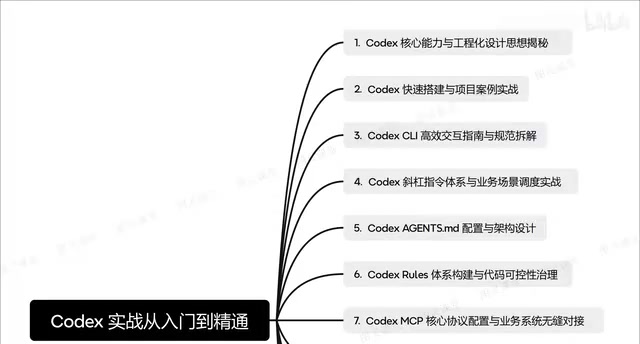
Codex in Practice: From Installation and Configuration to Multi-Agent Collaboration
Based on a Bilibili Codex course overview, this guide maps the full path of AI coding assistants from installation and agents.md context design to CLI commands, MCP integration, and multi-agent collaboration.

Claude Code Installation and Model Switching Guide for Users in China
How can developers in China install Claude Code reliably? This article compiles a Bilibili creator's hands-on solution: install via NPM, skip official login, use CC Switch to configure API Keys and freely switch between DeepSeek, Kimi, and other models to avoid account bans.

AI Supply Chain Security: What Canary Tokens Reveal
Starting from a Hacker News discussion, this article analyzes the role of canary tokens in AI supply chain security: how they detect abnormal access to model weights, training data, and credentials, as well as coverage blind spots and cost constraints during implementation.