Nadella's Prediction: AI Agents Will Reshape the Rules of the Web Economy
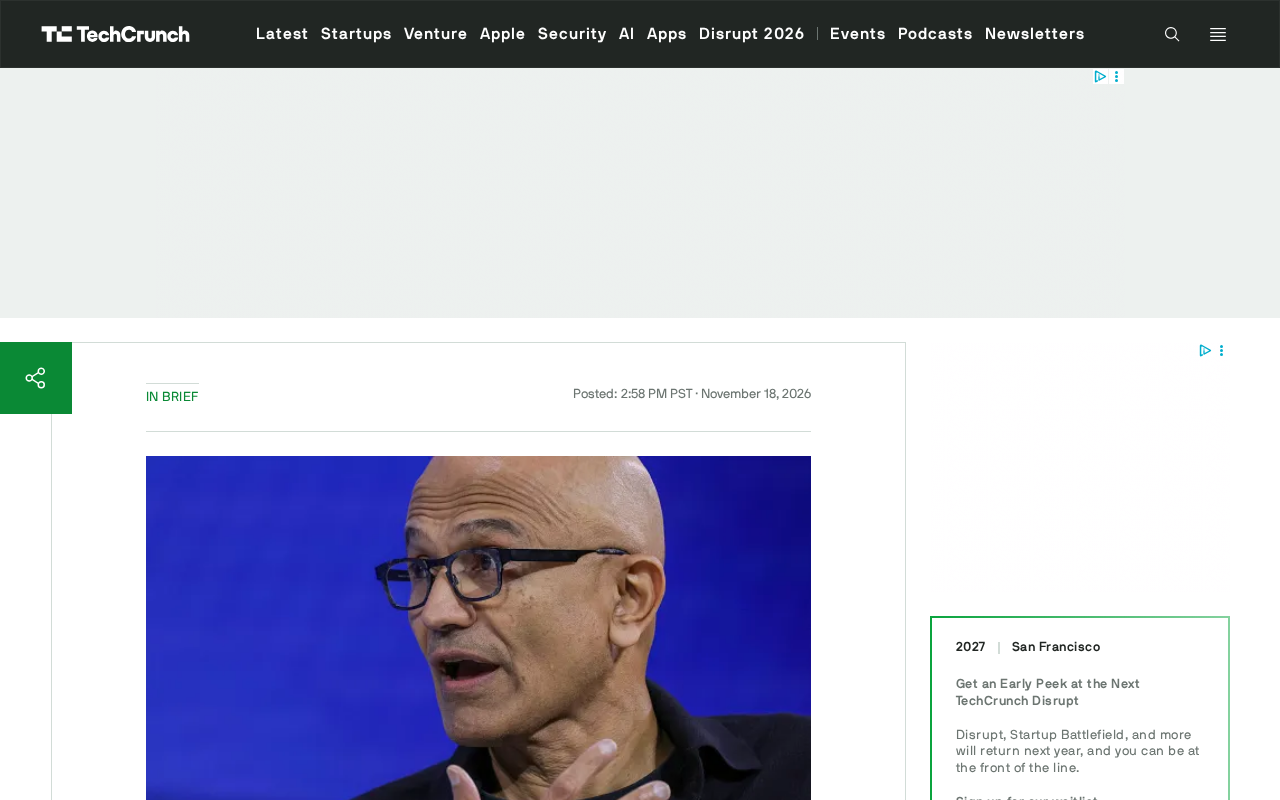
Nadella argues AI agents will bypass advertising interfaces and reshape the web economy and e-commerce competition logic.
Microsoft CEO Nadella judges that AI agents will reshuffle the internet economy, targeting advertising-driven business models. When agents can search, compare prices, filter, and order for users, the traditional "attract eyeballs, then convert to ads" chain is bypassed, compressing platforms' sellable attention inventory. The article notes that advertising relies on users passing through platform interfaces, while agents insert an autonomous decision layer between users and interfaces, forcing a revaluation of impression- and click-based pricing. For Amazon, the "search + recommendation + advertising" loop's starting point shifts from in-platform search to out-of-platform agent tasks, a warning to its moat. The agent economy also raises new questions about credibility, commissions, and agent commercialization, requiring platforms to redefine their roles.
Microsoft CEO Satya Nadella recently offered a judgment: AI agents will reshuffle the economic logic of the internet. It sounds like another tech leader's future prophecy, but its edge points at a very specific target — advertising-driven business models, and companies like Amazon that run on "competing for user attention."
The Real Impact Behind One Sentence
Nadella's core point isn't complicated: when AI agents can complete searches, compare prices, filter options, and even place orders on users' behalf, the traditional internet chain of "first attract eyeballs, then convert into advertising" gets bypassed. Users no longer need to browse pages themselves, click ads, or be steered by recommendation systems — agents execute their intent directly.
This means advertising no longer naturally sits in the middle of the user path. For the past two decades, the underlying assumption of the web economy has been that "attention can be packaged and sold," and AI agents are loosening that assumption. Nadella's use of the word "reshuffle" points to a reordering of how interests are distributed, not merely a technological upgrade.
AI Agents are software systems capable of perceiving their environment, autonomously planning, and executing multi-step tasks to achieve user goals — distinct from chatbots that only respond to single instructions. Their key capabilities include task decomposition, tool invocation (such as calling search APIs, price-comparison services, and payment interfaces), and cross-application orchestration. In the internet context, agents can replace users across the full chain of "search — filter — compare — order," inserting a layer of autonomous decision-making between the user and the platform interface. This layer shows no ads, isn't steered by recommendation algorithms, and optimizes directly for user intent — thus posing a structural shock to the advertising economy that depends on impressions and clicks for monetization.
Why the Advertising Model Is Hit First
Advertising-driven business models rely on one premise: users must pass through some "interface" so the platform can insert commercial information there. Search boxes, feeds, and product listing pages are all such interfaces. The intervention of AI agents amounts to adding an autonomous decision-making layer between users and interfaces.
Agents won't "glance at" banner ads, nor will they be led along by "you might also like." They act according to user goals: finding the most suitable product, the best price, the most hassle-free solution. For advertisers, there are fewer entry points to reach users; for platforms, the sellable attention inventory is compressed. What Nadella means by the "economics of the web" being rewritten is precisely that this system — priced on impressions and clicks — faces repricing.
The Attention Economy is the underlying logic of internet business models over the past two decades: platforms attract users to linger through free content or services, package that attention into advertising inventory, and charge advertisers by impression (CPM) or click (CPC). Its premise is that users must pass through a platform-controlled "interface" for the platform to insert commercial information. The intervention of AI agents loosens this premise — agents don't "browse" pages or "incidentally" see banner ads; they execute tasks directly toward goals. The result is that platforms' sellable attention inventory is compressed, the advertising pricing system faces revaluation, and this is the substance of what Nadella calls the "rewriting of the web's economics."
The Loosening of Amazon-Style Competition Logic
The material specifically notes that such changes will force companies like Amazon to rethink how they compete for customers. Amazon's competitiveness is largely built on a closed loop of "search + recommendation + advertising": users come to search for products, the platform displays sponsored product slots, and merchants pay for exposure.
If agents complete the shopping process for users, the starting point of this loop is no longer the user's search behavior inside the platform, but a task initiated by the agent outside the platform. The direct relationship between platform and user is weakened, and the value of the platform's advertising inventory is reassessed accordingly. Nadella's judgment is therefore not just a technology prediction but a reminder about the moats of e-commerce platforms.
The "search + recommendation + advertising" loop of e-commerce platforms is the core of moats for companies like Amazon: users enter the platform with purchase intent to search, the platform displays both organic results and sponsored product slots (Sponsored Products), merchants pay for higher exposure, and the platform thereby earns advertising revenue and strengthens user stickiness. The starting point of this loop is the user's active search behavior within the platform. When AI agents initiate shopping tasks for users outside the platform, the starting point of the loop moves outside the platform, the direct relationship between platform and user is weakened, and the value of advertising inventory is reassessed accordingly. This means the competitive focus of platforms may shift from "competing for user attention" to "competing for the right to be invoked by agents."
New Problems of the Agent Economy
Agents acting on users' behalf also raise a set of new questions: whom do agents listen to? Do they prioritize price, speed, or merchant commissions? If agents themselves become commercialized, will they turn into new "ad slots"?
These questions determine which direction the "reshuffle" ultimately takes. Nadella's prediction opens a window, but the specific rules inside that window — the credibility of agents, the settlement methods between merchants and agents, how platforms redefine their own roles — all remain unanswered. For companies dependent on advertising revenue, the real challenge isn't agent technology itself, but what remains of their business model when users no longer personally "browse" the web.
Final Thoughts
The value of Nadella's remark lies in pulling AI agents from a product topic into an economic-structure topic. Agents aren't just smarter assistants — they may be the hand that redistributes web traffic and commercial interests. Advertising-driven platforms need to answer a question they never had to answer before: when decision-making power shifts from the user interface to agents, what exactly are you selling?
One-line Summary
Nadella believes AI agents will bypass advertising interfaces and reshape the web economy and e-commerce competition logic.
Paragraph Summary
Microsoft CEO Nadella judges that AI agents will reshuffle the internet economy, with its edge aimed directly at advertising-driven business models. When agents can complete searches, price comparisons, filtering, and ordering for users, the traditional chain of "first attract eyeballs, then convert into advertising" is bypassed, and platforms' sellable attention inventory is compressed. The article's analysis points out that the advertising model depends on users passing through platform interfaces, while agents insert an autonomous decision-making layer between users and interfaces, putting the impression- and click-based pricing system up for revaluation. For Amazon, the starting point of the "search + recommendation + advertising" loop shifts from in-platform search to out-of-platform agent tasks, a reminder to its moat. The agent economy also brings new questions around credibility, commission attribution, and the commercialization of agents themselves, requiring platforms to redefine their roles.
Related articles

AI Writes Your Code—Do You Still Need to Learn Git? Five Reasons
AI coding agents handle Git operations automatically—is it still necessary to learn Git? Five reasons: team communication, reviewing agent PRs, monitoring code changes, fallback when AI goes down, and the joy of learning—plus how the focus of learning Git is shifting in the agent era.

Anthropic Reportedly Prices IPO at $83 Per Share, Valuing Company at $1.5 Trillion
Anthropic reportedly prices IPO at $83 per share, above the expected range, with a fully diluted valuation of $1.5 trillion. This article analyzes the signal significance of the pricing and its impact on the AI industry's financing environment.
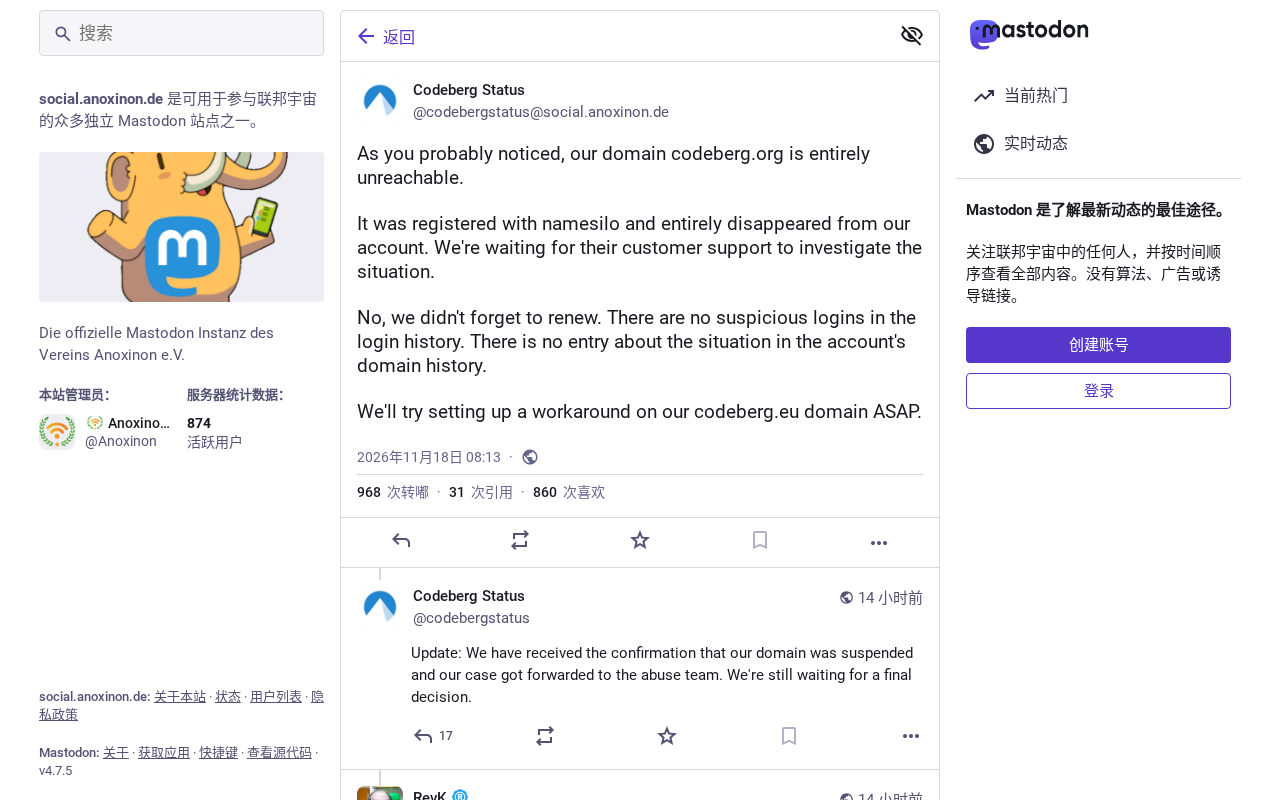
Open-Source Code Hosting Platform Codeberg Suffers Outage, Sparking Debate in Developer Community
Open-source code hosting platform Codeberg.org suffered an outage, sparking Hacker News debate over nonprofit platform stability and open-source infrastructure dependency risks.