Ninja AutoBarista Review: Versatile, But One Flaw Drove Me Away

Ninja AutoBarista uses Grind iQ to simplify espresso, but its versatility weighs on daily usability.
Ninja's AutoBarista automatic espresso machine features Grind iQ technology, which analyzes coffee beans to determine extraction parameters and lower the barrier to making espresso. The article notes this approach is valuable for beginners who don't want to master grind size, dose, and tamping, but the machine only provides a starting point—flavor still depends on user fine-tuning, so the intelligence is an assist rather than a replacement. The versatile integration reduces kitchen devices but lengthens interaction paths, creating friction in efficiency-focused scenarios like mornings. The reviewer's dealbreaker feature reflects this trade-off between features and usability, and such judgments are highly personal. The conclusion: users willing to get to know the machine and who value versatility will like it, while those seeking one-button simplicity should be cautious.
A Smart But Not Quite Hassle-Free Automatic Espresso Machine
Ninja's new AutoBarista automatic espresso machine tries to simplify the espresso-making process with a "thinking" chip. Its core selling point is a technology called "Grind iQ": the machine can analyze coffee beans and use that analysis to determine how to extract a shot of espresso. It sounds like barista expertise packaged into hardware, but in practice, this "intelligence" doesn't fully translate into a hassle-free experience.
Overall, the AutoBarista is a fairly comprehensive machine. It covers the entire chain from grinding to extraction, and through sensors and algorithms, it lets users switch between different beans without manually adjusting too many parameters. For people who want consistent results at home without diving deep into variables, this approach is appealing. The problem is that some of its design choices make daily use more cumbersome than expected.
What Grind iQ Actually Does
Letting the Machine Read Your Beans
Grind iQ's purpose is to take over some of the work that traditionally relies on human judgment. Traditional espresso involves many variables: roast level, freshness, grind size, dose, and tamping pressure all affect flow rate and flavor. AutoBarista's approach is to analyze the beans and suggest extraction settings, reducing the user's trial and error across these parameters.
The value of this approach lies in lowering the barrier to entry. For people new to espresso, the biggest obstacle is often not operating the equipment but "dialing in that good shot." If the machine can automatically match parameters to the beans' condition, it can absorb some of the uncertainty.
Espresso extraction is essentially a physical process: hot water under pressure passes through a compacted puck of coffee grounds, extracting soluble flavor compounds. Too fast a flow leads to under-extraction, with sour and thin flavors; too slow a flow causes over-extraction, producing bitterness and burnt notes. Grind size directly determines the puck's resistance, dose affects puck thickness and water flow path, and tamping pressure changes puck density—together these three determine flow rate. Additionally, darker roasts have a looser structure and extract more easily; beans that have rested longer release more carbon dioxide, making extraction less stable. "Dialing in" means finding balance among these interdependent variables, which is the fundamental reason home espresso has a high barrier to entry.
Smart Doesn't Mean Mindless
However, there's still a gap between "analyzing beans" and "one-button great coffee." The machine can read certain bean characteristics, but coffee flavor is subjective—the same bean might taste different to different people. Grind iQ provides a starting point, not an endpoint. Users still need to fine-tune based on their taste preferences, meaning this intelligence is more of an assist than a replacement.
This is the common situation for many smart coffee devices: algorithms can narrow the parameter range but cannot eliminate the磨合 process between human and machine. AutoBarista's performance here depends on whether users are willing to accept a collaborative model of "machine suggests first, human adjusts after."
In the coffee industry, this "machine suggests, human decides" model is not new. Commercial grinders and high-end home machines have long offered timed dosing and preset recipes, and some devices allow saving multiple parameter profiles. Grind iQ's difference is that it moves the basis for judgment to the beans themselves rather than merely recording the user's last settings. But technically, the machine can only obtain limited information—typically inferring from bean color, density, or manually entered roast info—and cannot truly perceive flavor. So it's closer to an "automated system that recommends starting parameters" rather than an intelligent agent that can closed-loop correct output quality. Understanding this boundary helps assess how much hassle such features actually save.
The Trade-offs Behind Versatility
AutoBarista's "versatility" is what earns it praise. One machine covering multiple drink needs can indeed reduce the number of devices on the kitchen counter. For users with limited space who want to try different coffee styles, this integration has real value.
But the more functions, the longer the interaction path often becomes. Each added mode or adjustable parameter requires one more choice or confirmation from the user. In daily use, this accumulation becomes an operational burden, especially in scenarios like rushed mornings when you just want a quick cup. The "dealbreaker" feature mentioned by the reviewer is exactly this kind of trade-off concentrated—it's not that performance is insufficient, but that some step in the workflow feels awkward, affecting the overall experience.
It's worth emphasizing that this "dealbreaker" is highly personal. The same feature might be a minor annoyance for users who enjoy tinkering, but a decisive issue for those seeking simplicity. So when judging whether AutoBarista suits you, knowing which type of user you are matters more than reading the spec sheet.
Who Is This Machine For
If your goal is to explore different beans, you're willing to spend time getting to know the machine, and you value the integration of one device covering multiple drinks, AutoBarista's versatility is a solid plus. Grind iQ provides valuable reference when switching beans, reducing blind adjustments.
If what you want is a "put it in, press a button, take it out" machine, then no amount of smart features may offset the friction in daily operation. AutoBarista is positioned more as a "thoughtful assistant" than a "fully hands-off black box." Understanding this is key to having reasonable expectations of its performance.
Conclusion
Ninja AutoBarista demonstrates an interesting direction: using sensors and algorithms to bring some of a barista's judgment into home devices. Grind iQ makes the machine more adaptable when switching beans, and the versatile design solves the problem of too many countertop devices. But it also reminds us that the value of smart appliances isn't just the length of the feature list, but whether those features truly reduce the burden of daily operation. For the reviewer, one design choice was enough to be a reason to walk away; for other users, this machine may land right in their sweet spot. Before choosing, clarify whether you care more about "what it can do" or "how smoothly it works."
Related articles
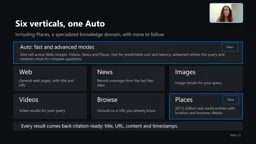
Microsoft WebIQ: Verifiable Real-Time Web Grounding for AI Agents
Microsoft WebIQ gives AI Agents real-time, citable web grounding across web, news, images, videos, and Places—164ms P95 latency, 50% fewer tokens, Scopes source control, and MCP integration.
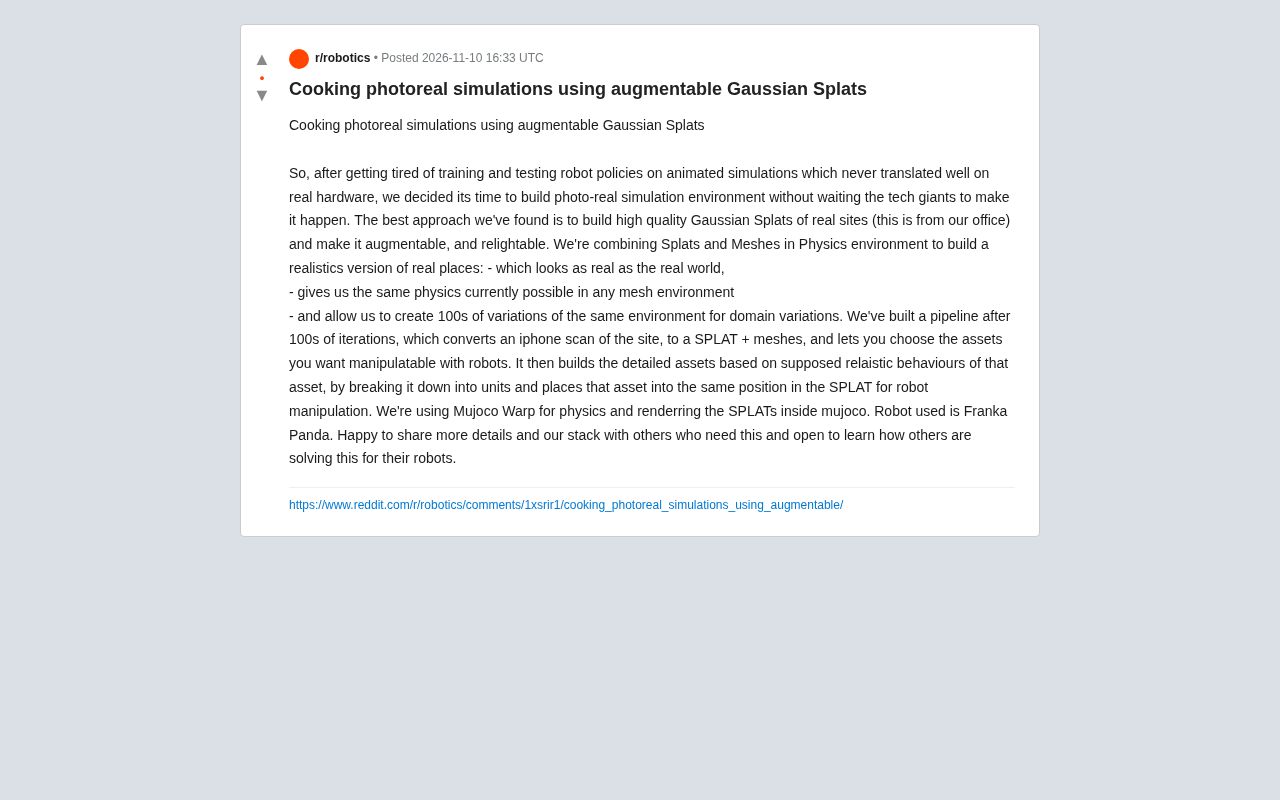
Augmentable Gaussian Splatting: Building Photorealistic Simulation Environments for Robot Training
Team combines Gaussian Splatting with meshes to build photorealistic robot simulation environments, integrating MuJoCo Warp physics and Franka Panda for augmentable, relightable real-site simulation.

Gemini 4 Carbon Released: The Leap from Gemini 3 to Gemini 4 in Under a Year
Google releases Gemini 4 Carbon, less than a year after Gemini 3. In the official demo, Carbon reverse-engineered the Theme Park binary, added a new DeepMind-themed ride, and ported it to the web in one shot.