Nuclear Startup Bluecore Raises $60M in Just Two Months
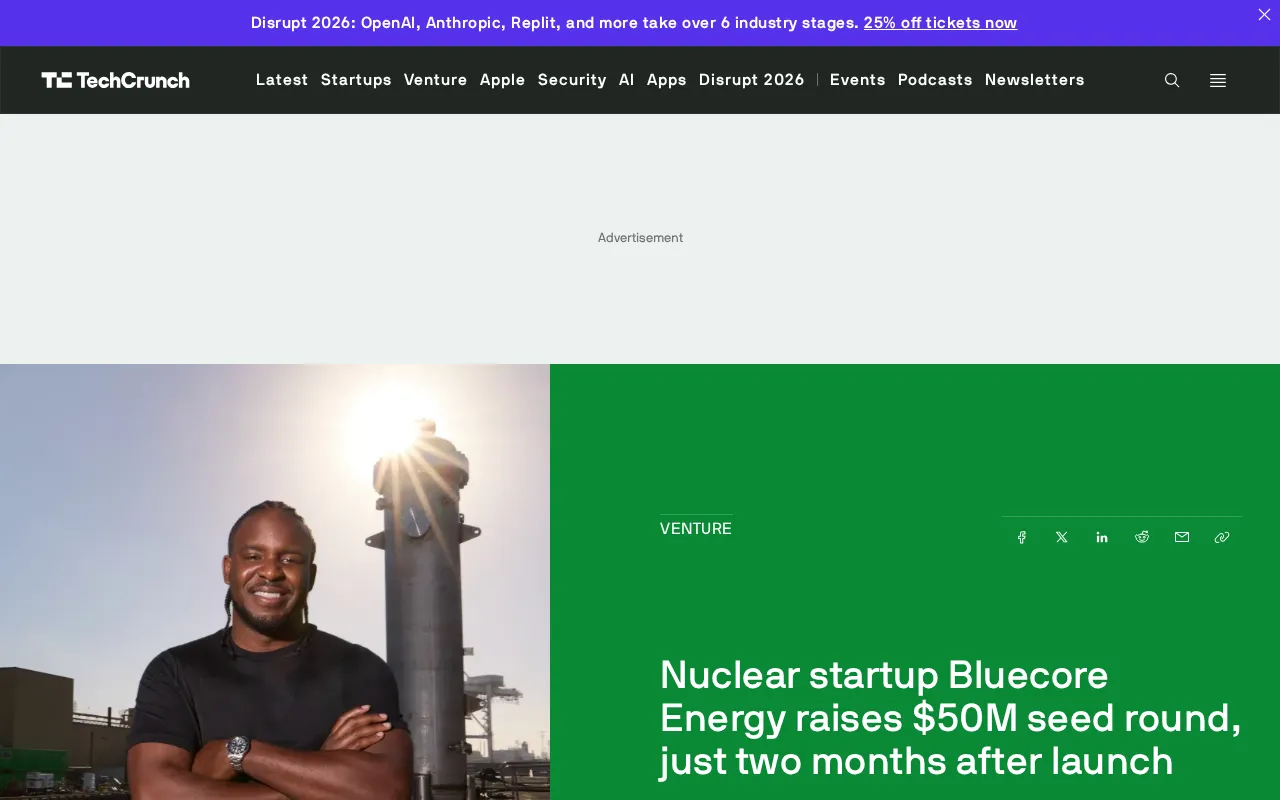
Nuclear startup Bluecore Energy raises $60M in two months, reflecting surging investor interest in clean baseload power.
Just two months after emerging from stealth, Bluecore Energy closed an oversubscribed $50M seed round on top of a prior $10M pre-seed, totaling $60M raised at a pace rarely seen in nuclear energy. The trend reflects surging electricity demand from AI data centers and industrial electrification, alongside maturing technologies like SMRs and Gen IV reactors that are making nuclear attractive again as clean baseload power. Tech giants like Microsoft and Google signing nuclear PPAs have further validated the momentum. Bluecore's next challenge is converting capital into technical proof points and NRC regulatory progress.
Record-Breaking Fundraising Speed
Nuclear energy startup Bluecore Energy announced on Tuesday the closing of an oversubscribed $50 million seed round — just two months after emerging from stealth. What makes this even more striking is that the company had already closed a $10 million pre-seed round shortly before, bringing its total raised to $60 million in a matter of months.
This pace is virtually unheard of in the nuclear industry. Traditional nuclear projects typically take years to secure comparable capital, given the technical complexity and regulatory requirements involved. Bluecore's rapid fundraising signals strong investor confidence in next-generation nuclear technology and the urgent demand for clean baseload power amid the global energy transition.
A Nuclear Renaissance in the Capital Markets
Bluecore Energy's fundraising success is a snapshot of the broader nuclear revival underway. As AI data centers, EV charging infrastructure, and industrial electrification drive a surge in electricity demand, investors are taking a fresh look at nuclear's value proposition. Unlike intermittent renewables, nuclear delivers stable, around-the-clock baseload power — something both corporations and governments chasing net-zero targets urgently need.
The oversubscribed seed round signals that, despite nuclear's reputation for long investment timelines and high upfront costs, the market remains highly enthusiastic about startups with genuinely innovative technology. This appetite likely stems from recent breakthroughs in small modular reactors (SMRs), microreactors, and other new technology paths that promise to significantly cut the cost and construction time of nuclear plants.
Technology Directions in the New Nuclear Era
While Bluecore's specific technology approach hasn't been fully disclosed, the speed at which it attracted capital suggests the company may have achieved meaningful breakthroughs in key areas. The leading directions in nuclear entrepreneurship today include:
- Generation IV reactor technology: Uses liquid metal or molten salt coolants for substantially improved safety
- Small modular designs: Factory-fabricated and shipped to site, dramatically shortening construction timelines
- Advanced fuel cycle technology: Can use existing nuclear waste as fuel, addressing the long-standing waste disposal challenge
Challenges Ahead
Nuclear startups still face serious headwinds. The U.S. Nuclear Regulatory Commission (NRC) licensing process can take years, and even innovative designs must pass rigorous safety reviews. Beyond regulation, public acceptance of nuclear energy, final disposal of nuclear waste, and competition from rapidly cheapening solar and wind power are all real challenges Bluecore will need to navigate.
Industry Outlook
Bluecore's fundraising milestone injects confidence into the broader nuclear startup ecosystem. As tech giants like Microsoft and Google begin signing nuclear power purchase agreements to fuel their data centers, nuclear is moving from the margins back toward the center of the energy system.
For Bluecore, the critical next step is converting capital into technical validation and regulatory progress. With solid funding in place, the company needs to accelerate its demonstration projects, secure NRC design certification, and build a reliable supply chain. If it succeeds, Bluecore has a real shot at becoming a defining company of the next nuclear generation — and a meaningful player in the global energy transition.
Related articles

Vibe Coding Full-Stack in Practice: AI Programming from Beginner to Enterprise Deployment
From Cursor to Claude Code, this Bilibili AI programming course uses four progressive projects to cover full-stack development, open-source secondary development, and team collaboration. The article analyzes the shock to frontend roles, the efficiency shift from 50 people to 5, and the methodology required for enterprise-grade projects.

David Blaine's Global Quest for Real Magic: From South Africa to Japan and India
David Blaine travels to South Africa, Japan, and India in his Do Not Attempt special, documenting Spinning drivers, black mamba rescuers, iaijutsu masters, and ascetics—exploring the boundary between magic and real human极限 challenges.

Is a Touchscreen MacBook Coming? Vergecast Reveals Apple Executive's Response
Vergecast podcast reveals a conversation between a reporter and Apple executive John Ternus about a touchscreen MacBook and Apple Pencil support. Ternus says iPad is the best device for a stylus, while the reporter bets MacBook will eventually support Apple Pencil.