NVIDIA Investigates Jensen Huang's Relationship with Alleged Chinese Spy
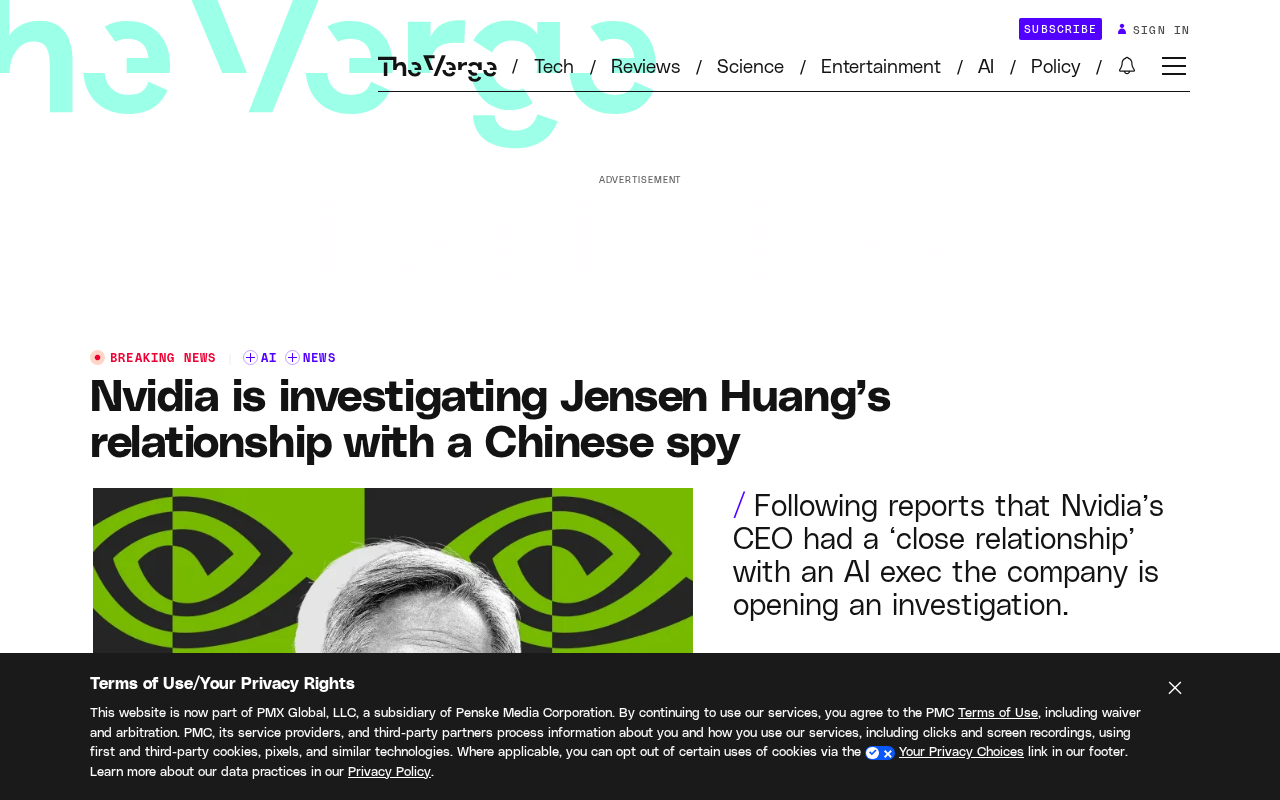
NVIDIA's board has launched an independent investigation into CEO Jensen Huang's relationship with Megaspeed executive Alice Huang, who faces espionage allegations.
NVIDIA's board announced an independent investigation into the relationship between CEO Jensen Huang and Megaspeed executive Alice Huang. Alice Huang is alleged to have been recruited by China's Ministry of State Security to gather NVIDIA trade secrets, but the claim is only a media allegation and has not been judicially confirmed. Sources disagree on whether the investigation focuses on Huang's knowledge and possible leaks or on internal security review processes. NVIDIA has disclosed no further details beyond a brief statement, and Jensen Huang has not responded. The incident comes amid peak AI chip demand and tightening U.S.-China export controls, and could affect NVIDIA's China business and heighten geopolitical risks in the semiconductor industry. The investigation's outcome will determine whether management changes are triggered.
Title
NVIDIA Investigates Jensen Huang's Relationship with Alleged Chinese Spy
Meta Description
NVIDIA's board has launched an independent investigation into CEO Jensen Huang's relationship with Megaspeed executive Alice Huang, who is alleged to have been recruited by China's Ministry of State Security for espionage. This article outlines the origins of the incident, cross-verification of information from multiple sources, and the impact on the semiconductor industry.
Article Content
NVIDIA's board of directors recently announced that it is conducting an independent investigation into the relationship between CEO Jensen Huang and Megaspeed executive Alice Huang. According to multiple reports, Alice Huang is alleged to have been recruited by China's Ministry of State Security (MSS) to gather NVIDIA's trade secrets. The news has drawn widespread attention across the technology and semiconductor industries, and has raised new scrutiny of NVIDIA's corporate governance and data security.
Origins of the Investigation and Official Statement
NVIDIA's board issued a brief statement saying that "in light of recent developments, the NVIDIA Board of Directors is initiating an independent investigation." The statement did not disclose the specific scope, timeline, or individuals involved, but clearly pointed to the connection between Jensen Huang and Alice Huang.
According to analyses by Bilibili creators and YouTube channels, Alice Huang holds a senior executive position at Megaspeed, which has business dealings with NVIDIA. Reports allege that she was recruited by China's Ministry of State Security for the purpose of obtaining sensitive NVIDIA information. If true, the allegation would involve sensitive areas such as commercial espionage and export controls.
At present, apart from the board's brief statement, NVIDIA has not provided further details. Jensen Huang himself has not publicly responded. The independence of the investigation will be led by the board, which may indicate that the company wishes to maintain some distance from the CEO in order to preserve investor confidence.
Independent investigation typically refers to a review, commissioned by the board (often through its audit committee or a special committee), of outside counsel or forensic firms to examine possible misconduct by company executives without management interference. Its core lies in procedural independence: investigators do not report to the subject of the investigation, and findings are submitted directly to the board. In U.S.-listed company governance practice, such investigations are common in cases of financial fraud, insider trading, or conflicts of interest; cases targeting a sitting CEO are relatively rare, so once launched, they are often interpreted by the market as meaning the board has already obtained preliminary leads or is facing external pressure.
China's Ministry of State Security is a component department of the State Council responsible for counter-espionage, intelligence, and national security-related work, and public information about its personnel composition and methods of operation is extremely limited. It should be noted that U.S. officials and media have repeatedly alleged that Chinese intelligence agencies obtain technical information through commercial channels, but such allegations usually rely on intelligence assessments rather than public evidence, and the accused parties often deny them. Therefore, the "recruited" claim in this article is an allegation in media reports, not a fact confirmed through judicial proceedings, and should be distinguished from a court conviction when reading.
Cross-Verification of Information from Multiple Sources Behind the Incident
Multiple independent sources have reported on the incident, but they differ on key details. According to analyses by Bilibili creators and YouTube channels, Alice Huang's identity as a spy is "reported" rather than a conclusion already established by a court. Some sources emphasize that her "relationship" with Jensen Huang is the focus of the investigation, but do not specify whether it is a business relationship or a personal one.
Regarding disagreements, one view holds that the investigation mainly focuses on whether Jensen Huang knew of Alice Huang's spy identity and whether sensitive information was leaked in business dealings; another view holds that the investigation focuses more on the company's internal security review processes rather than on the CEO personally. These disagreements reflect the incompleteness of the information.
The only thing that can be confirmed is that NVIDIA's board has already taken formal action. For a semiconductor company with one of the highest market capitalizations in the world, launching an independent investigation into its CEO is itself a major event, and regardless of the final outcome, it will affect the company's reputation and operations.
Impact on NVIDIA and the Semiconductor Industry
NVIDIA is at the peak of demand for AI chips, and its GPU products are the core of global AI infrastructure. Any incident involving China and U.S. national security could affect its business in the Chinese market, and China is one of the world's largest semiconductor consumer markets.
From a corporate governance perspective, the board's launch of an independent investigation shows that NVIDIA is trying to respond to outside doubts through procedural fairness. This approach is not common among technology companies, especially investigations targeting a sitting CEO. If the investigation finds misconduct, it could lead to management changes; if it finds none, it could help clarify the facts.
For the semiconductor industry, this incident once again highlights geopolitical risks. U.S. export controls on China have already restricted NVIDIA's sales of high-end chips to China, and espionage allegations could further intensify tensions. Other technology companies may also strengthen internal security reviews as a result, especially in areas involving China business and personnel exchanges.
U.S. export controls on China have been gradually tightened since 2022. Sales of high-end AI chips to China require a license from the Bureau of Industry and Security (BIS) of the Department of Commerce. NVIDIA has therefore successively launched the A800, H800, and subsequent special models to meet performance thresholds, but these models were later also included in the restrictions. Although export controls and espionage allegations belong to different legal frameworks—the former is administrative regulation, while the latter involves criminal and counter-espionage law—their practical impact can compound: stricter compliance reviews will raise transaction costs involving Chinese customers and personnel, and may also prompt companies to tighten internal information classification and personnel background checks.
Unresolved Questions and Follow-Up Points of Attention
The incident is still at an early stage, and many key questions remain unanswered: who is leading the investigation, whether a report will be made public, whether Jensen Huang is cooperating, what Alice Huang's current situation is, and what Megaspeed's response is. The answers to these questions will determine the direction of the incident.
Investors and industry observers should pay attention to NVIDIA's official announcements and regulatory filings, as well as whether relevant U.S. authorities become involved. If the incident escalates into a criminal investigation, the impact will go far beyond the corporate governance level. With limited information, maintaining caution and rationality and avoiding overinterpreting reports from a single source is the most appropriate stance at present.
As a U.S.-listed company, NVIDIA must report material events to investors through SEC disclosure filings such as 8-K, 10-Q/10-K. Whether an event is "material" depends on its impact on the decision-making of a reasonable investor. Whether the board's launch of an investigation into the CEO triggers a disclosure obligation must be judged in light of the investigation's scope and potential consequences. In addition, if the allegations involve economic espionage, they may involve the U.S. Department of Justice and the Federal Bureau of Investigation. Once criminal proceedings begin, both the company's disclosure obligations and the pace of the internal investigation will change. Therefore, follow-up attention should focus on SEC filings, formal company announcements, and public signals of whether regulators become involved.
One-line Summary
NVIDIA's board has launched an independent investigation into CEO Jensen Huang's relationship with Megaspeed executive Alice Huang, who faces espionage allegations.
Paragraph Summary
NVIDIA's board announced an independent investigation into the relationship between CEO Jensen Huang and Megaspeed executive Alice Huang. According to reports, Alice Huang is alleged to have been recruited by China's Ministry of State Security to gather NVIDIA trade secrets, but this claim is currently only an allegation in media reports and has not been judicially confirmed. Sources disagree on the focus of the investigation: whether it is on whether Huang knew and whether sensitive information was leaked, or on the company's internal security review processes. Apart from a brief statement, NVIDIA has not disclosed further details, and Jensen Huang himself has not responded. The incident occurs against the backdrop of peak demand for NVIDIA's AI chips and continuously tightening U.S.-China export controls, and may affect its China market business and intensify geopolitical risks in the semiconductor industry. The outcome of the investigation will determine whether management changes are triggered.
Related articles
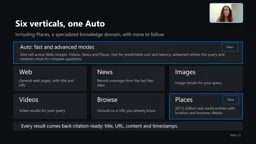
Microsoft WebIQ: Verifiable Real-Time Web Grounding for AI Agents
Microsoft WebIQ gives AI Agents real-time, citable web grounding across web, news, images, videos, and Places—164ms P95 latency, 50% fewer tokens, Scopes source control, and MCP integration.
Augmentable Gaussian Splatting: Building Photorealistic Simulation Environments for Robot Training
Team combines Gaussian Splatting with meshes to build photorealistic robot simulation environments, integrating MuJoCo Warp physics and Franka Panda for augmentable, relightable real-site simulation.

Gemini 4 Carbon Released: The Leap from Gemini 3 to Gemini 4 in Under a Year
Google releases Gemini 4 Carbon, less than a year after Gemini 3. In the official demo, Carbon reverse-engineered the Theme Park binary, added a new DeepMind-themed ride, and ported it to the web in one shot.