Nvidia's Turmoil Has Israeli VCs Eyeing Challenger Opportunities

Nvidia's dominance makes Israel's AI ecosystem both anxious and alert to challenger opportunities.
Israel's VC community is split on Nvidia's dominance: entrepreneurs fear local AI startups are deeply tied to the GPU and CUDA ecosystem and will suffer chain reactions from any Nvidia strategic shift, while some VCs see the monopolist's loosening as a window for challengers, with opportunities in chip alternatives, CUDA migration tools, and inference cost optimization. Challengers face high barriers in software ecosystems and developer habits, and Israeli teams prefer finding openings in niche scenarios. A slowdown in Nvidia's expansion could also reshape local talent flows and M&A pace, forcing founders to redesign exit paths. Anxiety and opportunity coexist, pointing to ecosystem reshuffling under a changing unipolar AI compute landscape.
Nvidia's dominant position in AI chips is leaving Israel's venture capital scene in a state of subtle anxiety. According to foreign media reports, many participants in Israel's startup ecosystem worry that if Nvidia's dominance begins to loosen, the entire local AI industry built on its tech stack will be hit. At the same time, a group of VCs sees a window of opportunity for challengers to rise.
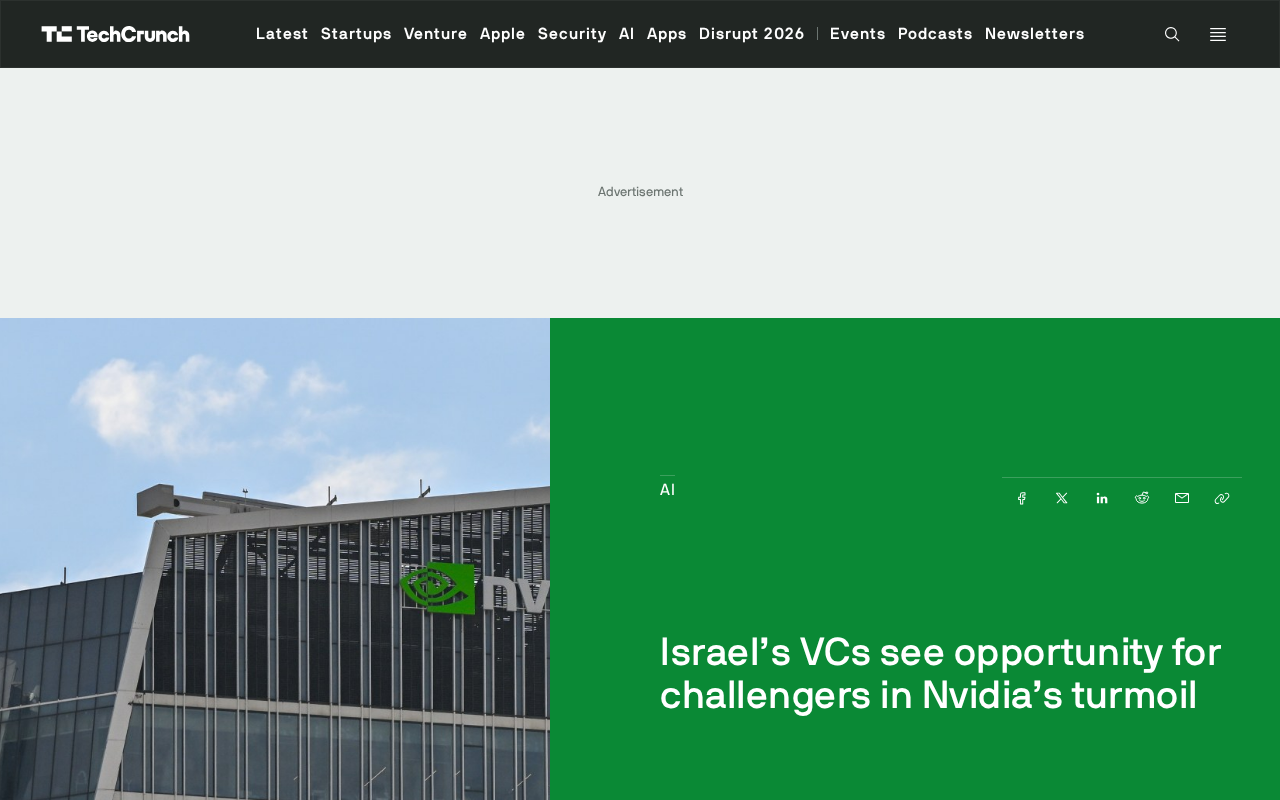
Why Nvidia Matters So Much to Israel
Nvidia's presence in Israel goes far beyond selling chips. Over the past few years, the company has built large R&D centers in Israel and brought local AI talent under its wing through multiple acquisitions. Many Israeli AI startups build their products around Nvidia's GPU ecosystem—from model training to inference deployment, it's nearly impossible to avoid the CUDA platform.
This deep integration means that any strategic shift at Nvidia—whether a change in product roadmap, supply fluctuations, or organizational restructuring—will ripple through the supply chain to Israeli startups. The report notes that it is precisely this high dependence that makes the local ecosystem especially sensitive to Nvidia's "turmoil."
CUDA (Compute Unified Device Architecture) is a parallel computing platform and programming model introduced by Nvidia in 2006, through which developers call on GPUs for general-purpose computing. After nearly two decades of accumulation, CUDA has formed a vast library ecosystem (such as cuDNN and TensorRT) and developer community, becoming the de facto standard for AI training and inference. Its lock-in effect comes not only from the technology itself but also from the massive amount of existing code, tutorials, and talent pool—migrating to another platform means rewriting low-level code and retraining teams, making migration costs extremely high. This is the structural reason why Israeli startups find it hard to avoid CUDA.
The VC Perspective: Cracks in the Monopolist's Armor Are the Entrepreneur's Entry Point
In contrast to entrepreneurs' concerns, some Israeli VCs view Nvidia's difficulties as an opportunity. The logic is not complicated: when one company holds absolute dominance in the AI compute market, the survival space for alternatives is severely compressed; but once the dominant player shows signs of fatigue, customers will actively seek a second supplier, and capital will be willing to bet on challengers.
Such opportunities may emerge at several levels. First, chip-level alternatives, including specialized accelerators and novel architectures; second, software-level compatibility and migration tools that help enterprises reduce their lock-in to CUDA; third, new infrastructure focused on inference cost and energy efficiency optimization. Israeli teams have deep accumulated expertise in chip design, system software, and AI infrastructure—areas that fall squarely within their capabilities.
The Realistic Hurdles for Challengers
Opportunity exists, but that doesn't mean the path is smooth. Nvidia's moat comes not only from hardware performance but also from years of accumulated software ecosystem and developer habits. Any challenger needs to answer a practical question: why would customers switch? Israeli VCs don't shy away from this point; their judgment leans toward finding openings in niche scenarios rather than directly replicating a general-purpose GPU giant.
"Challenger" in a business context refers to emerging companies that challenge an existing market leader. In the AI chip field, such challengers include specialized accelerator companies like Graphcore and Cerebras, as well as cloud providers' in-house chips (such as Google TPU and Amazon Trainium) and solutions derived from the open-source instruction set architecture RISC-V. Their common strategy is not to match Nvidia across the board but to build cost-performance advantages in specific workloads (such as inference or sparse computing) or with specific customers (such as hyperscale data centers), gradually eroding the edge of the market.
Specialized accelerators refer to chips with hardware architectures customized for specific computational tasks (such as matrix multiplication or convolution), with typical examples including Google TPU, Groq's LPU, and Tesla Dojo. Compared with general-purpose GPUs, specialized accelerators offer higher energy efficiency and lower cost on target workloads, but they lack flexibility and struggle to adapt to rapid algorithm iteration. Novel architectures cover directions such as in-memory computing, photonic computing, and Chiplet integration, attempting to break through the von Neumann bottleneck at the physical level. For Israeli teams, the technical barriers in these directions are highly related to system software capabilities—precisely the strength of their talent pool.
Chain Reactions for Israel's AI Ecosystem
Nvidia's turmoil could also change the flow of local talent in Israel. When a giant's expansion slows, some engineers and researchers will move to startups—something that has happened many times throughout history. For early-stage funds, improved talent supply is often more important than the technology roadmap.
Another observation point is the M&A market. If Nvidia's acquisition pace slows due to its own adjustments, local AI startups may need to consider independent commercialization earlier or turn to other strategic buyers. This will force founders to redesign their exit paths and make VCs more cautious about investment terms.
In the venture capital context, "exit path" refers to the way investors realize returns, mainly including IPOs, acquisitions by strategic buyers, and secondary market equity transfers. Israeli AI startups have historically relied heavily on acquisitions by multinational tech giants as their main exit channel, and Nvidia itself has been an active buyer. When a giant's acquisition pace slows, founders need to validate independent commercialization capabilities earlier or turn to alternative liquidity options such as private equity and secondary funds, which directly changes the valuation logic and bet structure in financing terms.
Conclusion: Anxiety and Opportunity Coexist
Reactions within Israel's VC community to Nvidia's turmoil are not uniform. Entrepreneurs' concerns are real—their products and business models are deeply embedded in Nvidia's ecosystem; and VCs' opportunity judgments are equally well-founded—any loosening of the monopoly structure will release new competitive space. The two sentiments are not contradictory; together they describe the same industrial reality: when the unipolar structure of AI compute shows signs of change, the entire ecosystem attached to it will reshuffle—and reshuffling itself is the scenario most familiar to entrepreneurs and investors.
One-line Summary
Nvidia's dominance leaves Israel's AI ecosystem both anxious and seeing challenger opportunities.
Paragraph Summary
Israel's VC community is divided in its response to Nvidia's dominant position: entrepreneurs worry that local AI startups are deeply tied to the GPU and CUDA ecosystem, and that any strategic shift at Nvidia will cause chain reactions; some VCs see the monopolist's loosening as a window for challengers, with opportunities concentrated in niche areas such as chip alternatives, CUDA migration tools, and inference cost optimization. Challengers face high barriers from software ecosystems and developer habits, and Israeli teams tend to seek openings in niche scenarios. A slowdown in Nvidia's expansion could also change local talent flows and M&A pace, forcing founders to redesign exit paths. Anxiety and opportunity coexist, together pointing to ecosystem reshuffling amid changes in the unipolar AI compute landscape.
Related articles
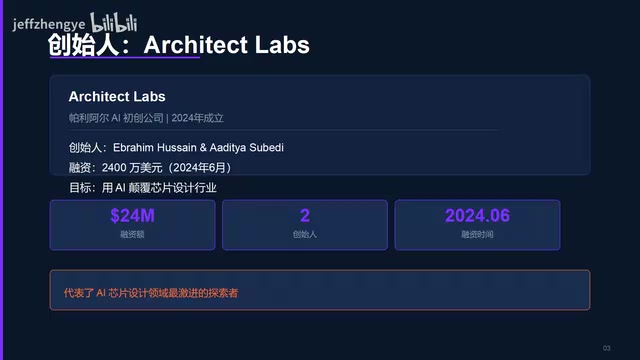
AI Independently Designs CPU Architecture 'Frostbite': 4.59x Energy Efficiency Boost
AI independently designed the complete CPU architecture Frostbite, achieving 4.59x better energy efficiency and 8.77x better performance per unit area. This article analyzes Architect Labs' technical path, five-step design flow, foreign media commentary, and current limitations, exploring the potential impact of AI chip design on Intel, AMD, and the RISC-V ecosystem.

Meta's Your Algorithm: Reshaping Recommendation Ranking with Natural Language
Meta reveals technical details of Facebook's "Your Algorithm": users describe interests in natural language, and the system uses LLM validation, 4-channel retrieval, layered filtering, and a fine-tuned LLM re-ranker to turn preferences into Feed and Reels ranking signals.

Huawei Found Liable for Trade Secret Theft: A New Legal Flashpoint in US-China Tech Rivalry
A jury found Huawei liable for stealing US trade secrets involving T-Mobile and Cisco source code. This analysis examines the legal, business, and geopolitical implications and compliance lessons for Chinese tech firms.