On the Eve of Anthropic's IPO: The Token-Selling Business and the Battle for Pricing Power

Anthropic's revenue is essentially API token sales; valuation hinges on how long its frontier lead lasts.
Based on tech analyst Raphaëlle d'Ornano's views, the article dissects Anthropic's revenue structure and IPO logic. Consumer business is small; core revenue is token sales via cloud distribution, first-party apps, and embedding into its own products. Cloud providers take the largest share of sales and marketing costs. Token prices deflated 754x in a year, but frontier tokens deflate little, forming the basis of pricing power. With compute costs rising, a two-way squeeze makes selling at frontier prices essential. Anthropic's IPO pricing is essentially a bet on how long its frontier leadership lasts, not on token volume.
In discussions about Anthropic's (referred to in the original as "Entropic") IPO prospects, one fundamental question comes up repeatedly: what exactly makes up this company's revenue? Tech analyst Raphaëlle d'Ornano, from YouTube, offers a sharp assessment — Anthropic's revenue is essentially API revenue, not the kind of committed-subscription, visible revenue that traditional SaaS companies enjoy. This determines that its valuation logic, growth narrative, and even IPO pricing strategy are fundamentally different from other software companies.
Revenue Structure: Three Ways to Sell the Token Business
Anthropic's consumer business accounts for only a small portion of overall revenue; the real revenue engine is selling tokens. d'Ornano points out that tokens can be sold through three paths: first-party applications, cloud platform distribution, and embedding into its own products.
Cloud channels are currently the dominant distribution method. Cloud providers like Google and Amazon are both distributors and counterparties, taking a distribution fee from each transaction. d'Ornano states plainly that this distribution fee constitutes the largest chunk of Anthropic's sales and marketing expenses. In other words, while cloud providers help Anthropic reach customers, they also take a considerable share of the profit margin.

The remaining path is productization — embedding the API into its own products like Cowork and Claude Code (referred to in the original as "Clarkode"). d'Ornano emphasizes that the purpose of these products is not just user experience, but to give Anthropic control over "whom it sells revenue to" and "how to package and price it." Products are a means of holding pricing power, not merely a feature delivery vehicle.

The Basic Logic of Token and API Billing
Large language model inference uses tokens as the smallest unit of measurement: user prompts and model responses are both split into tokens, and the model bills based on the total number of tokens processed. API (Application Programming Interface) revenue means customers call the model programmatically and pay based on actual token consumption. This is fundamentally different from the traditional SaaS model of charging per seat or per month — the former fluctuates linearly with customer usage, while the latter has contractual commitments and predictable renewal cycles. Because of this, API revenue is financially closer to "consumption-based revenue," which has low visibility and high customer concentration risk. Valuation typically needs to distinguish between "committed consumption" and "on-demand consumption." This is also the technical root of why analyzing Anthropic repeatedly emphasizes its "lack of SaaS-style visibility."
Token Deflation: Why Selling Tokens Is a Problem
d'Ornano raises an easily overlooked industry fact: token prices deflated 754x in a single year. This figure comes from her analysis, meaning that if you simply sell tokens generically, prices will slide at an extremely rapid pace and revenue scale will be hard to sustain.

But there's a crucial stratification here: frontier tokens — the optimal tokens for completing the most complex tasks — experience very little price deflation. This explains a seemingly contradictory strategy: while token prices overall are plummeting, leading model vendors can still maintain relatively stable pricing. Selling ordinary tokens is a red ocean; selling frontier tokens is the moat.
This logic is essential to understanding Anthropic's IPO narrative. What investors need to see is not growth in token sales volume, but sustained leadership in frontier capabilities — and the ability to sell tokens at the highest possible price to the most suitable customers during the leadership window.
What Is Token Price Deflation?
Token price deflation refers to the rapid decline in the per-unit selling price of tokens over time. It is driven by three main factors: improvements in model architecture and inference efficiency reduce the compute consumption per token; hardware such as GPUs delivers better price-performance; and price wars among vendors fighting for market share. Leading vendors like OpenAI, Anthropic, and Google have cut API prices multiple times over the past two years, with some model tiers seeing reductions of more than an order of magnitude. The impact of deflation on revenue is double-edged: lower unit prices compress revenue, but if price cuts drive faster growth in call volume, total revenue can still expand. The key is whether price cuts happen within a "capability leadership" window — the scarcity of frontier models gives vendors short-term pricing power, but once capabilities are matched, prices quickly converge toward marginal cost. Understanding this mechanism is essential to understanding why the article treats "frontier leadership" as the core valuation variable.
Cost-Side Pressure: Compute Investment Only Goes Up
The other side of pricing power is cost. d'Ornano points out that Anthropic's input costs will only continue to rise — both training and inference require ever more compute. This means the company faces a two-way squeeze: token unit prices are deflating while compute cost per unit of output is inflating.
In this structure, "selling tokens at frontier prices" is not a slogan but a survival necessity. d'Ornano puts it directly: Anthropic's challenge today is how to sell tokens while continuously leading the frontier, and how to maximize "whom to sell to and how to sell" — thereby preserving pricing power against rising costs.
The Difference Between Training Cost and Inference Cost
Understanding Anthropic's cost structure requires distinguishing two types of compute spending. Training cost is a one-time, upfront capital investment used to train each new generation of frontier models, often reaching hundreds of millions to billions of dollars and rising with model scale. Inference cost is the ongoing expense incurred with each API call, directly tied to usage. Their economic meanings differ: training cost determines whether the company can maintain frontier capabilities, while inference cost determines the gross margin of each token sale. When token unit prices deflate while inference compute demand grows with usage, gross margins get squeezed from both sides; meanwhile, training investment must keep escalating to maintain leadership. This combination of "rising fixed investment + declining unit revenue" is the financial essence of what the article calls the "two-way squeeze" — and why high premiums on frontier tokens are essential to cover costs.
What It Means for the IPO
Connecting the logic above, Anthropic's IPO story differs fundamentally from traditional SaaS companies in three ways. First, revenue lacks subscription-style visibility; API revenue fluctuates with customer usage, requiring a rewritten valuation model. Second, cloud channels are both a growth engine and a profit drain — distribution costs directly erode sales efficiency. Third, frontier leadership is the sole source of pricing power; once the lead narrows, the pressure of token price deflation will immediately show up on the revenue side.
d'Ornano's analysis points to one conclusion: Anthropic's IPO pricing is essentially a bet on "how long frontier capabilities can stay ahead." Selling tokens is nothing special in itself — selling them at frontier prices is the real fulcrum of this company's valuation.
One-line Summary
Anthropic's revenue is essentially API token sales, and its valuation depends on how long its frontier capabilities can stay ahead.
Paragraph Summary
Based on tech analyst Raphaëlle d'Ornano's views, the article dissects Anthropic's revenue structure and IPO logic. Its consumer business is small; core revenue comes from selling tokens through three paths: cloud platform distribution, first-party applications, and embedding into its own products. Cloud channels are the dominant distribution method, but the distribution fees taken by cloud providers constitute the largest portion of sales and marketing expenses. Token prices deflated 754x in a year, but frontier tokens deflate very little, forming the basis of pricing power. Meanwhile, compute costs keep rising, creating a two-way squeeze, making it essential to sell tokens at frontier prices. Thus, Anthropic's IPO pricing is essentially a bet on how long its frontier leadership lasts, not on token sales volume.
Related articles

No Coding Required: He Shipped an App Store App by 'Cutting Features' and Nitpicking with AI
A game designer with zero frontend/backend skills shipped a dual-platform App Store app with AI—not via one-click generation, but by cutting scope and nitpicking like a demanding client.

What Is Harness Engineering? From Concept Origins to Enterprise-Level Agent Implementation
What is Harness Engineering? This article traces the concept's origins and analyzes enterprise-level Agent requirements for tool call fault tolerance, data security, tenant isolation, and memory gaps.
Coze in Practice: A Three-Tier Agent Classification and a Multi-Agent Collaboration Guide
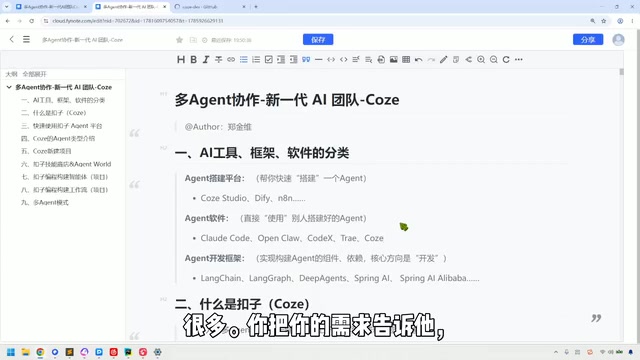
A Bilibili tutorial breaks down the multi-agent collaboration toolchain into three categories: building platforms like Coze Studio and Dify, Agent software like Claude Code, and development frameworks like LangChain—plus a Coze demo of industry templates, three-platform interoperability, local Agent integration, and the trade-offs of credit consumption.