Open-Source Humanoid Robot Asimov: Letting Humans and AI Share the Robot's Field of View

Asimov 1 achieves head teleoperation, letting humans and AI share the robot's first-person perception channel.
The open-source humanoid robot Asimov demonstrated head teleoperation on day 382: the operator's head movements drive the robot's 2-DoF neck, and the camera feed is transmitted back in real time, forming a low-latency first-person closed loop. The team emphasizes that the key design is opening both the camera feed and neck control interface to human operators and AI agents, enabling the robot's field of view to serve as an input source for agent decision-making and forming a perception-action loop. The project adheres to the open-source route, focusing on infrastructure like perception and teleoperation rather than flashy whole-body movements, paving the way for data collection, remote operations, and embodied intelligence training. The article argues that the bottleneck of humanoid robots lies not only in the mechanical body but more in how to effectively utilize perception data.
Open-Source Humanoid Robot Asimov: Letting Humans and AI Share the Robot's Field of View
The open-source humanoid robot project Asimov has reached day 382, and the team is testing a capability that seems simple but is highly extensible: head teleoperation. The operator's head movements directly drive the robot's neck (2 degrees of freedom), and the camera feed is transmitted back in real time, allowing the operator to observe the environment from the robot's first-person perspective.
The core of this test isn't how complex the mechanical structure is, but that it opens a door—humans and AI agents can share the same perception channel.
Head Teleoperation: From "Control" to "Shared Vision"
In the current demo, the operator controls the neck joints of Asimov 1 through head movements, achieving up-down and left-right rotation, while the camera feed is transmitted back to the operator's end. This is essentially a low-latency visual-action loop: you turn your head, the robot turns its head too, and what you see is what the robot sees.
The 2-DoF neck may seem simple, but it is the foundation for humanoid robots to achieve natural interaction. When humans converse, observe, and explore, head movements are frequent and unconscious. If the robot cannot replicate this movement pattern, teleoperation becomes clumsy, and data collection loses critical visual attention information.
The team emphasizes that this system is designed not only for human operators but also for AI agents. This means the robot's field of view is no longer just "a video stream for humans to watch," but can become an input source for agent decision-making.
Degree of Freedom (DoF) is a fundamental unit of measurement in robotics, referring to the number of dimensions in which a joint or mechanism can move independently. A 2-DoF neck typically corresponds to two rotational axes: "pitch (nodding up and down)" and "yaw (turning left and right)"; to achieve the full range of motion of a human neck, a third "roll (tilt)" degree of freedom is needed. More degrees of freedom make the robot's posture more flexible, but control difficulty, mechanical complexity, and cost also increase. Asimov's choice of a 2-DoF neck is a compromise between the need for natural interaction and engineering feasibility: pitch and yaw already cover most conversation gaze and environmental scanning scenarios, while the marginal benefit of roll is relatively limited. Understanding the concept of degrees of freedom helps assess the expansion space for future versions—adding a third degree of freedom means both the control interface and the AI decision space must be adjusted accordingly.
A Visual Interface Reserved for AI Agents
Traditional teleoperated robots often only consider the experience of human operators, with video streams being one-way and intended solely for human consumption. Asimov's design approach is different: the camera feed and neck control interface are exposed to both humans and AI agents simultaneously.
This brings several potential use cases. AI agents can receive images from the robot's perspective, autonomously decide "where to look," and then adjust the viewing angle through the neck control interface, forming a perception-action loop. For teleoperation scenarios, humans can take over remotely; for data collection scenarios, AI can automatically scan the environment and focus on key objects; for embodied intelligence research, this interface can serve as the front line of an agent's perception of the world.
In other words, the robot is no longer just a remotely controlled tool, but a perception platform shared by humans and AI.
The perception-action loop is the core operating paradigm of embodied intelligence: an agent first acquires environmental information through sensors (perception), makes decisions and executes actions based on it (action), and the action changes the environment, generating new perceptual input, and so on. In Asimov's head teleoperation, the camera is the perception end, and the neck control interface is the action end, forming a minimal but complete closed loop. The significance of this loop is that it enables agents to "actively acquire information" in the real physical world, rather than passively receiving images from a fixed viewpoint. Actively choosing the direction of observation is a key capability that distinguishes embodied intelligence from pure vision models—humans unconsciously turn their heads to focus on areas of interest when observing, and if AI agents can replicate this behavior, they can more efficiently explore the environment and collect high-quality training data within a limited field of view.
The Route Choice of an Open-Source Humanoid Robot
The Asimov project has chosen the open-source route, which is uncommon in the humanoid robot field. Most humanoid robot projects are either closed-source commercial ventures or remain in the laboratory stage. Open source means that hardware designs, control interfaces, and software stacks can be reused and modified by the community.
Judging from the progress on day 382, the team is not rushing to demonstrate complex whole-body movements, but focusing on "infrastructure" capabilities such as perception and teleoperation. Head teleoperation, first-person view transmission, and AI-accessible interfaces—these capabilities may not look flashy, but they are prerequisites for subsequent data collection, remote operations, and agent training.
This pragmatic pace also reflects a judgment: the bottleneck of humanoid robots lies not only in the mechanical body, but more in how to effectively utilize the robot's perception data. Letting both humans and AI "see the world through the robot's eyes" is paving the way for higher-level applications.
Open source for humanoid robots typically involves three levels: hardware design files (such as structural drawings, BOM lists), low-level control interfaces (APIs for joint actuation and sensor reading), and upper-level software stacks (perception, planning, teleoperation logic). The value of open source lies in lowering the barrier to replication, allowing research teams and developers to focus on algorithms and applications without building the body from scratch. But open source also faces practical challenges: the stability of the hardware supply chain, the attribution of safety responsibilities, and the ambiguity of commercialization paths. Asimov's choice of open source is essentially betting that "community collaboration accelerates iteration" is superior to "closed source protects technical advantages." For a field like humanoid robots where a standard paradigm has not yet formed, open source allows more people to validate ideas on the same platform, objectively accelerating the convergence of perception data formats and control interface specifications—this is the industry logic behind its route choice.
Beyond Teleoperation: The Imaginative Space of Data and Agents
When the robot's field of view can be accessed by both humans and AI simultaneously, the logic of data collection changes. The video streams generated by human teleoperation naturally carry annotations of operational intent—where the operator looks and why—and this information is valuable for training visual navigation and interaction models.
With AI agents connected, the same hardware can be used for autonomous exploration and data annotation. The agent decides the direction of observation, the robot executes neck movements, and the transmitted images are then used to evaluate the quality of the agent's decisions. This closed loop can accelerate the iteration of embodied intelligence policies.
What the Asimov team has shown so far is just a quick test, but the direction is clear: turning the robot into a shareable perception node rather than an isolated remote-controlled device.
One-line Summary
Asimov 1 achieves head teleoperation, allowing humans and AI to share the robot's first-person perception channel.
Paragraph Summary
The open-source humanoid robot Asimov demonstrated head teleoperation on day 382: the operator's head movements drive the robot's 2-DoF neck, and the camera feed is transmitted back in real time, forming a low-latency first-person closed loop. The team emphasizes that the key design of the system is to open both the camera feed and the neck control interface to human operators and AI agents simultaneously, enabling the robot's field of view to serve as an input source for agent decision-making and forming a perception-action loop. The project adheres to the open-source route, focusing on infrastructure such as perception and teleoperation rather than flashy whole-body movements, paving the way for subsequent data collection, remote operations, and embodied intelligence training. The article argues that the bottleneck of humanoid robots lies not only in the mechanical body but more in how to effectively utilize perception data.
Related articles

Gemini 4 Neon Released: A Balance Between Frontier Intelligence and Efficient Task Execution
Google DeepMind releases Gemini 4 Neon, focused on frontier intelligence and fast end-to-end task execution. This article breaks down its benchmark performance in coding, enterprise analysis, scientific reasoning, and cybersecurity, its four thinking levels, pricing, and safety alignment data.

Is AI the Culprit Behind Global Outages? The Trust Crisis Behind the NSA and FAA Failures
Fourth major failure in five days hits NSA classified network. Microsoft blames a software bug, FAA denies its new AI system, NSA says routine maintenance. Senator Warner suggests AI accelerates vulnerability discovery, leading to rushed fixes — while 39% of Americans already view AI negatively, exposing a deepening trust crisis.
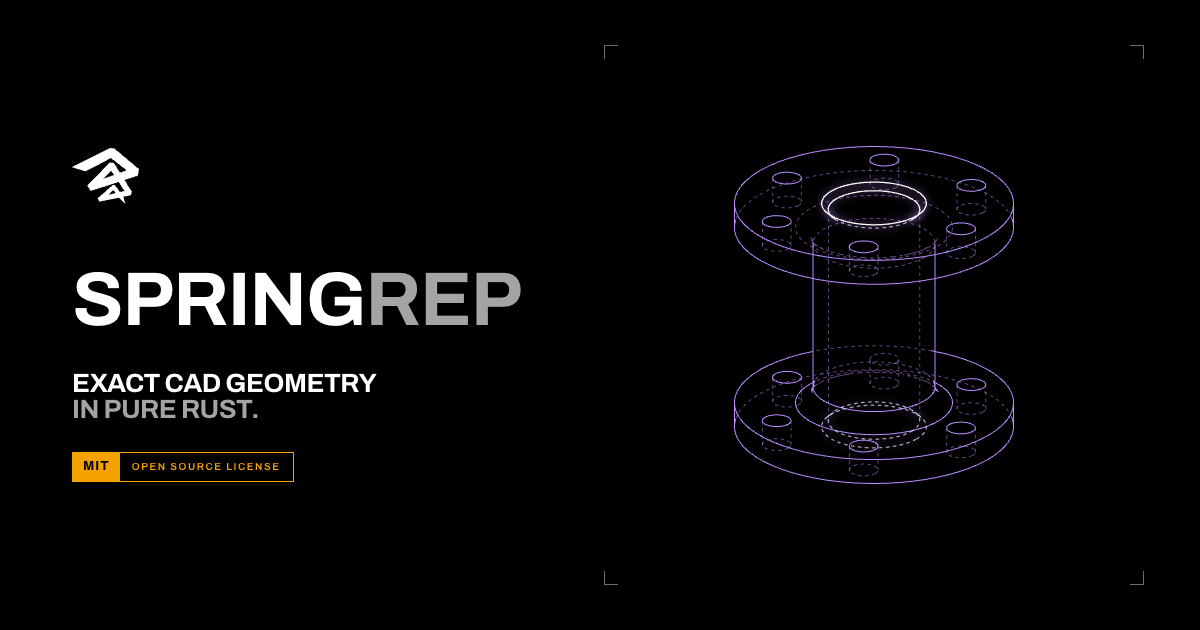
Robot Developer Builds Custom B-rep Kernel with 3,487 Tests
A robot developer builds a custom B-rep geometry kernel with 3,487 tests, exploring why robotics needs dedicated CAD tools and the barriers to building one.