OpenAI and Upwork Study: How AI Is Reshaping the Freelance Market

OpenAI and Upwork research shows AI is driving simultaneous migration of freelance demand structure, skill combinations, and project scale.
The joint OpenAI and Upwork study observes the freelance market from the demand side, finding that AI-related projects receive higher budgets and longer work hours, indicating a shift from experimental tasks to formal production. Market requirements are moving from single skills to a composite of domain expertise plus AI tools, with employers seeking people who can use AI to do their profession better. This migration brings both opportunity and pressure: AI skills command a pricing premium, non-AI project competition may intensify, and project upgrades raise delivery and project management thresholds. The study advises freelancers to identify AI signals in their categories, adjust service descriptions and portfolios, and embed AI capabilities in specific domain problems rather than showcasing tool proficiency in isolation.
When AI Meets Freelancing: A Shift in Demand Structure
The new joint study from OpenAI and Upwork turns the spotlight on the changes unfolding in the freelance market. Rather than getting stuck in the binary debate of "will AI replace jobs," the research approaches from the demand side, observing how employers' budgets, work hours, and skill requirements for AI-related projects are being rearranged. The conclusion points to a more nuanced picture: not a simple disappearance or explosion of jobs, but a simultaneous migration of demand structure, skill combinations, and project scale.
For freelancers who depend on platforms for work, this migration means both opportunity and pressure. AI-related projects command larger budgets and more work hours, but they also require practitioners to stitch traditional professional skills together with AI tool proficiency into a new capability stack.
Demand Is Tilting Toward AI-Related Projects
The most direct finding of the study is that demand for AI-related work on freelance platforms has changed noticeably. Employers allocate higher budgets and longer work hours to AI projects. This deserves elaboration: the simultaneous rise in budget and hours suggests these projects are not one-off small experiments but are being treated as formal work requiring sustained investment.
This tilt brings two knock-on effects. First, AI skills command a pricing premium, giving freelancers with relevant capabilities more leverage in negotiations. Second, competition for non-AI projects may intensify, as some budget and attention shift toward AI. Freelancers need to determine where their niche sits along this migration curve.
New Skill Combinations: Not Replacement, but Stitching
The "new skill combinations" mentioned in the study is a key signal. Market expectations for freelancers are shifting from single skills to composite capabilities—for example, design ability plus prompt engineering, writing ability plus model output review, development ability plus integration of AI toolchains.
This stitching-style capability requirement poses a learning challenge different from the past for freelancers. Traditionally, going deep in one vertical was the main path to building competitiveness; in an era where AI-assisted tools are widespread, whether one can effectively combine domain expertise with AI workflows is becoming a new dimension that distinguishes pricing levels. The message from the study is that employers are not looking for "people who can use AI" but for "people who can use AI to do their profession better."
Prompt Engineering refers to designing and optimizing instructions fed to generative AI models to reliably obtain outputs that meet expectations. It is not simply "knowing how to ask questions" but involves a systematic understanding of model capability boundaries, context length, few-shot guidance, role setting, and output format constraints. In freelance scenarios, prompt engineering is often combined with domain knowledge: designers use structured prompts to control visual style, writers use iterative prompts to complete drafts and revisions, and developers use prompts to drive code generation and testing. Notably, the barrier to prompt engineering is changing as model capabilities improve—basic techniques are becoming widespread, and what truly creates a premium is the ability to break down specific business problems and the judgment to review output quality, which is why the study emphasizes "stitching" rather than "replacement."
Market Signals Behind Rising Budgets and Work Hours
AI projects receiving larger budgets and more work hours reflects rising employer expectations for delivery quality on these projects. In the early stage, many AI-related tasks were experimental in nature, with limited budgets and short cycles; when the study observes budgets and hours rising together, it indicates this work is entering more serious production phases.
For freelancers, this is both an income opportunity and delivery pressure. Larger budgets often correspond to clearer outcome requirements and higher tolerance thresholds. Those who can deliver consistently on such projects will build resumes that are hard to replace; conversely, practitioners who rely solely on tool proficiency without domain judgment may be filtered out as projects upgrade.
Projects on freelance platforms are usually billed at fixed price or by the hour, and budget and hours are two independent signals: budget reflects the employer's expectation of the value of the outcome, while hours reflect their judgment of work complexity and sustained investment. When both rise together, it often means the project is moving from "proof of concept" to "production deployment," requiring steps such as data cleaning, process integration, quality evaluation, and iterative maintenance. This is consistent with the general path of enterprise AI adoption—small-scale experimentation first, then expansion to core business. For freelancers, understanding the characteristics of this stage helps determine where clients sit on the adoption curve, allowing them to adjust pricing strategy, delivery pace, and contract terms—for example, reserving hours for iteration and review to avoid taking on production-level demands at experimental-stage prices.
Practical Implications for Freelancers
Translating the study's conclusions into operational terms, there are several threads worth freelancers' attention. First, proactively identify growth signals of AI demand in your category, adjust your service descriptions and portfolio early, and let potential employers see your ability to integrate with AI workflows. Second, do not treat AI skills as a standalone selling point; embed them in specific domain problems and use cases to show how you improved delivery quality or efficiency with the help of tools. Third, pay attention to changes in project scale—projects with rising budgets and hours often require stronger project management and communication skills, and the value of these soft skills will be reassessed.
The study does not offer definitive predictions; it provides an observational framework: demand is migrating, skills are being recombined, and projects are upgrading. The freelance market has never been static, and this round of change brought by AI is testing practitioners' ability to redesign their own capability structures.
Frequently Asked Questions
What are the main conclusions of this study?
The OpenAI and Upwork study finds that demand for AI-related work in the freelance market is rising, with such projects receiving larger budgets and more work hours, while market requirements for skill combinations are also changing, with composite capabilities becoming more favored.
What should freelancers prioritize learning?
The study emphasizes skill combinations rather than single skills. The priority is to combine AI tool proficiency with one's own domain expertise to form composite capabilities that can solve specific problems, rather than pursuing tool proficiency in isolation.
What does rising budgets for AI-related projects mean?
When budgets and hours rise together, it usually means projects are shifting from experimental to formal production phases, employers' expectations for delivery quality are increasing, and requirements for practitioners' comprehensive capabilities are rising accordingly.
One-line Summary
OpenAI and Upwork research shows AI is driving simultaneous migration of freelance demand structure, skill combinations, and project scale.
Paragraph Summary
The joint OpenAI and Upwork study observes the freelance market from the demand side, finding that AI-related projects receive higher budgets and longer work hours, indicating they are moving from experimental tasks to formal production. Market requirements for freelancers are also shifting from single skills to a composite stitching of "domain expertise + AI tools," with employers seeking people who can use AI to do their profession better. This migration brings both opportunity and pressure: AI skills command a pricing premium, competition for non-AI projects may intensify, and project upgrades raise the bar for delivery and project management. The study suggests freelancers proactively identify AI signals in their categories, adjust service descriptions and portfolios, and embed AI capabilities in specific domain problems rather than showcasing tool proficiency in isolation.
Related articles
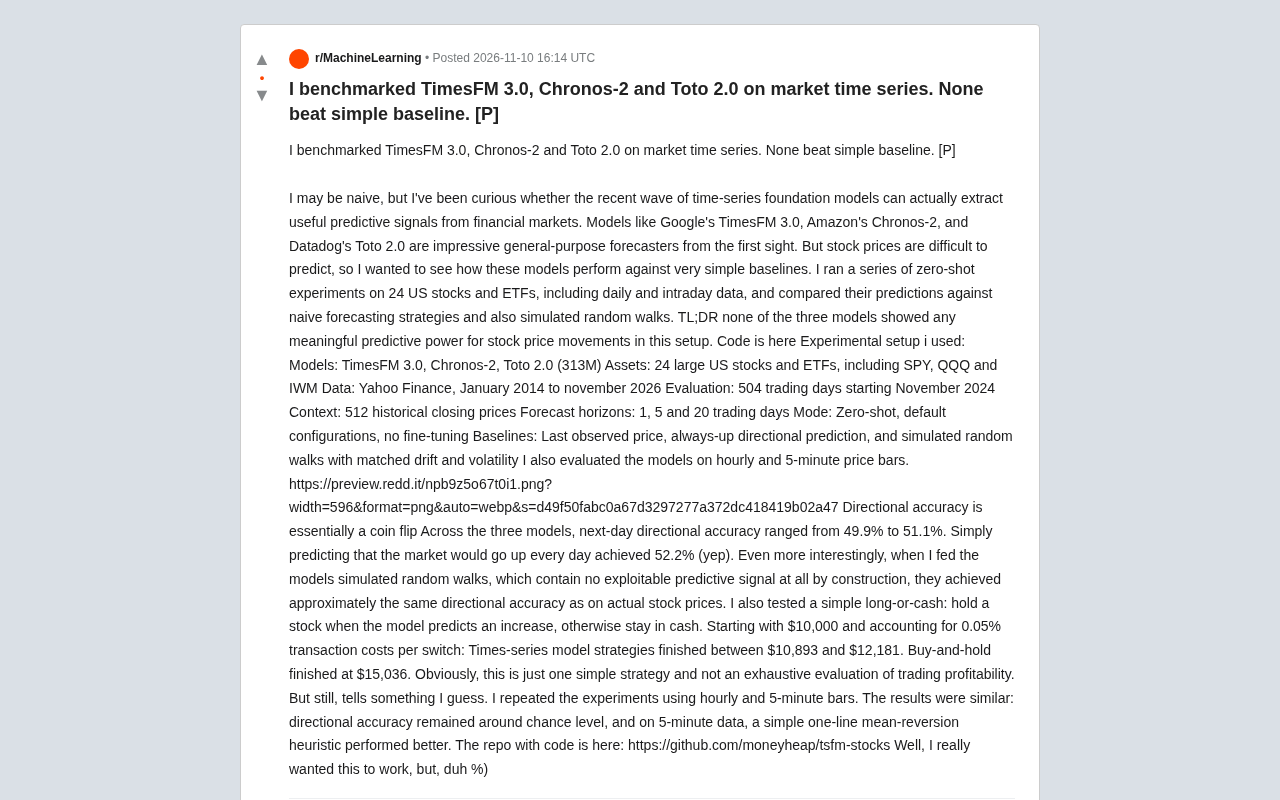
Putting TimesFM 3.0, Chronos-2, and Toto 2.0 to the Test: Time-Series LLMs Can't Beat Simple Baselines
A developer's zero-shot benchmark of TimesFM 3.0, Chronos-2 and Toto 2.0 on 24 U.S. stocks and ETFs: directional accuracy of just 49.9%-51.1%, and simulated trading underperformed buy-and-hold. Time-series foundation models show no edge over simple baselines on financial data.
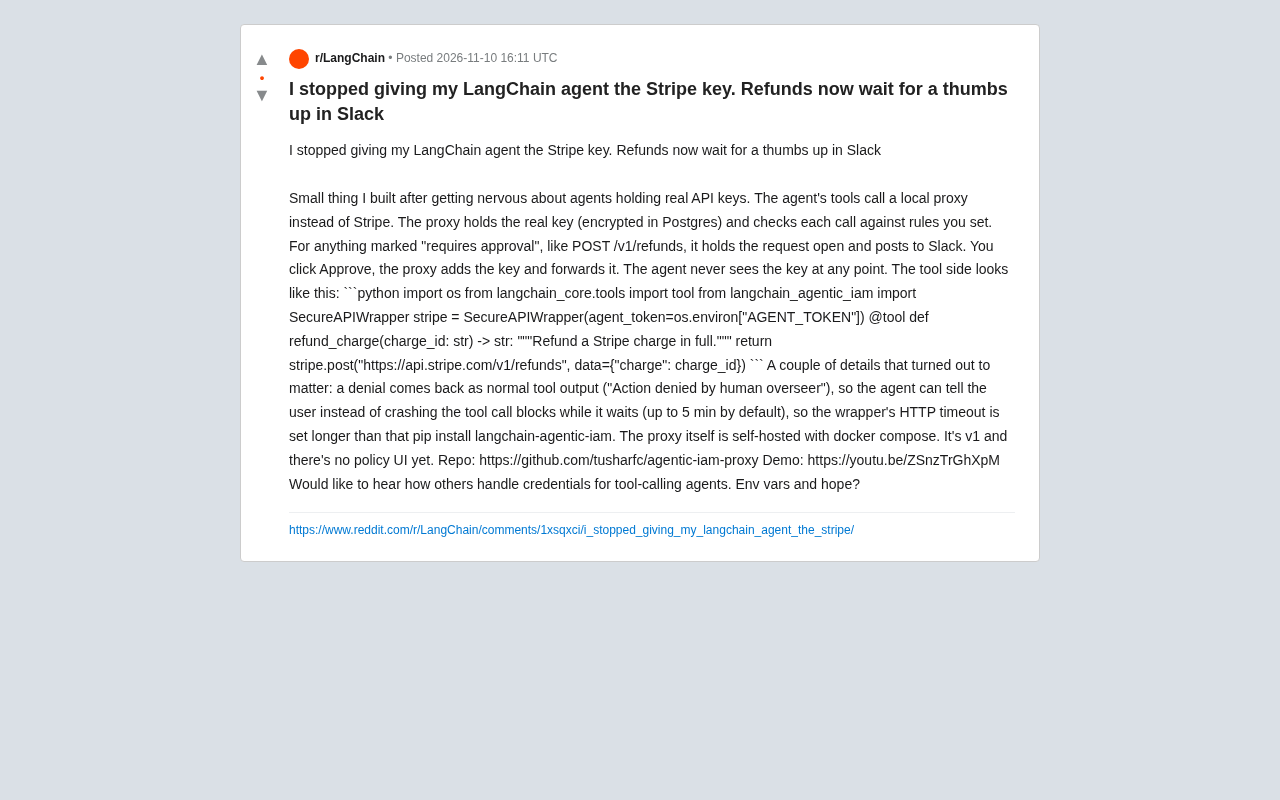
LangChain Agents No Longer Hold Stripe Keys: Refunds Require Slack Approval
A developer shares a credential management approach for LangChain agents: agents don't hold Stripe keys, and sensitive operations like refunds are forwarded through a local proxy and only executed after human approval in Slack, with code examples and engineering details.
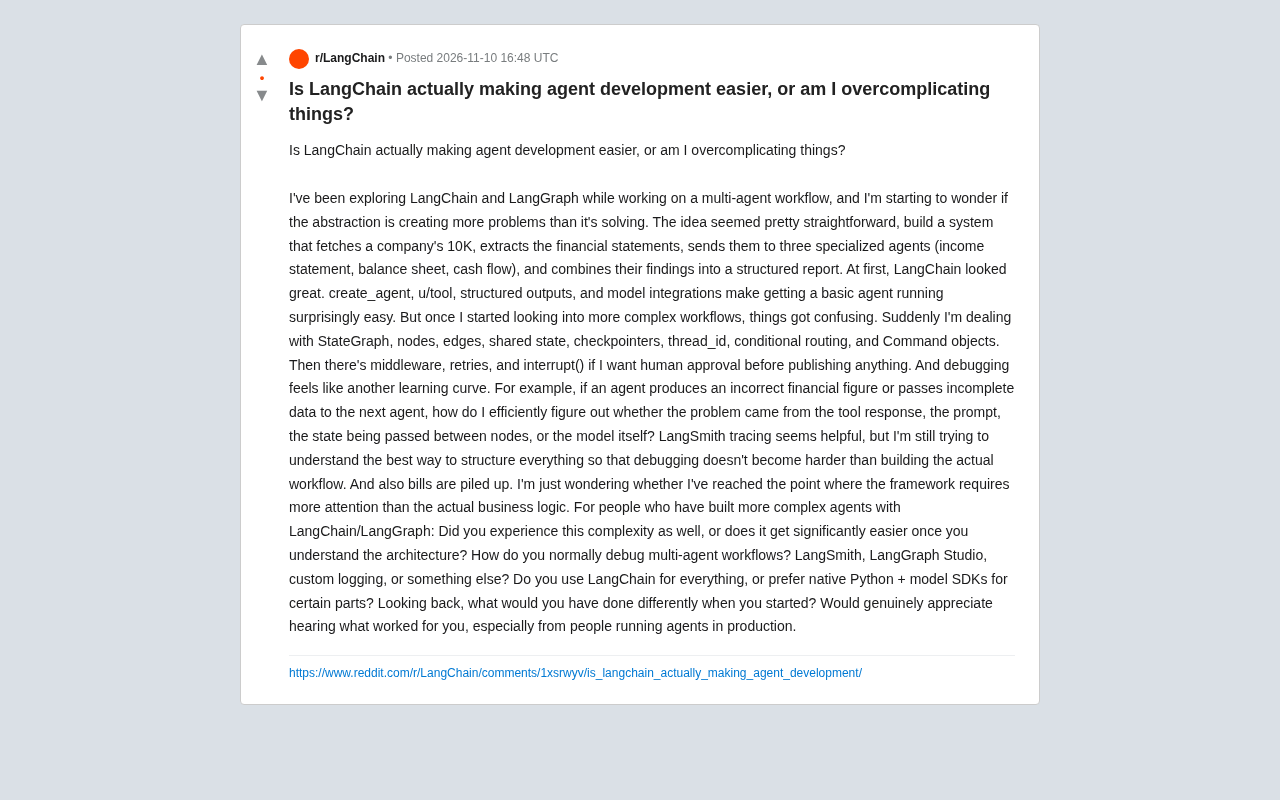
Does LangChain Really Make Agent Development Easier? A Developer Reflects on the Cost of Abstraction
A Reddit developer reflects on the abstraction cost of LangChain and LangGraph in multi-agent workflows: easy to start, but StateGraph, state management, debugging, and cost control add new complexity. The discussion covers debugging methods, whether to mix native Python + model SDKs, and production trade-offs.