OpenAI on the Data Center PR Crisis and AI Regulation Through Self-Restraint

OpenAI executive acknowledges data center PR challenges and proposes flexible regulation of recursive self-improvement via a car speed limit analogy.
This article covers two core issues from an OpenAI executive interview. First, AI data centers face a PR predicament in the US: the executive acknowledged the problem, noted about six OpenAI projects underway, and proposed a "laboratory of democracy" approach—listening on site, incorporating community feedback, and self-accountability—rather than imposing facilities on communities. Second, on regulation: responding to a proposal to ban complete recursive self-improvement, the executive supported a "broadly defined speed limit," using a car speed limit analogy to argue regulation should ensure humans keep both hands on the wheel and control technology, not stop progress. The through line is "people above technology"—human control of AI is OpenAI's North Star. Yet details—speed limit thresholds, RSI boundary definitions, and how community feedback enters approvals—remain unclear.
OpenAI an executive acknowledged in a rare interview that AI data centers face serious public relations problems in the United States, and proactively proposed a "speed limit" approach to regulating recursive self-improvement. The core of this conversation is not what new model OpenAI has released, but how it responds to two layers of anxiety from the outside world: compute expansion and AI going out of control.
Why Data Centers Are Stuck in a PR Predicament
The host asked directly: why do data centers and compute campuses have such a big PR problem in this country? The executive did not dodge the question. He first acknowledged that multiple factors are at play, then emphasized that OpenAI currently has about six such projects at different stages of construction, and every one of them is moving forward.
In his view, the fact that the projects keep winning approvals precisely shows that there is a "right way to build" and a "wrong way to build." He likened each project to a laboratory of democracy—learning from the previous project and applying those lessons to the next one. The subtext of this metaphor is that data centers are not simple infrastructure expansion, but social engineering that requires repeated back-and-forth with communities.
The key insight is that the "fundamental recognition" he kept emphasizing is this: actually go to the site, listen, learn, hold yourself accountable, and build facilities based on feedback, rather than imposing facilities on communities. This kind of statement is not common among AI companies. It pulls the PR problem back from "image management" to "governance approach."
The "Speed Limit" Framework: OpenAI's Regulatory Bottom Line
Later in the interview, the conversation turned to a more sensitive topic. The host proposed a specific plan: prohibit complete recursive self-improvement, and prohibit AI from building the next generation of AI without human involvement. Would OpenAI be willing to accept this kind of regulation immediately?

The executive's answer was yes, but with a qualifier: the version they are talking about is a "broadly defined speed limit." He then expanded on this with a car analogy—when the automobile system was first built, speed limit rules were eventually established. Speed limits change over time, but the core purpose is to ensure that humans can keep both hands on the wheel and control the vehicle. The car should not be so fast that people cannot control it.

This analogy is worth unpacking. It acknowledges that technological capabilities are accelerating and becoming stronger, while arguing for establishing a regulatory framework through legislation that imposes some form of speed limit. In other words, OpenAI does not oppose regulation itself. It hopes regulation will use "controllability" as the standard, rather than "prohibition."
Recursive Self-Improvement (RSI) is a core concept in AI safety discussions. It refers to an AI system being able to modify its own code, architecture, or training process, thereby producing a next-generation system with stronger capabilities, and iterating in this way. The opposite is the current mainstream paradigm: human researchers design model architectures, curate data, tune parameters, and evaluate, while the AI itself does not participate in this process. Theoretically, once the RSI loop is formed, capability growth may detach from the pace of human review and show exponential acceleration. This is also the technical basis of the "intelligence explosion" hypothesis. In the interview, the host's proposal to "prohibit AI from building the next generation of AI without human involvement" is in effect a demand to cut off this loop and keep humans in the key link of every iteration. It is worth noting that the boundary between RSI and "AI-assisted AI research" is blurry—the latter is already widely used (for example, using models to generate training data or evaluate other models), so when regulation is implemented, the granularity and form of "human involvement" need to be precisely defined.
Human Control: The North Star Throughout
Throughout the conversation, the most repeatedly reaffirmed principle was this: people are above technology. The executive stated clearly that OpenAI's North Star on AI matters is that people should be in control of this technology.

Placed between the two topics of the data center PR crisis and recursive self-improvement regulation, this statement forms an implicit through line: whether it is physical compute facilities or model-level self-evolution capability, the message OpenAI is trying to convey is "controllable." Controllable for communities, controllable for humanity.
Of course, the interview did not provide details on whether this posture of self-accountability can be translated into verifiable institutional arrangements. The specific thresholds for speed limits, the definition of the boundaries of recursive self-improvement, and how community feedback enters the approval process all remain open questions. But at least judging from this conversation, OpenAI chose to put "accountability" on the table rather than avoid it.
The term "North Star" in technology and product management refers to a team's long-term unchanging highest guiding principle, against which all decisions are calibrated. OpenAI has used similar frameworks multiple times in its charter and public statements, emphasizing that its mission is to ensure that artificial general intelligence (AGI) benefits all of humanity. Setting "human control of technology" as the North Star means that when commercial expansion, technological capability improvement, and controllability conflict, controllability should in theory be prioritized. However, the North Star principle itself is a statement of values rather than an executable standard. Outsiders evaluating its credibility still need to rely on specific institutions: for example, whether there are independent audits, external red-team testing before model release, and whether regulators have substantive review authority over compute facilities and training processes. The interview did not address these mechanisms, so this principle is currently more of a directional commitment than a verifiable governance arrangement.
Frequently Asked Questions
How many data center projects does OpenAI have underway? The interview mentioned about six projects at different stages of construction, and each one is moving forward.
Does OpenAI support banning AI from building the next generation of AI? The executive expressed support for regulation in the form of a "broadly defined speed limit," and used car speed limits as an analogy, emphasizing that the core is to ensure humans can control technology.
What is "recursive self-improvement"? It refers to the process by which an AI system improves itself or builds stronger AI without human involvement. In the interview, it was raised as an object that needs regulation.
One-line Summary
An OpenAI executive acknowledged the data center PR predicament and, using a car speed limit analogy, proposed a flexible regulatory approach to recursive self-improvement.
Paragraph Summary
This article sorts out two core issues from an interview with an OpenAI executive. The first is the PR predicament AI data centers face in the United States: the executive acknowledged the problem exists, emphasized that OpenAI has about six projects underway, and proposed building facilities in a "laboratory of democracy" way through on-site listening, community feedback, and self-accountability, rather than imposing facilities on communities. The second is the regulatory issue: in response to the proposal to "ban complete recursive self-improvement," the executive expressed support for a "broadly defined speed limit" and, using car speed limits as an analogy, argued that the goal of regulation is to ensure humans can keep both hands on the wheel and control technology, rather than to stop technological development. The principle running through the whole article is "people above technology," that is, human control of AI is OpenAI's North Star. However, institutional details such as speed limit thresholds, the definition of the boundaries of recursive self-improvement, and how community feedback enters the approval process remain unclear.
Related articles

Anthropic's New Model Fable 5.2 Tested: Performance Surpasses Opus 5.5
Anthropic releases Fable 5.2, tested to outperform Opus 5.5. Higher per-token price but lower cost per task. Release highlights, public benchmarks, custom benchmarks, three hands-on tests, and model selection advice.
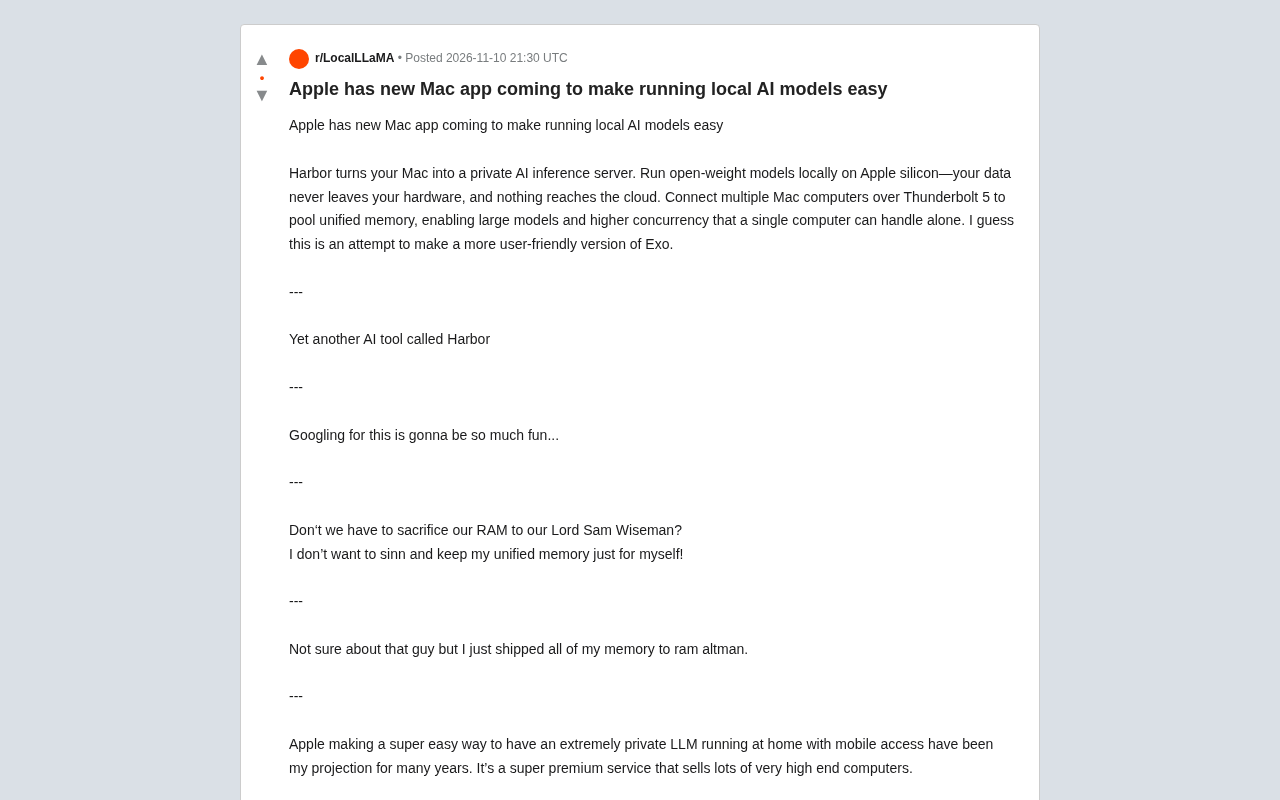
Apple's New Mac App Harbor: Local AI Inference and Thunderbolt 5 Clustering
Apple's new Mac app Harbor exposed: turning Macs into private AI inference servers, pooling unified memory across multiple Macs via Thunderbolt 5 to run large models. This article analyzes its features, differences from Exo and LM Studio, and impact on the local AI ecosystem.
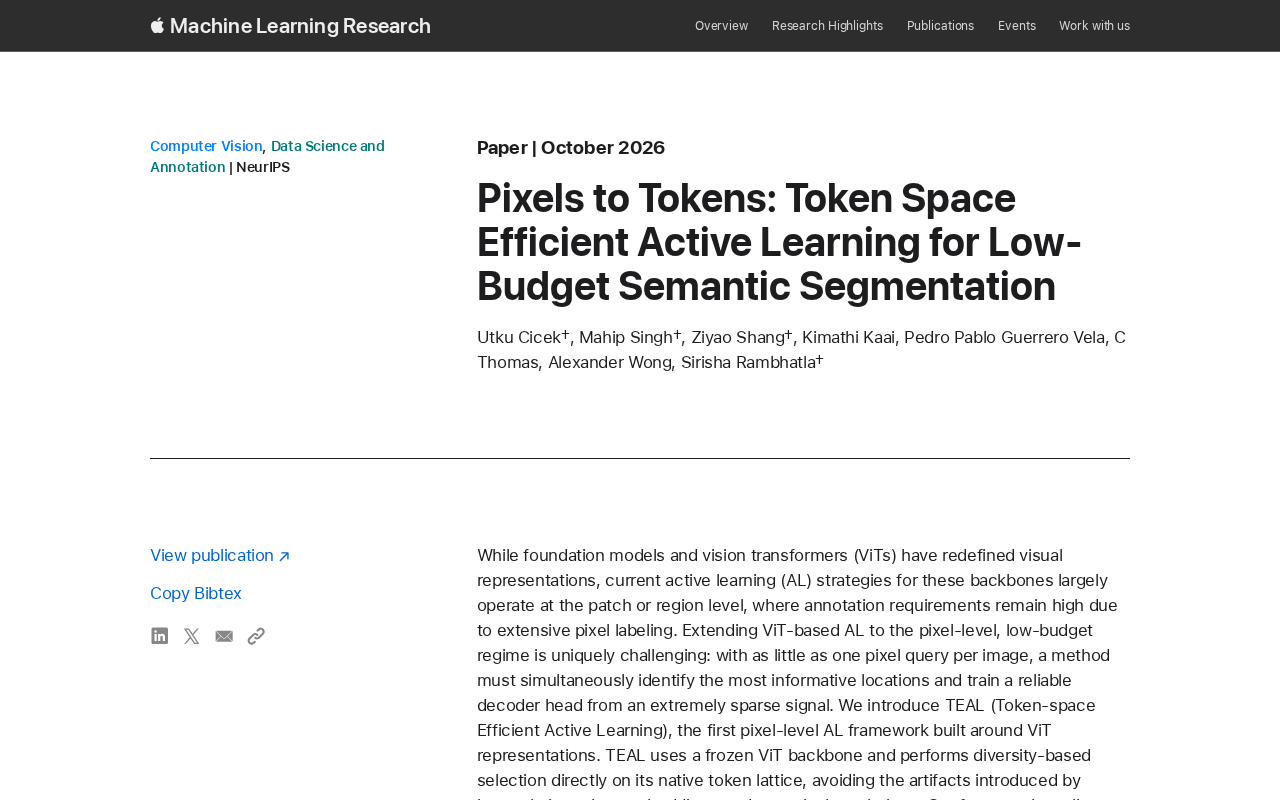
Token-Space Active Learning: TEAL, a New Method for Low-Budget Semantic Segmentation
TEAL introduces token-space efficient active learning for pixel-level low-budget semantic segmentation with ViT foundation models—one pixel query per image locates informative positions and trains the decoder, reducing annotation cost.