OS Taxonomy: A Breakdown of the Open-Source Operating System Classification Framework

Open-source OS Taxonomy builds a standardized classification system for operating systems using structured data, gaining 427 stars in one day.
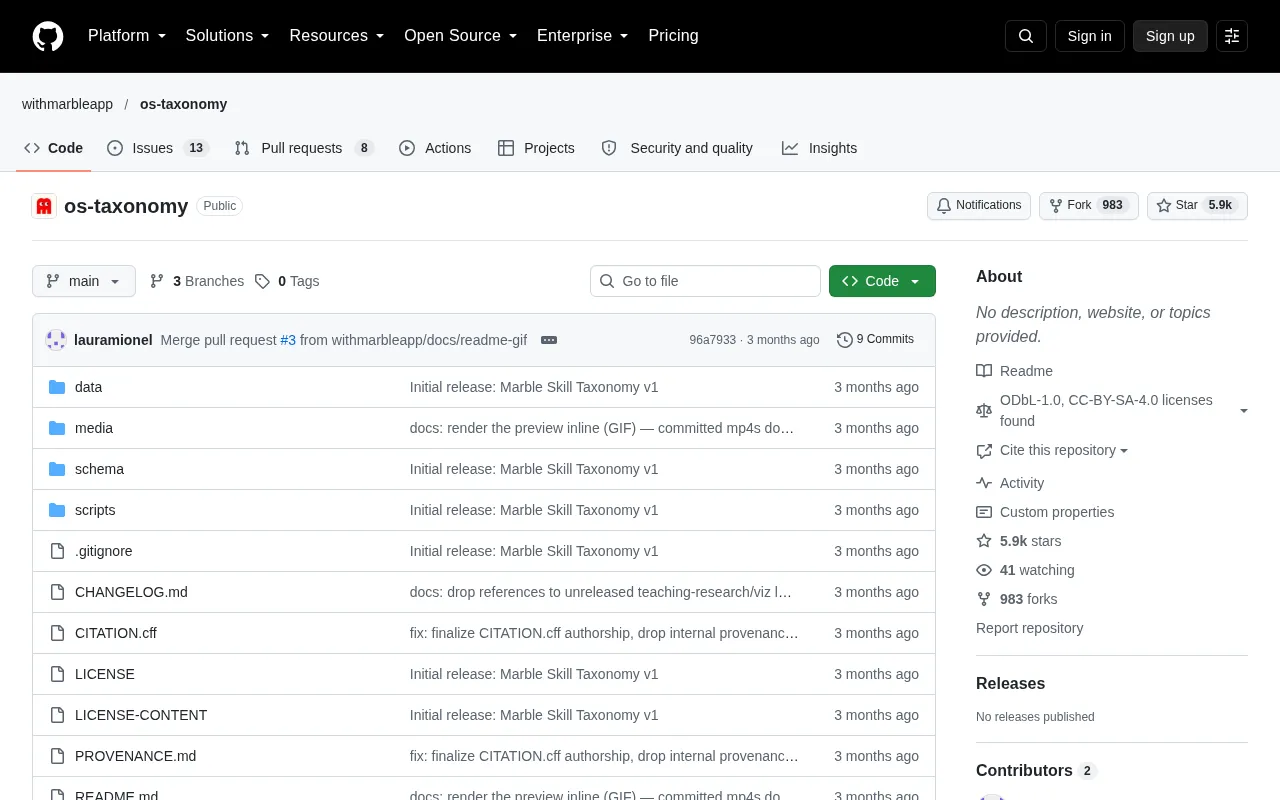
OS Taxonomy is an open-source operating system classification framework by the withmarbleapp team, implemented in JavaScript. It uses a layered, multidimensional classification model (kernel type, target platform, licensing model, use cases, etc.) to provide unified semantic coordinates for the fragmented OS ecosystem. With data separated from logic, even non-developers can contribute by editing data files, a key reason for its rapid community growth. The project has 5,845 stars and 981 forks, with 427 new stars in a single day. Potential applications include software compatibility detection, automated technical documentation, survey data standardization, and market analysis. Its limitations include a primarily JS-centric ecosystem that raises integration costs for non-JS teams, and the need for ongoing community validation of the classification system's completeness and authority.
What Is OS Taxonomy?
OS Taxonomy is an open-source operating system classification framework created by the withmarbleapp team, designed to provide a standardized classification system for the complex and fragmented operating system ecosystem. The project has already gained 5,845 stars and 981 forks on GitHub, with 427 new stars in a single day, demonstrating strong interest from the developer community in the problem of operating system classification.
The operating system field has long lacked a unified classification standard. Different projects and different documents describe operating systems in wildly different ways, which creates significant obstacles for technology selection, knowledge management, and the development of automation tools. OS Taxonomy attempts to solve this problem through a structured data model.
Core Design of the Project
Structure of the Classification Model
OS Taxonomy is implemented in JavaScript and provides a layered classification model. The model organizes operating systems across multiple dimensions, including kernel type, target platform, licensing model, use cases, and more. Each dimension contains specific classification nodes, and the nodes form a tree structure through parent-child relationships.
The advantage of this design is flexibility: developers can choose different dimensions for filtering and aggregation based on their needs. For example, when building a software compatibility database, you can cross-query by kernel type and platform; when performing market analysis, you can classify by licensing model and use case.
Taxonomy is a foundational concept in information science, referring to a structured system for systematically naming and organizing concepts or entities. In software, a taxonomy usually takes the form of a controlled vocabulary plus hierarchical relationships, enabling data from different sources to map onto the same set of semantic coordinates. Unlike simple tagging systems, a taxonomy emphasizes broader/narrower relationships between nodes, and therefore supports inheritance-based queries and aggregation—for example, querying "Unix-like kernels" can automatically include all specific kernel types beneath it. OS Taxonomy applies exactly this methodology to the operating system domain, treating "kernel type," "target platform," and other attributes as facets to form a multidimensional classification space that can be separated or combined, essentially resembling faceted classification in library science.
Data-Driven Implementation
The project is centered on data files, with classification definitions separated from code logic. This means non-developers can also contribute—simply editing data files allows you to add or adjust classification items without needing to understand the code in depth. This low-barrier contribution model is one of the important reasons the project has been able to rapidly accumulate community attention.
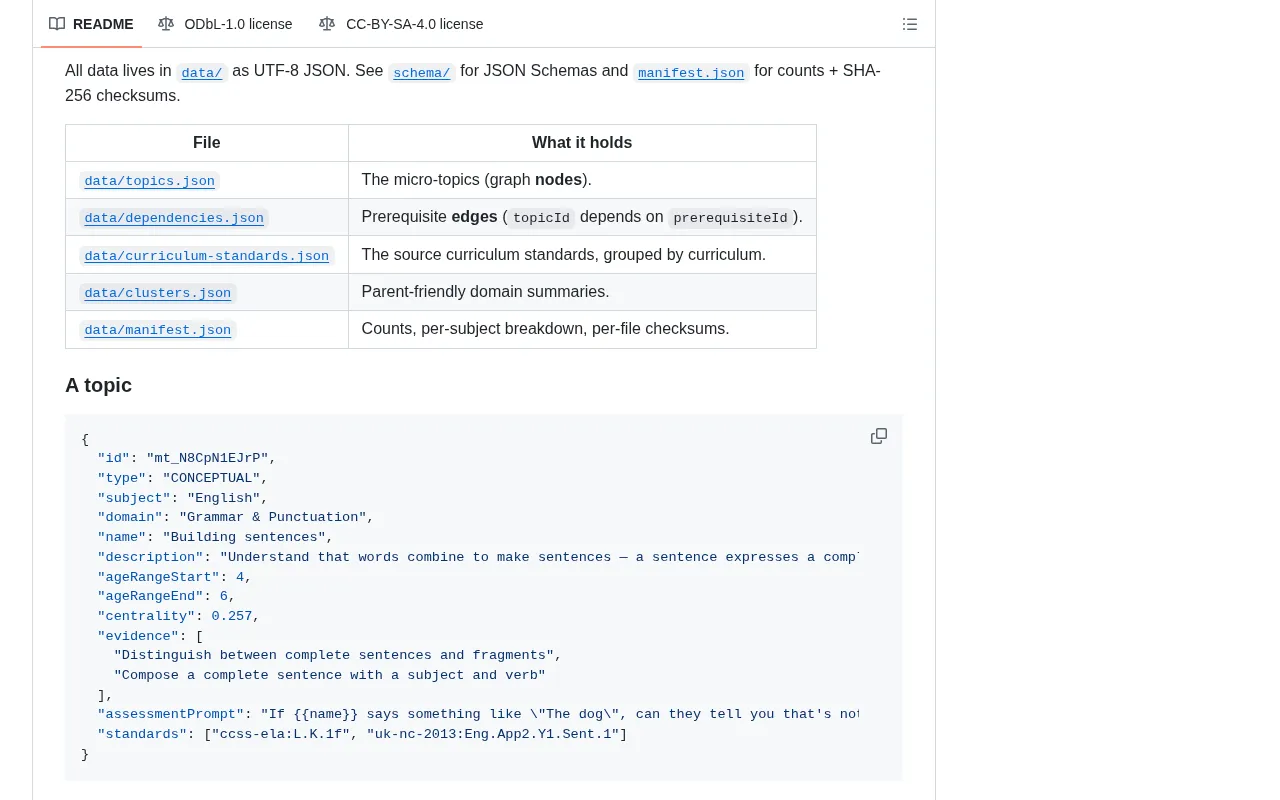
Data-driven design (separation of data and logic) is the key to the project's low contribution barrier: the classification system is stored in structured data files (such as JSON/YAML), and the code is only responsible for loading, validating, and querying. This model is often called "configuration as contribution" in open-source communities—contributors submit data patches rather than source code, and reviewers focus on whether the classification semantics are correct rather than implementation details. The benefits include: changes are auditable, easy to diff, schema validation can be used to verify data legality, and the same dataset can be exported into multiple formats for consumption by different language ecosystems. The trade-off is the need to maintain the stability of the data schema; otherwise, downstream integrators can easily break due to field adjustments.
Community Response and Potential Applications
A growth rate of 427 stars in a single day is a remarkably strong performance on GitHub, indicating that the "infrastructure"-type need for operating system classification has long been neglected. Judging from the number of forks, many developers may be building their own derivative tools or datasets based on this project.
Potential application scenarios include: software compatibility detection tools, automatic generation of technical documentation, standardization of developer survey data, and operating system market analysis reports. For teams that need to process large amounts of operating system information, a unified taxonomy can significantly reduce the cost of data cleaning and mapping.
Limitations Worth Noting
At present, the project is primarily oriented toward the JavaScript ecosystem, so integration costs may be somewhat higher for teams using non-JS technology stacks. In addition, the completeness and authority of the classification system still require ongoing community validation—the operating system field changes rapidly, and new forms (such as WebAssembly runtimes and containerized OSes) continue to emerge, so the taxonomy must keep evolving in sync to maintain its value.
The WebAssembly runtimes mentioned in this article refer to execution environments such as WASI/Wasmtime and Wasmer that use WebAssembly bytecode as the execution carrier. They feature sandbox isolation and cross-platform distribution, and whether they should be classified as "operating systems" is controversial. Containerized OSes refer to host systems such as Flatcar, Bottlerocket, and Talos that are specifically trimmed for running containers, and their "distribution" boundaries are blurrier than those of traditional Linux distributions. These two new forms are precisely the trickiest part of maintaining a taxonomy: existing classification dimensions (such as "licensing model") still apply to them, but dimensions such as "kernel type" and "use case" need to be extended or redefined; otherwise, awkward situations arise in which they are duplicated under multiple nodes or cannot be placed anywhere. This is also the direct reason a classification system must continuously evolve.
Quick Start Recommendations
If you are interested in operating system classification, you can clone the repository directly to inspect the data file structure and begin contributing by supplementing missing classification items. For tool developers, it is recommended to first assess whether the existing classification dimensions cover your business scenarios, and then decide whether to use it directly or fork and customize it.
Related articles

Private Key Set to 4? CA's Elementary Mistake Leaves TLS Exposed
CA eMudra set private keys to tiny values like 4, making TLS certificates brute-forceable. A Computerphile video demonstrates the full process from extracting public keys to forging certificates, and explores the fragility of the PKI trust chain.

How Gen Turns Data into Decisions with ChatGPT Work
In an OpenAI user case, business leader Gen shares how ChatGPT Work turns data into decisions: within hours of launch, teams can judge whether integrations and onboarding flows work, shifting decision iteration from hundreds of trial-and-error attempts to a fast feedback loop.

ChatGPT vs. Claude In-Depth Comparison: Strong at Coding but Weak at Research — How to Bridge the Gap?
A user considers switching from ChatGPT to Claude, finding Claude stronger at coding but shallower at research. We analyze the differences and share tips to make Claude's research deeper.