Paddock: Purpose-Built Linux and Sandboxes for AI Agents

Paddock gives each AI agent an isolated Linux environment or locked sandbox on a single self-owned VPS, solving multi-agent isolation and resource control.
Paddock is an MIT-licensed open-source developer tool that creates independent Linux computers or locked sandboxes for each AI agent on a single self-owned VPS, allowing agents to run code, access files, and call tools without interfering with one another. It abstracts away repetitive infrastructure work like containerization, network policies, and resource quotas, so developers only need to request an agent environment. Compared with Firecracker and E2B, Paddock emphasizes a lightweight single-machine approach that doesn't require a Kubernetes cluster or managed cloud services, lowering the barrier for individual developers and small teams. The project received 82 votes on Product Hunt and is still early-stage with a small community; production use requires first validating isolation reliability.
Why Do AI Agents Need Their Own "Computer"?
As AI agents move from chat windows to real task execution, they no longer need just a conversational interface—they need a real environment where they can run code, access files, and call tools. Paddock's answer is straightforward: give each AI agent its own dedicated Linux computer or locked-down sandbox, all running on a single VPS you own.
The project received 82 votes on Product Hunt, ranking 14th, and is positioned as an open-source, MIT-licensed developer tool. Its core value lies in solving environment isolation and resource control in multi-agent scenarios—you don't need to buy a cloud host for each agent, nor worry about agents interfering with each other.
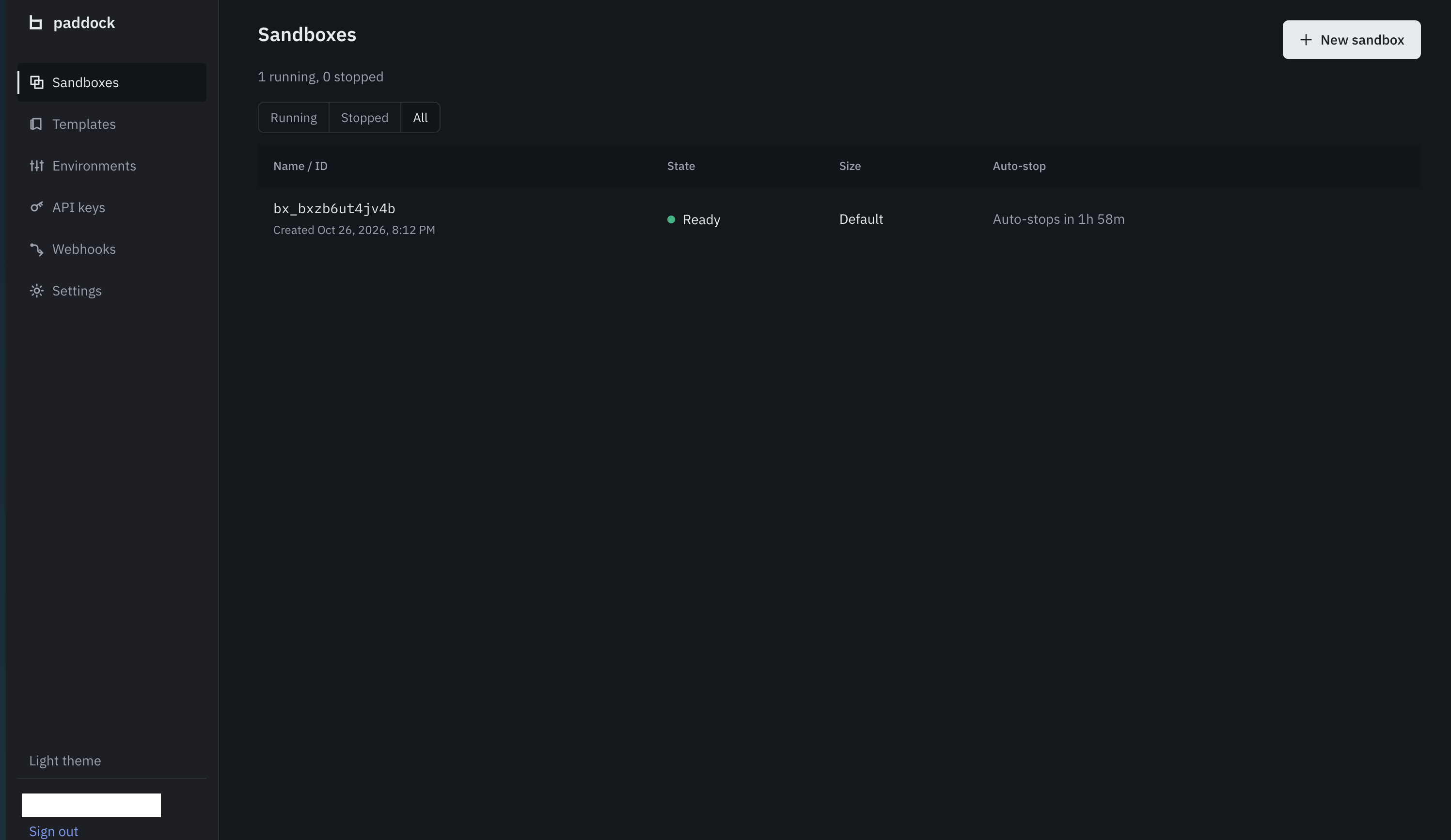
How Paddock Works: One VPS, Multiple Isolated Environments
Paddock's architectural approach is pragmatic. It doesn't require you to use a specific cloud provider; instead, it creates independent environments for each agent on a single VPS through containerization or virtualization. According to the official description, each agent can get one of two forms:
- A full Linux computer: The agent has its own filesystem, process space, and network stack, and can install software and run services just like operating a real machine.
- A locked-down sandbox: A stricter isolation environment, suitable for running untrusted code or restricting an agent's permission scope.
This design lets developers run multiple agents simultaneously on the same server, with each agent's environment isolated from the others. For scenarios requiring parallel task execution—say, one agent scraping data, another analyzing it, and a third generating reports—this isolation is crucial.
What Open Source and MIT Licensing Mean
Paddock uses the MIT license, which means you can freely use, modify, and distribute the code, even for commercial projects. For developer tools, the transparency that open source brings is the foundation of trust: you can review the sandbox implementation details, confirm whether the isolation mechanisms are reliable, and customize environment configurations to your needs.
Combined with the "Open Source, SaaS, Developer Tools, GitHub" categorization tags on Product Hunt, Paddock likely offers both a self-hosted version and a managed service. For teams that prioritize data privacy, the self-hosted option on your own VPS is clearly more appealing.
The MIT license is one of the most permissive open-source licenses, with only one core obligation: retain the original copyright notice and license notice when distributing the software. It allows users to freely use, copy, modify, merge, publish, sublicense, and even sell copies of the software, and does not require derivative works to adopt the same license. For infrastructure tools like Paddock, this means enterprises can embed it into internal platforms without worrying about license contagion; but conversely, a permissive license also means upstream can hardly constrain commercial forks through the license, and the flow of community contributions back upstream depends more on the project's own governance and appeal.
The Infrastructure Gap in Multi-Agent Collaboration
An obvious gap in the current AI agent ecosystem is that most frameworks focus on agents' reasoning and decision-making logic while treating the execution environment as an afterthought. Developers often need to set up Docker containers, configure network policies, and manage resource quotas themselves—repetitive and error-prone work.
Paddock attempts to abstract this layer away. You simply tell it "give me an agent environment," and it handles the isolation, networking, and storage management. This approach is similar to how early cloud computing abstracted physical servers into virtual machines—except now the "tenants" are AI agents.
Judging from the number of comments on Product Hunt (only 3), the project is still in its early stages with limited community discussion. But the 82 votes in support indicate that at least some developers believe this problem is worth solving. Maker Antonio Santiago Dueñas's background isn't detailed in the source material, but the project's direction hits the real pain points of deploying multi-agent systems.
Comparison with Existing Solutions
There are already some sandbox solutions on the market, such as isolation environments based on Firecracker microVMs, or platforms like E2B designed specifically for AI code execution. Paddock's differentiation lies in its lightweight positioning of "one VPS"—it doesn't aim for large-scale cluster management, but rather lets individual developers or small teams run multiple agent environments on a single server.
This positioning lowers the barrier to entry. You don't need a Kubernetes cluster or a cloud provider's managed service; a regular VPS plus Paddock is enough to start experimenting. For rapid prototyping and small-scale deployments, this is a more pragmatic choice.
Firecracker is a lightweight microVM monitor open-sourced by AWS, based on KVM, capable of launching microVMs in extremely short time while providing isolation strength close to virtual machines but startup speed close to containers. E2B is a managed sandbox platform for AI code execution, offering an SDK that lets agents securely run generated code in the cloud. The main differences between these and Paddock lie in abstraction level and deployment form: Firecracker is a low-level primitive that requires self-built orchestration; E2B leans toward a managed service, with data leaving the private domain; Paddock makes "giving an agent a machine" an out-of-the-box single-machine solution. When choosing, you need to weigh the priorities of isolation strength, operational cost, and data sovereignty.
Containerized isolation and virtualized isolation have fundamental differences in security boundaries. Containers like Docker share the host kernel, achieving view and resource isolation through namespaces and cgroups—fast startup, low overhead, but kernel vulnerabilities or misconfiguration can lead to escapes. Full virtual machines (such as those based on KVM) have independent kernels, offering stronger isolation at the cost of slower startup and higher memory overhead. Paddock provides both "full Linux computer" and "locked-down sandbox" forms, effectively leaving developers room to choose between isolation strength and resource efficiency: trusted agents use lightweight containers, while running untrusted code switches to stronger isolation.
Resource quotas are a key control point for multi-agent deployment on the same machine. When running multiple agent environments in parallel on a single VPS, without limits on CPU, memory, disk I/O, and network bandwidth, an out-of-control loop or large-scale scraping by one agent could drag down the entire machine and affect other agents. cgroup v2 provides a unified resource control interface, allowing hard limits and weights to be set for each container; at the network level, traffic shaping and outbound whitelisting are often used to prevent agents from scanning the internal network or connecting to unauthorized addresses. When evaluating Paddock, it's worth checking whether it exposes these quota items as configurable parameters.
Who Should Pay Attention to Paddock?
Multi-agent system developers: If you're building applications that require multiple agents to work in parallel, the isolated environments Paddock provides can prevent resource conflicts and permission overreach between agents.
Teams that prioritize data privacy: All environments run on your own VPS, keeping data within your private domain—suitable for scenarios involving sensitive information.
Integrators of AI agent frameworks: As an infrastructure layer, Paddock can work with agent frameworks like LangChain and AutoGPT to provide an execution backend for agents.
Open-source enthusiasts: The MIT license means you can customize deeply, or even build your own commercial product on top of it.
It's worth noting that Paddock is still an early-stage project with a small community, and its documentation and ecosystem support may not yet be comprehensive. For critical business in production environments, it's advisable to first validate its stability and isolation effectiveness in small-scale scenarios.
The Next Step for Agent Infrastructure
Paddock's emergence reflects a trend: AI agents are evolving from "can talk" to "can do," and the prerequisite for "can do" is a safe, controllable execution environment. When agents can freely run code, access networks, and manipulate files, isolation and permission management are no longer optional—they're essential.
Whether this project can gain a foothold in the highly competitive developer tools market depends on whether it can continuously improve the reliability of its isolation mechanisms, reduce configuration complexity, and build an ecosystem around agent environments. 82 votes is a starting point; the real test lies in the pace of subsequent iterations and community building.
For developers exploring multi-agent applications, Paddock is worth adding to your watch list—especially when you're tired of manually configuring Docker environments for each agent.
Related articles

T3 Code: The Open-Source AI Coding Assistant's Comeback Story
T3 Code is an open-source AI coding assistant that unifies subscriptions like Codex and Claude, with powerful remote control and parallel task management.

Never Elected, Yet Ruled New York for 30 Years: The Ultimate Case Study in the Mechanics of Power
Robert Caro's biographies reveal how unelected Robert Moses ruled New York for 30 years through legal drafting and public authorities, and how Lyndon Johnson built leverage as a "powerless" Senate Majority Leader. Unpacking the underlying logic of accumulating and sustaining power.

The CPython 3.10 Recursion Trap and Synthetic Recovery in TokenGuard, an LLM Circuit Breaker
TokenGuard's author recounts a recursion crash caused by OrderedDict.pop in CPython 3.10 and introduces v0.3.0's Loop Nudge synthetic recovery, inline DLP scanning, and other new LLM agent circuit-breaker capabilities.