Podia Integrates ChatGPT and Built-in Agent: A Hands-On Guide to Creator AI Tools

Podia connects creators to ChatGPT via MCP and offers a built-in Agent—build courses and email funnels with natural language.
Podia embeds AI into creator workflows with two optional paths: connecting accounts to external AI tools via MCP, or using the built-in Podia Agent. Both read real product lists, course structures, and email campaigns and execute natural language instructions. In the demo, ChatGPT listed products, opened course modules, and generated a three-chapter, two-lesson sourdough course draft priced at $49. The built-in Agent created a freebie-triggered sales funnel and a three-day email sequence with course links auto-attached. AI output is always a draft, lessons are hidden by default, and creators keep final review rights.
Podia is putting AI capabilities directly into creators' workflows. In an official demo, the product team showcased two paths: first, connecting a Podia account to external AI tools like ChatGPT via MCP, and second, using Podia's built-in AI Agent. Both can read your products, course structures, and email campaigns, and create content based on instructions. This toolset is entirely optional, but after watching the demo, it's clear that it significantly reduces the burden of day-to-day operations.
Two Integration Paths: MCP Connection and Built-in Agent
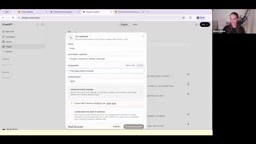
Podia currently offers two AI usage paths. The first is an MCP (Model Context Protocol) connection, which lets external tools like ChatGPT or Claude directly access your Podia backend data. In the demo, the presenter added a custom connector through the plugin section of a ChatGPT Plus plan, using the link provided in Podia's help documentation to complete OAuth authorization—the entire process took just a few clicks in the browser. Once connected, the "AI Assistant" section of the Podia settings page shows that ChatGPT is linked.
The second is the built-in Podia Agent, which requires no additional payment for other AI tools and is used directly within the account. The presenter mentioned that the 14-day free trial comes with a certain AI quota, making it easy for new users to test right away. The two paths have overlapping functionality; the choice depends on whether you're already paying for an AI tool.
MCP (Model Context Protocol) is an open standard proposed by Anthropic in late 2024, designed to let external AI applications securely access various data sources and tools in a unified way. Think of it as the "USB-C port" of the AI world: previously, every AI tool that wanted to integrate with a SaaS platform had to develop its own private integration; with MCP, a platform only needs to implement a server once, and any client supporting the protocol—ChatGPT, Claude, and others—can discover capabilities, request data, and execute operations according to the standard. The protocol itself doesn't define specific business logic; it only specifies interaction formats such as "tool lists," "resource reading," and "calls and returns," so permission control and user authorization remain in the platform's hands. Podia exposes data such as products, courses, and email campaigns as tools that AI can invoke via MCP—a direct implementation of this approach.
OAuth is the authorization mechanism behind this connection. Users are redirected to Podia's authorization page in the browser, log in, and confirm "allow ChatGPT to access my account"; Podia then issues an access token to ChatGPT, and every subsequent call is authenticated with that token—no need to hand over account credentials to a third party. This is why the entire connection in the demo took just a few clicks—the authorization flow is handled by the standard protocol, so users don't need to manually configure API keys.
External Connection in Practice: From Queries to Course Creation
Verifying the connection is simple: the presenter asked ChatGPT directly, "What products are on my Podia site?" and the response accurately listed two published products—the freebie "7-Ingredient Weeknight Dinner Recipes" and the paid course "Meal Prep Simplified." This shows the AI can read real business data rather than giving generic answers.
More useful is access to the internal structure of courses. The presenter asked ChatGPT to open the second module of "Meal Prep Simplified," and the AI accurately returned the module name and three lessons, which could then be clicked into for editing. For creators working on course revisions or content restructuring, this means no more clicking through menus layer by layer in the backend—you can get a full picture of the content using natural language.
The course creation step best demonstrates efficiency. The presenter asked the AI to generate an outline for a beginner sourdough course with "three chapters, two lessons each," providing only chapter and lesson titles plus a one-sentence description. Here there's a notable sense of boundaries: the presenter emphasized that they only let the AI build the skeleton, while the specific recipes, steps, videos, and images would still be filled in by themselves. Then a single sentence—"Create a draft course called Sourdough from Scratch, priced at $49, with three chapters and two lessons each based on the outline above"—landed the course structure in the Podia backend.
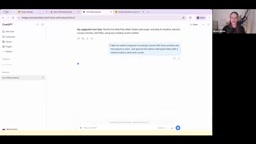
The result is in draft status, and all lessons are hidden by default. This design is crucial—creators always retain final review rights, so a single misstep won't make half-finished content visible to students. The presenter then demonstrated adding a lesson: asking the AI to add a lesson called "Dough Fermentation" to the second chapter with a bullet-point outline. The AI placed the lesson in the correct position, and the outline became a memory aid for the creator when writing the actual content.

Built-in Agent: Building a Sales Funnel with One Sentence
The Podia Agent's capabilities are similar to the external connection, but it's rooted inside Podia, and the interface provides some example prompts, such as drafting email campaigns, asking for business growth advice, and optimizing pages.
The most complete case in the demo is sales funnel building. The presenter's instruction was: create a new campaign in campaigns called "sourdough sales funnel," with the trigger condition being users signing up for the freebie "7-Ingredient Weeknight Dinner Recipes." The AI automatically found the product, created the campaign, and bound the trigger condition—all in one go.
The email sequence that followed is even more telling. One instruction asked to add a three-day email series: the first email on day zero introducing the business; the second three days later sharing the founder's story; the third three days after that promoting the sourdough course. In the generated result, the timing, subject lines, and outlines for all three emails were in place, and even the course link was automatically attached.
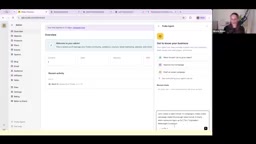
Worth noting is the quota limit. The demo account was in its trial period and had only three question credits for the day, with the Agent interface displaying the remaining amount in real time. The presenter's experience is that each prompt can carry quite a few instructions, so even with only three credits, a fair amount of work can be completed.
A sales funnel is a classic model in digital product marketing, referring to the series of stages a potential customer goes through from first contact with a brand to final payment: awareness (seeing free content), interest (downloading a freebie, subscribing to email), consideration (reading nurture emails), and conversion (purchasing a paid product). In the email marketing context, a funnel typically consists of a "trigger condition" and an "email sequence"—when a user completes a certain action (such as signing up for a freebie), they are automatically enrolled and then receive a series of emails at preset intervals.
The structure in the demo—"day zero introducing the business, day three telling the founder's story, day six promoting the course"—is a typical nurture sequence: first build trust with value content and brand background, then extend a purchase invitation on that foundation of trust. This works because it turns a one-time sales pitch into rhythmic outreach, so users aren't asked to pay before they know anything. For creators, manually building such a funnel requires repeatedly switching between the products, campaigns, and emails modules in the backend, whereas AI compresses this chain of operations into a single natural language instruction—saving exactly this kind of organizational labor.
What This Means for Creators
This toolset addresses the trivial but time-consuming parts of a creator's business: taking inventory of the product library, mapping out course structures, building email sequences, and outlining new courses. The presenter repeatedly emphasized that "you always have the final say"—AI produces drafts and skeletons, while professional judgment and depth of content still come from the creator.
From a product strategy perspective, Podia betting on both external connections and a built-in Agent makes sense. Users already paying for ChatGPT can reuse their existing subscription via MCP; users who don't want another subscription have the built-in option. Both can be connected or disconnected at any time, so workflows aren't locked in.
For course and digital product creators, the real value of these capabilities isn't "letting AI write content" but compressing organizational busywork into a few minutes, so people can spend time on what only they can do—recipes, experience, and teaching delivery.
One-line Summary
Podia uses MCP connections and a built-in Agent to build courses and email funnels with natural language.
Paragraph Summary
Podia embeds AI capabilities into creators' workflows, offering two optional paths: connecting an account to external AI tools like ChatGPT via the MCP protocol, or using the built-in Podia Agent. Both can read real product lists, course structures, and email campaigns, and execute operations based on natural language instructions. In the demo, ChatGPT accurately listed the site's products, opened a course module and read its lesson structure, and generated a three-chapter, two-lesson sourdough course draft priced at $49 from a single instruction. The built-in Agent created a sales funnel triggered by freebie signup in one go and generated a three-day email sequence, even automatically attaching the course link. AI output is always a draft, lessons are hidden by default, and creators retain final review rights.
Related articles

The Truth Behind Titanic's Sinking: Key Decisions and Communication Failures in the National Geographic Documentary
National Geographic's The Unsinkable Ship uses survivor testimony to reconstruct Titanic's fatal decisions—from the missing MSG telegram prefix and the broken boiler-room-to-bridge link to how 'unsinkable' thinking delayed damage control and evacuation.

74M-Parameter Open-Source Model Partially Outperforms Jev AI in Testing
Fastino AI's Glider 2.5 models, with just 74M–300M parameters, reportedly outperform Jev AI in some guardrail benchmarks per YouTube testing, run on consumer hardware, and even play Doom. We analyze small models' competitiveness and deployment value on specific tasks.

Gemini 4 Argon Hands-On: Aggressive Pricing, 3D Capabilities Need Coaching
Gemini 4 Argon hands-on: limited-time $2/$10 pricing, million-token output, strong 3D and reverse-engineering work, but weak front-end aesthetics and zero-shot ability need coaching.