Polymorphic Inference: Making Inference Engines Self-Adaptive Like Living Organisms

Polymorphic Inference makes the inference stack continuously adapt to models, traffic, and chips; Together Compiler uses AI agents to maintain the tuning loop in production.
The article discusses how static configurations in open-source model inference deployment struggle with model iteration, traffic fluctuations, and chip differences. It proposes Polymorphic Inference: moving decisions on parallel partitioning, batching, and KV Cache management from pre-deployment static determination to runtime continuous self-tuning. Together with Together Compiler, AI agents sense the state, evaluate, and execute configuration changes in production, forming a tuning loop. This combination transforms one-time manual tuning into continuous self-adaptation, potentially lowering the manpower barrier for self-deploying teams, but also raising implementation considerations such as interpretability, stability boundaries, and decision oscillations under extreme traffic.
Title
Polymorphic Inference: Making Inference Engines Self-Adaptive Like Living Organisms
Meta Description
Polymorphic Inference offers self-tuning inference in response to constant changes in models, traffic, and chips. Together Compiler uses AI agents to keep production inference tuned. This article analyzes its approach and its significance for the open-source inference ecosystem.
Article Content
Inference deployment for open-source models has long faced an awkward reality: models change, traffic changes, and chips change too—yet inference stacks often remain statically configured. Polymorphic Inference aims to change this—enabling inference systems to continuously adapt to models, traffic, and hardware, while Together Compiler leverages AI agents to automate this tuning in production.
The Pain of Threefold Changes in Inference Deployment
The original article states upfront: Models, traffic and chips are constantly changing. These three constitute the sources of uncertainty in inference systems.
- Models are changing: Open-source models iterate frequently, with different architectures, operator combinations, and precision strategies, making a fixed inference configuration hard to reuse across models.
- Traffic is changing: Request patterns, concurrency distributions, and sequence lengths fluctuate over time. Static parallelism strategies easily mismatch when traffic patterns shift.
- Chips are changing: Accelerators from different generations and vendors differ significantly in memory hierarchy, interconnect bandwidth, and compute structure, making manual tuning extremely costly.
These threefold changes compound, turning inference performance tuning into a process that continuously consumes manpower. The starting point of Polymorphic Inference is precisely to transform "one-time tuning" into "continuous self-tuning."
KV Cache is a core optimization mechanism in large language model inference. During autoregressive generation, the model must recompute attention over all previous tokens for each new token generated, with computation growing quadratically with sequence length. KV Cache stores the computed Key and Value tensors, so subsequent generation only needs to compute attention for the current token, reducing complexity to linear. However, the cost is memory usage: cache size is proportional to batch size, sequence length, and number of layers, potentially occupying most of the GPU memory in long-context scenarios. Therefore, KV Cache management strategies—such as paged storage, prefix sharing, and cache eviction—directly affect throughput and latency. When the sequence length distribution in traffic changes, the KV Cache allocation method needs corresponding adjustment—one of the dynamic dimensions that static configurations struggle to handle.
Core Approach of Polymorphic Inference
From the naming, "Polymorphic" emphasizes variability in form. Based on the original description, the key to this approach lies in adapting separately to models, traffic, and chips, and updating the adaptation results as the environment changes.
Traditional inference engine configurations (parallel partitioning, batching strategies, KV Cache management, etc.) are usually determined before deployment and rarely changed afterward. Polymorphic Inference delegates these decisions to runtime, enabling the inference stack to choose a more suitable execution form based on the current model structure and actual load.
This approach contrasts with static compilation optimization: static solutions pursue "compile once, run anywhere," while polymorphic inference acknowledges that the environment itself drifts, thus requiring continuous re-adaptation.
Parallel partitioning strategies refer to how model inference computation is distributed across multiple accelerators. Common approaches include Tensor Parallelism (splitting individual layer weights across multiple GPUs), Pipeline Parallelism (splitting layers across different devices), and Data Parallelism (replicating the model to handle different requests). Different parallelism strategies have very different requirements for interconnect bandwidth, memory capacity, and batch size: Tensor Parallelism is communication-intensive and suits high-bandwidth interconnects; Pipeline Parallelism has bubble overhead and suits models with many layers. When model architecture or chip topology changes, the optimal parallelism scheme changes accordingly. Runtime adaptive selection of partitioning methods is a key capability that distinguishes polymorphic inference from static deployment.
Together Compiler: Using AI Agents to Maintain Production Tuning
The original article summarizes Together Compiler's role in one sentence: uses AI agents to keep production inference tuned.
What's noteworthy here is the word "agents." It implies that the tuning process is not a one-time automation script, but rather continuous participation by intelligent agents with certain decision-making capabilities: sensing the current state of the inference environment, assessing whether adjustment is needed, and executing corresponding configuration changes.
Moving tuning from human expertise to an agent loop effectively addresses the "shelf life" problem of tuning. In production environments, both traffic and models change, and conclusions from manual tuning decay over time; an agent-driven closed loop can promptly fill in when decay occurs.
AI agent closed loop in this context typically refers to a "sense—decide—act—verify" cycle: the agent collects metrics such as latency, throughput, and memory usage of the inference service, compares them with targets or baselines, decides whether to adjust parallelism, batch size, or cache strategy, then issues configuration changes and observes the effects. Compared with traditional automated tuning (such as Bayesian optimization), agent-based solutions can combine natural language descriptions, log analysis, and multi-step reasoning to handle more open problem spaces. However, closed-loop systems also need to set change frequency limits and rollback mechanisms to avoid frequent oscillations under production traffic.
Significance for the Open-Source Inference Ecosystem
The deployment cost of open-source models has long been concentrated in the engineering tuning phase. Closed-source service providers can continuously refine their inference stacks through internal teams, while self-deploying teams often lack equivalent manpower investment.
The combination of Polymorphic Inference and Together Compiler points to a "tuning-as-a-service" capability: transforming inference optimization that originally relied on senior engineers into a continuous self-adaptive mechanism built into the system. If this path matures, the actual cost-effectiveness of open-source models in production will come closer to their theoretical compute potential.
Of course, self-tuning systems themselves bring new considerations—the interpretability of tuning decisions, the stability boundaries of configuration changes, and whether agent decisions introduce oscillations under extreme traffic are all questions that need answering during implementation. The original article does not elaborate on these details, but from an engineering perspective, they are key to whether self-tuning solutions can be trusted.
Summary
Polymorphic Inference's value proposition is clear: acknowledge that constant changes in models, traffic, and chips are the norm, and replace static configurations with self-tuning mechanisms; Together Compiler brings this tuning loop to production through AI agents. The competition in inference optimization is shifting from "how well can you tune" to "can you keep tuning well."
One-line Summary
Polymorphic Inference enables the inference stack to continuously adapt to models, traffic, and chips, while Together Compiler uses AI agents to maintain a tuning loop in production.
Paragraph Summary
The article discusses how static configurations in open-source model inference deployment struggle with model iteration, traffic fluctuations, and chip differences. It proposes Polymorphic Inference: moving decisions on parallel partitioning, batching, and KV Cache management from pre-deployment static determination to runtime continuous self-tuning. Together with Together Compiler, AI agents sense the state, evaluate, and execute configuration changes in production, forming a tuning loop. This combination transforms one-time manual tuning into continuous self-adaptation, potentially lowering the manpower barrier for self-deploying teams, but also raising implementation considerations such as interpretability, stability boundaries, and decision oscillations under extreme traffic.
Related articles
 Tech Frontiers
Gemini Omni 1.2 Flash: AI Video Moves Toward Draft-Style Editing
Google's Gemini Omni 1.2 Flash update enables conversational, draft-style editing of the same video—swap scenes while keeping products, adjust lighting while keeping characters. Clips up to 15s, 720p costs 30% less than the previous Flash—ideal for e-commerce ads, previs, and short-asset production.
Codex Tutorial: One-Command Install and Run Your First Task
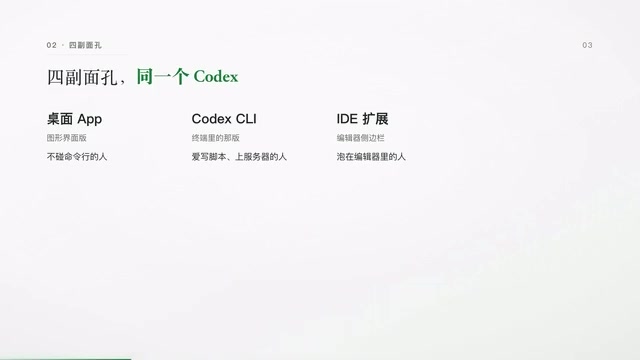
Codex tutorial: one-command install and run your first task. Covers the four Codex forms, sandbox and approval guardrails, AGENTS.md and MCP configs, cloud network policy, and the iron rule of human review—everything you need to get started with this autonomous coding agent.
 Tech Frontiers
Localix: An Open-Source Agentic Development Environment with Multi-Model and Local AI Integration
Localix is an MIT open-source Agentic Development Environment (ADE) supporting seamless Claude Code plugin loading, multi-model cloud and local execution, Mini Apps extensions, and agent context management—an open AI collaboration workbench for developers.