Qwen 4 Preview Hands-On: Open-Source Models Break New Ground

Alibaba's Qwen 4 series preview revealed: million-token context, standout code capabilities, and confirmed open weights.
Alibaba Cloud's Qwen 4 series is about to launch, with an early preview already available to select testers. The product line includes Qwen 4 Max, Flash, Plus, and 27B, with the Coder model expected to return; Max is rumored to feature a million-token context, image input, and tool calling. Hands-on tests show the preview can generate a Minecraft clone with lighting, day-night cycles, and an inventory system, as well as a 3D Roman Colosseum scene. In web development and agentic coding tasks, quality surpasses the previous generation and some competitors, with token efficiency improved by roughly half. Raising the thinking tier to xhigh or max yields perceptible quality gains but increases time. Alibaba has confirmed Qwen 4 will have open weights and hinted the same for Qwen 5; community rumors about abandoning smaller models are false.
Alibaba Cloud's Qwen 4 series is about to launch, and an early preview has already been made available to select testers. Based on the leaked test cases, this generation of open-source models demonstrates surprising completeness in code generation and the construction of complex interactive scenarios—even surpassing closed-source competitors on certain tasks.
Qwen 4 Series Launch Imminent: Product Matrix and Official Signals
According to analysis from a YouTube tech channel, Alibaba Cloud officially introduced the Qwen 4 series at the Aspara conference, including Qwen 4 Max, Qwen 4 Flash, Qwen 4 Plus, and the most anticipated Qwen 4 27B. Additionally, the specialized Qwen Coder model is expected to return.
Alibaba Cloud's CTO stated at the Aspara conference in Amsterdam that Qwen 4 would arrive "next week," with outside speculation pointing to an early November release window. Recently released official teasers like "The Becoming Begins," along with mysterious model checkpoints such as Kalmia, Kyria, Hensia, and Miura appearing on leaderboards, are all viewed as signals that Qwen 4 is about to make its debut.
Notably, the poster released by the Qwen team quotes a passage from classical Chinese philosophy describing a giant fish named "Kun" whose immense size is "unknown—perhaps thousands of li." Kun sounds similar to Qwen, and this metaphor has been interpreted as Alibaba hinting at the scale and capability of its new models.
Core Specs: Million-Token Context and Tool Calling
A promotional image briefly leaked by a partner and quickly deleted revealed that Qwen 4 Max will feature a million-token context window, with support for image input and tool calling. Although the image was taken down shortly after, combined with the CTO's earlier statements, these specifications carry a high degree of credibility.
Early testers gained access to the models several days in advance. Although the preview version does not explicitly state the specific model variant, its performance suggests it is likely Max or close to Max specifications.
Token context window refers to the total amount of input and output text (measured in tokens) that a large language model can process in a single inference pass. A million tokens roughly corresponds to 700,000 to 800,000 English words, or the entire Three-Body trilogy. It directly determines whether a model can read through a large codebase, lengthy document, or extremely long conversation history in one go, without needing to truncate segments or rely on retrieval augmentation. Previously, mainstream open-source models in the industry typically supported 128K to 200K tokens. If Qwen 4 Max reaches the million-token level, it means the model can understand an entire repository and trace cross-file call relationships—which is precisely an important prerequisite for its outstanding performance in agentic coding tasks.
Tool calling (function calling / tool use) refers to a model actively outputting structured requests during generation to invoke external functions, APIs, or retrieval systems, then incorporating the returned results into subsequent reasoning. It is the underlying mechanism of agent capabilities: the model no longer just outputs text, but can execute searches, run code, and read/write files. Combined with image input, the model can simultaneously understand screenshots and code to complete "look at the image and modify the UI"-type tasks.
Code Capability Hands-On: From a Minecraft Clone to the Roman Colosseum
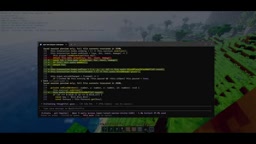
The most intuitive demonstration in this preview is code generation. In web development and agentic coding tasks, testers used the Qwen 4 preview to generate a Minecraft clone featuring lighting and shadows, a day-night cycle, an inventory system, underwater dynamic effects, multiple terrains, and creatures. For an open-source model, this level of detail was previously almost unimaginable.
In another case, the model generated a 3D scene of the Roman Colosseum within Qwen Code, including spectators, architectural details, ambient lighting, and even flickering light effects. The task used only "high" thinking mode without enabling the highest reasoning tier, consumed approximately 69k tokens, and produced quite impressive output quality.
Testers also compared it with a DeepSeekAd competitor: the Qwen 4 preview delivered higher-quality web development output with significantly better token efficiency, saving roughly half the token consumption.

Enhanced Reasoning and Cross-Domain Performance
Unlike the previous generation, the Qwen 4 preview shows perceptible quality improvements when raising thinking intensity from high to xhigh or even max. The trade-off is longer generation time—the model "thinks more" during the reasoning phase. This contrasts with some competitors where "raising the reasoning tier yields no obvious improvement."
Other notable tests include:
- Bioreactor simulation: Using the Hermes harness to generate an interactive insulin production simulation, the model first wrote a Python growth model, validated the calculations, then built a virtual reactor with adjustable oxygen, temperature, pH, stirring, and feed rate; when oxygen levels were lowered, bacterial growth stalled and an alarm was automatically triggered.
- 2D RPG village: Compared with a GPT competitor in max thinking mode, Qwen 4's Kyria checkpoint performed better in environmental composition and overall structure.
- Voxel art and 3D scenes: Generated voxel artwork with a day-night cycle, as well as 3D water surface and lighting scenes built with vanilla JavaScript and Three.js.
- SVG animation: Fun prompts like "a giraffe riding a bicycle, a rhino riding a giraffe" also produced smooth animations.

Thinking budget (thinking budget / reasoning effort) is an adjustable parameter introduced by reasoning models to control the length of the model's internal reasoning chain before producing an answer. The higher the tier, the more likely the model will try multiple approaches, self-verify, and backtrack—at the cost of multiplied latency and token consumption. Common industry tiers are low/medium/high, with some vendors extending further to xhigh and max levels. For simple tasks, overly high tiers may actually introduce errors through overthinking; for complex engineering tasks, raising the tier often yields substantial benefits. The distinguishing feature of the Qwen 4 preview is that the quality gap between high and low tiers is perceptible, indicating that its reasoning path expansion is genuinely effective rather than merely adding redundant output.
Open-Source Commitment and Rumor Clarification
There were rumors in the Chinese community that Alibaba might adjust its strategy, reduce investment in smaller models, or even abandon the open-weight approach. The YouTuber explicitly refuted this claim: the poster has no connection to the Qwen team, and the Aspara conference slides explicitly mention that Qwen 4 will have open weights, with hints that Qwen 5 will follow suit. For the open-source community, this is currently the most noteworthy commitment.
Open weights (open-weight) means a vendor publishes the model parameter files, allowing others to download, deploy locally, fine-tune, and redistribute them—though not necessarily disclosing training data or full training code. This falls short of the strict definition of "open-source software," but it is the de facto standard practice in the current large model community. Open weights are significant for developers: enabling private deployment, avoiding API costs and data leakage, and fine-tuning for vertical domains. For vendors, it is a means of building ecosystems, attracting developers, and establishing de facto standards. If Qwen 4 and Qwen 5 continue to open their weights, it will consolidate their position in the open-source model camp; conversely, a shift to closed-source APIs would erode community trust.
Key Information at a Glance
- Product line: Qwen 4 Max / Flash / Plus / 27B, with the Coder model possibly returning
- Max spec rumors: Million-token context, image support, tool calling
- Code performance: Web development and agentic coding significantly better than the previous generation and some competitors, with outstanding token efficiency
- Reasoning characteristics: Raising the thinking tier yields substantial quality improvements, but increases time
- Open-source stance: Qwen 4 confirmed to have open weights, with hints for Qwen 5 as well
The preview version still has a few minor bugs (such as the exit logic in underwater scenes), but overall completeness far exceeds what the word "preview" typically implies. For developers waiting for Qwen 4 27B, this early leaked report card is enough to keep expectations high.
One-line Summary
Alibaba's Qwen 4 series preview revealed: million-token context, standout code capabilities, and confirmed open weights.
Paragraph Summary
Alibaba Cloud's Qwen 4 series is about to launch, with an early preview already available to select testers. The product line includes Qwen 4 Max, Flash, Plus, and 27B, with the Coder model expected to return; Max is rumored to feature a million-token context, image input, and tool calling. Hands-on tests show the preview can generate a Minecraft clone with lighting, day-night cycles, and an inventory system, as well as a 3D Roman Colosseum scene. In web development and agentic coding tasks, quality surpasses the previous generation and some competitors, with token efficiency improved by roughly half. Raising the thinking tier to xhigh or max yields perceptible quality gains but increases time. Alibaba has confirmed Qwen 4 will have open weights and hinted the same for Qwen 5; community rumors about abandoning smaller models are false.
Related articles
 Tech Frontiers
MuJoCo: An Analysis of DeepMind's Open-Source General-Purpose Physics Simulator
An in-depth analysis of Google DeepMind's open-source physics simulator MuJoCo: high-performance C++ kernel, MJCF modeling format, contact solving principles, MJX GPU acceleration, and robot reinforcement learning use cases.
 Tech Frontiers
Claude API Quick Start: The Official Quickstarts Project Collection
Anthropic's official claude-quickstarts project collection helps developers quickly build deployable apps with the Claude API. Nearly 20k stars, Python-based, great for beginners and prototyping.
 Tech Frontiers
AI Agents Connecting Directly to APIs: Which Calls Can Be Safely Allowed?
AI agents can call any API, but the real challenge is deciding which calls can be safely allowed. This article analyzes allowance decisions from three dimensions—intent matching, least privilege, and controllable impact—and argues that the control layer should sit outside the agent, combined with audit traceability to build a trustworthy API call governance mechanism.