Recreating Classic Game Lemmings in Pure CSS: Pushing the Limits of JS-Free Animation

Pure CSS recreation of Lemmings animation sparks Hacker News debate on technical boundaries and practicality.
This article covers the "Lemmings CSS Animation" project, which recreates the classic game Lemmings' animations using only CSS (no JavaScript), earning 331 points on Hacker News. It breaks down the technical principles—using CSS pseudo-classes like :checked, sibling selectors, and keyframe animations to build a state machine for lemming actions—and analyzes the performance advantages and maintainability challenges of pure CSS. Community reactions are divided: some praise the expansion of CSS capabilities, others question its practicality as mere showmanship. The piece concludes that the project offers new ideas for reducing JS dependency in lightweight scenarios, while JS remains better for complex logic.
When a Classic Game Meets Frontend Tech
On Hacker News, a project called "Lemmings CSS Animation" sparked widespread discussion, garnering 331 upvotes and 67 comments. The project recreates the animation effects of the classic game Lemmings using pure CSS, without any JavaScript. Hosted on GitHub Pages, the author demonstrates how to simulate classic lemming actions—walking, falling, digging—using only CSS animations and selector capabilities.
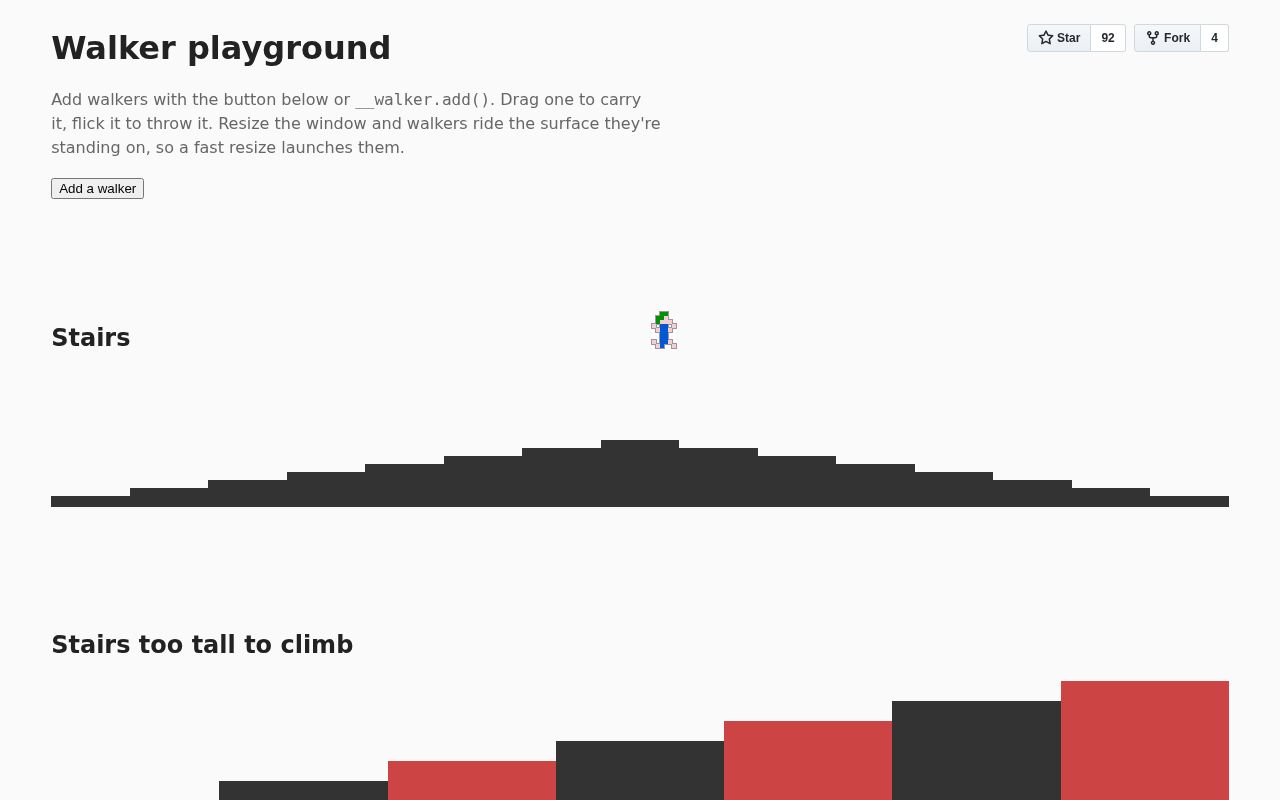
Technical Breakdown: How CSS Drives Game Logic
Implementing Animation and State Machines in CSS
Traditional game logic usually relies on JavaScript's event loop and state management, but CSS itself has transition and keyframe animation (@keyframes) capabilities that can simulate simple state switching. In this project, the author likely leverages CSS's :checked pseudo-class, :hover, and sibling selectors to trigger different animation branches, thereby achieving conditional behavior without writing scripts. For example, toggling a lemming's walking direction or action type via a checkbox's checked state—a technique known in frontend circles as a "CSS state machine."
The core of the CSS state machine technique lies in using user interaction (or state changes in form controls) to drive UI changes without JavaScript. In pure CSS implementations, the :checked pseudo-class is often paired with <input type="checkbox"> or <input type="radio">, with a label triggering state changes; sibling selectors (such as + and ~) allow selecting subsequent elements based on the input's state and applying styles. Combined with transition and @keyframes, this can create seemingly logical animation sequences. This pattern had early forms in projects like "CSS Zen Garden," but in recent years, with support for CSS custom properties and the :has() selector, its capabilities have expanded further.
Trade-offs Between Layout and Performance
Pure CSS animations often have better rendering performance than JS-driven frame-by-frame calculations, because browsers can delegate animations to the compositor thread. However, implementing complex interactions with CSS also presents challenges: code size can balloon rapidly, and maintainability decreases. From the project demo, the author achieves smooth visual effects through a refined HTML structure combined with CSS variables and animation timelines, while maintaining code readability. This approach suits lightweight demos or educational purposes but is not suitable for full-fledged game development requiring complex logic.
The compositor thread is a key part of the browser rendering pipeline. Modern browsers divide page rendering into the main thread and the compositor thread: the main thread handles HTML parsing, style calculation, layout, and painting, while the compositor thread handles layer compositing and animations. When CSS animations involve only transform and opacity properties, the browser can hand them off to the compositor thread for independent execution, avoiding main-thread layout and paint overhead and achieving smoother animations. In contrast, JavaScript-driven animations that frequently modify layout properties (such as width, top) trigger reflow and repaint, increasing main-thread load. However, pure CSS solutions have limited state management capabilities, and complex interactions still require JS.
Community Reaction and Controversy
In the Hacker News comment section, developers engaged in heated discussion. Some praised the further expansion of CSS capabilities, believing such "constrained creation" helps understand browser rendering mechanisms; others questioned its practicality, seeing the implementation as more of a show of skill that would be hard to maintain and extend in real projects. Some comments noted that similar techniques could be used for interactive stories or dynamic elements in marketing pages, reducing dependence on JavaScript and improving page load speed.
This divergence reflects a classic debate in the frontend community about technology choices: whether to pursue ultimate lightweight performance or prioritize maintainability and development efficiency. Regardless, this project, as a technical experiment, successfully demonstrates CSS's potential and offers developers new ideas.
Hacker News is a news community where tech entrepreneurs and developers gather, incubated by Y Combinator and known for high-quality technical discussions and sharp comments. Its voting mechanism (upvotes) and comment threads often spark deep debates on tech trends. A project gaining hundreds of points usually means it touches on shared community interests, such as creative coding, performance optimization, or exploration of web standards. In this case, the divergent comments reflect different value orientations among developers toward "technical showmanship" versus "engineering practicality."
Implications for Frontend Development
The Lemmings CSS Animation project reminds us that modern CSS is far more than a style description language. By combining animations, transforms, selectors, and custom properties, developers can build surprisingly impressive interactive effects. For teams looking to reduce JavaScript dependency, the state management techniques here can be borrowed and pure CSS approaches tried in suitable scenarios (such as onboarding pages, loading animations, simple gamified elements). But it's also important to recognize the limitations: as logic complexity increases, JavaScript remains the more appropriate choice.
The project's popularity on Hacker News also shows the community's sustained interest in creative technical experiments. It's not just nostalgia—it's a tribute to and exploration of the web platform's capabilities.
Background
Constrained creation is the practice of innovating under limited technical or resource conditions—for example, implementing games with only CSS or building apps with pure HTML. This approach often inspires deep understanding of underlying principles and drives the evolution of tools and standards. Historically, competitions like CSS Zen Garden and JS1k have encouraged developers to push limits. The Lemmings CSS Animation project continues this tradition—it's not just nostalgia but a tribute to and exploration of the web platform's capabilities, reminding developers of the potential of native CSS animations and state management techniques in lightweight interactions.
One-line Summary
Pure CSS recreation of the classic game Lemmings animation sparks heated debate on Hacker News about technical boundaries and practicality.
Paragraph Summary
This article introduces a project called "Lemmings CSS Animation," which recreates the animation effects of the classic game Lemmings using only CSS (no JavaScript), earning 331 points on Hacker News. The article breaks down its technical principles: using CSS pseudo-classes (like :checked), sibling selectors, and keyframe animations to build a state machine that implements lemming actions such as walking and falling; it also analyzes the performance advantages of pure CSS animations and the challenges of code maintainability. Community reactions are divided: some praise it for expanding CSS capabilities, while others question its practicality as a show of skill. Finally, it notes that the project offers frontend developers new ideas for reducing JS dependency and trying pure CSS interactions in lightweight scenarios, while emphasizing that JS remains the better choice when logic becomes complex.
Related articles
 Tech Frontiers
Coldframe: A Honeypot Disguised as a Supermarket Freezer Controller
Coldframe is a honeypot disguised as Danfoss AK-SM 800A and Dixell XWEB freezer controllers, built as a single Python file that detects CVE-2025-41450 attempts and is identified as real devices on Shodan.
 Tech Frontiers
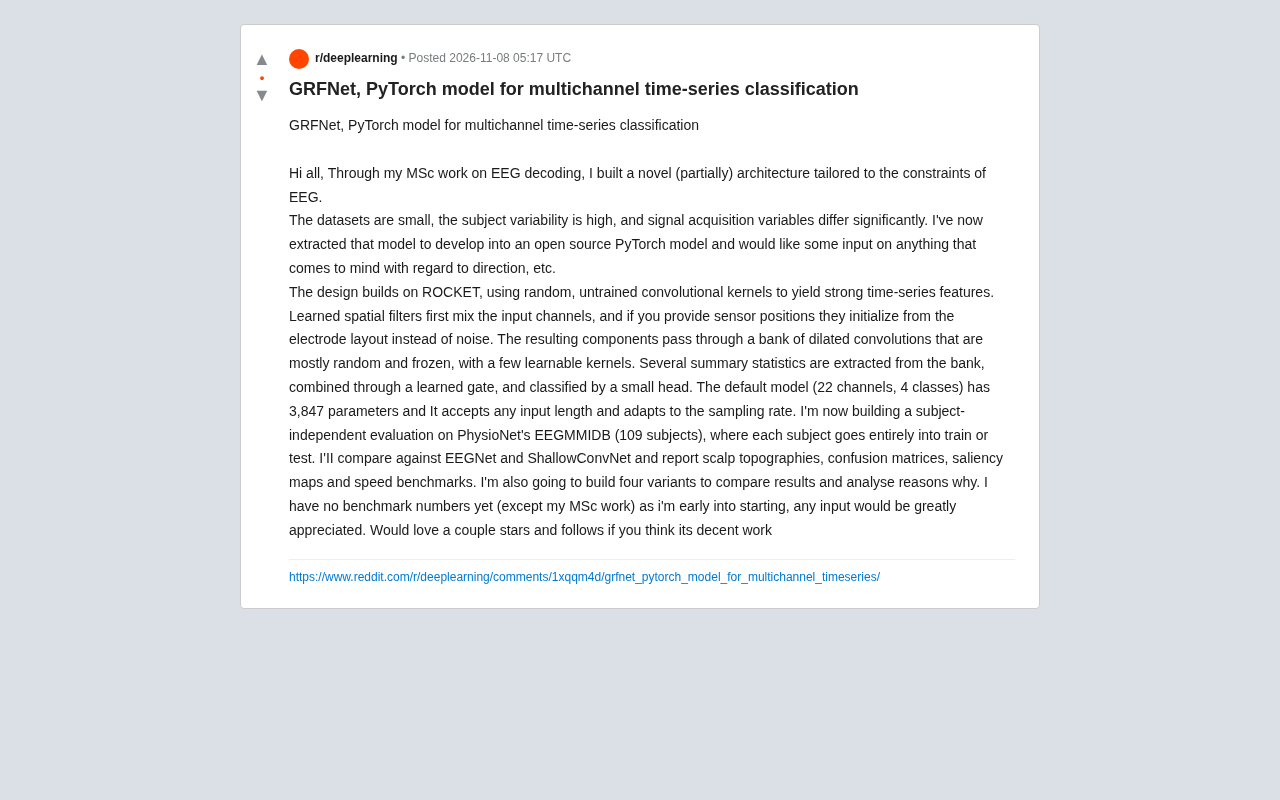
GRFNet: A Lightweight PyTorch Model Designed for Multichannel Time-Series Classification
GRFNet is a lightweight PyTorch model for multichannel time-series classification, originating from EEG decoding research. With only 3,847 parameters, it is based on the ROCKET architecture, combining random convolution kernels with learnable spatial filters, supports arbitrary input lengths, and will soon be evaluated on the PhysioNet dataset.
 Tech Frontiers
CUDA-Accelerated Rocket League Simulator: A Player-Made Hardcore Experiment
A Reddit post shows a "100% Accurate" Rocket League simulator accelerated with CUDA. We analyze its technical context, CUDA's value in game physics simulation, and the significance and limitations of such community projects.