Replit Weekly: Claude Haiku 5.5 Goes Live, BYOC Enterprise Deployment Unlocked

Replit adds Claude Haiku 5.5, the Solutions Partner program, and three BYOC enterprise deployment modes.
Replit's updates cover three threads: model capabilities, enterprise services, and cloud deployment autonomy. Claude Haiku 5.5 enters the model selector for fast, cost-effective lightweight tasks. The Solutions Partner program lets certified partners handle requirements, architecture, and deployment while Replit provides the runtime. BYOC offers Full BYOC, BYOC for Published Apps, and Image Exports to address data residency and compliance concerns.
Replit's updates last week focused on three main areas: expanding model capabilities, deepening enterprise-grade services, and increasing cloud deployment autonomy. For teams that rely on cloud-based collaborative development and AI application builders, these changes are worth noting.
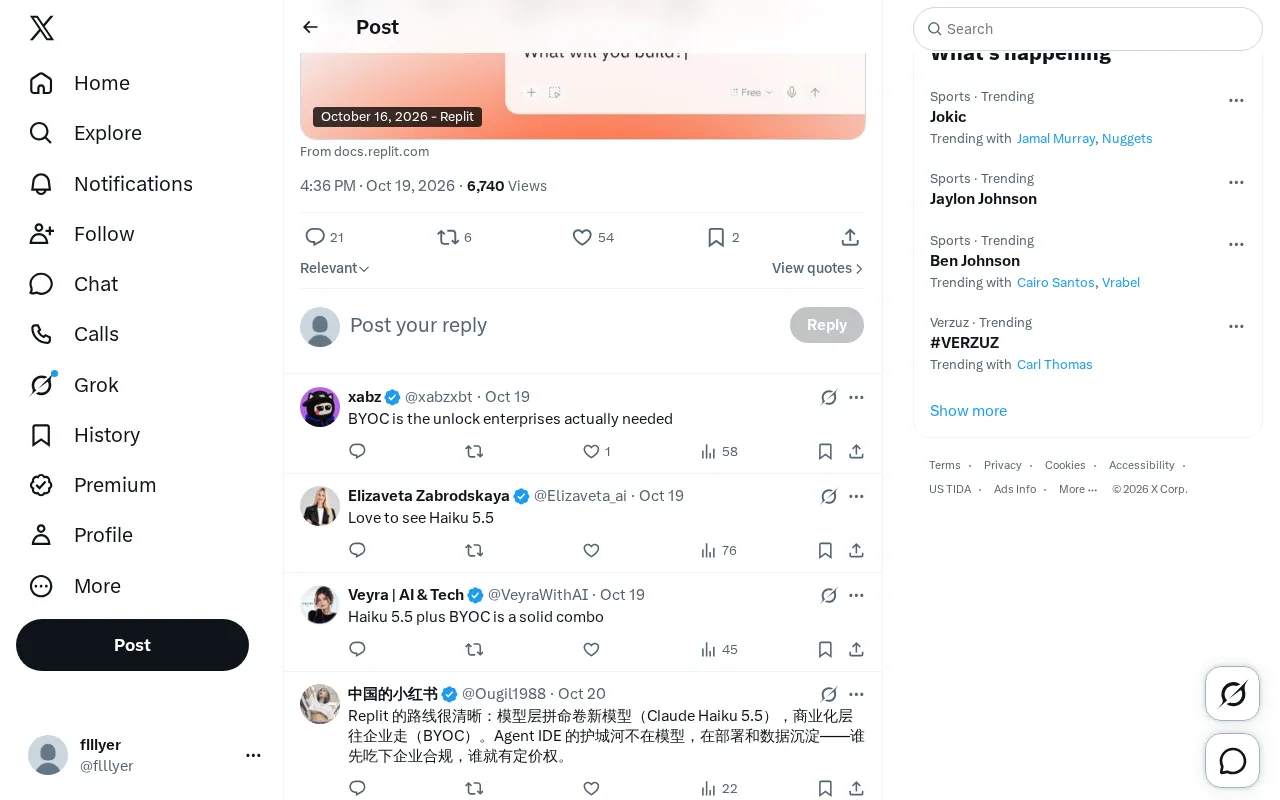
Claude Haiku 5.5 Enters the Model Selector
Replit has officially added Claude Haiku 5.5 to its model selector. The Haiku series has always been known for its responsiveness and cost efficiency, and version 5.5 is expected to improve reasoning quality while maintaining low latency. For developers using Replit Agent or calling built-in models, this means an additional option that balances speed and cost for prototype validation and lightweight tasks.
The flexibility of the model selector directly affects the development experience. Replit allows users to switch between different models within the same workspace, avoiding the need to migrate projects just to test a particular model. The addition of Haiku 5.5 gives fast-iteration scenarios—such as generating boilerplate code, explaining error messages, and writing unit tests—a lighter-weight option, so there's no need to call heavier large models every time.
Claude Haiku is the lightweight product line in Anthropic's Claude model family, forming a three-tier positioning alongside Opus (flagship) and Sonnet (balanced). The Haiku series is designed to minimize latency and token costs per call while ensuring usable reasoning quality, so it is often used for high-frequency, low-complexity tasks such as code completion, format conversion, simple Q&A, and batch text processing. In agent-type applications, Haiku also often serves as a "routing layer" or "preprocessing layer," first determining task difficulty before deciding whether to escalate to a heavier model. Understanding this tiering helps developers weigh cost against performance based on task complexity, rather than defaulting to the most powerful model.
Building and Implementing with Replit Solutions Partners
Replit is simultaneously promoting its Solutions Partner program, positioned to help enterprises move from "wanting to build with AI" to "actually building something." The official phrasing is "Build and implement with a Replit Solutions Partner," emphasizing not just the tool itself but also external support during implementation.
This move continues Replit's trend of extending from a purely self-service development platform toward enterprise services. For companies lacking an in-house AI engineering team, partners can take on requirements analysis, architecture recommendations, and deployment implementation, while Replit provides the underlying development environment and runtime. The intent of the ecosystem division of labor is fairly clear: the platform handles capabilities, and partners handle delivery.
Solutions Partner is a common ecosystem role in SaaS and cloud platforms, typically referring to third-party companies that are certified by the platform and have implementation and delivery capabilities. Unlike ordinary channel resellers, such partners often handle pre-sales consulting, solution design, system integration, migration and go-live, and ongoing operations. For the platform, a partner system can cover a large number of mid- and long-tail enterprise customers at a lower cost than building it all in-house; for customers, it provides an officially endorsed technical support entry point. This "platform provides product, partners provide delivery" division of labor has mature precedents in the enterprise software industry, and Replit's move essentially embeds self-service developer tools into the standard enterprise procurement and implementation process.
Enterprise BYOC: Three Deployment Modes Available
For enterprise customers, Replit has introduced Bring Your Own Cloud (BYOC). The official offering includes three deployment options: Full BYOC, BYOC for Published Apps, and Image Exports. The three differ in degree of autonomy—Full BYOC lets enterprises place the runtime environment entirely within their own cloud accounts, suitable for organizations with hard requirements around data residency and compliance; BYOC for published apps focuses on production workloads; and Image Exports leans toward exporting build artifacts to their own infrastructure.
The value of BYOC lies in alleviating the most common concern enterprises have when adopting cloud-based AI development platforms: whose machines the code and data run on. By placing the runtime in the customer's own cloud account, Replit's role shifts from "hosting everything" to "providing the development experience and control plane," which in regulated industries such as finance and healthcare is often a prerequisite for procurement.
BYOC (Bring Your Own Cloud) is a deployment architecture pattern in which a software vendor runs its product in the customer's own cloud account or private infrastructure rather than in the vendor-hosted public cloud environment. The opposite is the SaaS multi-tenant model and private deployment. With BYOC, the vendor typically provides the control plane (responsible for management, updates, and monitoring) and the development experience, while the data plane (code, build artifacts, runtime) resides in the customer's cloud account, so customers can reuse their existing network isolation, IAM policies, audit logs, and cost accounting systems. This model is especially common in scenarios with stricter data residency regulations (such as GDPR and industry compliance requirements), and in recent years it has become a mainstream compromise for enterprise-grade AI tools seeking large customers.
Signals from This Update
All three updates point in the same direction: while expanding developer choice, Replit is making the enterprise market a priority. The model layer is left to users to choose as needed, the implementation layer brings in partners to fill delivery capability gaps, and the infrastructure layer allows enterprises to take control back into their own cloud. For individual developers, the most direct change is an additional Haiku 5.5 in the model selector; for enterprise technology decision-makers, the emergence of BYOC means Replit can be included on the shortlist with greater confidence.
For more details, see the official Replit changelog.
One-line Summary
Replit's update adds Claude Haiku 5.5, the Solutions Partner program, and three BYOC enterprise deployment modes.
Paragraph Summary
Replit's updates last week revolved around three main threads: model capabilities, enterprise services, and cloud deployment autonomy. At the model level, Claude Haiku 5.5 officially entered the model selector, offering an option that balances speed and cost for lightweight, high-frequency tasks such as prototype validation, boilerplate code generation, and error explanation. At the enterprise services level, Replit is promoting the Solutions Partner program, with certified partners handling requirements analysis, architecture recommendations, and deployment implementation, while the platform provides the development environment and runtime, forming a "platform manages capabilities, partners manage delivery" division of labor. At the infrastructure level, Replit introduced BYOC, offering three deployment approaches with varying degrees of autonomy—Full BYOC, BYOC for Published Apps, and Image Exports—addressing enterprises' concerns about data residency and compliance. The overall signal: while expanding developer choice, Replit is accelerating its push deeper into the enterprise market.
Related articles
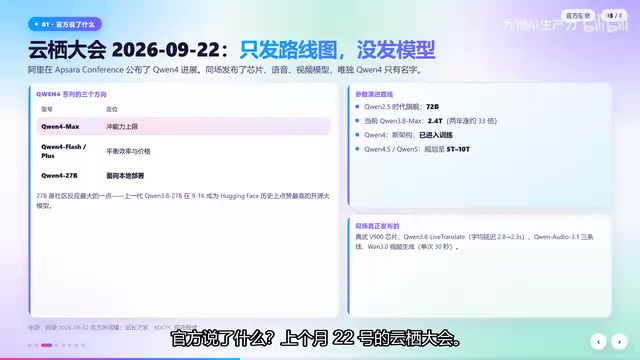
Qwen4 Architecture Preview Open-Sourced: 125B Parameters, 512 Experts, Designed for VRAM-Constrained Hardware
Qwen4 isn't released yet, but its architecture is previewed via open-source Qwen3.8 Flash Next: 125B params, 6B activated per token, 512 experts, 262K context, built for VRAM-limited hardware. This article covers official confirmations, key config.json metrics, and local deployment tests on 24G memory.
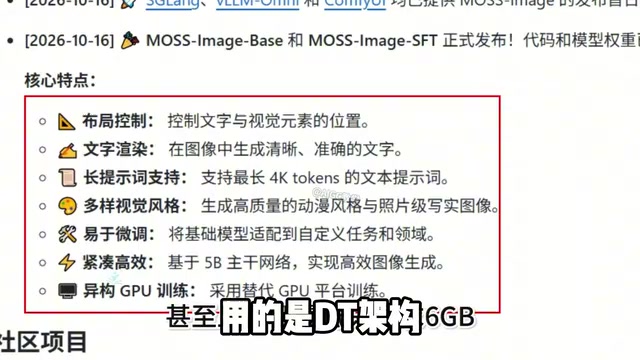
Run 8K Images on 6GB VRAM! Hands-On Test of Fudan's Open-Source MOSS-Image Model
Fudan OpenMouse team and Shanghai MOSS Intelligence open-source MOSS-Image, a 500M-parameter DT architecture text-to-image model that runs locally on 6GB VRAM with precise text rendering, structured layout control, and 4K Token prompt support—ideal for e-commerce posters and local deployment by individual creators.
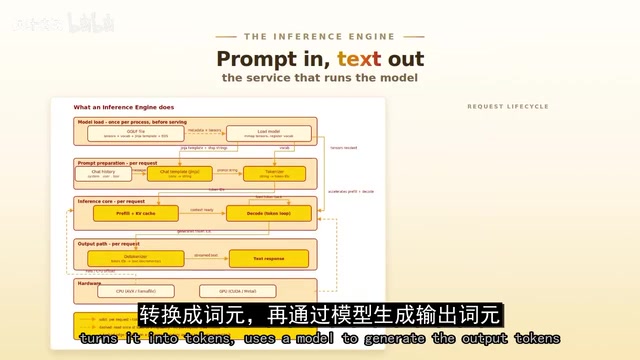
Overseas Blogger Tests Local Deployment of 100B-Parameter MoE Model: Key Lessons on Quantization and Tool Calling
Overseas blogger tests local deployment of Alibaba's Qwen 3.8 Flash Next 100B MoE model on a Strix Halo mini PC and CUDA workstation, revealing how quantization precision affects tool-calling success and the real-world performance of the Strata and GUFO inference engines.