RoboCop's Funniest Scene: Classic Quotes and Dark Humor Explained

An Amazon clip reveals how RoboCop's dark humor satirizes institutions and human nature through absurd contrasts.
Based on a curated RoboCop clip released by Amazon MGM, this article breaks down three classic funny scenes: the kidnapper demanding fresh coffee and car freebies during negotiations, satirizing consumerism's infiltration of violence; RoboCop reading Miranda rights to a corpse, mocking rigid bureaucratic procedure; and the mistaken identity and credit-stealing satire of "Dick, you're fired." The article argues that this humor stems from "presenting the absurd with a straight face," using double entendres, situational contrast, and mockery of authority to make audiences reflect on institutions, consumerism, and human weakness—still sharp today.
Introduction: An Underrated Classic of Dark Humor
1987's RoboCop is often regarded as a benchmark for sci-fi action films, but a recent curated clip from Amazon MGM reminds us that the film's sense of humor is just as sharp. From Murphy's deadpan law enforcement to the kidnapper's absurd demands, director Paul Verhoeven uses exaggerated violence and satirical dialogue to build a Detroit that is both futuristic and absurd. Based on that official clip, this article breaks down its most hilarious moments and explores how this humor serves the film's social critique.
Scene One: The Kidnapper's "Fresh Coffee" and the Absurd Negotiation
The clip opens with the kidnapper Miller holding the mayor hostage and making two demands to the police: first, no tricks; second, some fresh coffee. This contrast—reducing a life-or-death negotiation to everyday trivialities—is the core of Verhoeven-style humor. When Miller demands a "recount" and picks a car that is "fast and gets lousy gas mileage," the absurdity peaks—he even cares about cruise control and a "blob pump" (a nonsensical freebie).
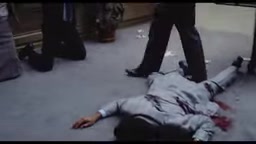
This humor isn't just for laughs. It satirizes how consumerism seeps into violence: even crime has to care about specs and free gifts. The police respond, "No problem, Miller, we'll throw in the blob pump too," further dissolving the seriousness of law enforcement. According to the official clip, the pacing and dialogue design of this exchange remain a meme fans still relish today.
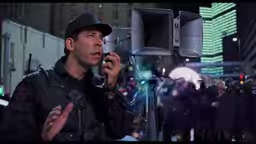
Scene Two: RoboCop's Deadpan Enforcement and Procedural Justice
When RoboCop arrests a criminal, he solemnly reads the Miranda rights—even though the suspect is already dead. In the clip, he says to the corpse, "You have the right to remain silent," and a colleague reminds him, "You're reading Miranda to a dead body," to which he replies, "I'm in trouble." This absurdly mechanical execution of procedure highlights both the cyborg's residual humanity and mocks the rigidity of the bureaucratic system.
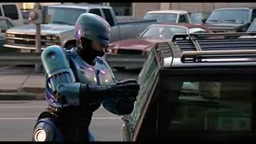
Another classic moment comes when RoboCop requisitions a vehicle and the owner complains, "What's the problem?" He corrects him: "It's trouble, idiot... I mean, officer." This small linguistic slip makes the cold enforcer a bit clumsily endearing. And the exchange "Nice shooting" followed by "They're winning, right, sir?" instantly pulls the action scene back to the helplessness of office politics.
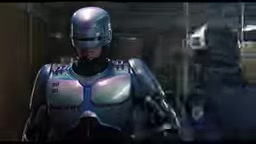
Miranda Rights originate from the U.S. Supreme Court's 1966 ruling in Miranda v. Arizona, which requires law enforcement to inform suspects before custodial interrogation that they have the right to remain silent and the right to an attorney. If not read, a suspect's statements may be excluded. RoboCop reading these rights to a corpse is both a mechanical execution of procedural justice and a hint at the cognitive flaw of a cyborg system unable to distinguish "person" from "object," thereby amplifying the absurdity of bureaucratic procedure.
Scene Three: Dick's Firing and the Film's Most Venomous Line
At the end of the clip, the kidnapper holds an old man hostage and threatens to board a plane, shouting, "Dick, you're fired!"—a line spoken by the kidnapper to the police officer Dick, completing the humor of mistaken identity. RoboCop then solves the problem with one shot, and the mayor praises, "Nice shooting, son, what's your name?" Dick jumps in to answer, "Dick." This ending is clean and crisp, condensing the film's satirical tone into a few seconds: the hero is nameless, and the bureaucrat steals the credit.
Though brief, this clip showcases the layers of RoboCop's humor: from double entendres in dialogue to situational contrast, and to mockery of authority. Amazon MGM's curated edit happens to string these scattered pearls together.
Why Does This Humor Still Work Today?
RoboCop's comedic feel stems from "presenting the absurd with a straight face." Verhoeven uses news broadcasts, commercial breaks, and exaggerated performances to build a world that is believable yet laughable. The kidnapper demanding coffee, RoboCop reading Miranda, and Dick being "fired"—these moments are classic because they let the audience realize through laughter that the future may not be far away, and human absurdity never changes.
For today's viewers, these clips are not just nostalgia but a masterclass in dark humor writing—how to use a single line to simultaneously build character, advance plot, and satirize society. Amazon MGM's official clip provides vivid material for this analysis.
Paul Verhoeven is a Dutch director known for sci-fi action films such as RoboCop, Total Recall, and Starship Troopers, whose works are often marked by exaggerated violence, dark humor, and media satire. In RoboCop, the news broadcasts and commercials he intersperses (such as "Nuke 'em" and the "6000 SUX" car ad) construct a future world where consumerism and violence collude. These pseudo-TV segments are themselves critical parodies of real media, reinforcing the film's absurdity and satirical layers.
Conclusion: Humor Is Another Edge of Sci-Fi
RoboCop's funny scenes are not mere comic relief but the soft packaging of the film's critical edge. From "fresh coffee" to "blob pump," from Miranda rights to "Dick, you're fired," every punchline points to institutions, consumerism, or human weakness. Rewatching these clips, we laugh not just at the lines but at a world that was predicted yet has never gone out of date.
Related articles
 Tech Frontiers
MuJoCo: An Analysis of DeepMind's Open-Source General-Purpose Physics Simulator
An in-depth analysis of Google DeepMind's open-source physics simulator MuJoCo: high-performance C++ kernel, MJCF modeling format, contact solving principles, MJX GPU acceleration, and robot reinforcement learning use cases.
 Tech Frontiers
Claude API Quick Start: The Official Quickstarts Project Collection
Anthropic's official claude-quickstarts project collection helps developers quickly build deployable apps with the Claude API. Nearly 20k stars, Python-based, great for beginners and prototyping.
 Tech Frontiers
AI Agents Connecting Directly to APIs: Which Calls Can Be Safely Allowed?
AI agents can call any API, but the real challenge is deciding which calls can be safely allowed. This article analyzes allowance decisions from three dimensions—intent matching, least privilege, and controllable impact—and argues that the control layer should sit outside the agent, combined with audit traceability to build a trustworthy API call governance mechanism.