Running Qwen 3.8 on a Laptop to Read Raw Weights: 46 Minutes Per Answer

Researchers had a large model directly read its own 17GB weight file, taking 46 minutes but only suitable for interpretability exploration.
This article introduces "weight space programming," a radical interpretability idea: letting a language model directly read a neural network's raw weight file as input. Simon Willison reproduced the experiment with Qwen 3.8 27B on a personal laptop; the model file was about 17GB, and a single answer took 46 minutes and consumed 43,506 reasoning tokens. The Pong test ran for more than an hour, while the Freeway task failed outright. The article notes that the method is highly sensitive to task type and has extremely high engineering costs, making it currently suitable only for small-scale interpretability research and not for interactive use. The original content is labeled a "first look," and the conclusions remain at an early stage, requiring more independent reproductions to verify stability and scope of applicability.
When a Model Directly "Reads" Its Own Weights
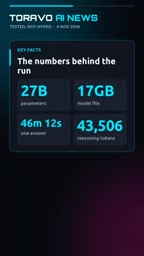
Interpretability research on large models typically relies on probes, attention visualization, or activation patching—methods that all operate at the level of the model's external representations. But a paper on "weight space programming" proposes a more radical idea: let the language model directly read a neural network's raw weight file and treat the weights as input text. According to Simon Willison's blog, he reproduced this experiment with Qwen 3.8 27B (written as QEN 3.8 27b in the original) on a personal laptop—the model file was about 17GB, and a single answer consumed 46 minutes and 43,506 reasoning tokens. That number alone captures both sides of the issue: the idea is novel enough, and the cost is real enough.

Weight Space Programming is centered on bypassing the traditional "input text–output text" interface by serializing a neural network's parameter matrices directly into a sequence of numeric tokens as context input to a language model. Its fundamental difference from mainstream interpretability methods (probes, attention visualization, activation patching) is that the latter analyze the model's activation space or representation layers, whereas the former attempts to get the model to build an internal mapping at the level of weight values. Its theoretical motivation comes from the self-referential question of "whether a model can understand itself"—if a language model can process arbitrary numeric sequences, then a weight file, as a special kind of numeric sequence, can in principle be processed too. The challenge is that the distribution of weight values differs enormously from that of natural language tokens, and the model needs to consume a large number of reasoning tokens to "parse" these numeric patterns, which is precisely the source of the 43,506 reasoning tokens consumed.
Experimental Details: 17GB of Weights and 46 Minutes of Reasoning
Willison's experimental setup is not complicated: feed a model weight file of about 17GB to the same model and have it answer questions based on these raw values. A single inference takes 46 minutes and generates more than 40,000 reasoning tokens. This level of inference cost means it cannot be used in any interactive scenario, but in a research context, the long reasoning chain itself may contain valuable information—the process by which the model gradually digests the numeric patterns in the weights is worth observing.
It should be noted that this is a preliminary reproduction attempt, not a complete validation of the original paper. Willison himself also frames this as a "first look."
Reasoning Token in this context refers to the tokens corresponding to the intermediate thinking steps the model produces before generating a final answer. Modern large models (such as the Qwen series) support "chain-of-thought" style reasoning, generating a large amount of internal derivation text before outputting an answer. 43,506 reasoning tokens mean the model spent tens of thousands of steps gradually digesting the numeric patterns in the weight file rather than giving an answer directly. The cost of this long reasoning chain is that inference time grows linearly—on a consumer laptop, the generation of each token requires a complete model forward pass, and the total time of 46 minutes is directly related to this. It is worth noting that the long reasoning chain itself may contain valuable intermediate representation information, and researchers can observe how the model gradually "understands" the weight values, which constitutes the unique value of this method in interpretability research.
Limitations in Actual Performance
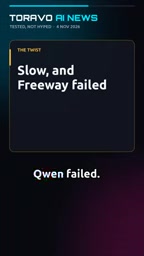
Not all tasks can run smoothly. In the Pong-related test, the runtime exceeded one hour; on the Freeway task, Qwen simply failed. These two cases expose the fragility of the current method: weight space programming is highly sensitive to task type, and whether the model can correctly understand and execute a task after reading raw weights involves significant uncertainty.
From an engineering perspective, the 17GB input scale itself approaches the boundary of context processing, and inference time measured in hours also means that any iterative debugging is extremely expensive. This determines that it is currently only suitable for small-scale, exploratory research rather than general-purpose capability.
Context Window is a key factor limiting the engineering feasibility of this method. After a 17GB weight file is serialized into text, the number of tokens far exceeds the upper limit of the context window of current mainstream models (usually 128K to 1M tokens). This means the model cannot "see" the complete weights at once and can only digest them through segmented processing or sliding window mechanisms, and integrating information across segments is itself an unresolved challenge. In addition, the precision of weight values (such as FP16 or BF16) introduces representation overhead when serialized into text, further inflating the input scale. The Pong test exceeding one hour and the Freeway task failure are very likely related to the model losing key numeric patterns in an ultra-long context—when the input approaches or exceeds the context boundary, the model's attention to early numeric values decays significantly, leading to task comprehension failure.
Who It Is For: A Narrow Door for Interpretability Researchers
If you work on interpretability research into the internal mechanisms of models, this method offers a perspective different from traditional probing—not observing activations from the outside, but letting the model process weight values itself. This "introspective" path may reveal patterns that external methods find hard to capture. But if you are simply looking for an efficient inference solution, this direction is currently completely unsuitable.
You may not have noticed that the original video content clearly noted "we have not yet tested" and "this is a first look at a blog post," which means the relevant conclusions are still at an early stage and more independent reproductions are needed to confirm the method's stability and scope of applicability.
Conclusion: A Glimpse for Researchers, Not a Product
Overall, the value of this experiment lies in verifying a conceptual possibility: a local model on consumer-grade hardware can indeed process its own raw weights. But the 46-minute single answer, the Pong test exceeding one hour, and the failure on Freeway together define the current boundary.

For researchers focused on the internal mechanisms of models, this line of work is worth following; for ordinary developers, for now it is merely an interesting but expensive thought experiment. The evaluation can be summed up in one sentence: tested, not hyped.
One-line Summary
Researchers had a large model directly read its own 17GB weight file, which took 46 minutes but is only suitable for interpretability exploration.
Paragraph Summary
This article introduces "weight space programming," a radical interpretability idea: letting a language model directly read a neural network's raw weight file as input. Simon Willison reproduced the experiment with Qwen 3.8 27B on a personal laptop; the model file was about 17GB, and a single answer took 46 minutes and consumed 43,506 reasoning tokens. The Pong test ran for more than an hour, while the Freeway task failed outright. The article notes that the method is highly sensitive to task type and has extremely high engineering costs, making it currently suitable only for small-scale interpretability research and not for interactive use. The original content is labeled a "first look," and the conclusions remain at an early stage, requiring more independent reproductions to verify stability and scope of applicability.
Related articles

9 AI Subscription Plans Compared: The Real Cost Per 100M Tokens Revealed
Bilibili creator tests 9 AI subscription plans from Volcano, Alibaba, Tencent, Baidu, Zhipu, Xiaomi, MiniMax and more, converting them all to real cost per 100M tokens, breaking down fixed-quota vs. three-tier coefficient billing and how caching, time-of-day discounts, and window limits affect actual quota.

Vibe Coding for Beginners: Expressing Intent Instead of Handwriting Code
What is Vibe Coding? A 137-episode Bilibili course defines it: the core is expressing intent, not writing code. This article analyzes Vibe Coding's productivity logic, target audience, and entry expectations to help beginners decide if it's worth learning.

LangChain Beginner's Guide: An Agent Development Roadmap from LangGraph to Deep Agents
Clarify the encapsulation relationship among LangChain, LangGraph, and Deep Agents, and master the learning path and selection logic for agent development frameworks—suitable for beginners in large model development.