Sage2: Real-Time Speech to Structured Data, a New Choice for Developer APIs
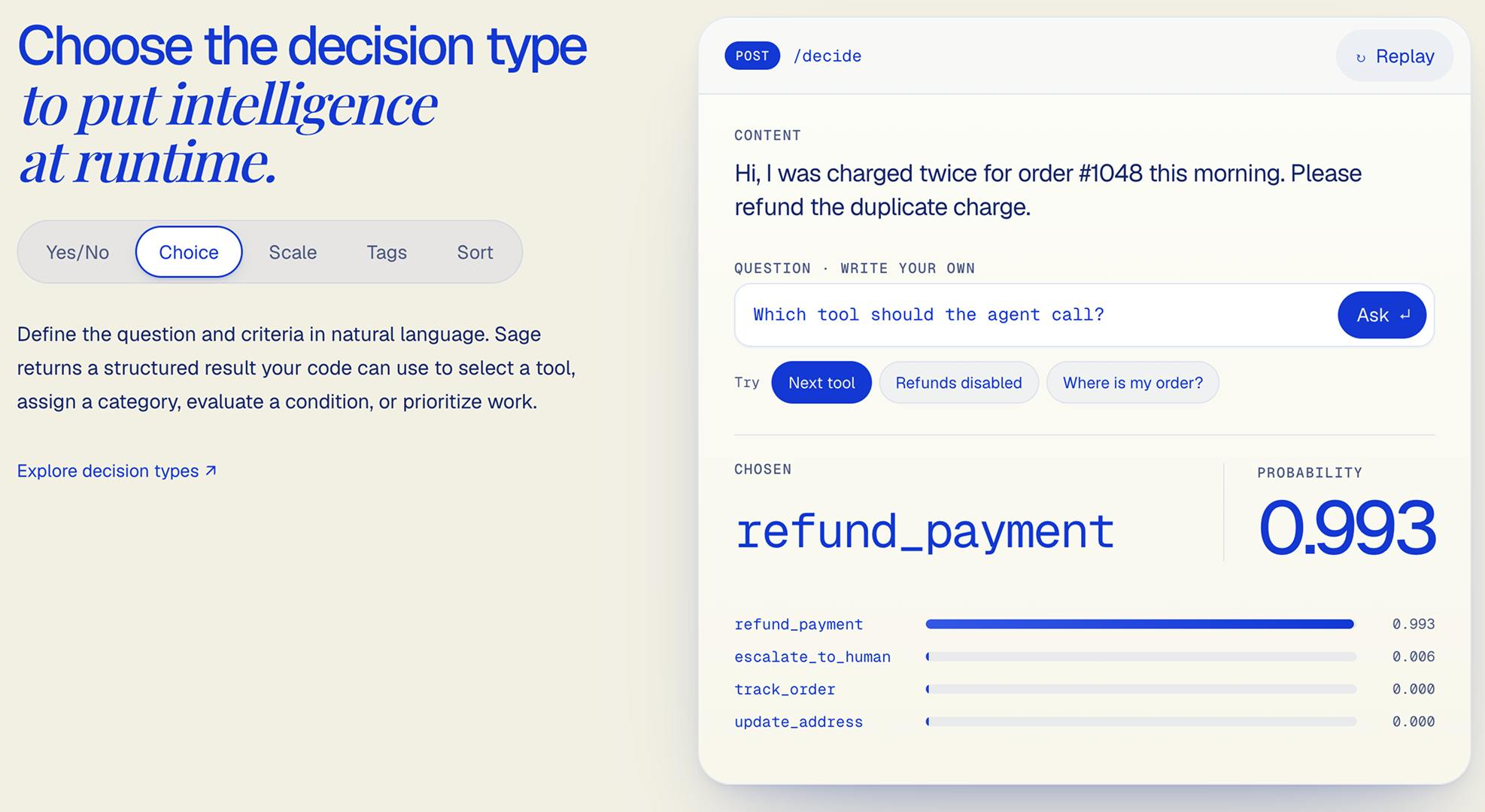
Sage2 converts real-time speech to structured data via API with streaming decisions, lowering the barrier for voice understanding.
Levanto Labs' Sage2 is a developer API that converts real-time conversations into structured data with streaming decisions. Unlike speech-to-text alone, it extracts key values like dates, amounts, and durations while tracking intent changes, enabling dynamic responses during conversations. It targets customer service, voice assistants, sales calls, and collaboration tools. Sage2 ranked second on Product Hunt with 99 votes, though pricing, language support, and performance metrics remain undisclosed, requiring developer verification.
In AI application development, extracting usable information from unstructured conversations has always been a challenge. Levanto Labs' Sage2 converts real-time speech into structured data via API and supports streaming decisions, enabling applications to respond dynamically as conversations progress. The product received 99 votes on Product Hunt, ranking second for the day, indicating developers' interest in this capability.

From Speech to Data: Sage2's Core Capabilities
Sage2 positions itself as "turning real-time conversations into structured data and immediate actions." It offers a developer API that can extract key values such as dates, amounts, and durations from natural language, and track changes in user intent. This means applications can understand conversation content in real time and execute next steps accordingly—such as recording schedules, triggering transactions, or adjusting workflows.
Unlike traditional speech-to-text, Sage2 focuses more on information extraction and semantic understanding. Developers don't need to build complex NLP pipelines themselves; they can directly obtain structured results through the API and focus on business logic.
Information Extraction is a classic task in natural language processing, aiming to identify predefined entities and relationships—such as names, dates, amounts, and durations—from unstructured text or speech transcriptions. Traditional methods typically rely on rule matching or statistical models (like CRF), while in recent years, sequence labeling methods based on pre-trained language models have become mainstream. Sage2 encapsulates this capability as an API: developers don't need to worry about underlying model selection and training data, and can obtain structured output simply by defining the desired field types. It's worth noting that extraction accuracy depends heavily on domain data distribution, and general-purpose models may require additional adaptation in vertical scenarios (such as healthcare or finance).
Streaming Decisions: Keeping Applications in Step with Conversation Pace
Sage2 emphasizes "streaming decisions," meaning that as a conversation progresses, the system can continuously update its understanding of user intent and make corresponding judgments. This is particularly important for scenarios requiring real-time interaction, such as customer service bots, voice assistants, or real-time collaboration tools. Applications can dynamically adjust response strategies based on Sage2's output rather than waiting until the conversation ends to process.
This capability relies on continuous intent tracking. Sage2 not only extracts static values but also captures changes in intent, helping applications adjust direction promptly during conversations.
Streaming Processing is the opposite of traditional batch processing: data arrives continuously in increments, and the system computes and outputs results immediately within each time window rather than waiting for all data to be collected. In voice conversation scenarios, streaming processing means ASR (automatic speech recognition) outputs transcribed text segment by segment, with downstream intent recognition and entity extraction rolling and updating accordingly. This brings two engineering challenges: first, low latency requirements—model inference must complete within hundreds of milliseconds; second, decision stability under incomplete input—the system needs to handle ambiguity from "half sentences" and correct previous judgments in subsequent context. Sage2's so-called "streaming decisions" are built on this processing paradigm.
Developer Perspective: API-First Design
Sage2 is offered as an API, categorized under developer tools and artificial intelligence. Developers can integrate it into existing systems, using API calls to achieve structured extraction of voice data and decision support. Official examples include extracting common entities such as dates, amounts, and durations—basic data points in many business scenarios.
For developers, Sage2's value lies in lowering the barrier to building voice understanding features. Without training models from scratch or maintaining complex NLP infrastructure, usable structured output is available through the API.
NLP Pipeline refers to a system that chains multiple processing stages together, typically including speech recognition, text cleaning, tokenization, entity recognition, intent classification, and dialogue state tracking. Building such a pipeline yourself requires integrating multiple models or services and handling data format transitions, error propagation, and latency accumulation between stages—resulting in high maintenance costs. Sage2's API-first design essentially abstracts this pipeline: developers replace multi-component orchestration with a single interface call, transferring engineering complexity to the server side. This model is similar to Twilio (communications) and Stripe (payments)—a typical form of "capability as a service," where the trade-off is sacrificing flexibility for integration speed.
Application Scenarios and Potential
Sage2's capabilities can be applied to various scenarios:
- Intelligent Customer Service: Extract key information from customer inquiries in real time (such as order numbers and dates) and track intent changes to provide more precise responses.
- Voice Assistants: Capture data such as schedules and amounts from conversations, automatically creating reminders or records.
- Sales and Business: Extract transaction details in real time during calls to assist with follow-ups.
- Collaboration Tools: Structure action items from meeting discussions to drive task execution.
What these scenarios have in common is the need for immediate understanding and response to real-time conversations, and Sage2's streaming decision features fit perfectly.
Competition and Challenges
The voice understanding space already has many players, including traditional speech recognition services and emerging large model APIs. Sage2's differentiation lies in focusing on structured data extraction and streaming decisions rather than mere transcription. However, its actual performance depends on extraction accuracy and intent tracking reliability, which developers need to verify during integration.
Additionally, information about Sage2 is currently limited; the official team has not disclosed specific pricing, supported languages, or performance metrics. Developers may need to further test its performance across different scenarios before adoption.
Conclusion
Sage2 provides developers with a convenient way to turn real-time speech into structured data and immediate actions. Its API design and streaming decision capabilities give it application potential in customer service, assistants, sales, and other scenarios. Although details are yet to be refined, its popularity on Product Hunt indicates market demand for such tools. For developers needing real-time voice understanding, Sage2 is worth watching.
One-line Summary
Sage2 converts real-time speech into structured data via API and supports streaming decisions, lowering the barrier for developers to build voice understanding features.
Paragraph Summary
Levanto Labs' Sage2 is a developer-oriented API product whose core capability is converting real-time conversations into structured data with support for streaming decisions. Unlike pure speech-to-text, Sage2 focuses on information extraction and semantic understanding, extracting key values such as dates, amounts, and durations from natural language while continuously tracking changes in user intent—enabling applications to dynamically adjust responses during conversations rather than waiting until they end. Offered as an API, it lets developers integrate without building complex NLP pipelines. Applicable scenarios include intelligent customer service, voice assistants, sales calls, and collaboration tools—fields requiring real-time conversation understanding. Sage2 received 99 votes on Product Hunt, ranking second for the day, but official pricing, supported languages, and performance metrics remain undisclosed, and actual extraction accuracy and intent tracking reliability still need developer verification.
Related articles
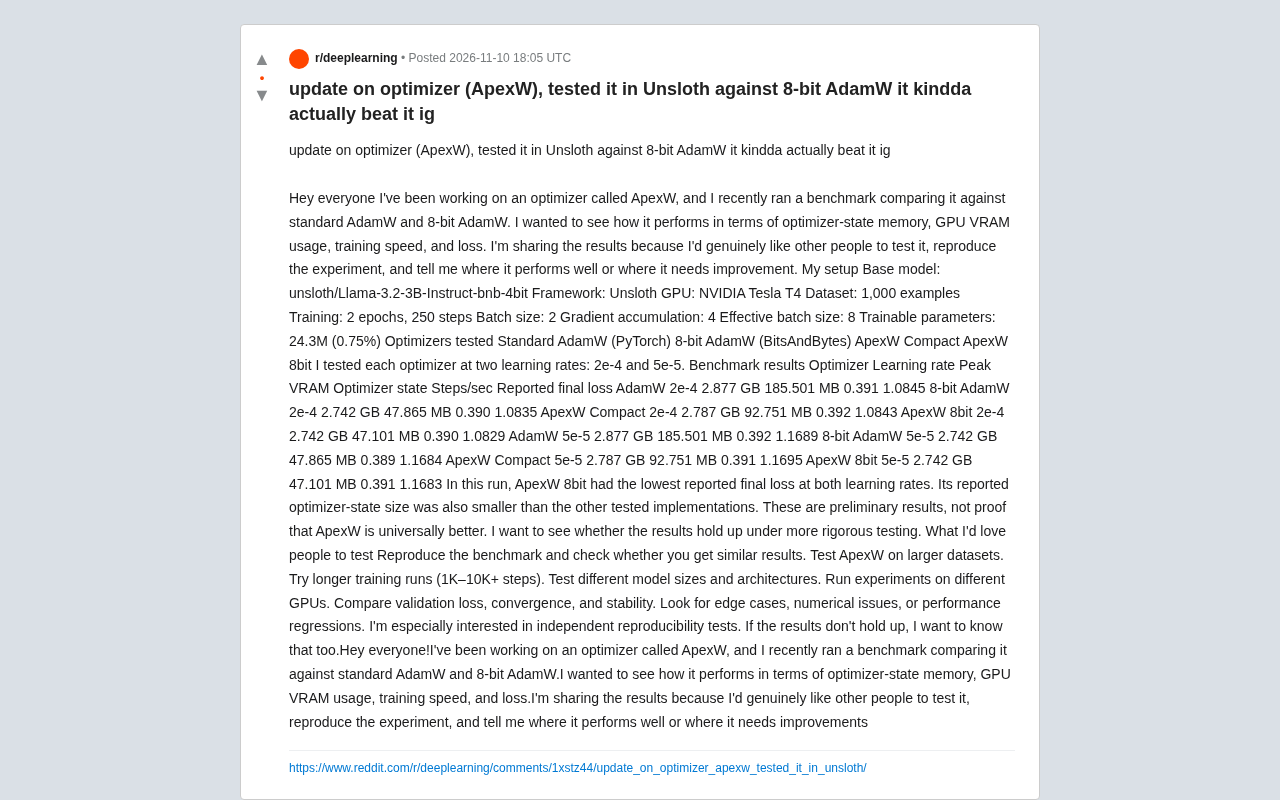
ApexW Optimizer Benchmark: Matches 8-bit AdamW in Unsloth with Lower Memory Usage
Developer shares benchmark of ApexW optimizer in Unsloth: ApexW 8bit has lower optimizer state memory (47.101 MB) and slightly better final loss than 8-bit AdamW, but similar speed. Needs independent reproduction.

US Computer Science Enrollment Drops 12.4% — Is CS Still Worth Studying?
CS enrollment fell 12.4% while health majors grew 6.2%. A CS master's grad explains why the degree's real value isn't coding but systems thinking.
Training 15+ Models on Your Own Data to Predict Blood Glucose: A Personal Health Data Modeling Case Study
A Reddit user trained 15+ machine learning models on personal blood glucose and metabolic data, revealing the technical challenges, overfitting risks, and implications for personal AI health apps.