Shield Uses AI Agents to Solve Legacy System Handoff Challenges
Shield Uses AI Agents to Solve Legacy …
Shield uses AI agents to navigate legacy portals and separate mechanical operations from professional judgment.
The article introduces Shield's Forge agent, built with OpenAI models, designed to solve the problem of enterprise IT technicians being trapped in legacy portal systems. These systems lack modern APIs, have outdated interfaces, and involve cumbersome processes. The Forge agent chooses to "use systems like a human," navigating interfaces autonomously to complete handoff tasks rather than rebuilding systems or writing fragile RPA scripts. Its core positioning is a division-of-labor adjustment: agents handle procedural work while technicians focus on judgment-based tasks. The article also notes challenges such as interface robustness and permission/audit design, and its actual effectiveness remains to be verified.
Why IT Technicians Get Stuck in Legacy Portals
There is a long-overlooked pain point in enterprise IT operations: a large amount of critical business still runs on legacy portal systems that lack modern APIs, have outdated interfaces, and involve cumbersome processes. Technicians are forced to spend enormous time manually moving data between systems, filling out forms, and triggering workflows. Shield is trying to solve this problem using OpenAI's model capabilities—letting AI agents perform operations in legacy portals on behalf of humans, thereby freeing technicians to focus on work that truly requires judgment.
According to the original source material, Shield's Forge agent can autonomously navigate these legacy systems and complete handoff tasks that previously required manual clicking, data entry, and verification. The core idea is not to replace technicians, but to separate "mechanical operations" from "professional judgment."
How the Forge Agent Works
Agent Navigation Rather Than System Reconstruction
The traditional approach is either to rebuild legacy systems (high cost, high risk) or to write RPA scripts (fragile, hard to maintain). Shield's chosen path is to have an AI agent "use" these systems like a human—understanding the interface, executing operations, and completing handoffs. The source material explicitly states that the Forge agent navigates the system itself, enabling technicians to focus on the problems that require their judgment.
The advantage of this approach is low intrusiveness into legacy systems. Enterprises can gain some automation benefits without first completing system modernization.
RPA (Robotic Process Automation) is a technology that uses software robots to simulate human clicks, input, and other operations on graphical interfaces to complete repetitive tasks, typically through recording or script writing. Traditional RPA relies on fixed interface element targeting (such as coordinates or control IDs). Once the interface is redesigned or loading is delayed, scripts easily fail, resulting in high maintenance costs and fragility. The key difference between Shield's Forge agent and RPA is that it uses large-model understanding of interface semantics to dynamically decide operation steps rather than relying on hard-coded fixed paths, giving it stronger adaptability in legacy portals with irregular interfaces and variable states.
Redefining the Human-Machine Division of Labor
Shield's positioning is clear: the agent handles procedural work, and technicians handle judgment-based work. The original text states it as "letting technicians focus on the problems that require their judgment." This effectively redraws the boundaries of operations team work—assigning repetitive labor to agents and leaving exception handling, decision-making, and customer communication to humans.
For IT teams long overwhelmed by tickets and portal operations, this division adjustment could bring substantive changes to the way they work.
In the context of IT operations, "handoff" refers to the coordination operations required when a task or ticket is transferred between different systems, teams, or levels—for example, exporting alerts from a monitoring system, registering them in a ticketing system, and then triggering a handling process in a portal. Such handoffs often span multiple legacy systems that lack API interoperability, requiring manual copy-pasting, repeated data entry, and verification, making them one of the main sources of technician time consumption. The significance of agents taking over handoff operations lies in reducing the "friction costs" between systems, rather than replacing any system itself.
Implications for Legacy System Automation
The Shield case points to a broader trend: AI agents are becoming an "adaptation layer" for enterprise legacy systems. Rather than waiting for long system replacement cycles, it is better to use agents to overlay a layer of intelligent operational capability on top of existing systems.
The challenges of this path are equally obvious. Legacy portal interfaces are often irregular and variable in state, and agents need sufficient robustness to run stably; permissions and auditing during handoffs also need to be redesigned. The source material does not disclose Forge's specific technical details or deployment scale, so its actual effectiveness still requires more practical validation. But the direction itself is worth watching: let AI adapt to old systems, rather than letting old systems hold people back.
The feasibility of AI agents as an "adaptation layer" depends largely on the capability boundaries of the underlying models. Large language models do not directly operate interfaces; they usually need to be combined with visual understanding (recognizing screen elements), tool calling (executing clicks and input), and planning (breaking down multi-step tasks) to form a complete agent loop. Such architectures may still produce erroneous operations or get stuck in loops in open, unstructured interfaces, so in enterprise scenarios it is usually necessary to set up human confirmation points, operation replay logs, and permission boundaries—this is also the concrete meaning of "permissions and auditing need to be redesigned."
FAQ
Does Shield's Forge agent require modifying existing systems?
According to the original source material, the Forge agent navigates existing legacy portals to complete work, rather than requiring enterprises to modify systems first.
Will agents replace IT technicians?
Shield's positioning is to free technicians from portal operations and let them focus on problems requiring judgment—this is a division-of-labor adjustment, not a replacement.
One-line Summary
Shield uses AI agents to navigate legacy portals, separating mechanical operations from professional judgment.
Paragraph Summary
The article introduces Shield's Forge agent, built using OpenAI models, which aims to solve the problem of enterprise IT technicians being trapped in legacy portal systems. These legacy systems lack modern APIs, have outdated interfaces, and involve cumbersome processes, forcing technicians to spend large amounts of time manually moving data and triggering workflows. The Forge agent chooses the path of "using systems like a human," autonomously navigating interfaces to complete handoff tasks, rather than rebuilding systems or writing fragile RPA scripts, with low intrusiveness into legacy systems. Its core positioning is a human-machine division-of-labor adjustment: agents handle procedural work, while technicians focus on judgment-based tasks. The article also notes that this model faces challenges such as interface robustness and permission and audit design, and its actual effectiveness remains to be verified, but the direction of "letting AI adapt to old systems" is worth watching.
Related articles

AI Writes Your Code—Do You Still Need to Learn Git? Five Reasons
AI coding agents handle Git operations automatically—is it still necessary to learn Git? Five reasons: team communication, reviewing agent PRs, monitoring code changes, fallback when AI goes down, and the joy of learning—plus how the focus of learning Git is shifting in the agent era.

Anthropic Reportedly Prices IPO at $83 Per Share, Valuing Company at $1.5 Trillion
Anthropic reportedly prices IPO at $83 per share, above the expected range, with a fully diluted valuation of $1.5 trillion. This article analyzes the signal significance of the pricing and its impact on the AI industry's financing environment.
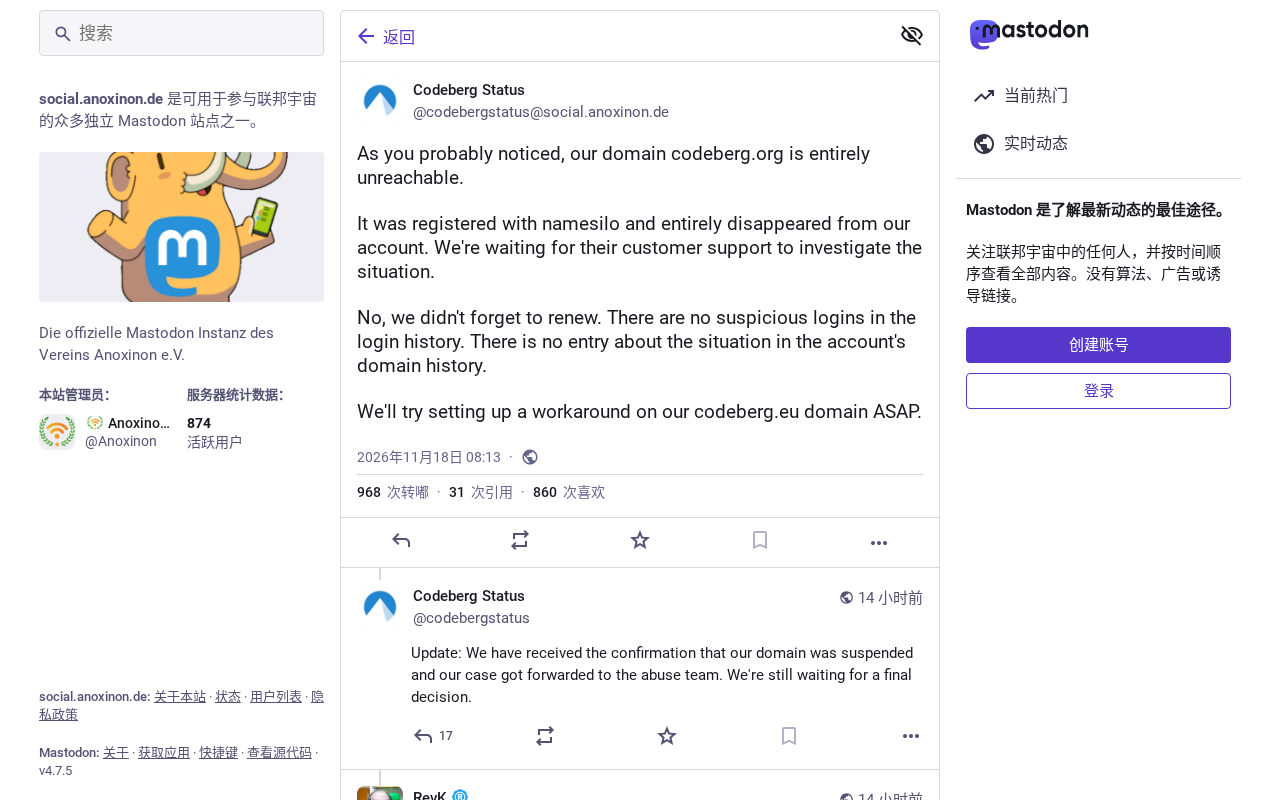
Open-Source Code Hosting Platform Codeberg Suffers Outage, Sparking Debate in Developer Community
Open-source code hosting platform Codeberg.org suffered an outage, sparking Hacker News debate over nonprofit platform stability and open-source infrastructure dependency risks.