The $2 Trillion Valuation Falls Through: What Signals Does Anthropic's IPO Roadshow Reveal?

Anthropic's IPO discloses real financial data for large models for the first time, and its pricing may become a new global AI valuation anchor.
Anthropic is about to launch its IPO, originally expected to be the largest in history, but as AI market sentiment cools, that expectation is likely to fall through. For the domestic AI industry, the significance of this listing is that it is the first time a frontier large-model company has laid out core data such as revenue, profit, customer retention, and computing liabilities in front of the public market. The article interprets the roadshow information from four dimensions: whether general-purpose large models can truly make money; the bull-bear divergence created by the nearly 900 billion "take-or-pay" computing contract; the reshaping of the global AI valuation anchor triggered by the issuance range of $70 to $78, corresponding to a maximum diluted valuation of $1.4 trillion, a downward revision from rumors; and the competitive boundary between closed-source and open-source routes. Final pricing is expected around November 19, and whether it holds firm or breaks issue price, it will become an important window for observing the AI competitive landscape and capital attitudes.
Anthropic's IPO Roadshow: What the $2 Trillion Valuation Collapse Signals
Anthropic is set to launch its IPO next week. The market originally expected it might surpass SpaceX to become the largest IPO in history, but as AI market sentiment cools, that expectation is likely to fall through. For those following the AI industry in China, Anthropic's listing may seem distant, yet it serves as a rare mirror—it is the first time a frontier large-model company has laid out core data such as revenue, profit, customers, and computing-power liabilities in front of the public market.
According to a breakdown by a Bilibili creator, the roadshow information can be interpreted from four dimensions: whether large models can make money, the billing structure of long-term computing contracts, the reshaping of the global AI valuation anchor, and the competitive boundary between closed-source and open-source routes.
Can General-Purpose Large Models Actually Make Money?
This is the industry's first opportunity to see real commercial data from a frontier foundation model. Revenue structure, profit margins, customer retention, and other metrics previously existed only in rumors and fundraising decks; now they are written into the prospectus materials.
For the industry, the significance of this data far exceeds Anthropic as a single company. It answers a long-pursued question: is it financially viable to continuously invest massive computing power to refine models and then monetize through API services? If the data looks good, the fundraising narrative of the entire AI startup ecosystem can gain support; if the data looks bad, investors will re-examine the valuation logic of all similar companies.
The Nearly 900 Billion Computing Contract: The Root of Bull-Bear Divergence
The most closely watched item in the roadshow materials is that nearly 900 billion computing-power long-term contract bill. Anthropic has signed a large number of "take-or-pay" computing contracts—whether or not the capacity is used, payment is due when the term expires.
Bulls argue that locking in computing power in advance is a necessary means to secure capacity and ensure the pace of model iteration; in an environment of computing scarcity, this is a competitive moat. Bears worry that if AI demand slows or a price war breaks out, these rigid costs will directly erode profits.
On one side is explosive revenue growth, on the other is heavy long-term liabilities—this contradiction constitutes the biggest battleground of this IPO. The root of the divergence between bulls and bears is almost entirely concentrated on how this bill is broken down.
"Take-or-Pay" is a clause structure common in energy and large infrastructure contracts: the buyer commits to paying a minimum amount within a specified term, regardless of whether the product or service is actually taken. In the AI computing context, cloud providers or chip suppliers require model companies to lock in future years of GPU capacity, with fixed contract amounts and rigid payment obligations, while actual usage can fluctuate. The commercial logic of this structure is that suppliers need long-term contracts to support capital expenditures (building data centers, purchasing chips), thereby transferring capacity risk to the demand side. For model companies, long-term contracts lock in scarce computing power but also turn future cash flow into rigid liabilities—typically reflected in accounting as long-term commitments or lease liabilities, which will continuously pressure the income statement and cash flow. When computing power is in short supply, this is a moat; when demand or prices reverse, it becomes a noose around profits. This is precisely the financial root of the bull-bear divergence.
The Global AI Valuation Anchor Is Being Reshaped
The issuance range given in this roadshow is $70 to $78, with public offering fundraising of up to approximately $64.4 billion. Combined with $26 billion in concurrent placements from giants such as Google, Nvidia, and AMD, the total fundraising ceiling is close to $90.4 billion, and the fully diluted valuation could reach up to $1.4 trillion.

Compared with the previously rumored $2 trillion valuation, this pricing range has been significantly revised downward. This downward revision itself is a landmark move by institutions to revalue AI. Looking ahead, model capability and growth rate are no longer the sole considerations; computing liabilities, revenue structure, and channel dependence will all be packaged into valuation models.

The impact of this anchor will transmit to other large-model companies overseas and will also affect the fundraising valuation expectations of domestic AI companies. For some time to come, Anthropic's pricing will become a reference coordinate for the AI capital market.
A "valuation anchor" refers to the reference benchmark investors use to price similar assets in the market. Primary markets lack public trading prices, so investors often use the public valuation multiples of comparable companies (such as price-to-sales PS, price-to-earnings PE) to work backward to pricing. When a landmark company completes an IPO and provides a clear issuance range and diluted valuation, it provides a citable anchor for the entire track: subsequent financing, M&A, and secondary market transactions of similar companies will float around this anchor. The significance of the anchor lies not only in the number itself but also in which variables it packages—if the market discounts computing liabilities, revenue structure, and channel dependence, then all similar companies must make similar adjustments when pricing. Therefore, Anthropic's downward pricing revision will transmit to overseas and domestic AI company valuation expectations through anchoring effects.
Closed Source vs. Open Source: The Boundary of Two Routes
Anthropic follows a typical closed-source route: continuously investing massive computing power to refine model capabilities, then monetizing through API services. On the other route, open-source models are continuously cutting prices and iterating rapidly, constantly diverting customers.

There is no simple good-or-bad distinction between the two routes, but Anthropic's listing will help the industry see clearly where the boundary of the closed-source route lies—how it secures its ecological niche, which pitfalls it has stepped into, and which experiences it has validated are all worth deep reference.
The core difference between closed-source and open-source routes lies in different ways of capturing value. Closed-source model companies (such as Anthropic and OpenAI) monetize through API token-based billing, requiring massive upfront computing investment to train models and relying on scale effects and performance leadership to maintain premiums; open-source models (such as the Llama series and multiple domestic open-weight models) make weights public and distribute them through community and cloud provider hosting. The models themselves are difficult to charge for directly, and value flows more to cloud services, hardware, and downstream applications. The competitive boundary of the two routes depends on three variables: whether the model performance gap is large enough to support a premium, the speed at which inference costs decline, and enterprise customers' preferences for data sovereignty and customizability. When open-source model performance approaches closed-source and inference costs fall rapidly, the closed-source API premium will be compressed; conversely, frontier capabilities can still only be continuously invested in by closed-source companies. Anthropic's financial data provides exactly a quantifiable observation sample for this boundary.
The Verdict Comes Around November 19
The final pricing is expected around November 19, and nothing is finalized yet. If pricing holds firm, it means the public market is still willing to pay for AI's long-term growth; if the listing breaks issue price directly, it may be interpreted as a signal that this round of AI bubble has been punctured. Regardless of the outcome, this IPO is an important window for observing the AI competitive landscape and capital attitudes.
The formation of an IPO pricing range typically goes through several stages: roadshow bookbuilding, order book construction, and final pricing. The issuance range is the preliminary price band given by underwriters and the company based on institutional investor intentions; the final issue price is determined within the range by subscription demand. If subscriptions are enthusiastic, pricing will lean toward the upper end of the range or even be raised; if demand is weak, it may be priced at the lower end or the issuance size may be reduced. "Fully diluted valuation" refers to the total market value after including all potential dilution factors such as all issued shares, options, and convertible bonds. It is usually higher than the valuation calculated on a basic share capital basis and is a stricter measure for assessing a company's true size. In addition, cornerstone placements (such as concurrent subscriptions by Google, Nvidia, and AMD) provide demand support and also carry a sense of strategic binding, which will influence the bargaining structure of pricing to some extent.
Related articles

AI Writes Your Code—Do You Still Need to Learn Git? Five Reasons
AI coding agents handle Git operations automatically—is it still necessary to learn Git? Five reasons: team communication, reviewing agent PRs, monitoring code changes, fallback when AI goes down, and the joy of learning—plus how the focus of learning Git is shifting in the agent era.
Anthropic Reportedly Prices IPO at $83 Per Share, Valuing Company at $1.5 Trillion
Anthropic reportedly prices IPO at $83 per share, above the expected range, with a fully diluted valuation of $1.5 trillion. This article analyzes the signal significance of the pricing and its impact on the AI industry's financing environment.
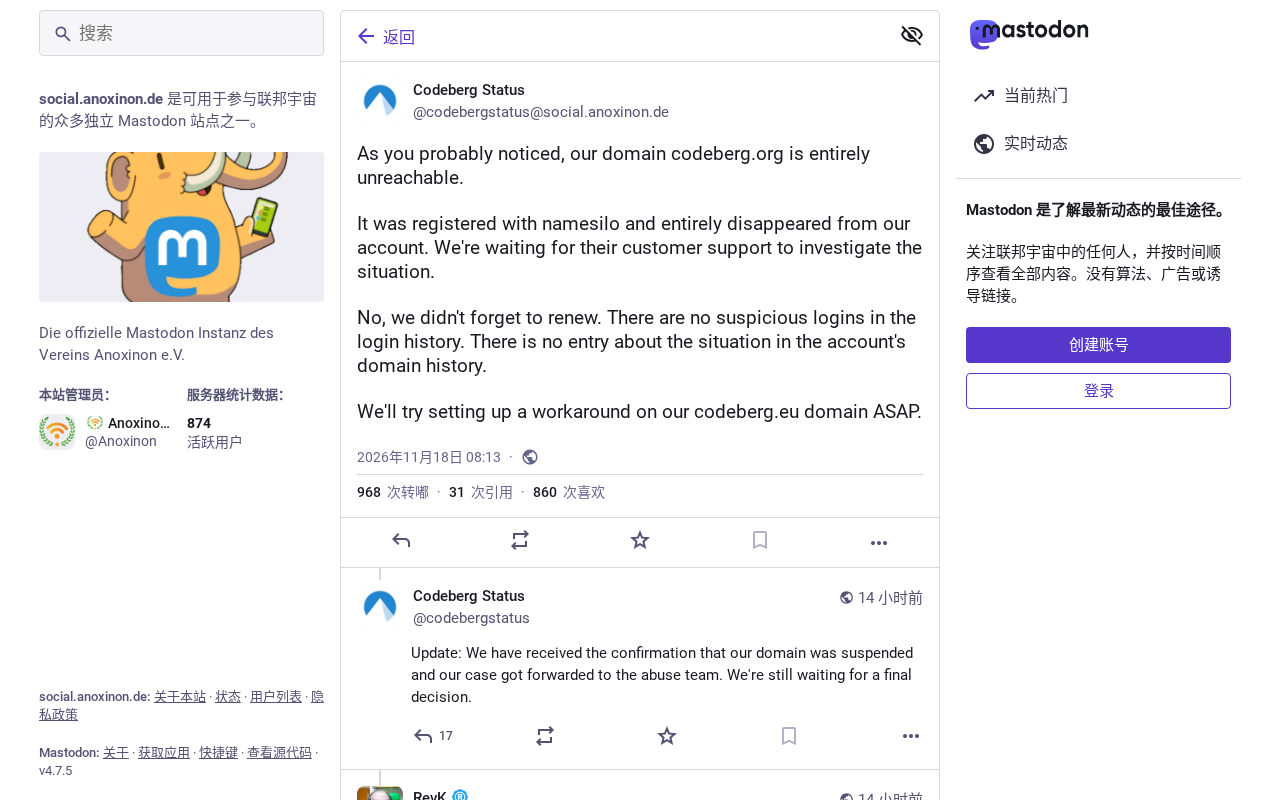
Open-Source Code Hosting Platform Codeberg Suffers Outage, Sparking Debate in Developer Community
Open-source code hosting platform Codeberg.org suffered an outage, sparking Hacker News debate over nonprofit platform stability and open-source infrastructure dependency risks.