The Cybertruck Experiment Ends: The Electric Pickup Myth Fades
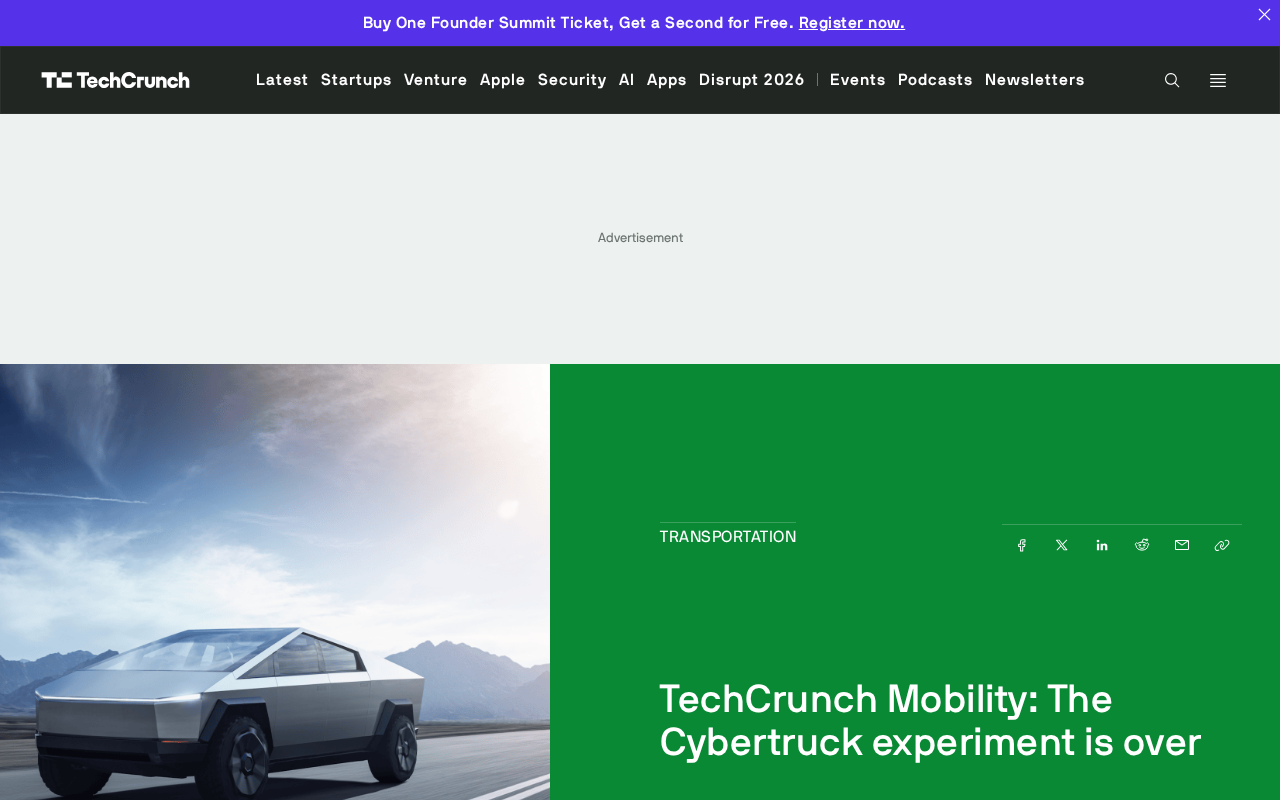
TechCrunch Mobility declares the Cybertruck experiment over, reflecting the electric pickup predicament and mobility competition's turn toward AI.
TechCrunch Mobility calls the Cybertruck a technical validation and cultural probe, not a mature mass-market product, reflecting pessimism over whether disruptive design can win traditional pickup users. Electric pickups are constrained by real use cases like towing, payload, and refueling, while unconventional styling hurts cost and capacity. As hardware electrification plateaus, competition shifts to AI, autonomous driving, smart cockpits, and fleet scheduling.
TechCrunch Mobility's latest newsletter, headlined "The Cybertruck experiment is over," brings a close to the phased attempt of Tesla's controversial model. Setting aside the noise around its looks and buzzworthiness, this judgment reflects the deeper adjustments underway in the electric pickup segment.
The end of a high-profile experiment
From launch, the Cybertruck carried symbolic meaning beyond that of an ordinary vehicle: it was both Tesla's assault on pickups—North America's profit stronghold—and a testing ground for unconventional engineering solutions such as the stainless steel body and the 48V low-voltage architecture. By defining it as an "experiment" rather than a "product," TechCrunch Mobility itself acknowledges the vehicle's exploratory nature—it was more a technical validation and cultural probe than a mature, mass-market volume product.
When an experiment is declared over, it means the industry has reached a fairly pessimistic baseline judgment on the proposition of whether "electric pickups can win over traditional gas-pickup users through disruptive design."
Why electric pickups struggle to break through traditional barriers
Traditional pickup users have highly specific use cases: towing, payload, long-distance travel, and harsh road conditions, with requirements for range stability and refueling convenience far higher than those for passenger cars. The aerodynamics and manufacturing complexity problems brought by unconventional styling, in turn, eat into cost and production capacity.
The Cybertruck case shows that the resistance disruptive innovation encounters in the pickup market comes more from usage habits and infrastructure than from product capability alone. This lesson has reference value for the entire electric pickup track.
48V low-voltage architecture refers to raising the nominal voltage of a vehicle's low-voltage electrical system from the 12V used by traditional gas vehicles and most EVs to 48V. With higher voltage, current can drop to about a quarter when delivering the same power, allowing thinner wiring harnesses, lower copper usage, and reduced vehicle weight, while leaving headroom for high-power electronic devices (such as active suspension, electric steering, and thermal management actuators). Tesla was the first to make it a mass-production selling point on the Cybertruck, but the 48V ecosystem requires extensive support from new suppliers and components, making economies of scale hard to achieve in the short term—one reason such unconventional engineering solutions come under cost pressure.
AI is reshaping the center of gravity in mobility
TechCrunch Mobility states at the outset that its focus is now "more than ever on the role AI plays in mobility." This shift in positioning is itself noteworthy: as the hardware-level electrification narrative enters a plateau, capital and public attention are rapidly turning toward software and intelligence.
For automakers, this means the competitive dimension extends from the "three electrics" (battery, motor, electronic control) to autonomous driving, smart cockpits, and fleet scheduling algorithms. The end of the Cybertruck experiment forms a neat contrast with this shift—styling and engineering gimmicks alone cannot sustain long-term commercial success, and AI capability is becoming a new source of differentiation.
The data loop is the core mechanism of competition in intelligent driving and smart cockpits: vehicles collect perception data on real roads, send it back for model training and simulation validation, and the improved algorithms are then pushed to the fleet via OTA, forming a cycle of "collect—train—deploy—collect again." The scale of the loop depends on fleet size and data-upload capability, so sales and installation volume themselves become sources of software competitiveness. This also explains why the competitive dimension of the mobility industry is shifting from hardware specs to iteration speed—whoever can faster turn real-world scenario data into model improvements can build hard-to-replicate advantages in autonomous driving and intelligent scheduling.
Implications for the industry
First, electrification in a segment cannot discuss innovation apart from real use cases. Second, there is a clear gap between buzz and commercial success; traffic cannot replace repeat purchases and word of mouth. Third, the next stage of competition in the mobility industry will rely more on software iteration and data-loop capabilities.
The Cybertruck story has come to a close, but the questions it leaves remain: what product form do electric pickups need to be truly accepted by mainstream users, and to what extent will AI rewrite the answer?
Plateau in industry analysis usually refers to a stage in which the pace of performance improvement and cost reduction for a given technology track slows markedly and market penetration growth stabilizes. For EVs, the improvement curves for battery energy density, charging power, and vehicle cost have flattened after an early rapid decline, product homogenization has intensified, and price wars have replaced technological gaps as the main competitive tool. This is precisely the backdrop for capital and public attention turning to software and intelligence: when hardware can no longer provide significant differentiation, autonomous driving capability, cockpit experience, and operational efficiency become new valuation anchors.
One-line Summary
TechCrunch Mobility declares the Cybertruck experiment over, reflecting the electric pickup predicament and mobility competition's turn toward AI.
Paragraph Summary
TechCrunch Mobility, under the headline "The Cybertruck experiment is over," characterizes the controversial model as a technical validation and cultural probe rather than a mature, mass-market volume product, reflecting the industry's rather pessimistic judgment on whether "disruptive design can win over traditional gas-pickup users." The article notes that electric pickups are constrained by real use cases such as towing, payload, long-distance travel, and refueling convenience, while the aerodynamics and manufacturing complexity brought by unconventional styling eat into cost and capacity—resistance comes more from usage habits and infrastructure than from product capability itself. Meanwhile, the newsletter explicitly shifts its focus to AI's role in mobility, meaning that after the hardware electrification narrative enters a plateau, the competitive dimension is extending from the three electrics to autonomous driving, smart cockpits, and fleet scheduling algorithms. The article closes with three takeaways: innovation cannot be divorced from real scenarios, buzz cannot replace repeat purchases and word of mouth, and software iteration and data loops are becoming new sources of differentiation.
Related articles

Microsoft WebIQ: Verifiable Real-Time Web Grounding for AI Agents
Microsoft WebIQ gives AI Agents real-time, citable web grounding across web, news, images, videos, and Places—164ms P95 latency, 50% fewer tokens, Scopes source control, and MCP integration.
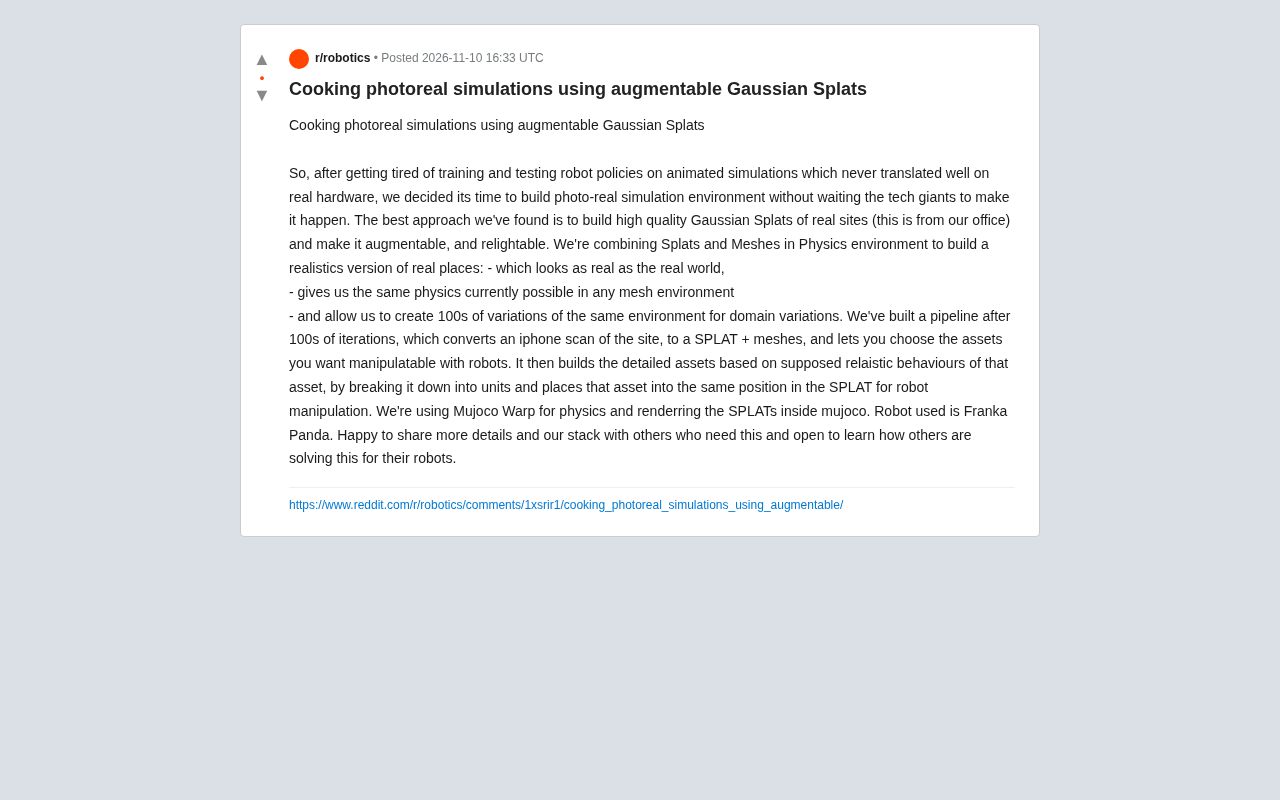
Augmentable Gaussian Splatting: Building Photorealistic Simulation Environments for Robot Training
Team combines Gaussian Splatting with meshes to build photorealistic robot simulation environments, integrating MuJoCo Warp physics and Franka Panda for augmentable, relightable real-site simulation.

Gemini 4 Carbon Released: The Leap from Gemini 3 to Gemini 4 in Under a Year
Google releases Gemini 4 Carbon, less than a year after Gemini 3. In the official demo, Carbon reverse-engineered the Theme Park binary, added a new DeepMind-themed ride, and ported it to the web in one shot.