The Muse Deeply Integrates with Instagram: A New Imagination for the Creator Ecosystem

The Muse's integration with Instagram has been officially confirmed, with continuous iteration and more interactive features to come.
The Muse officially confirmed through its social account that the integration with Instagram is now live, calling the experience "awesome" and clearly stating that more "fun things" are planned. The article points out that this integration should be understood as a starting point rather than an endpoint: cross-platform collaboration usually starts with account linking and content syncing, then gradually moves toward data interoperability and embedding creation tools. For creators, the most direct value is reducing the labor of repeatedly moving materials and maintaining accounts, enabling a "create once, distribute everywhere" pipeline. The official wording "fun things" suggests that follow-up features may lean toward interaction and community gameplay rather than being purely efficiency tools. At present, the specific feature list, rollout schedule, and scope of application have not been disclosed, and readers should refer to the actual product presentation.
A Platform Handshake Worth Noting
The integration between The Muse and Instagram was recently personally "stamped" by the official account on social platforms — "awesome, and it's only going to get better." Although this brief statement from Twitter carries little information, the signal it reveals is clear: the connection between the two platforms is not a one-time feature launch but a continuously iterating product line, with "more fun things" queued up behind it.
For readers interested in creator tools and the social distribution ecosystem, the value of this kind of cross-platform integration often lies not in how many features are available on day one, but in what long-term possibilities it opens up.
What the Integration Means
Judging from the official wording, this integration is positioned as "awesome," with emphasis that "we have more fun things planned here." Such phrasing typically appears in two scenarios: first, a new feature has just launched and the team is satisfied with the experience; second, the collaboration has just begun and both sides are paving the way for what comes next. The combination of The Muse and Instagram looks more like the latter — a starting point, not an endpoint.
The common path for cross-platform integration usually begins with account linking and content syncing, gradually moves toward data interoperability and embedding creation tools, and may ultimately evolve into joint operations or mutual traffic referrals. The Muse did not disclose specific feature details, but "excited for you all to try it" indicates that the features are already available for users to experience, and the team is looking forward to feedback.
Direct Impact from the Creator's Perspective
For content creators, the most direct benefit of platform integration is reduced repetitive work. If The Muse's content capabilities can connect smoothly with Instagram's distribution network, creators will no longer have to shuttle materials back and forth between the two platforms or repeatedly maintain accounts. This kind of "create once, distribute everywhere" pipeline has been the core direction of competition in creator tools over the past few years.
Another detail worth noting is the phrase "fun things." It suggests that follow-up features may lean toward interactivity, entertainment, or community gameplay rather than being purely efficiency tools. If this judgment holds, the integration may focus not just on content migration but on interactions between creators and fans.
Cross-platform integration typically relies on two types of mechanisms in technical implementation: one is account authorization (OAuth), where users authorize one platform to access another platform's public profile or publishing permissions without sharing passwords; the other is open APIs, through which platforms open content publishing, data reading, and other capabilities to partners. If the connection between The Muse and Instagram involves content syncing, it is most likely built on Instagram's Graph API, whose permission scopes, review policies, and rate limits all directly affect the depth and stability of the integration features. This also explains why cross-platform features are often rolled out in batches: the platform side needs to control the scale of API calls and compliance risks, while the partner side needs to design the experience within the boundaries of permissions. Understanding this layer makes it clear that "integration launch" is usually only the first step of API connectivity, and whether subsequent features can expand depends on continued negotiation between the two sides over API permissions and data policies.
"Create once, distribute everywhere" is often called content repurposing in the industry, and its efficiency depends on two links: format adaptation of materials and identity linking of accounts. Different platforms have different specifications for image dimensions, copy length, and hashtags. Shallow integration can only achieve link sharing or redirection, while deep integration allows direct preview and adaptation to the target platform's specifications within the creation tool. For creators, judging whether an integration is worth investing in can depend on whether it reduces the intermediate steps of "export—upload—re-edit," and whether post-publishing data can flow back into a unified analytics dashboard. If neither is achieved, the convenience of the integration remains more at the entry level rather than a true workflow transformation.
Directions Worth Watching Going Forward
The official statement clearly says "only going to get better," which leaves room for future updates. Inferring from industry practice, several directions worth watching include: the depth of integration features (whether it is shallow sharing or deep embedding into the creation workflow), the ownership rules for data and rights, and whether the two sides will launch joint incentive programs.
It should be noted that the currently public information comes only from this social media post by The Muse. The specific feature list, rollout schedule, and scope of application have not been disclosed. Readers should refer to the actual product presentation when experiencing it.
Summary
The integration between The Muse and Instagram currently appears to be a collaboration that is "officially optimistic from the opening." Its short-term value lies in the convenience brought by cross-platform connectivity, while its long-term value depends on what the subsequent "fun things" can become. For creators, this is a variable worth keeping an eye on — not because of what has already happened today, but because the official statement clearly says there is more to come.
Related articles
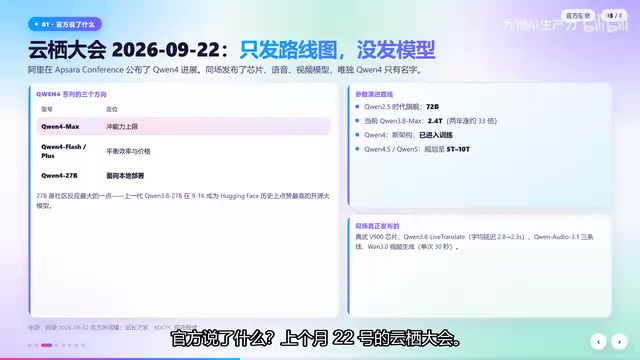
Qwen4 Architecture Preview Open-Sourced: 125B Parameters, 512 Experts, Designed for VRAM-Constrained Hardware
Qwen4 isn't released yet, but its architecture is previewed via open-source Qwen3.8 Flash Next: 125B params, 6B activated per token, 512 experts, 262K context, built for VRAM-limited hardware. This article covers official confirmations, key config.json metrics, and local deployment tests on 24G memory.
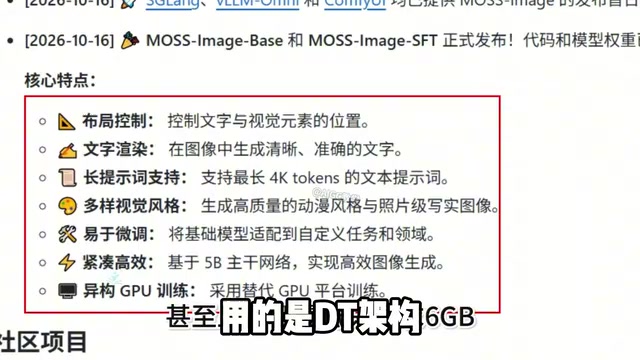
Run 8K Images on 6GB VRAM! Hands-On Test of Fudan's Open-Source MOSS-Image Model
Fudan OpenMouse team and Shanghai MOSS Intelligence open-source MOSS-Image, a 500M-parameter DT architecture text-to-image model that runs locally on 6GB VRAM with precise text rendering, structured layout control, and 4K Token prompt support—ideal for e-commerce posters and local deployment by individual creators.

Overseas Blogger Tests Local Deployment of 100B-Parameter MoE Model: Key Lessons on Quantization and Tool Calling
Overseas blogger tests local deployment of Alibaba's Qwen 3.8 Flash Next 100B MoE model on a Strix Halo mini PC and CUDA workstation, revealing how quantization precision affects tool-calling success and the real-world performance of the Strata and GUFO inference engines.