The Origin Story of Kid Pix: The Software That Changed Children's Drawing

Kid Pix became a classic that influenced a generation of creative tools through rebellious design and constraint-driven creativity.
Kid Pix is a children's drawing software created in the late 1980s by artist Craig Hickman, inspired by watching his two-year-old son draw on screen. Unlike mainstream educational software that emphasized correctness, Kid Pix made destruction and trial and error fun. Many signature features came from early Macintosh hardware limits, which Hickman turned into strengths. Initially distributed as shareware and later published by Broderbund, it became a cultural icon and deeply influenced tools like Scratch and Procreate.
In the long history of digital creative tools, Kid Pix is a name that cannot be overlooked. This children's drawing software, born in the late 1980s, not only let countless kids doodle freely on screen for the first time, but also influenced an entire generation of creative tools with its rebellious design philosophy. Recently, a discussion on Hacker News about the origin story of Kid Pix has once again drawn attention, giving us the opportunity to re-examine the birth of this classic software.
An Artist's "Side Project"
Kid Pix was created by Craig Hickman, a creator originally focused on photography and digital art. According to materials cited in the Hacker News discussion, Hickman initially had no intention of making children's software. While developing graphics tools on the Macintosh, he accidentally discovered that his two-year-old son showed great interest in the lines and colors on the screen. This chance observation became the starting point of Kid Pix.
Hickman's design approach was completely different from mainstream educational software of the time. Most children's software in the 1980s emphasized "correctness"—coloring must not go outside the lines, letters must be neat. Kid Pix went the opposite way, turning "destruction" into fun. The eraser didn't erase—it "blew up" the screen. The brush could draw bizarre shapes. And there was a famous "undo" button that made a funny sound when pressed. This design let children feel a sense of control through trial and error, rather than being bound by rules.
Creativity Born from Technical Limitations
Many of Kid Pix's signature features actually stemmed from the hardware limitations of early Macintosh computers. During development, Hickman faced strict constraints on memory and processor performance, making complex graphics rendering impossible. So he simply turned these limitations into features: using simple bitmap operations to create "explosion" effects, using existing system sounds for feedback, and using a low-resolution canvas to encourage bold creativity.
This "constraint-driven innovation" approach was mentioned by multiple developers in the HN discussion. One comment noted that Kid Pix proved that good tool design isn't about piling on technology, but about accurately understanding user psychology. Children don't care whether the image is refined—they care about what happens to the world when they press a button.
From Shareware to Cultural Icon
Kid Pix was initially distributed as shareware, with users able to copy it via floppy disk and pay a small fee. This model spread rapidly through the Mac user community in the late 1980s. According to recollections in the discussion, in many school computer labs, Kid Pix was the only software children actively wanted to open.
Broderbund later acquired the publishing rights to Kid Pix and brought it to a broader market. But here's a detail: Hickman always maintained core control over the product, which was not common in the software industry at the time. Kid Pix went on to release multiple versions, but the rough, direct, surprise-filled spirit of the original has always been regarded by longtime users as an irreplaceable classic.
The shareware model was a popular software distribution method in the 1980s and 1990s: developers provided software to users for free trial, and if satisfied, users could voluntarily pay a small fee to the developer (usually by mailing a check). This model bypassed traditional retail channels, reduced distribution costs, and was especially suited to individual developers and small teams. Kid Pix was initially distributed as shareware, with users able to copy it to friends via floppy disk and pay according to the instructions. This "try before you buy" mechanism drove viral spread of the software through the Mac user community and helped Kid Pix accumulate a large base of loyal users before it achieved commercial release. The shareware model was gradually replaced by app stores and subscriptions after the rise of the internet, but its place in the history of personal software cannot be ignored.
Lessons for Modern Creative Tools
Kid Pix's legacy is still clearly visible today. From Scratch to Procreate, from Toca Boca to various children's programming tools, you can find traces of Kid Pix: emphasizing instant feedback, encouraging purposeless exploration, and turning "mistakes" into fun.
Someone in the HN discussion raised a sharp point: today's children's software is often over-designed, wrapping learning goals in polished animations and achievement systems, and in doing so loses the courage of Kid Pix—"give them a blank canvas and a bunch of weird buttons, then step back." This reflection applies equally to today's AI-driven creative tools—as technical capabilities grow stronger, restraint and trust in users become rare qualities.
The story of Kid Pix reminds us that the best tool is often not the one with the most features, but the one that best knows how to make users feel free.
Scratch is a graphical programming tool for children developed by the MIT Media Lab, first released in 2007. It allows users to create interactive stories, games, and animations by dragging and dropping blocks, aiming to lower the barrier to programming and cultivate computational thinking and creativity. Scratch's design philosophy is in the same lineage as Kid Pix: emphasizing instant feedback, encouraging exploration and trial and error, and hiding learning within the joy of creation. Today Scratch has tens of millions of users worldwide and has become a benchmark in children's programming education. Procreate, meanwhile, is a professional drawing app for iPad, known for its intuitive touch interaction and rich brush system, and it likewise inherits Kid Pix's idea of "letting the tool step back and letting the user express themselves freely."
One-line Summary
With its rebellious design philosophy and constraint-driven creativity, Kid Pix became a classic that influenced a generation of creative tools.
Paragraph Summary
Kid Pix is a children's drawing software created in the late 1980s by artist Craig Hickman, born from his observation of his two-year-old son's interest in drawing on screen. Unlike mainstream educational software of the time that emphasized "correctness," Kid Pix turned destruction and trial and error into fun, such as an eraser that "blew up" the screen and a funny undo sound effect. Many signature features stemmed from the hardware limitations of early Macintosh computers, and Hickman turned those limitations into features. Kid Pix was initially distributed as shareware and later published by Broderbund, becoming a cultural icon for a generation. It had a profound influence on modern creative tools such as Scratch and Procreate, and its core lesson is this: the best tool is the one that makes users feel free.
Related articles
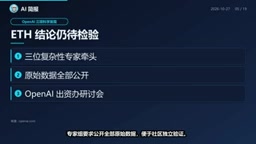
OpenAI Math Breakthrough, Anthropic IPO, and Reasoning Model Tutorial
OpenAI unveils math, CS, and physics results, claiming proof that ETH is false; Anthropic files for IPO, disclosing revenue and customer data; SpaceX gets $40B GPU financing; open-source model tool-calling accuracy issues and constrained decoding; 8-video reasoning model tutorial.

14 Core Concepts of Reasoning Models: From Chain of Thought to GRPO Explained
A systematic breakdown of 14 core concepts of reasoning models: chain of thought, test-time compute, verifiers, RLVR and GRPO, distillation, and reward hacking, plus rules for controlling thinking-token costs to help you decide when reasoning is worth paying for.

OpenAI's Claimed Refutation of ETH Sparks Debate, Meta Bets Big on AI Infrastructure
OpenAI claims an AI-assisted discovery that challenges the Exponential Time Hypothesis (ETH) and launches the mid-tier GPT-6.1 Tera. Cloudflare discloses a cross-customer data leak postmortem, and Meta plans $95B in AI infrastructure financing.