The State of Context Engineering: The Paradigm Shift from Prompting to Context Management

Context engineering treats all model-visible information as a resource system to design and govern, not just optimize wording.
The article maps the shift from prompt engineering to context engineering: the latter treats system prompts, retrieved snippets, tool outputs, and history as a resource system to be actively designed and governed. As Agents become widespread, context is now a continuously flowing state, raising questions of who filters, compresses, and discards it. HN discussion centers on long-window noise and cost, retrieval quality as the ceiling, the lack of unified state abstraction, and hard-to-standardize evaluation. Patterns like layered context, dynamic summarization, tool output filtering, and context budgets are emerging but not yet standard. Ownership, observability, and the fine-tuning trade-off remain open.
When "prompt engineering" is increasingly seen as a baseline skill, a broader concept is taking shape in the community: context engineering. It is not concerned with the wording tricks of a single query, but treats all the information visible to the model—system prompts, retrieved snippets, tool outputs, conversation history, user profiles—as a resource system that must be actively designed and dynamically governed.
This article draws on the piece The State of Context Engineering by technical writer dbreunig and the discussion it sparked on Hacker News to map out the current state, boundaries, and open questions of this concept.
From prompt engineering to context engineering: what actually changed
The core assumption of prompt engineering is that model capability is fixed, and optimizing how the input is phrased is enough to get better output. Context engineering zooms out—the space the model can "see" on each call is limited, and how that space is filled determines results far more than how any single sentence is worded.
There are practical drivers behind this shift. As the Agent form factor becomes widespread, models no longer just answer single-turn questions; they continuously receive tool results, retrieved documents, and intermediate state across multi-step tasks. Context has gone from a one-time input to a continuously flowing state, and who is responsible for filtering, compressing, and discarding it has become an engineering problem.
The "state" discussed in the original article can be understood as a periodic stocktake of this emerging field: practice has already run ahead of concept, but the methodology has yet to converge.
Context window refers to the maximum number of tokens (input plus output) a model can process in a single inference. The context windows of mainstream large models have expanded from the early 4K and 8K to 128K and even the million-token level, but a larger window does not mean effective utilization improves in tandem. Research has widely observed the "lost in the middle" phenomenon: content located in the middle of a long context is significantly less likely to be referenced or reasoned over by the model than content at the beginning and end, a phenomenon known as positional bias. In addition, the computational cost of attention mechanisms grows quadratically with sequence length, so long contexts directly drive up inference latency and cost. The core tension of context engineering is therefore not insufficient window capacity, but how to place the most critical information within the limited high-efficiency range.
The problems context engineering actually solves
In the HN discussion thread (45 comments, 196 points), much of the discussion centered on several concrete tensions:
Bigger context windows are not always better. Longer windows mean more noise and higher inference costs, and the model's efficiency at using information in the middle of long contexts is often questioned. The engineering trade-off therefore shifts from "can we fit it in" to "is it worth fitting in."
Retrieval quality sets the ceiling. Whether it is RAG or tool-call results, snippets injected into the context that are not sufficiently relevant can instead interfere with the model's judgment. Context engineering treats retrieval, reranking, and truncation as links in the same design chain.
State management requires explicit design. In multi-turn Agent tasks, which history to keep, which to summarize, and which to discard currently relies mostly on heuristic rules, lacking a unified abstraction.
Evaluation is hard to standardize. Single-turn prompts can be scored by comparing outputs, whereas the effect of a context strategy often only shows up across a complete task pipeline, making evaluation significantly more costly.
These discussions all point to one thing: context engineering is not prompt engineering under a different name, but an expansion of the problem from "how to write it" to "what to give, how much to give, and when to give it."
RAG (Retrieval-Augmented Generation) is an architecture that retrieves relevant snippets from an external knowledge base and injects them into the context before the model generates, typically comprising four stages: document chunking, vector indexing, similarity retrieval, and reranking. Retrieval quality is determined jointly by recall (whether relevant snippets are retrieved) and precision (whether the retrieved snippets are truly relevant). From a context engineering perspective, each stage of RAG directly affects the quality of what ultimately gets injected into the context: chunking that is too coarse introduces irrelevant noise, missing reranking lets low-relevance snippets crowd out the budget, and improper truncation strategies lose key facts. This is why the original article treats retrieval, reranking, and truncation as a single design chain.
Several typical patterns in current practice
Judging from community discussion and public practice, context engineering has roughly formed several approaches:
- Layered context: organizing system instructions, task descriptions, retrieved content, and conversation history into layers, each with a different trimming strategy.
- Dynamic summarization: periodically compressing history in long conversations, keeping only decision-relevant facts rather than preserving everything verbatim.
- Tool output filtering: first performing structured extraction on raw tool output, then deciding whether it enters the context, avoiding dumping large blocks of text in all at once.
- Context budget: allocating token quotas to different sources and treating the window as a resource that needs planning.
These patterns have yet to form a standard library or unified framework; they are mostly experience accumulated independently by teams in engineering practice. This also explains why the word "state" is more apt—the field is still in flux.
Context budget borrows the resource-allocation logic of economics: treating the context window as a scarce resource of fixed capacity, presetting token quota ceilings for different sources such as system prompts, retrieved snippets, tool outputs, and conversation history, and triggering compression or discarding when quotas are exceeded. Common practices include setting hard caps for each source type, dynamically adjusting quotas by priority, and prioritizing decision-relevant facts over raw text when the budget is tight. The value of this pattern is that it turns "what to put in" from an intuitive judgment into a measurable, tunable engineering decision, but it also brings new problems: how to set quota ratios and which content to discard when over budget still lack general guidelines.
Questions still to be answered
The original article and the discussion do not provide definitive answers; instead they expose several open issues.
The first is ownership: should context strategy be implemented at the application layer, or pushed down to the model or framework layer? Both routes have been attempted, but the boundary is blurry.
The second is observability: when model output degrades, it is hard to tell whether retrieval was wrong, summarization lost information, or the context ordering is off. The lack of debugging tools is a real obstacle to adoption in this field.
The third is the relationship with fine-tuning: whether certain knowledge should go into the context or be baked into the model through training is a trade-off between cost and flexibility, and currently relies mostly on experiential judgment.
The popularity of context engineering essentially reflects one fact: improving model capability has not eliminated engineering problems, it has only shifted them from "how to express" to "how to organize information." This shift may be more worth watching than any single technique.
Fine-tuning refers to continuing to train a pretrained model on domain-specific data to bake knowledge or behavioral patterns into the model's parameters. Compared with context injection, fine-tuned knowledge does not consume the context window at inference time and yields more stable responses, but it has high update costs, poor flexibility, and difficulty adjusting promptly to rapidly changing information. Context injection is the opposite: knowledge can be updated at any time without training, but it consumes window budget on every call and is constrained by retrieval quality. The trade-off usually depends on how frequently knowledge changes, how latency-sensitive the task is, and the available training resources; there is currently no general decision framework, and it is mostly based on experiential judgment and small-scale comparative experiments.
One-line Summary
Context engineering treats all model-visible information as a resource system to design and govern, rather than optimizing the wording of a single query.
Paragraph Summary
The article maps the paradigm shift from prompt engineering to context engineering: the former optimizes the expression of a single input, while the latter treats all visible information—system prompts, retrieved snippets, tool outputs, conversation history—as a resource system that must be actively designed and dynamically governed. As the Agent form factor becomes widespread, context has shifted from a one-time input to a continuously flowing state, and who filters, compresses, and discards it has become an engineering problem. HN discussion focuses on tensions such as the noise and cost of long windows, the role of retrieval quality in setting the ceiling, the lack of a unified abstraction for state management, and the difficulty of standardizing evaluation. Current practice has formed patterns such as layered context, dynamic summarization, tool output filtering, and context budgets, but has yet to converge into a standard framework. Ownership, observability, and the relationship with fine-tuning remain open issues.
Related articles
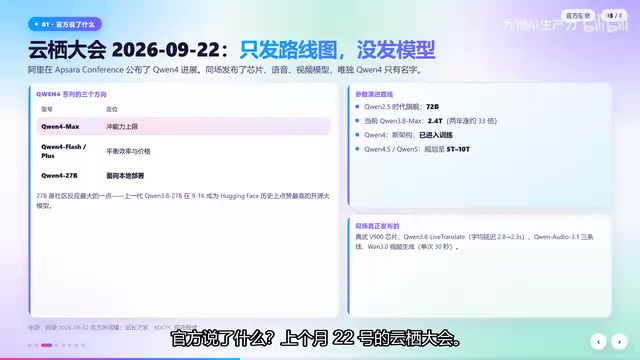
Qwen4 Architecture Preview Open-Sourced: 125B Parameters, 512 Experts, Designed for VRAM-Constrained Hardware
Qwen4 isn't released yet, but its architecture is previewed via open-source Qwen3.8 Flash Next: 125B params, 6B activated per token, 512 experts, 262K context, built for VRAM-limited hardware. This article covers official confirmations, key config.json metrics, and local deployment tests on 24G memory.
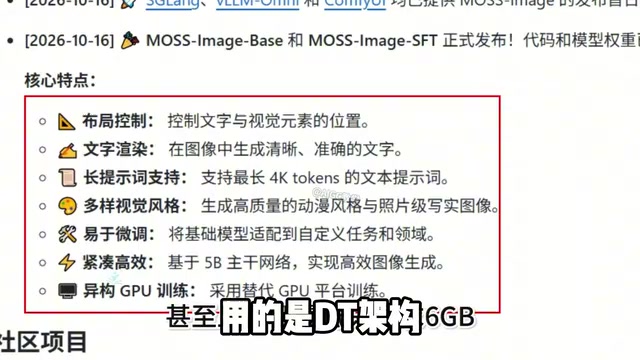
Run 8K Images on 6GB VRAM! Hands-On Test of Fudan's Open-Source MOSS-Image Model
Fudan OpenMouse team and Shanghai MOSS Intelligence open-source MOSS-Image, a 500M-parameter DT architecture text-to-image model that runs locally on 6GB VRAM with precise text rendering, structured layout control, and 4K Token prompt support—ideal for e-commerce posters and local deployment by individual creators.
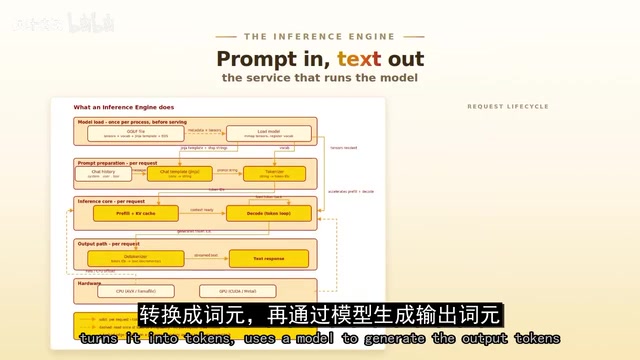
Overseas Blogger Tests Local Deployment of 100B-Parameter MoE Model: Key Lessons on Quantization and Tool Calling
Overseas blogger tests local deployment of Alibaba's Qwen 3.8 Flash Next 100B MoE model on a Strix Halo mini PC and CUDA workstation, revealing how quantization precision affects tool-calling success and the real-world performance of the Strata and GUFO inference engines.