throxy: YC's First AI-Native Sales Agent, Breaking Through Cold Calling in the Buyer's Native Language

YC project throxy uses human SDRs to cold call in buyers' native languages and charges per actual meeting.
throxy is a YC P25 project that calls itself the first AI-native sales agent, targeting industries like manufacturing, logistics, and construction where standardized outreach fails. Its approach is the opposite of most AI sales tools: AI handles list building and process management, while cold calling is done by human SDRs, explicitly labeled "All SDRs are humans." This month's new feature routes calls by the lead's native language — a factory manager in Lyon gets a French call, a Munich buyer hears German — to boost answer rates and trust-building speed. On the business model side, customers only pay for meetings that are accepted and actually take place, shifting risk to the provider. The article argues this reflects the divergence of routes in the AI sales space and notes that linearly growing human costs at scale are the core challenge.
While most AI sales tools are still optimizing email templates, YC P25 project throxy has chosen a heavier path — having human SDRs make cold calls in the buyer's native language, and charging only for meetings that actually happen. This positioning targets industries like manufacturing, logistics, and construction where "generic outreach fails," and it reveals the divergence taking place in the AI sales space.
Why Cold Calling Fails in These Industries
In B2B sales, manufacturing, logistics, and construction share common traits: long decision chains, older buyers, and strong defensiveness toward unsolicited pitches. Standardized English email sequences or templated scripts often can't even get past the front desk in these scenarios. throxy's official description states outright that these industries are the hardest-hit zone for "generic outreach fails."
The product approach isn't to use AI to mass-generate more outreach, but the opposite: build prospect lists with proprietary technology, then have human sales representatives call the buyers. In other words, AI handles the data and process layers, while the final push is left to humans. The official materials specifically note "[All SDRs are humans]" — this both clarifies the "AI sales" label and serves as a commitment to deal quality.
SDR (Sales Development Representative) is a front-line prospecting role in B2B sales organizations: they reach potential customers through cold calls, cold emails, and social outreach. The goal isn't to close deals directly, but to identify leads with initial interest and convert them into qualified sales meetings, which are then handed to Account Executives (AEs) to advance. In mature SaaS and industrial sales systems, the division of labor between SDRs and AEs is standard practice. throxy's model essentially outsources and productizes the SDR function: lists are generated by the tech layer, calls are executed by humans, and the deliverable is "a confirmed meeting" rather than "a batch of leads." This also explains why it emphasizes "All SDRs are humans" — in the AI sales context, the SDR role is often understood as an automatable outbound calling bot, and throxy is deliberately drawing a line between itself and that.
New This Month: Language-Based Call Routing
This month's update from throxy is routing calls to SDRs who speak the lead's native language. The official examples are very specific: a factory manager in Lyon receives a call in French, a buyer in Munich hears German.
This feature may look like just "multilingual support," but it actually affects answer rates and the speed of trust-building. In industrial procurement, language is tied to regional business customs and the rhythm of relationship-building — opening in the other party's language can significantly reduce the first reaction of "this is a nuisance call." For B2B companies selling across borders, this essentially pushes localization down from the marketing collateral level to the sales execution level.
Call routing is originally a term from call centers and communication systems, referring to distributing inbound or outbound call tasks to the most suitable agents based on preset rules. Common rules include skill groups, geography, time of day, language, and customer tier. throxy's approach uses "the native language of the lead's region" as a routing dimension: after the system identifies the lead's geographic and language attributes, it assigns them to an SDR who speaks that language. In terms of engineering implementation, this requires that language and region fields be accurately tagged during list building, and that the SDR team be grouped by language skills. On the business side, it migrates the dispatch logic of traditional customer service centers into the sales prospecting context — a concrete implementation of localization extending from the content layer to the execution layer.
Business Model: Paying for Accepted Meetings
throxy's pricing logic is "you only pay for meetings that are accepted and actually take place." This differs from monthly subscription sales tools and from traditional outsourcing billed by lead count.
For buyers, this model transfers risk to the service provider: no meetings, no revenue — forcing throxy to guarantee list quality and call quality. For throxy itself, this means it must continuously optimize its list-building technology and SDR conversion capabilities rather than relying on volume. This kind of "results-oriented" pricing isn't new in sales outsourcing, but combined with its AI-native positioning and language routing, it forms a fairly clear differentiated package.
Pay-per-meeting is a form of outcome-based pricing, contrasted with per-seat subscriptions, per-lead pricing, and hourly billing. The sales outsourcing industry has long had "pay-per-booked-meeting" variants, but disputes often arise in execution: what counts as a "qualified meeting," who determines it, and how no-shows are handled. throxy's wording emphasizes "accepted and actually taking place," which in substance introduces a dual threshold into the contract — the lead must confirm acceptance, and the meeting must actually occur, for billing to be triggered. This structure isn't friendly to the service provider's cash flow, because revenue recognition is deferred until after the meeting takes place; providers therefore typically need higher unit prices to compensate for acquisition and booking costs. Understanding this helps assess whether its unit economics hold up at scale.
The Divergence of Routes in the AI Sales Space
throxy sits at the intersection of two routes. One is AI-native data and automation capabilities applied to list building and process management; the other is human-to-human communication, especially cross-language, cross-cultural cold calling.
Currently, most AI sales products bet on full automation — AI writes emails, AI makes calls, AI follows up. throxy's choice is to acknowledge that AI can't yet replace certain steps, and instead use AI to amplify the efficiency of human SDRs. Whether this judgment holds depends on whether it can maintain meeting quality at scale. After all, "humans" means costs grow linearly with scale, while AI's cost curve declines.
Signals Worth Watching
The product received 76 upvotes and 14 comments on Product Hunt, ranking 14th. As YC's first project to call itself an AI-native sales agent, throxy's progress is worth tracking for practitioners in B2B sales and AI applications: it's testing whether the hybrid model of "AI does the heavy work, humans do the hard work" can succeed in vertical industries.
For companies selling industrial goods, logistics services, or building materials to multilingual European markets, the language-based call routing feature has direct reference value. And for teams building AI sales tools, throxy's pay-per-meeting model offers a commercialization sample worth benchmarking against.
Related articles
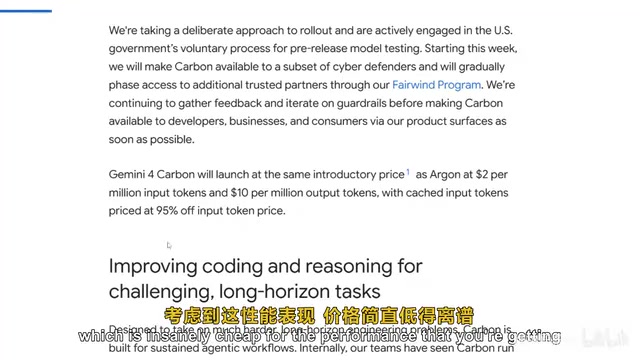
Gemini 4 Carbon Hands-On: The Strongest AI Model? Compared with Claude Opus 5.5
Google's Gemini 4 Carbon tops the Artificial Analysis leaderboard with 71% on CW Bench and leads Vending Bench. Hands-on comparison with Claude Opus 5.5: stunning front-end design but slightly behind in web development, with a clear price advantage.

Gemini 4 Carbon Tops Global Rankings as AI Productivity and Open-Source Ecosystems Surge
Google DeepMind's Gemini 4 Carbon tops global benchmarks, built for complex agents and system security. ByteDance launches Doubao Work integrated with Feishu, Anthropic's AI autonomously breaches 5 system-level attack chains, and ModelBest and Fudan open-source on-device multimodal and image generation models.

Overseas Creator Breaks Down N8n AI Agent Business Playbook: From Tooling to Monetization
An overseas creator breaks down the N8n AI agent business playbook: comparing Zapier, Make, and N8n, detailing four monetizable automation categories—lead capture, WhatsApp follow-up, booking, and content pipelines—plus agency pricing and a sales playbook.