TikTok Launches Standalone TikTok Shop App, Revealing E-commerce Ambitions

TikTok pilots a standalone TikTok Shop app in a few countries, redefining the e-commerce entry point.
TikTok has launched a standalone TikTok Shop app in a few countries, currently in small-scale testing. The app features interest-based personalized recommendations, product displays via livestreams and short videos, and in-app exclusive discounts and free shipping—essentially a condensed version of the main app's e-commerce capabilities, but with context separation to reduce shopping friction. This move could boost conversion and retention and may help TikTok circumvent regulatory pressures in some markets. For sellers, it means another traffic channel but requires adapting dual-entry pricing and ad strategies; for creators, the conversion funnel is lengthened, and they must gauge whether followers will download another app for shopping.
TikTok is spinning its e-commerce business out of the main app. According to social media consultant Matt Navarra, TikTok has launched a standalone TikTok Shop app in a handful of countries. This is more than just a product line split—it may signal TikTok's redefinition of the e-commerce entry point.
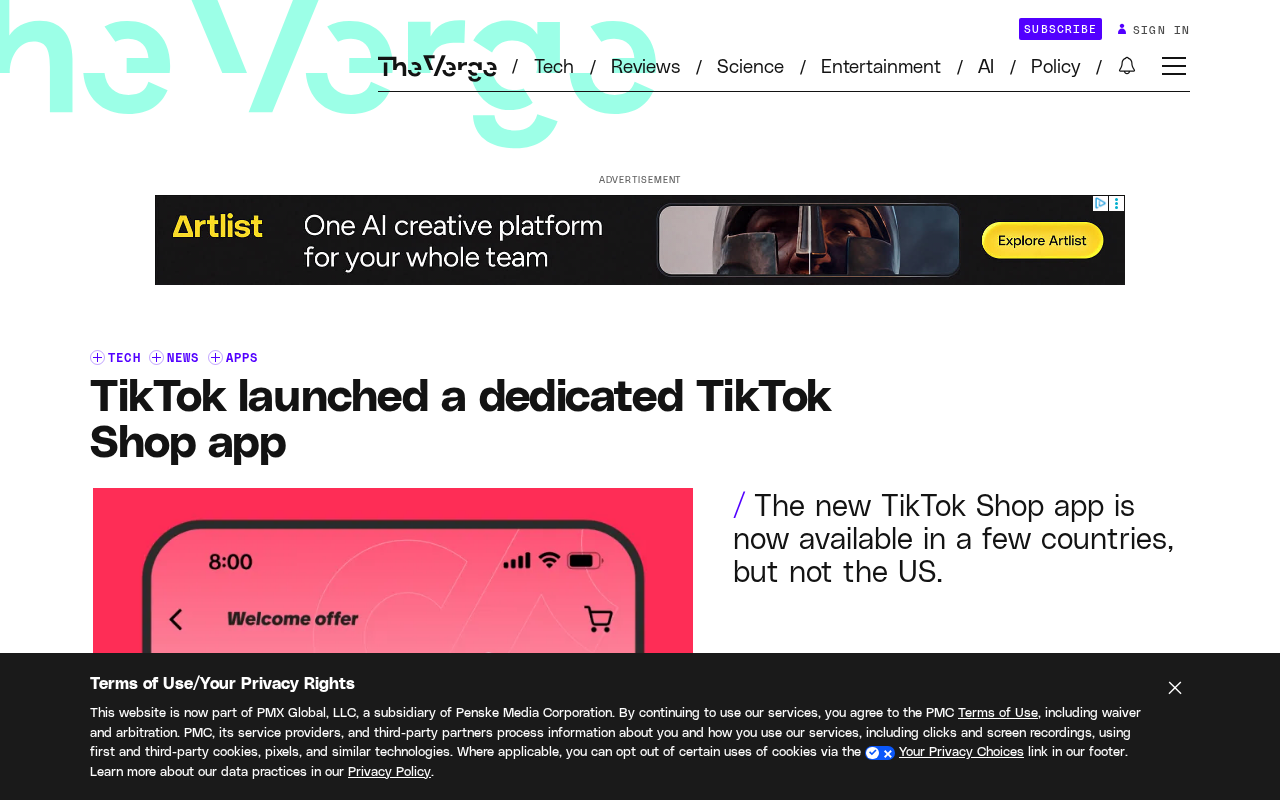
A Standalone App with Three Core Selling Points
According to the App Store product page description, the standalone TikTok Shop app highlights three features: personalized recommendations based on user interests, intuitive product displays through livestreams and short videos, and exclusive discounts and free shipping benefits available only within the app.
These three features are familiar—they are essentially a condensed version of TikTok's in-app e-commerce capabilities. But putting them into a standalone app means TikTok wants users to make a clearer contextual switch between "scrolling content" and "buying things." Personalized recommendations drive acquisition and retention, livestreams and short videos handle conversion, and exclusive discounts serve as the most direct download hook.
Why "Separate Out" Shopping?
Separating e-commerce functionality from the main app is not unprecedented in the industry. But TikTok's situation is unique: the main app simultaneously hosts short videos, livestreams, social features, and shopping, resulting in high feature density. The shopping entry point is buried in the content feed—seamless for heavy users, but not direct enough for users who just want to compare prices, find coupons, or browse product reviews.
The logic behind the standalone app is to reduce the mental burden of shopping decisions. Users open it specifically to buy, not to "buy incidentally while scrolling." This separation of contexts could positively impact conversion rates and user retention. Another motivation that cannot be ignored is that a standalone app can circumvent regulatory and compliance pressures that the main app faces in some markets, allowing e-commerce operations to run within a more controllable shell.
GMV stands for Gross Merchandise Volume, referring to the total order value completed through a platform within a given period, including all transactions—paid and unpaid, shipped and unshipped, returned and not returned. It is the most commonly used metric in the e-commerce industry to measure platform transaction scale, but it does not equal actual platform revenue—GMV only reflects "flow," and a platform's true revenue must deduct returns and canceled orders, and depends on monetization methods such as commission rates and advertising fees. Livestream e-commerce platforms like TikTok Shop commonly disclose GMV to communicate growth volume, so when the article mentions "no user scale or GMV data," it is effectively saying that outsiders cannot judge the true scale of this standalone business.
Regarding compliance pressure, in recent years the EU's Digital Services Act (DSA) has required very large online platforms to bear higher review obligations for products and content, while the US has continued to exert pressure around TikTok's ownership and data security issues. Placing e-commerce operations in a standalone app allows responsibilities for product review, consumer protection, taxation, and data governance to be more clearly divided architecturally, reducing the risk of the main app being held collectively accountable for e-commerce issues.
Cautious Signal: Launch in Only "a Few Countries"
Interestingly, TikTok chose to pilot in a few countries first rather than rolling out globally. This is consistent with TikTok's past distribution strategy for new features: validate on a small scale, then decide whether to double down.
This caution is justified. A standalone e-commerce app requires an independent operations team, localized product supply, and logistics fulfillment capabilities—if any link falls short, "exclusive discounts" become empty promises. The information disclosed so far includes no list of covered countries, nor user scale or GMV data, indicating this is still in early testing, with TikTok itself observing feedback.
What It Means for Sellers and Content Creators
For sellers already operating on TikTok Shop, an additional standalone entry point means another traffic channel, but also means adapting to a new recommendation logic and operational rhythm. If exclusive discounts and free shipping only apply within the standalone app, sellers may need to design different pricing strategies and ad creatives for the two entry points.
For content creators, the standalone app pulls "livestream selling" and "short video seeding" out of the content consumption context. Creators need to judge whether their followers are willing to download another app for shopping. This conversion funnel is one step longer than directly linking within the main app—both an opportunity and a barrier.
Conversion funnel refers to the progressive stages a user goes through from encountering a product to completing a purchase, for example: seeing content → clicking on a product → entering the product page → adding to cart → placing an order and paying. Each additional stage causes some users to drop off, so the shorter the "funnel," the higher the overall conversion rate typically is. In the main app, users scrolling short videos can click a link and order directly—fewer stages. In the standalone app model, users must first download and install, register and log in before completing the same action—the funnel is lengthened, and each layer introduces new drop-off. This also explains why exclusive discounts and free shipping are used as "download hooks"—to compensate for the extra steps with immediate benefits.
The Battle for the E-commerce Entry Point Has Just Begun
The emergence of the standalone TikTok Shop app shows that TikTok is no longer content with treating e-commerce as an附属 feature of a content platform. It wants to test whether a purer shopping context can work—whether users are willing to install a separate app for a social platform's e-commerce business.
The answer to this question can only be found in a few pilot countries in the short term. Public information is currently limited, and feature details, coverage, and future rollout plans remain to be seen. But the direction is clear: TikTok is turning e-commerce from "doing it on the side" to "doing it seriously."
One-line Summary
TikTok pilots a standalone TikTok Shop app in a few countries, redefining the e-commerce entry point.
Paragraph Summary
TikTok has launched a standalone TikTok Shop app in a few countries, currently in small-scale testing. The app highlights interest-based personalized recommendations, product displays through livestreams and short videos, and in-app exclusive discounts and free shipping—essentially a condensed version of the main app's e-commerce capabilities, but with context separation to reduce the mental burden of shopping. This move could boost conversion and retention, and may also help TikTok circumvent regulatory and compliance pressures the main app faces in some markets. For sellers, it means another traffic channel but requires adapting pricing and ad strategies for dual entry points; for creators, the shopping conversion funnel is lengthened, and they must judge whether followers are willing to download another app for shopping.
Related articles
 Tech Frontiers
Stylome Bot Slammed as Useless Junk: Why Do AI Detection Tools Keep Failing?
Reddit users test the Stylome AI detection bot: Gemini-rewritten text judged human-written, consistently low confidence. An analysis of AI text detection's technical dilemmas, privacy concerns, and credibility crisis in community governance.
 Tech Frontiers
When AI Becomes a Productivity Divide: Clarity or "AI Psychosis"?
A civil engineer's deep use of agentic AI boosted efficiency but bred contempt for peers who refuse to learn. Is this clarity or AI psychosis? An analysis of the cognitive and psychological challenges behind the AI productivity divide.
 Tech Frontiers
Opus 5.5 Benchmark Scores Climb, Community Says Its "Weights Are Blessed"
Reddit community discusses Opus 5.5's rising scores on the Benchmaxxing Bench, with users describing its performance as "weights are blessed." This article interprets the community reaction and cautions against conflating benchmark scores with real capability.